 Flip the card
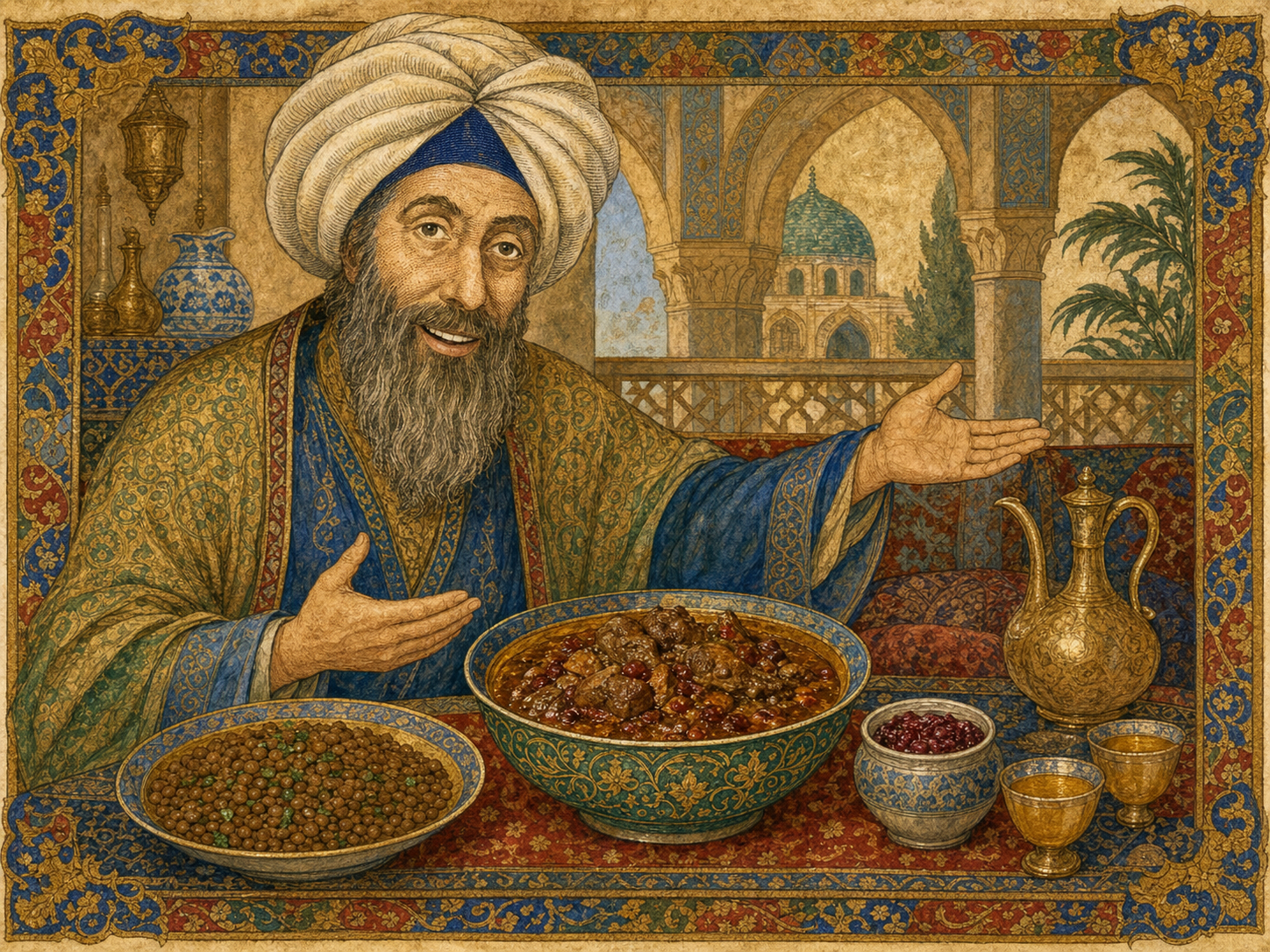
Alhazen at the table
965 — 1039
On the menu
The Abbasid-Fatimid Sufra
On the medieval Arab-Muslim table — the sufra, the leather or cloth spread on which dishes are arranged — there is neither an entrée nor a dessert in the French style, but a simultaneous deployment of foods placed around the bread. You find long-simmered pot dishes (ṭabīkh), a fermented condiment that awakens everything (kāmakh), a sweet-and-sour drink to accompany, and sweets and dried fruits that circulate from the beginning to the end of the meal as of a journey. The court cooks of Baghdad and then Cairo followed collections like al-Warrāq's Kitāb al-Ṭabīkh (10th century), which classifies dishes by technique and propriety rather than by order of service.
Signature : Murrī
A fermented barley sauce (sometimes with deliberately moldy flour), long matured in the sun with salt — the Arab equivalent of ancient garum and a distant cousin of soy sauce. A few drops bring that deep, salty-umami taste that structures the learned cuisine from Baghdad to Cairo. It is the soul of Abbasid taste: almost every savory dish receives a touch of it.
click to flip back
Alhazen at the table
965 — 1039
5 period recipes
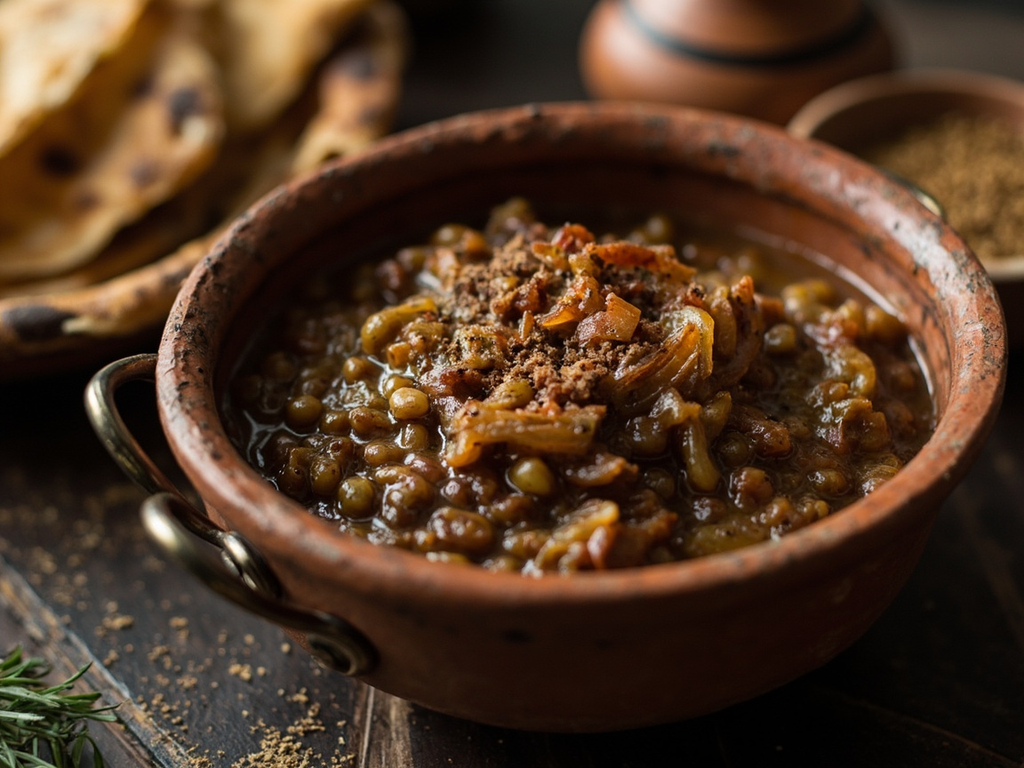 Everyday
ʿAdas — Lentils with Murrī and Cumin
Daily Ṭabīkh (everyday pot dish of commoners and scholars)
🧂 🍄· 50 min
View the recipe
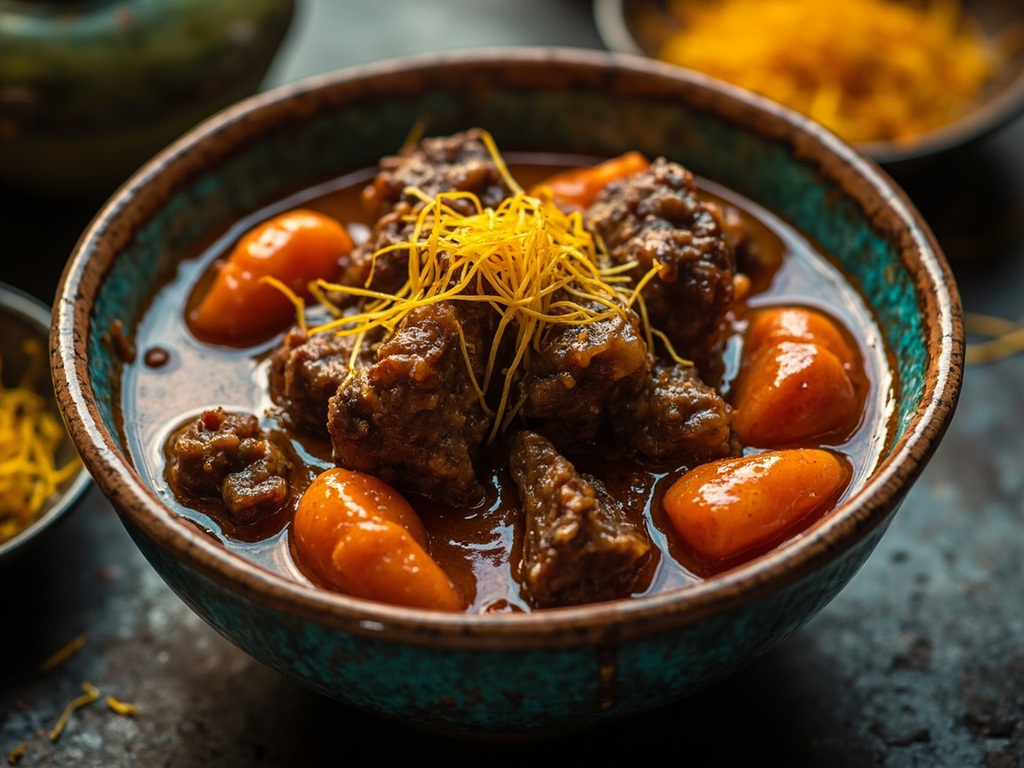 Festive
Sikbāj — Sweet-and-Sour Stew with Vinegar and Dibs
Ceremonial Ṭabīkh (noble dish of grand gatherings)
🍋 🍯· 2 h 30
View the recipe
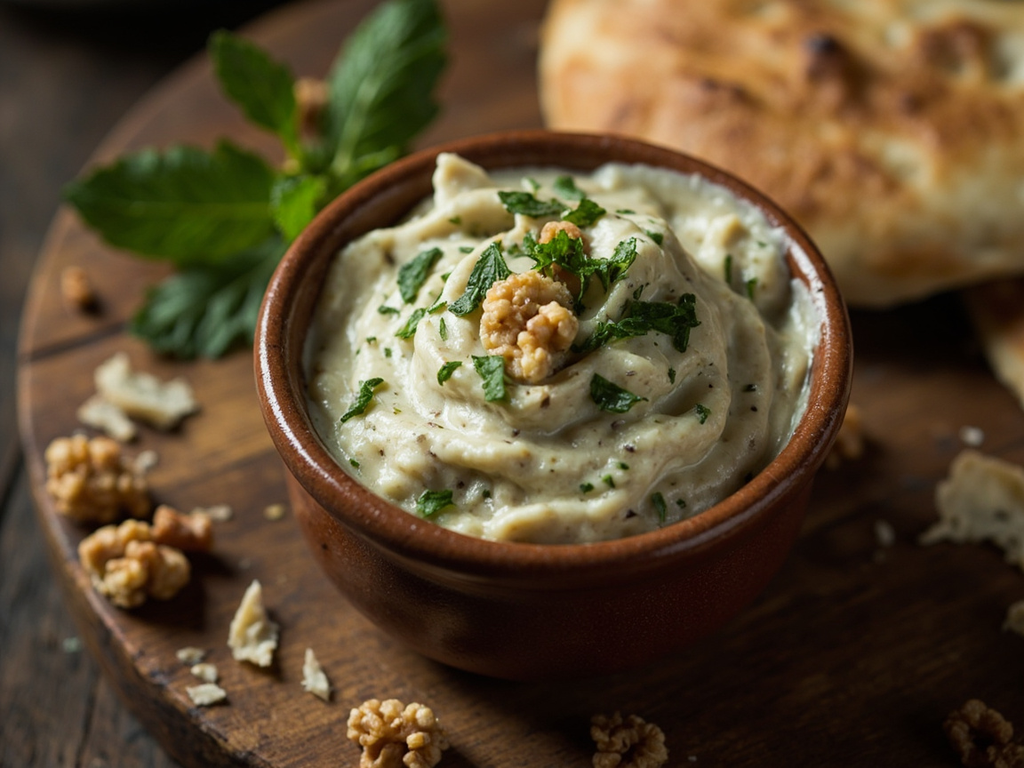 Preserving
Kāmakh Aḥmar — Fermented Condiment with Murrī
Kāmakh (keeping condiment, permanently placed on the sufra)
🫙 🍄· 30 min (+ 2 to 3 days maturation)
View the recipe
 Drink
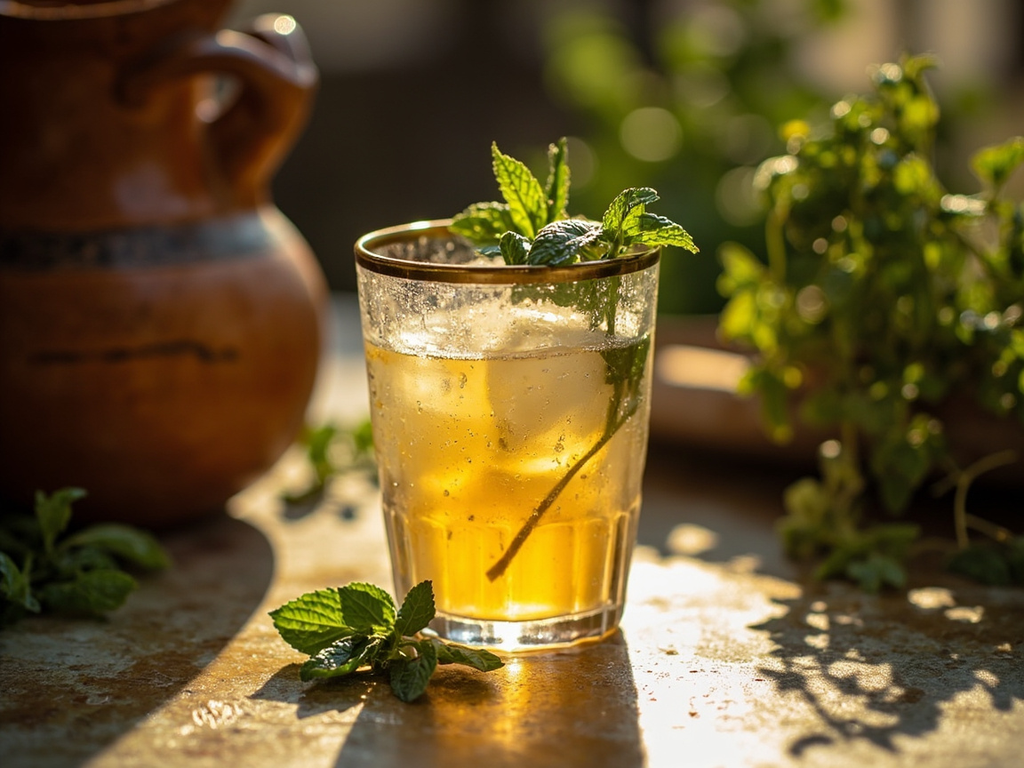
DrinkSakanjabīn — Vinegar and Honey Syrup
Sharāb (sweet-and-sour drink of the sufra, served diluted with water)
🍋 🍯· 25 min
View the recipe
 Travel
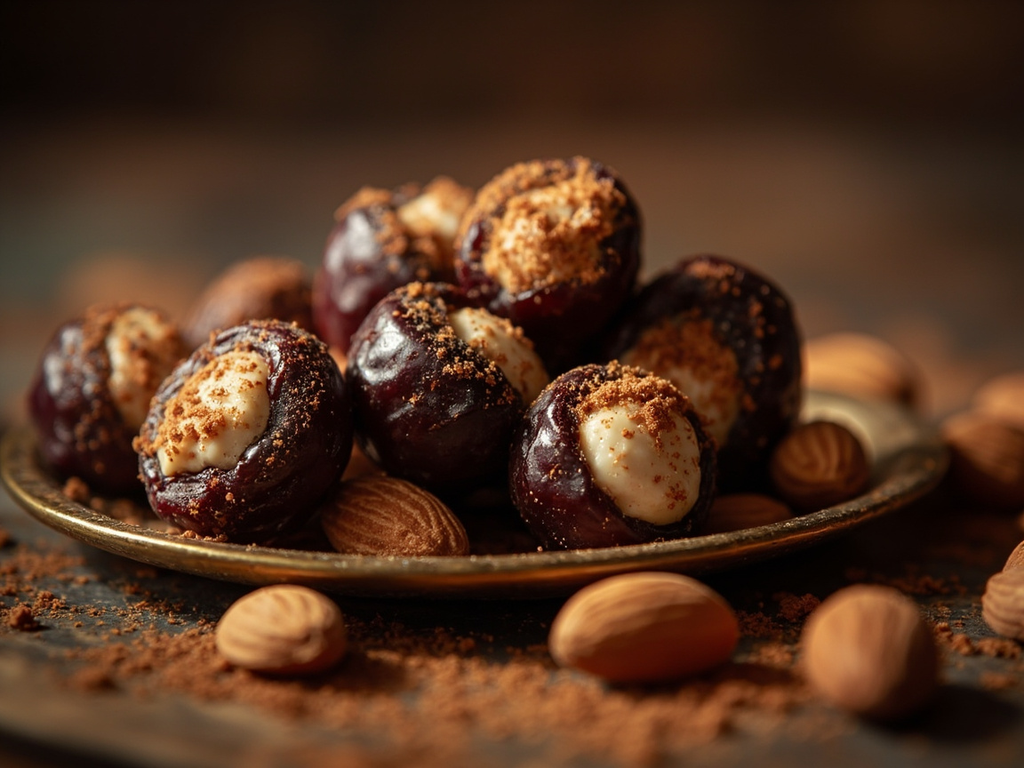
Tamr Maḥshī — Dates Stuffed with Almonds and Rose Water
Ḥalwā of Provision (travel and snack sweets, circulating on the sufra)
🍯· 30 min
View the recipe