 flip
flipSikbāj — Sweet-and-Sour Stew with Vinegar and Dibs
Sikbāj — Sweet-and-Sour Stew with Vinegar and Dibs
Why this dish? Sikbāj was the dish of nobles and caliphs — the one served to honored guests. Alhazen, a renowned scholar received in the learned circles of Baghdad and Fatimid Cairo, would have tasted it at tables where optics and astronomy were discussed over a dish of such prestige.
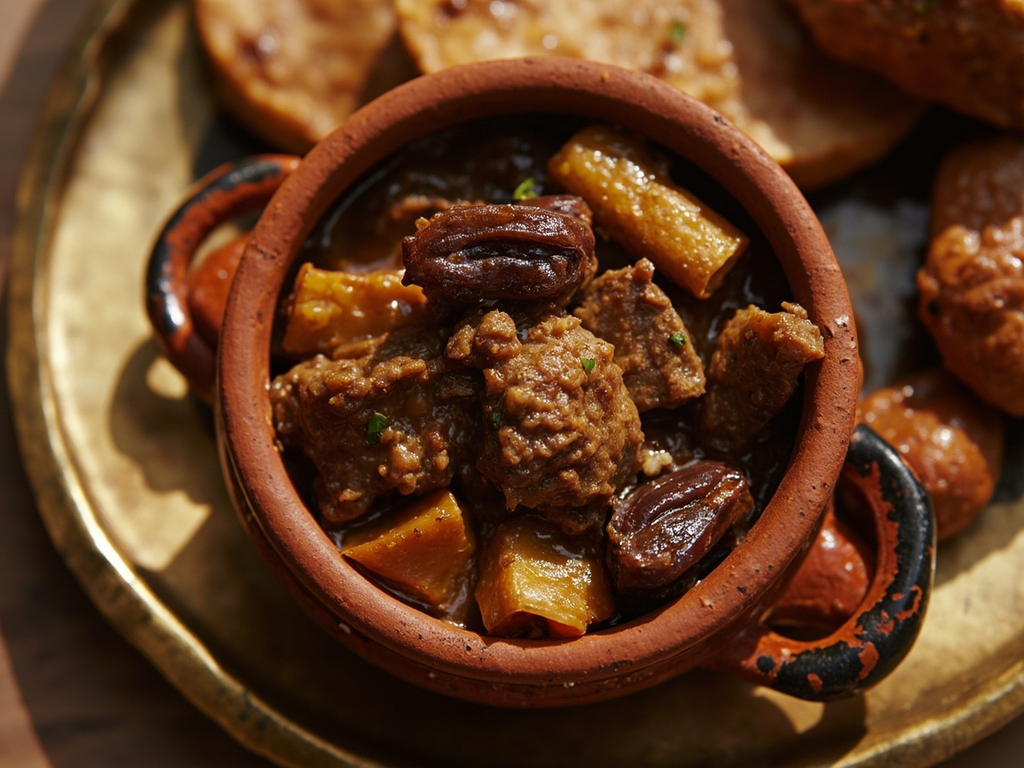
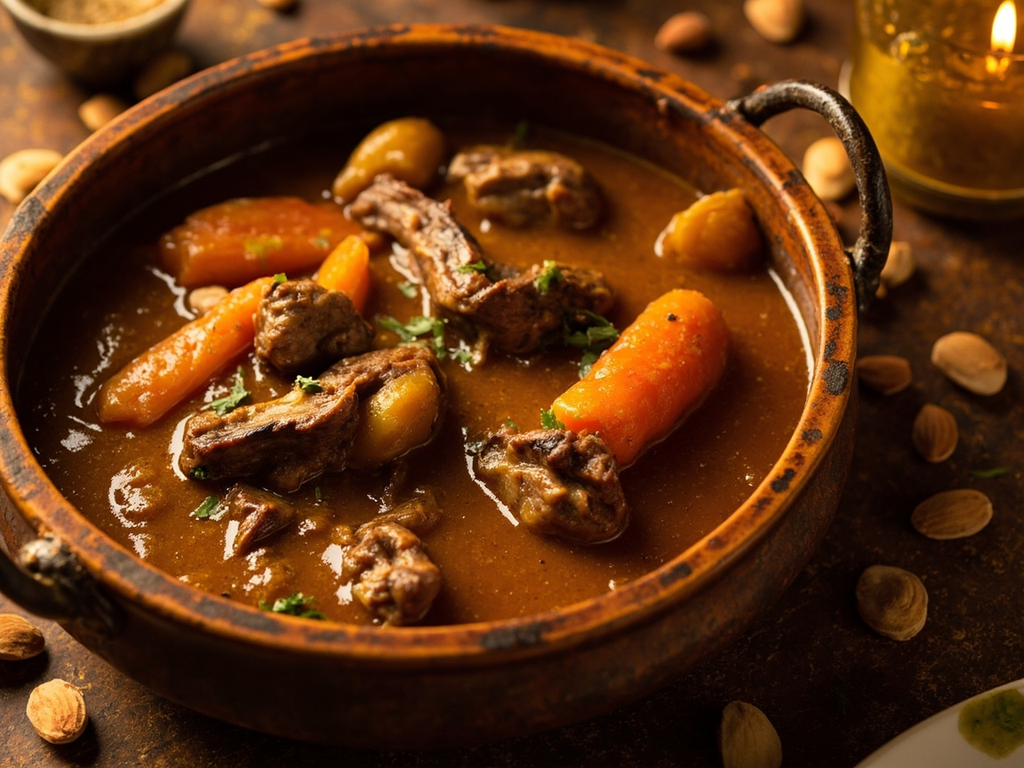
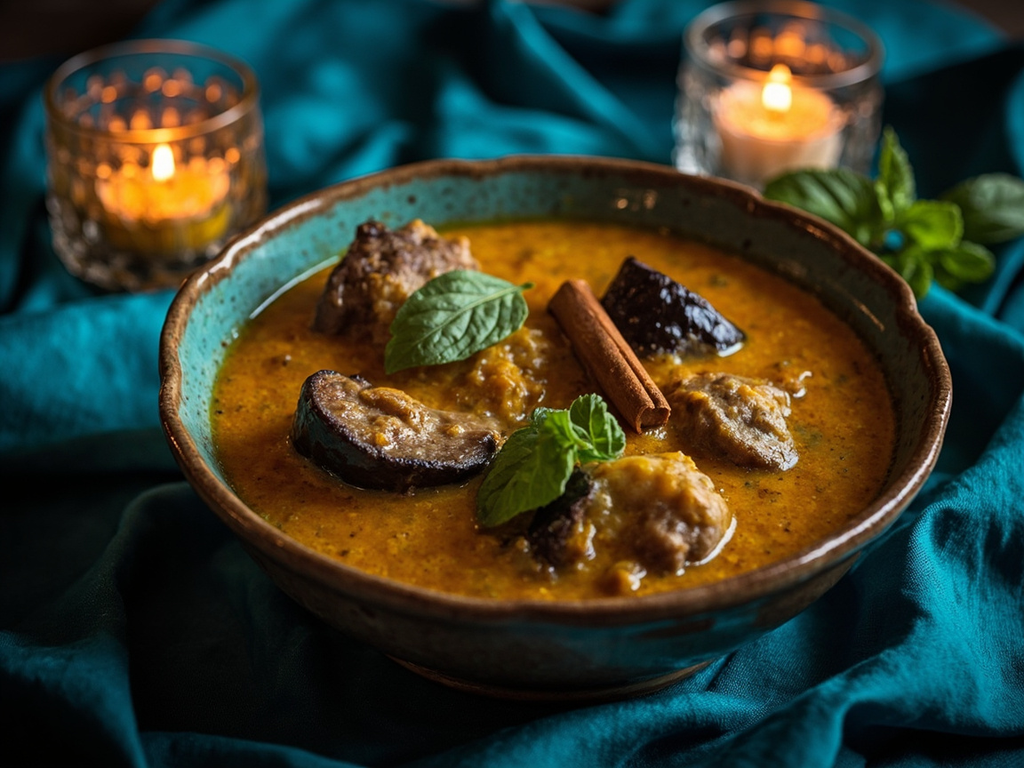
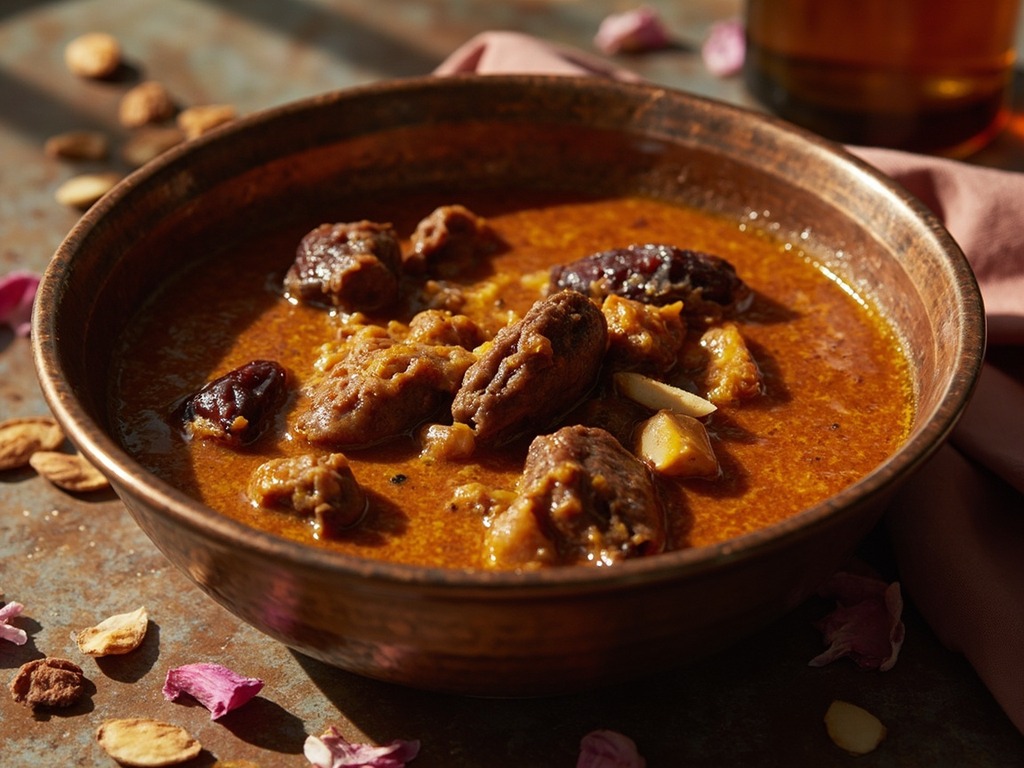
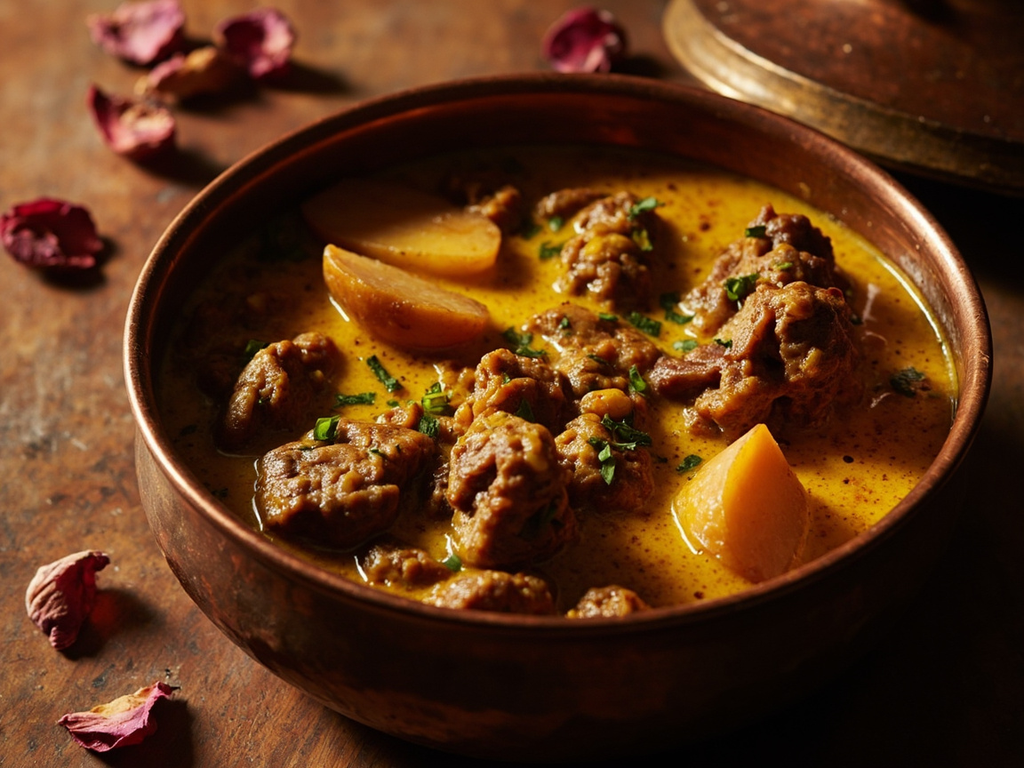
A long-simmered lamb or beef stew, balanced between the acidity of vinegar and the sweetness of grape syrup, perfumed with coriander, cinnamon, and saffron. In the medieval Arab world, it was the king of banquet dishes.
Here is a dish worthy of a cherished guest. Take good meat, cook it until it yields under the spoon, then marry two opposites in it: the sharpness of vinegar and the sweetness of grape syrup — for all beauty, know this, is born of a just balance, just as light is born of the right proportion of angles. A pinch of saffron for the color of gold, a stick of cinnamon, and let it rest: sikbāj does not like haste. They say it is even better cold the next day; I have verified it, and it is true.
- •Lamb or beef — a fine piece (heart of the dish)
- •Onions — several (base)
- •Wine or date vinegar — generous (acidity)
- •Dibs (grape syrup) or honey — in proportion to vinegar (balancing sweetness)
- •Carrots — a few (sweet vegetable)
- •Coriander, cinnamon, saffron — to taste (noble spices)
Sikbāj — Sweet-and-Sour Stew with Vinegar and Dibs
A long-simmered lamb or beef stew, balanced between the acidity of vinegar and the sweetness of grape syrup, perfumed with coriander, cinnamon, and saffron. In the medieval Arab world, it was the king of banquet dishes.
Why this dish? Sikbāj was the dish of nobles and caliphs — the one served to honored guests. Alhazen, a renowned scholar received in the learned circles of Baghdad and Fatimid Cairo, would have tasted it at tables where optics and astronomy were discussed over a dish of such prestige.
Here is a dish worthy of a cherished guest. Take good meat, cook it until it yields under the spoon, then marry two opposites in it: the sharpness of vinegar and the sweetness of grape syrup — for all beauty, know this, is born of a just balance, just as light is born of the right proportion of angles. A pinch of saffron for the color of gold, a stick of cinnamon, and let it rest: sikbāj does not like haste. They say it is even better cold the next day; I have verified it, and it is true.
Ingredients (period version)
- Lamb or beef — a fine piece (heart of the dish)
- Onions — several (base)
- Wine or date vinegar — generous (acidity)
- Dibs (grape syrup) or honey — in proportion to vinegar (balancing sweetness)
- Carrots — a few (sweet vegetable)
- Coriander, cinnamon, saffron — to taste (noble spices)
Ingredients
- Lamb shoulder or beef chuck — 800 g, cut into large cubes (heart of the dish)
- Onions — 2 large, sliced (base)
- Red wine vinegar — 100 ml (acidity)
- Dibs (grape syrup) or honey — 2 to 3 tbsp (balancing sweetness)
- Carrots — 3, cut into chunks (sweet vegetable)
- Ground coriander — 1 tsp (spice)
- Cinnamon stick — 1 (noble spice)
- Saffron — 1 pinch (color and aroma)
- Salt — to taste (seasoning)
Method
- Brown the meat in a little oil until colored, then set aside.
- Sweat the onions in the same pot, add coriander and cinnamon.
- Return the meat, cover with water, add saffron and a little salt. Simmer covered for 1 hour 30 minutes.
- Add the carrots, vinegar, and dibs (or honey). Continue for 30 to 45 minutes until the meat is tender and the sauce syrupy.
- Taste and adjust the sweet-sour balance. Serve hot — or cold the next day, medieval style.
How it was made : Sikbāj (from Persian "sik", vinegar) is one of the best-documented dishes of medieval Arab cuisine, appearing in all major collections from the 10th to the 13th century. Reputedly of Sassanid origin and adopted by Abbasid caliphs, it symbolized table refinement. It was prepared with melted sheep's tail and sometimes perfumed with rose water. Grape or date dibs replaced sugar, which was still rare and expensive.
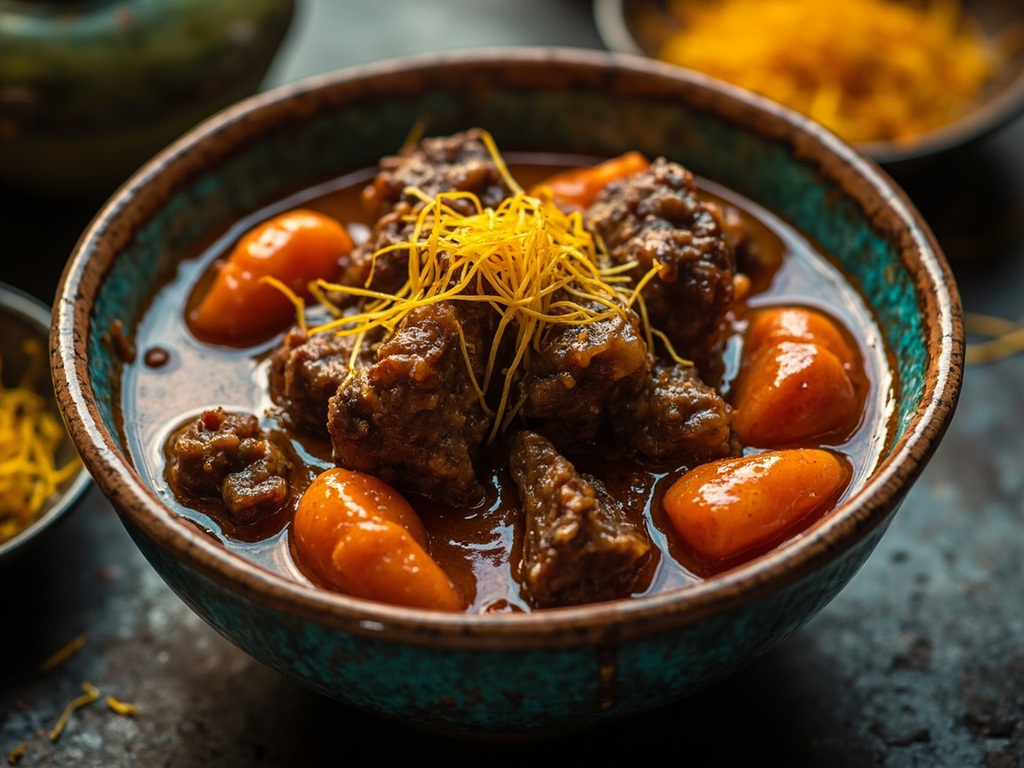
The contemporary twist : Plate the meat glazed with its mirror sauce, a few saffron threads on top and a glazed carrot standing upright — a "caliph's banquet" nod in a dark plate.
Sources : Nawal Nasrallah, Annals of the Caliphs' Kitchens (al-Warrāq's Kitāb al-Ṭabīkh) · Charles Perry (trans.), A Baghdad Cookery Book (al-Baghdādī's Kitāb al-Ṭabīkh, 13th c.)
Alhazen · Charactorium