 flip
flipSakanjabīn — Vinegar and Honey Syrup
Sakanjabīn — Vinegar and Honey Syrup
Why this dish? Under the heat of Fatimid Cairo, where Alhazen lived his last decades by the Nile, sakanjabīn was the quintessential refreshing drink, prized by physicians for quenching thirst and soothing. A scholar who scrutinized the sun and the refraction of its light surely needed to slake his thirst.
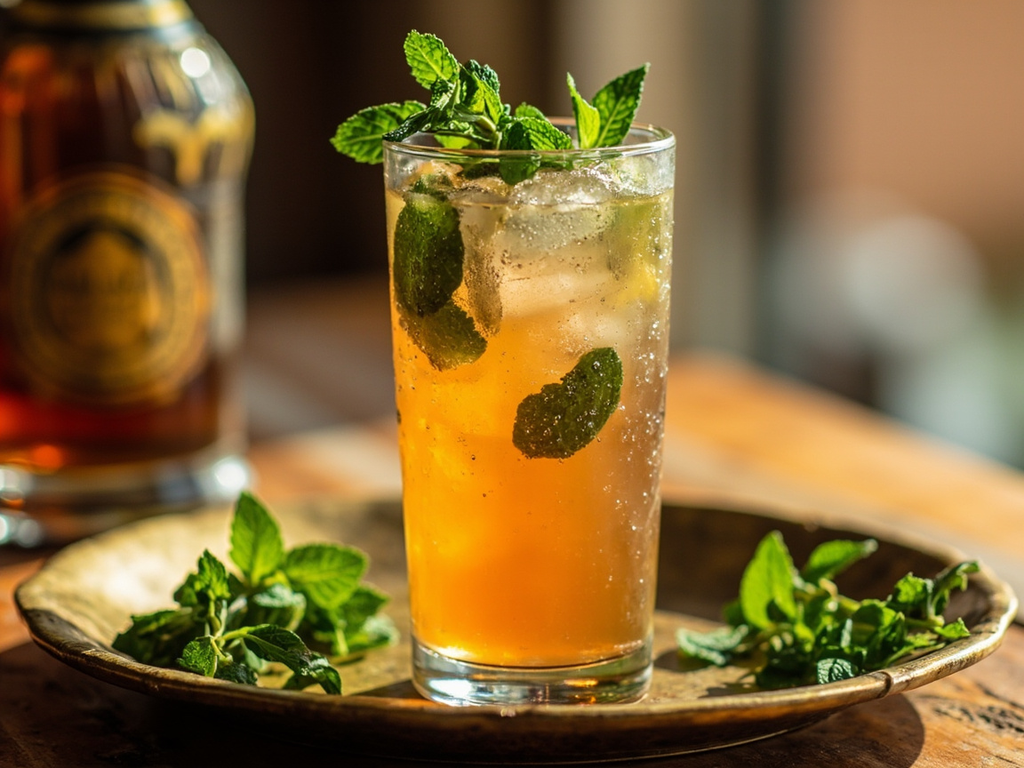
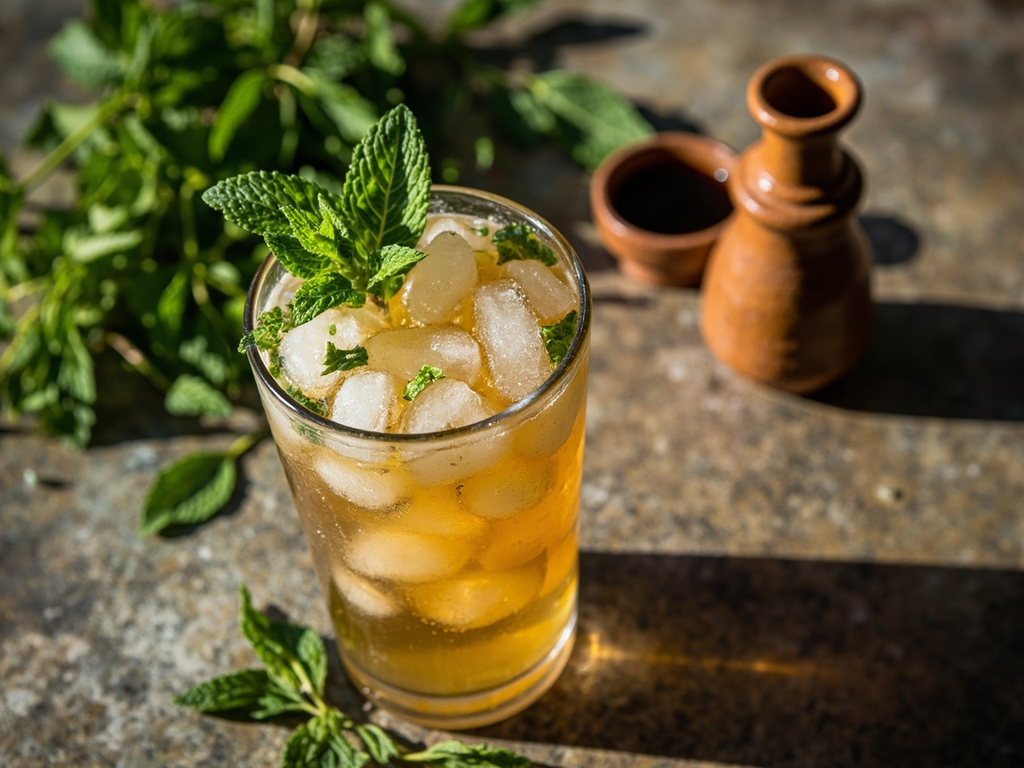
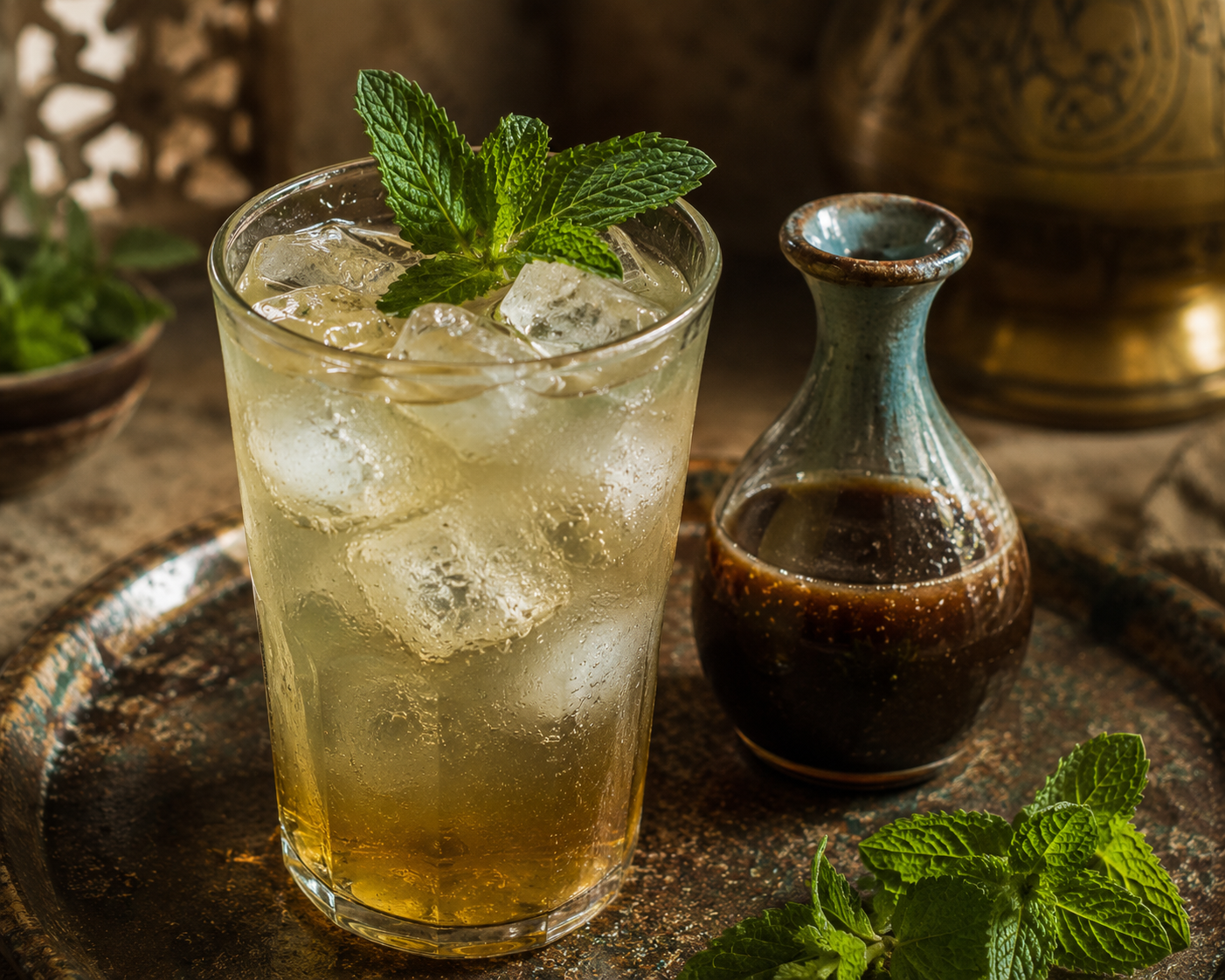
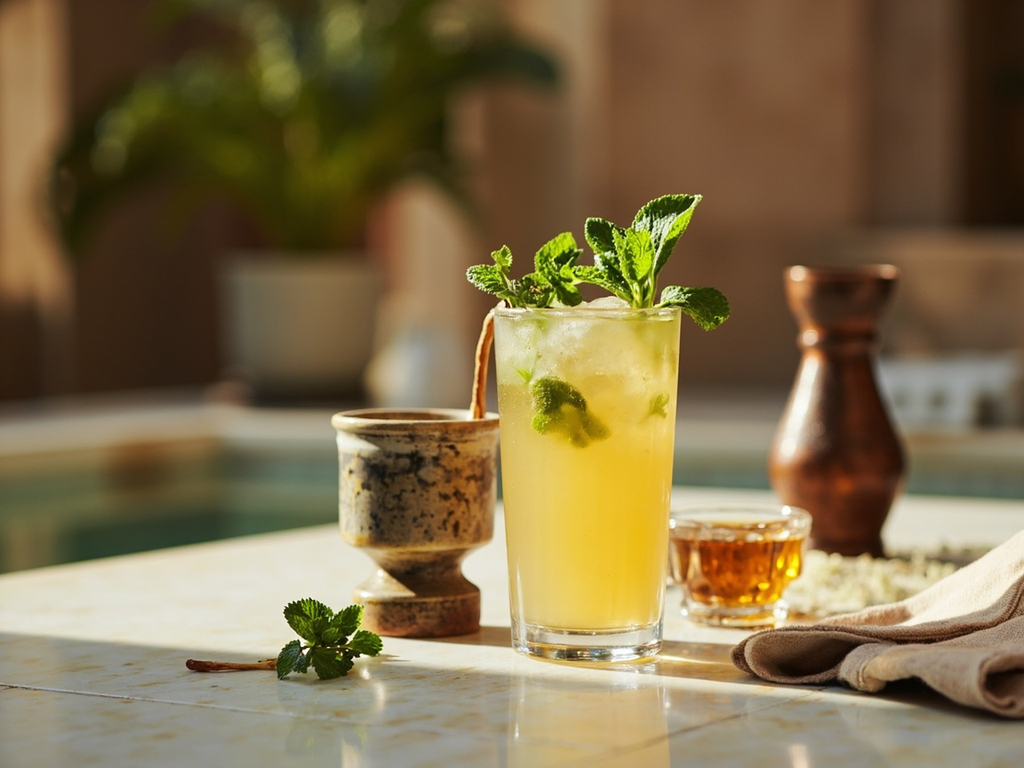
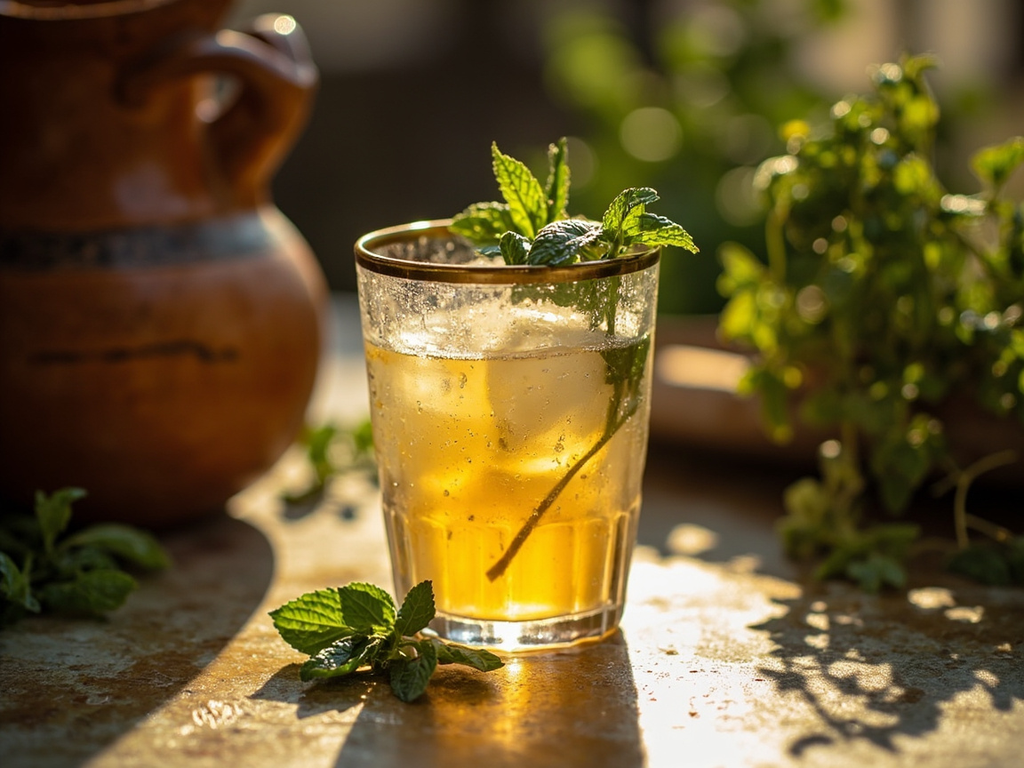
A syrup of perfect balance between honey and vinegar, sometimes minted, diluted in cold water for a lively, thirst-quenching drink. The Arab-Persian ancestor of lemonade.
When the Egyptian sun crushes the city and the throat burns, here is my remedy of choice. Dissolve the honey in water, add the vinegar drop by drop until the sharp and the sweet hold in just balance — neither should prevail — then reduce over low heat. A mint leaf, some fresh water from the well, and you drink measure itself. Physicians prescribe it against bile; I drink it because it is good and clears the mind for study.
- •Honey — two parts (sweetness)
- •Wine vinegar — one part (lively acidity)
- •Water — for dilution (base)
- •Fresh mint — a few leaves (fragrance (optional))
Sakanjabīn — Vinegar and Honey Syrup
A syrup of perfect balance between honey and vinegar, sometimes minted, diluted in cold water for a lively, thirst-quenching drink. The Arab-Persian ancestor of lemonade.
Why this dish? Under the heat of Fatimid Cairo, where Alhazen lived his last decades by the Nile, sakanjabīn was the quintessential refreshing drink, prized by physicians for quenching thirst and soothing. A scholar who scrutinized the sun and the refraction of its light surely needed to slake his thirst.
When the Egyptian sun crushes the city and the throat burns, here is my remedy of choice. Dissolve the honey in water, add the vinegar drop by drop until the sharp and the sweet hold in just balance — neither should prevail — then reduce over low heat. A mint leaf, some fresh water from the well, and you drink measure itself. Physicians prescribe it against bile; I drink it because it is good and clears the mind for study.
Ingredients (period version)
- Honey — two parts (sweetness)
- Wine vinegar — one part (lively acidity)
- Water — for dilution (base)
- Fresh mint — a few leaves (fragrance (optional))
Ingredients
- Honey — 250 g (sweetness)
- White wine vinegar — 125 ml (lively acidity)
- Water — 250 ml (for syrup) + cold water for serving (base)
- Fresh mint — 1 small bunch (fragrance (optional))
Method
- In a saucepan, dissolve honey in 250 ml water, bring to a simmer.
- Add vinegar, lower heat and let reduce 15 to 20 minutes until a light syrup consistency.
- At the end, steep a few mint leaves, infuse off heat then remove.
- Let cool and store syrup in the fridge in a bottle.
- To serve, pour a little syrup into a glass and top with cold water (about 1 part syrup to 4 parts water).
How it was made : Sakanjabīn (from Arabic-Persian, literally "vinegar-honey") is an oxymel attested since Greek antiquity and widely spread in the medieval Islamic world, both as a pleasure drink and as a remedy in the Galenic medicine practiced by Avicenna and his contemporaries. Sugar, when available, could replace part of the honey. It was made with fruits, mint, or seeds.
The contemporary twist : Serve over crushed ice with a mint sprig and a thin cucumber slice — a "scholar's mocktail" perfect for summer.
Sources : Charles Perry (trans.), A Baghdad Cookery Book (Kitāb al-Ṭabīkh, 13th c.) · Arab medical tradition (oxymel / sakanjabīn) — Avicenna, Canon of Medicine
Alhazen · Charactorium