 flip
flipʿAdas — Lentils with Murrī and Cumin
ʿAdas — Lentils with Murrī and Cumin
Why this dish? Born in Basra, city of merchants and canals, then a frugal scholar in Cairo living partly by copying manuscripts under al-Ḥākim's reign, Alhazen ate the everyday dish: legumes, bread, and a drizzle of murrī. The lentil, cheap and nourishing, sustained the long nights spent observing light and measuring angles.
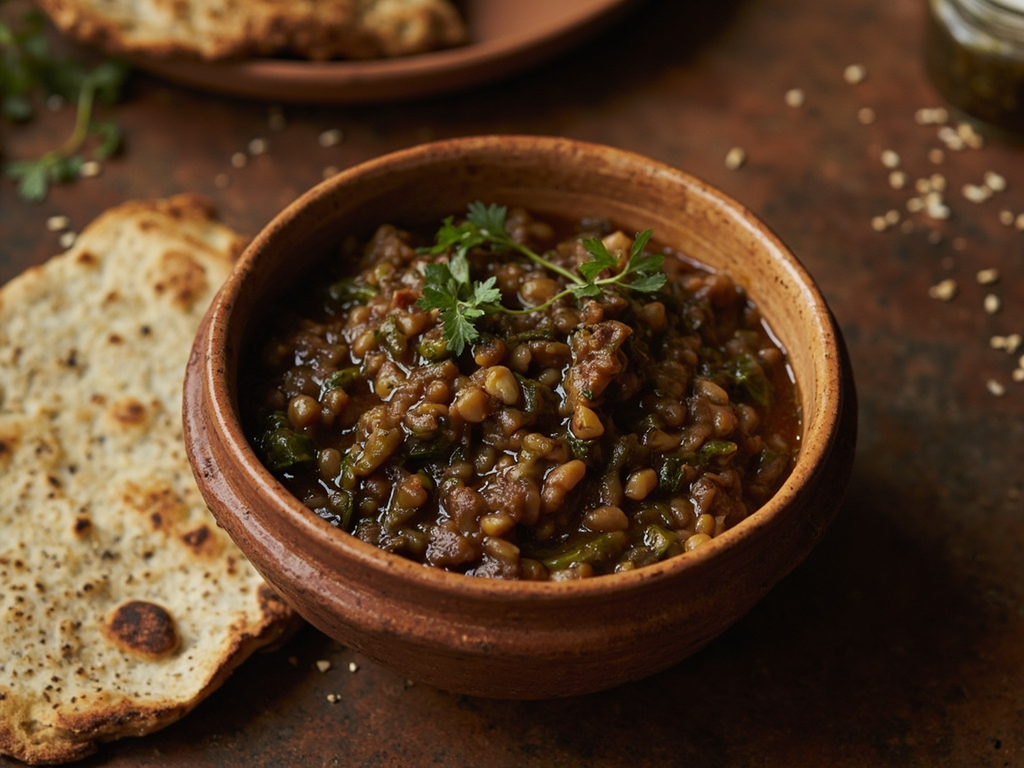
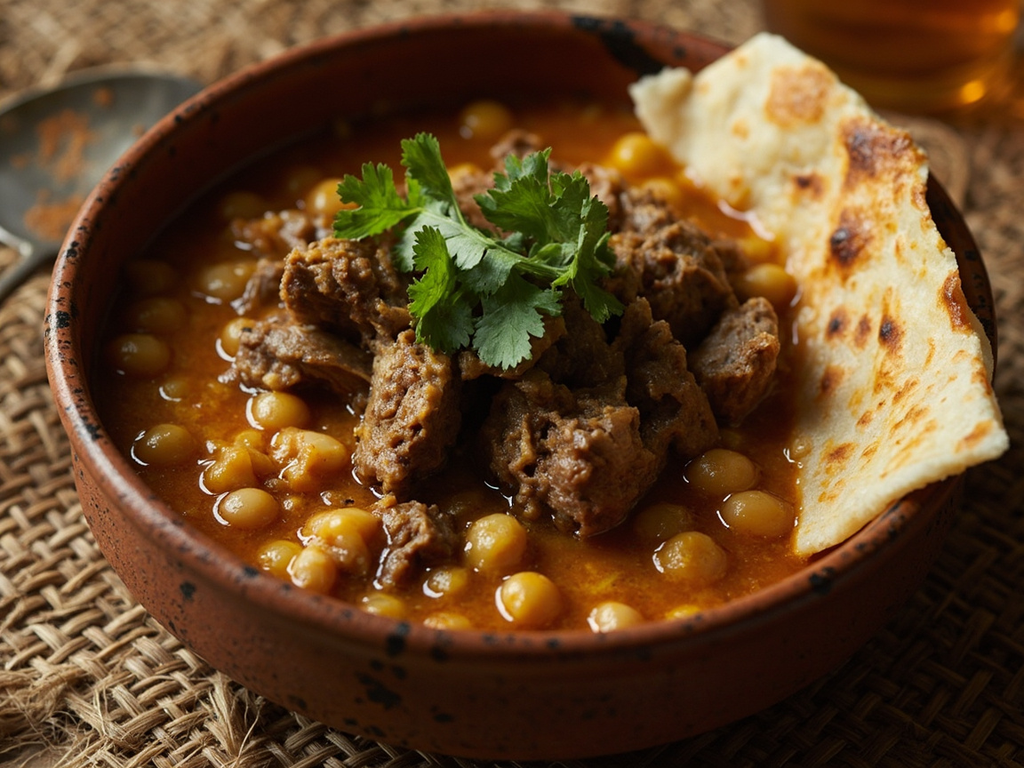
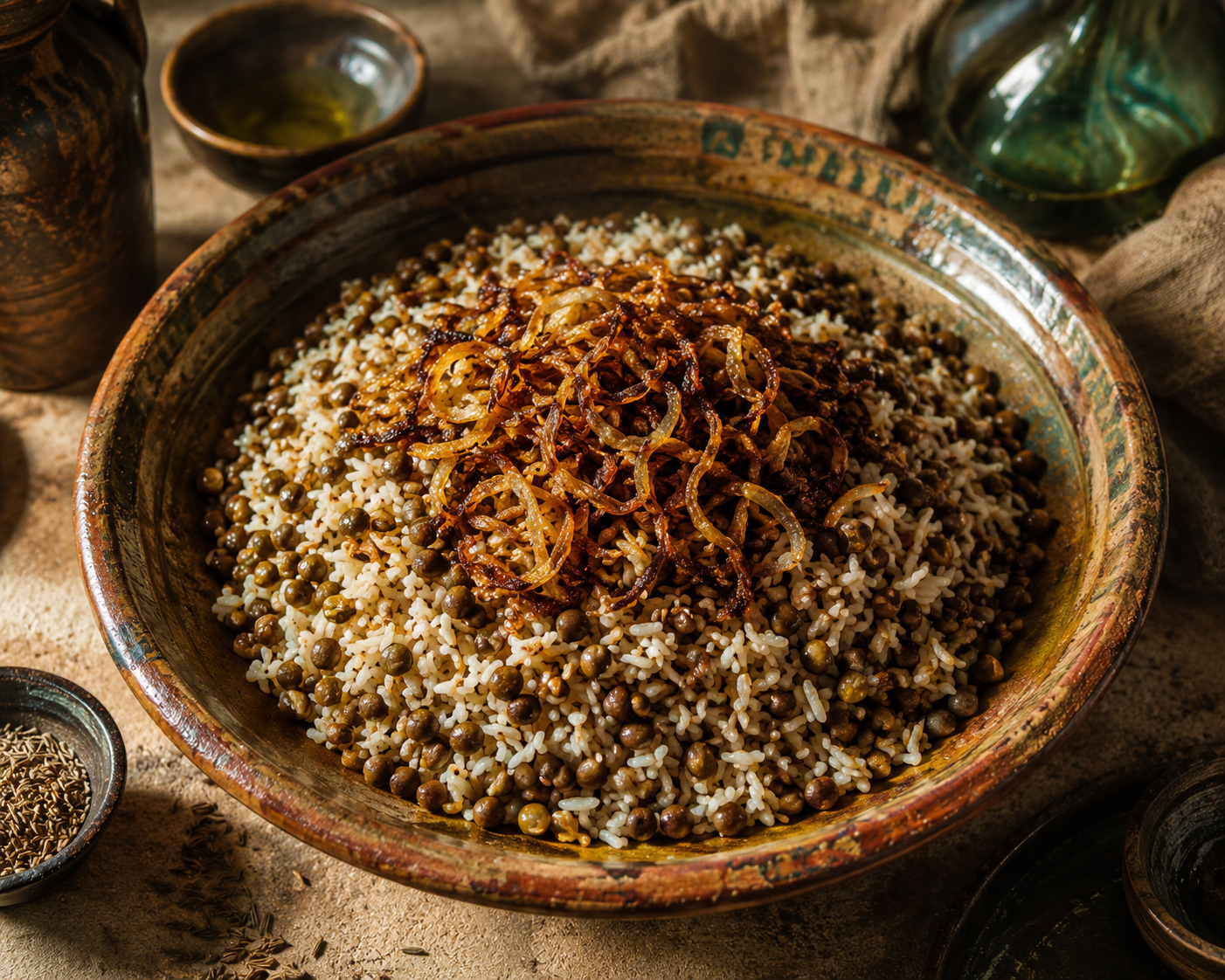
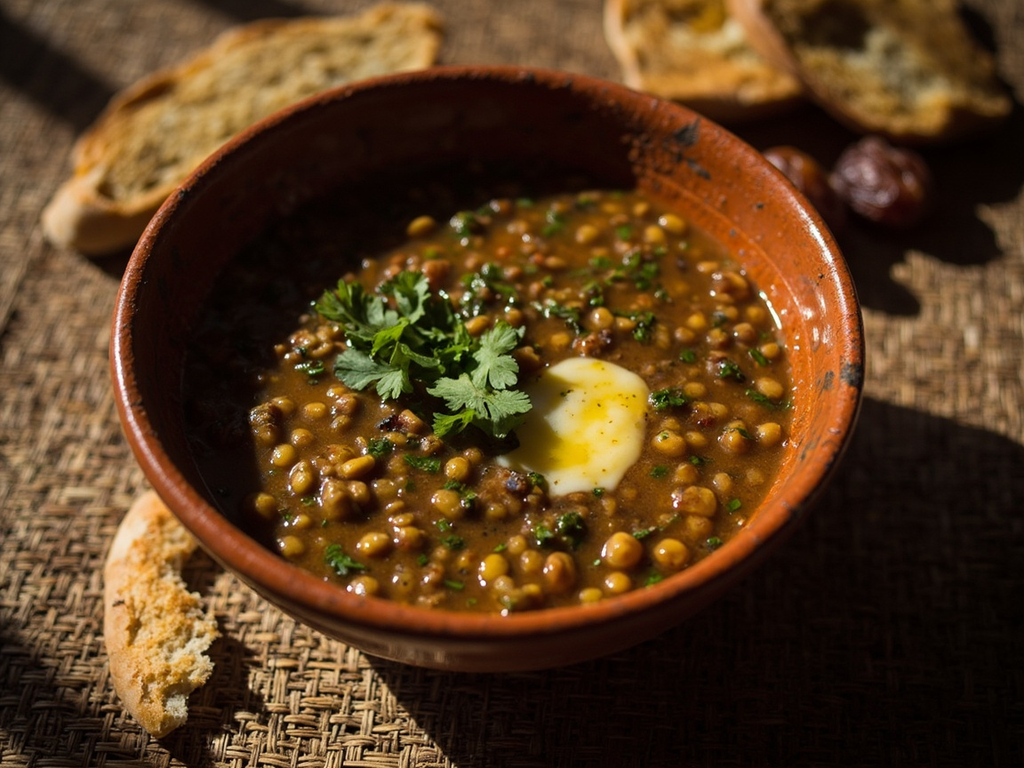
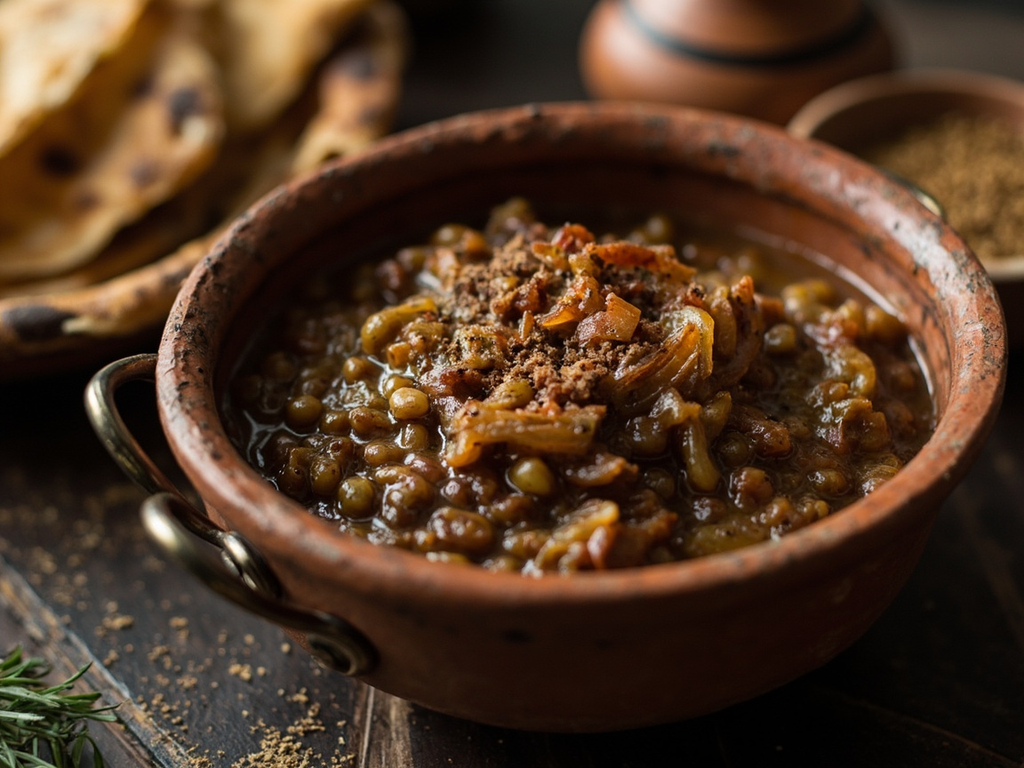
A pot of soft brown lentils, perfumed with golden onion, cumin, and coriander, lifted by a spoonful of murrī that gives it depth. Eaten warm, scooped up with flatbread, simple and filling.
Listen, friend: God did not make wisdom dependent on fatty meats. At my table in Cairo, when the night was for observing rays and not for feasting, a bowl of lentils sufficed me. I would brown the onion in olive oil until its scent filled the room, then drown the lentils with water, pounded cumin, and at the last moment a few drops of murrī — for it is this that awakens taste as measure reveals truth. Dip your bread, and give thanks: here is what nourishes a man who keeps vigil.
- •Brown lentils — two handfuls per person (nourishing base)
- •Onion — one large (aromatic base)
- •Olive oil — a drizzle (fat)
- •Cumin and coriander seeds — to taste (warm spices)
- •Murrī (fermented barley sauce) — a spoonful (salty umami, signature)
- •Flatbread — as needed (utensil and accompaniment)
ʿAdas — Lentils with Murrī and Cumin
A pot of soft brown lentils, perfumed with golden onion, cumin, and coriander, lifted by a spoonful of murrī that gives it depth. Eaten warm, scooped up with flatbread, simple and filling.
Why this dish? Born in Basra, city of merchants and canals, then a frugal scholar in Cairo living partly by copying manuscripts under al-Ḥākim's reign, Alhazen ate the everyday dish: legumes, bread, and a drizzle of murrī. The lentil, cheap and nourishing, sustained the long nights spent observing light and measuring angles.
Listen, friend: God did not make wisdom dependent on fatty meats. At my table in Cairo, when the night was for observing rays and not for feasting, a bowl of lentils sufficed me. I would brown the onion in olive oil until its scent filled the room, then drown the lentils with water, pounded cumin, and at the last moment a few drops of murrī — for it is this that awakens taste as measure reveals truth. Dip your bread, and give thanks: here is what nourishes a man who keeps vigil.
Ingredients (period version)
- Brown lentils — two handfuls per person (nourishing base)
- Onion — one large (aromatic base)
- Olive oil — a drizzle (fat)
- Cumin and coriander seeds — to taste (warm spices)
- Murrī (fermented barley sauce) — a spoonful (salty umami, signature)
- Flatbread — as needed (utensil and accompaniment)
Ingredients
- Brown or green lentils — 250 g (nourishing base)
- Onion — 1 large, sliced (aromatic base)
- Olive oil — 3 tbsp (fat)
- Ground cumin — 1 tsp (warm spice)
- Ground coriander — 1 tsp (warm spice)
- Light soy sauce (in lieu of murrī) — 1 tbsp (umami substitute for murrī)
- Salt — to taste (seasoning)
- Pita or khobz bread — as needed (accompaniment)
Method
- Rinse the lentils. Brown the sliced onion in olive oil over medium heat, 8 to 10 minutes, until nicely amber.
- Add cumin and coriander, let bloom 30 seconds.
- Pour in the lentils and cover with water by three fingers. Simmer covered 30 to 40 minutes, until tender.
- Off the heat, stir in the spoonful of murrī (or soy sauce) and adjust salt.
- Serve warm, to be scooped with bread.
How it was made : Lentils (ʿadas) are among the oldest cooked foods of the Fertile Crescent. In Abbasid cookbooks, they are enriched according to one's purse: with murrī and spices for the poor or the scholar, with meat and melted sheep's tail for the rich. Murrī, made by controlled fermentation of salted barley paste dried in the sun for weeks, played the role that bouillon cubes or soy sauce have today.
The contemporary twist : Serve in a matte black bowl, a veil of olive oil and a pinch of grilled cumin on top — and call it "the scholar's vigil."
Sources : Nawal Nasrallah, Annals of the Caliphs' Kitchens (translation of al-Warrāq's Kitāb al-Ṭabīkh, 10th c.)
Alhazen · Charactorium