 Flip the card
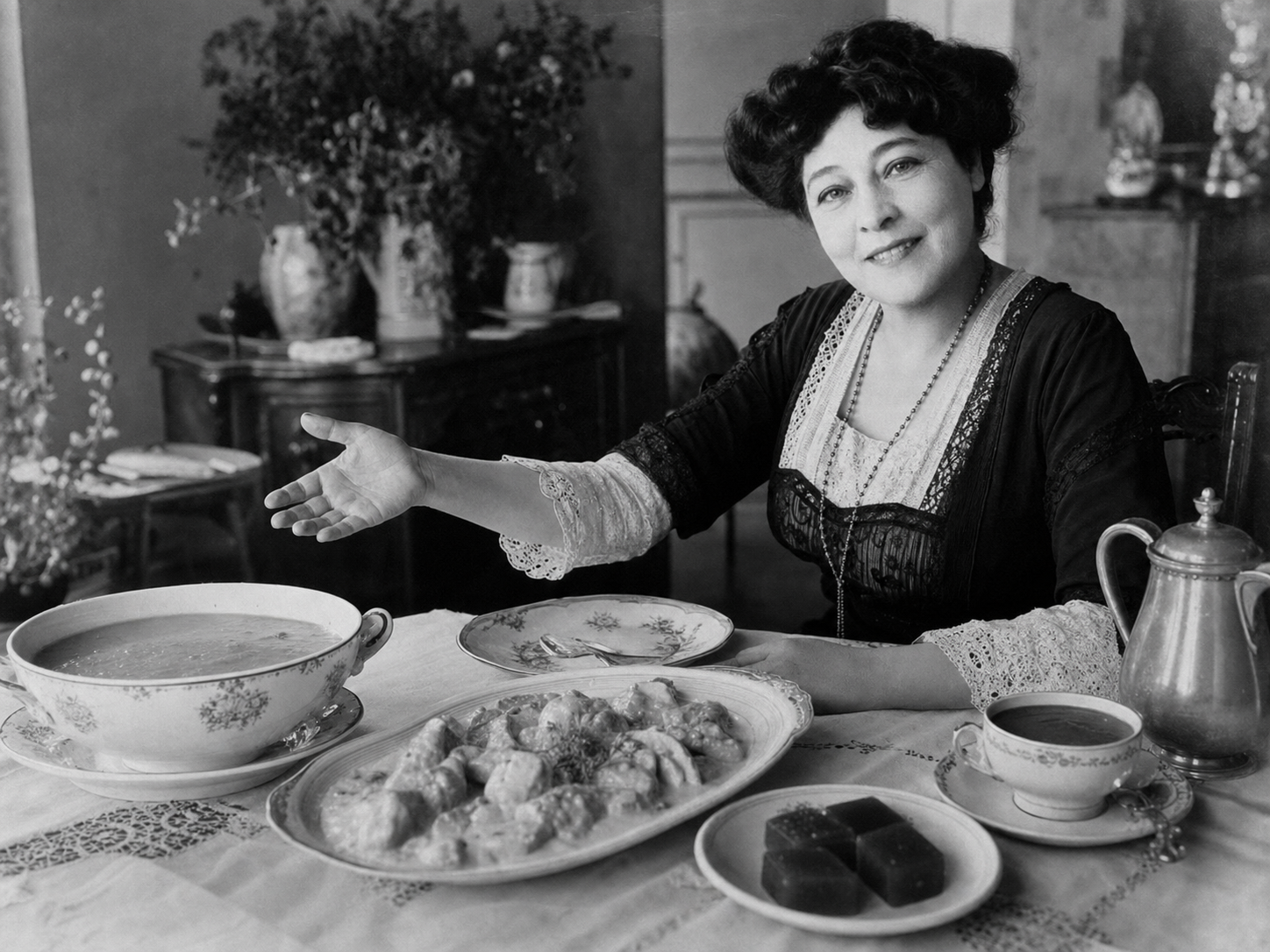
Alice Guy at the table
1873 — 1968
On the menu
The Bourgeois Meal with Successive Courses
At the table of a French bourgeois family during the Belle Époque, one did not serve "starter-main course-dessert" but a succession of courses: soup opened the meal, followed by an entrée or hors d'œuvre, then the relevé or roast (the centerpiece), an entremet (sweet or savory), and finally dessert and fruit. At that time, service "à la française" (everything on the table) gradually gave way to service "à la russe" (course by course), and cooking was organized around stocks, liaisons, and butter. It is within this framework that Alice Guy transposed her household in New Jersey.
Signature : Liaison with White Roux and Fresh Butter
The emblematic gesture of French bourgeois cooking: a white roux (butter + flour cooked without browning), moistened with a good broth to obtain creamy veloutés and white sauces, often finished with an egg yolk and a squeeze of lemon. This was the French touch that Alice Guy maintained even in her American kitchen.
click to flip back
Alice Guy at the table
1873 — 1968
4 period recipes
 Everyday
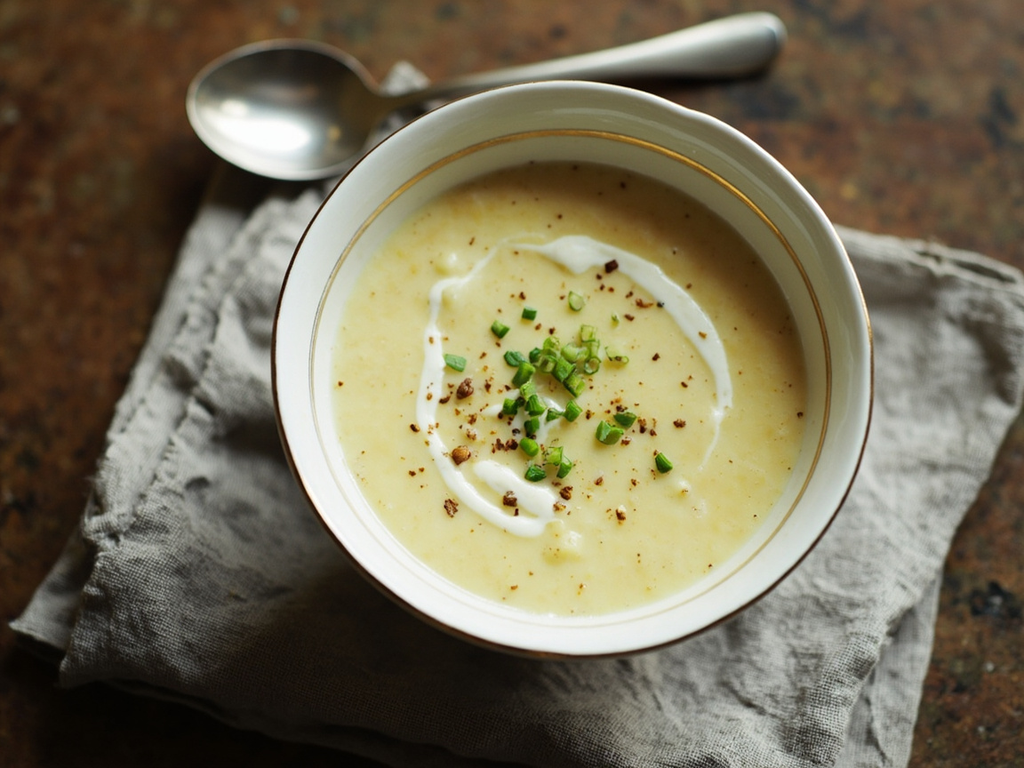
Potage Parmentier
Soup (first course, meal opening)
🧂 🍄· 45 min
View the recipe
 Festive
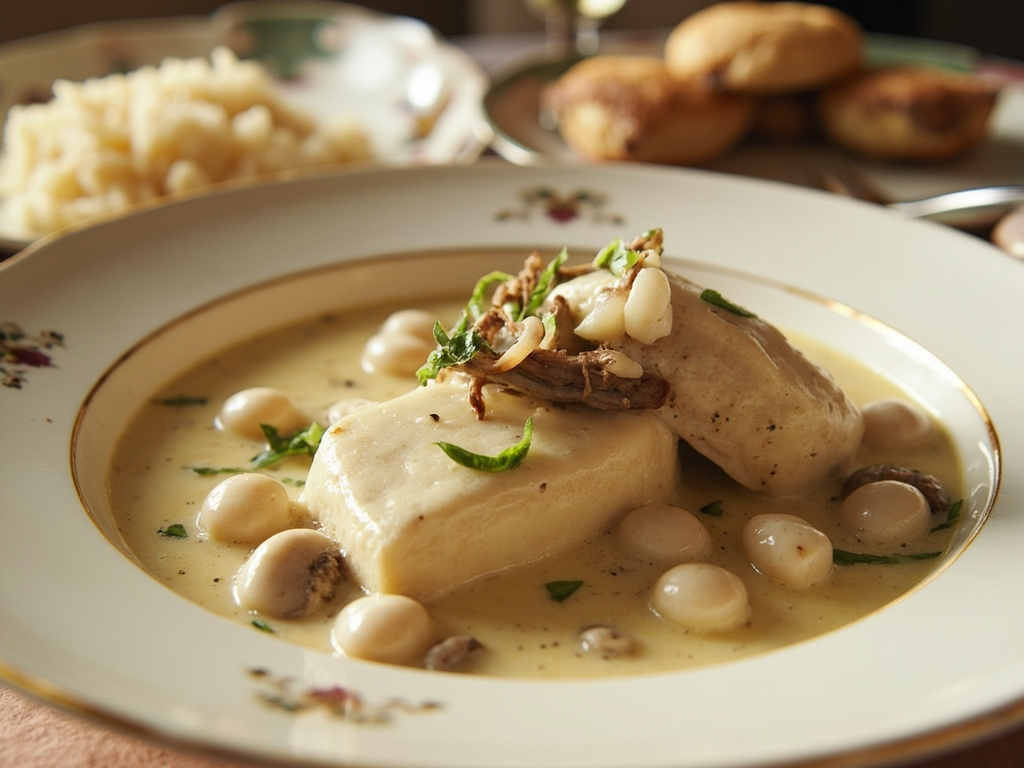
Blanquette de veau à l'ancienne
The relevé / centerpiece (heart of the meal)
🧂 🍄 🍋· 2 h
View the recipe
 Preserving
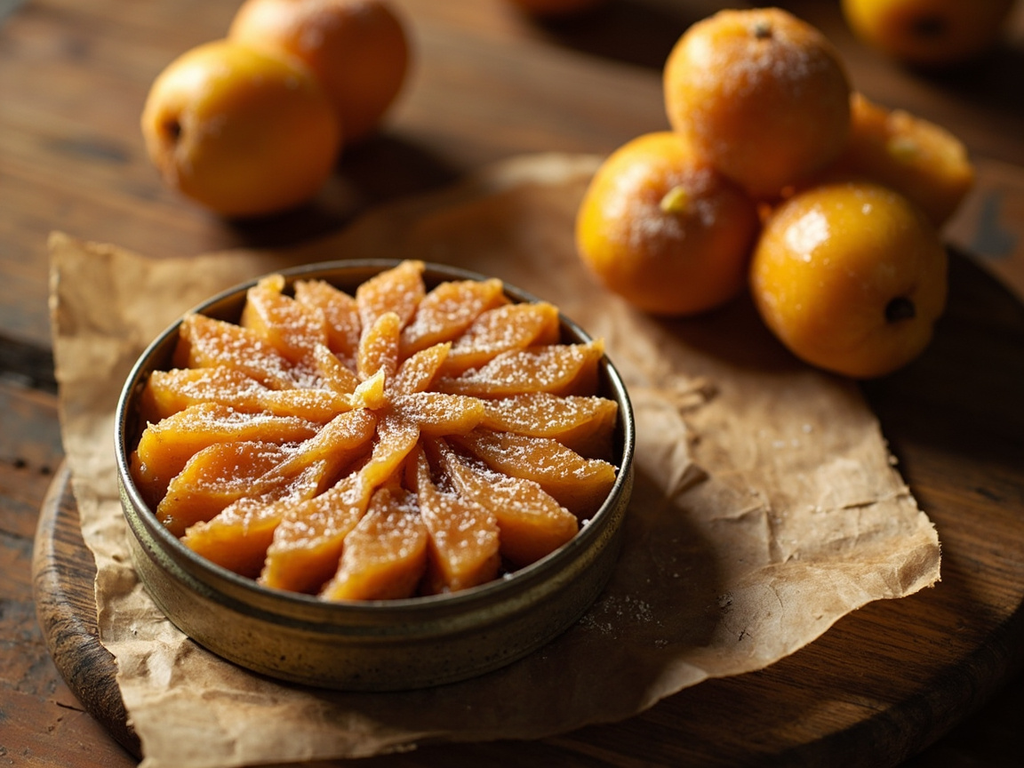
Cotignac (Quince Paste)
Preserved Sweets (sweet pantry reserve)
🍯 🍋· 1 h 30 (+ drying 24-48 h)
View the recipe
 Drink
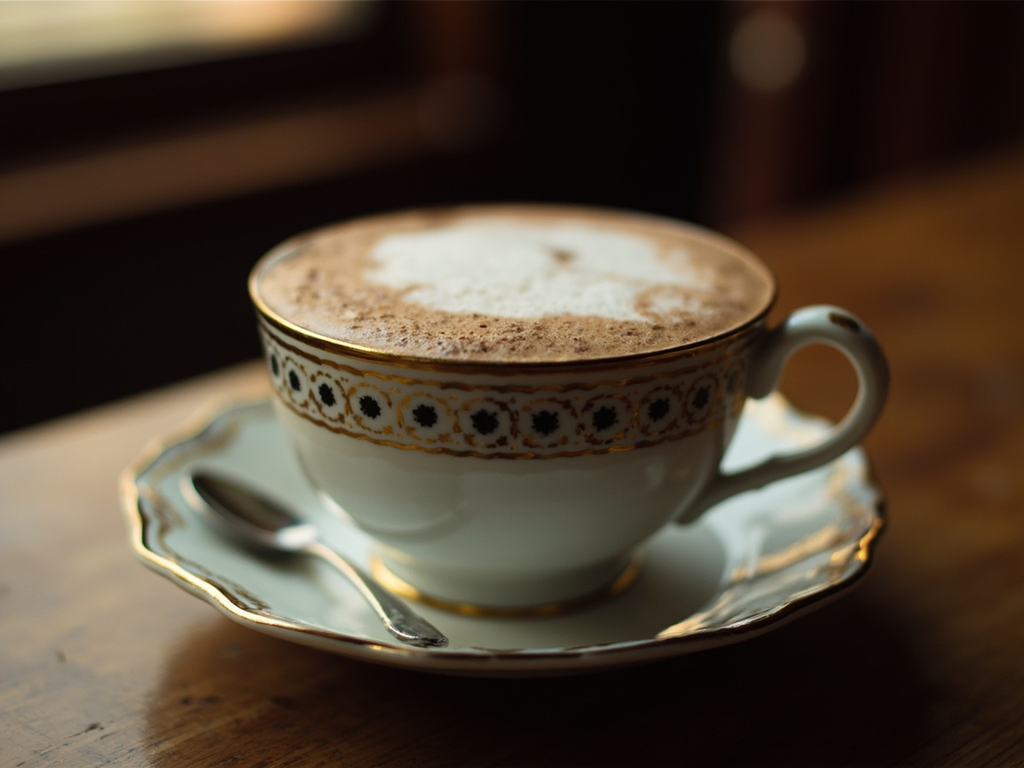
DrinkChocolat chaud à la française
The drink of lunch / late evenings
🍯 ☕· 15 min
View the recipe