 flip
flipCotignac (Quince Paste)
Cotignac (Quince Paste)
Why this dish? The Atlantic crossing and long journeys punctuate Alice Guy's life. Fruit pastes, which keep for months and transport without damage, were the ideal confectionery for travelers and the sweet reserve of the bourgeois pantry — an autumn treat cut into diamonds for the end of the meal or to slip into a cabin trunk.
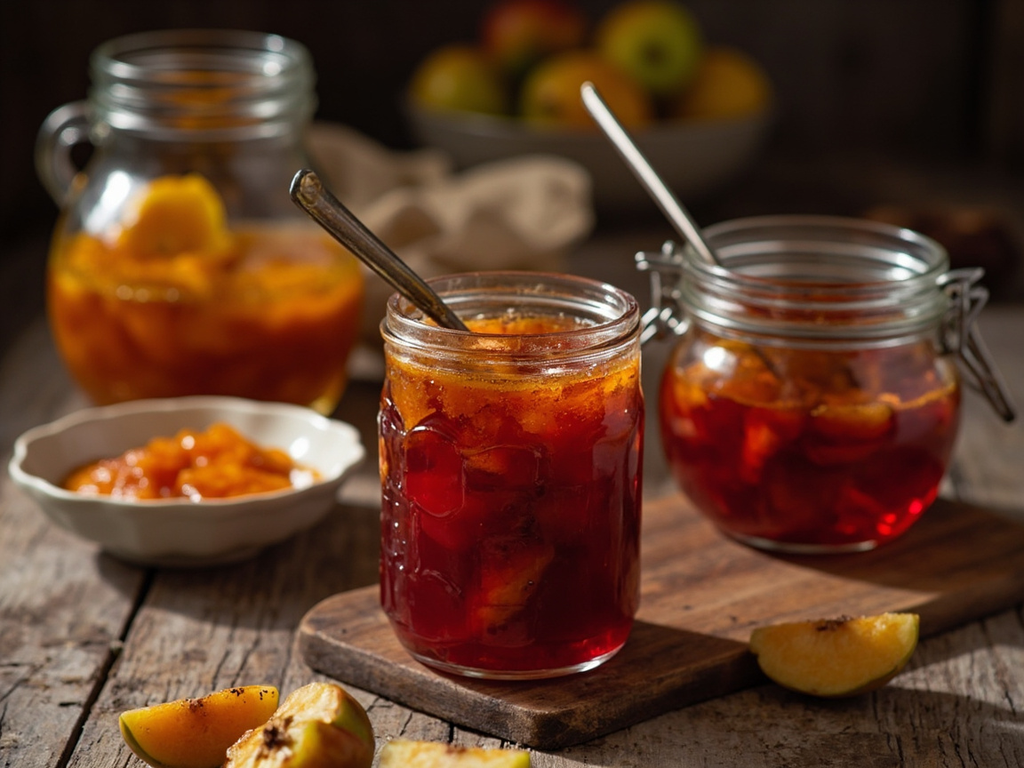
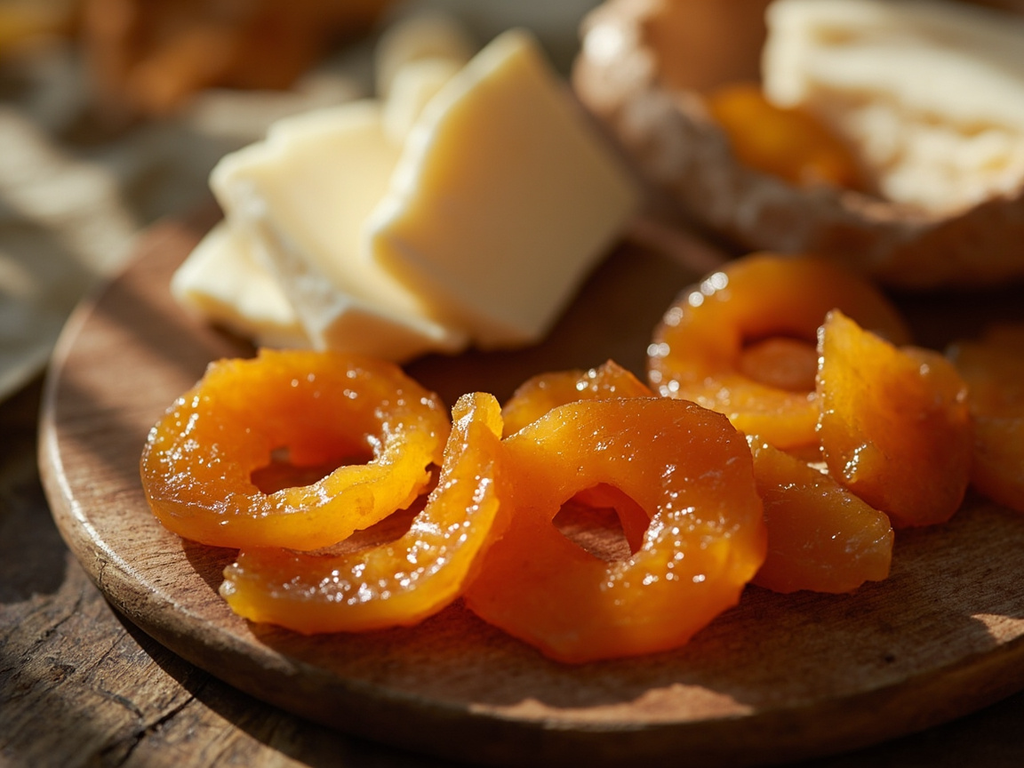
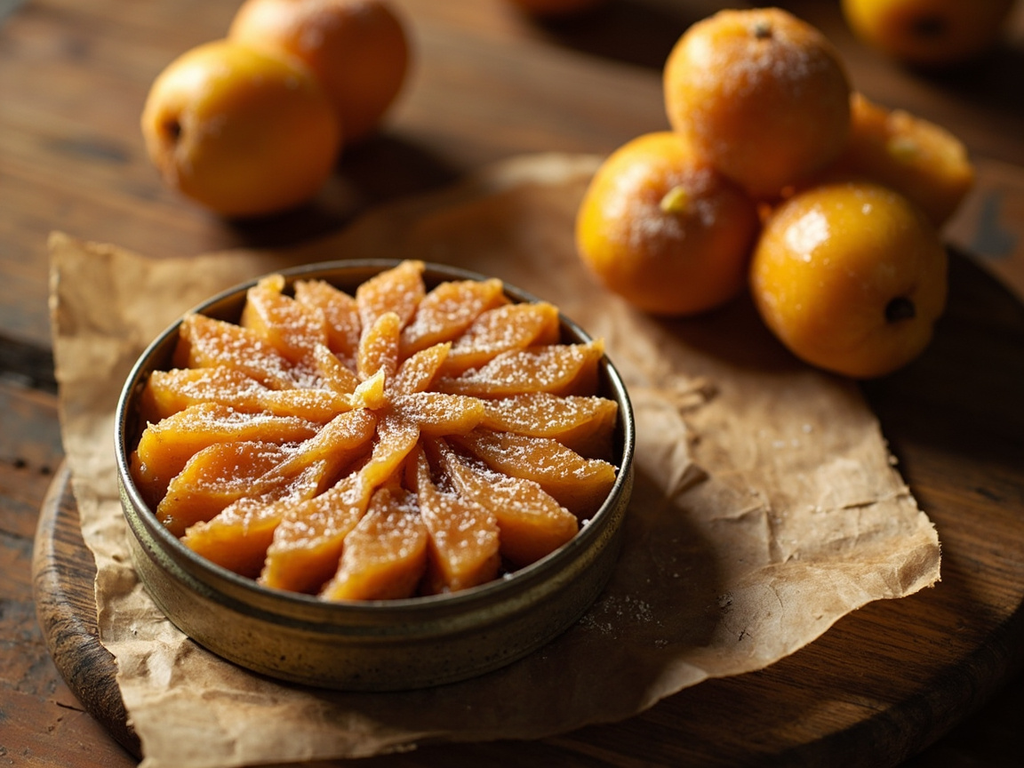
A firm, translucent fruit paste made from quince pulp and sugar, slowly reduced, dried, then cut into diamonds and rolled in sugar. It keeps for weeks and accompanies coffee or travels in a tin.
In autumn, when quinces perfumed the entire kitchen, I would never miss my cotignac for anything. It is a school of patience: you cook the pulp with sugar, stirring constantly, until the spoon leaves a clean trail at the bottom of the pan. You spread it, let it dry for days, then cut into small diamonds and roll them in sugar. I would take a tin on every crossing — a bit of France that feared neither sea nor time.
- •Ripe quinces — a good amount (fragrant pulp)
- •Sugar — about the weight of the pulp (setting and preservation)
- •Lemon — a little (acidity and firmness)
Cotignac (Quince Paste)
A firm, translucent fruit paste made from quince pulp and sugar, slowly reduced, dried, then cut into diamonds and rolled in sugar. It keeps for weeks and accompanies coffee or travels in a tin.
Why this dish? The Atlantic crossing and long journeys punctuate Alice Guy's life. Fruit pastes, which keep for months and transport without damage, were the ideal confectionery for travelers and the sweet reserve of the bourgeois pantry — an autumn treat cut into diamonds for the end of the meal or to slip into a cabin trunk.
In autumn, when quinces perfumed the entire kitchen, I would never miss my cotignac for anything. It is a school of patience: you cook the pulp with sugar, stirring constantly, until the spoon leaves a clean trail at the bottom of the pan. You spread it, let it dry for days, then cut into small diamonds and roll them in sugar. I would take a tin on every crossing — a bit of France that feared neither sea nor time.
Ingredients (period version)
- Ripe quinces — a good amount (fragrant pulp)
- Sugar — about the weight of the pulp (setting and preservation)
- Lemon — a little (acidity and firmness)
Ingredients
- Quinces — 1.5 kg (for about 800 g pulp) (fragrant pulp)
- Sugar — same weight as pulp (about 800 g) (setting and preservation)
- Lemon juice — 1 lemon (acidity and firmness)
- Granulated sugar for coating — 100 g (finishing)
Method
- Wash and rub the quinces, cut into quarters without peeling (skin and seeds are rich in pectin).
- Cook in water until tender, then pass through a food mill to obtain the pulp.
- Weigh the pulp, add an equal weight of sugar and the lemon juice.
- Cook over medium heat, stirring constantly, for 30 to 45 minutes, until the mixture pulls away from the bottom of the pan.
- Spread to 1.5 cm thickness in a frame or dish lined with paper, smooth, and let dry for 24 to 48 hours in a dry place.
- Cut into diamonds and roll in granulated sugar; store in an airtight tin between sheets of paper.
How it was made : Cotignac is a very old confectionery (the one from Orléans was famous as early as the Middle Ages). Before refrigeration, transforming autumn fruits into sugar pastes allowed them to be kept all winter. The pastes were dried on racks, sometimes for several days, in an airy place.
The contemporary twist : Presented as a "film strip" of fruit: long thin strips rolled up on themselves, in homage to the 35mm reels of the filmmaker.
Sources : Tante Marie, La Véritable Cuisine de famille (early 20th c.) · French confectionery traditions (cotignac d'Orléans)
Alice Guy · Charactorium