 flip
flipBlanquette de veau à l'ancienne
Blanquette de veau à l'ancienne
Why this dish? Blanquette was the Sunday and reception dish of Parisian bourgeoisie — a stew that is nicely presented and shared. For a woman who hosted actresses, operators, and investors from Solax at her table, it was the prestigious yet unostentatious dish: French to the core, even when served in New Jersey.
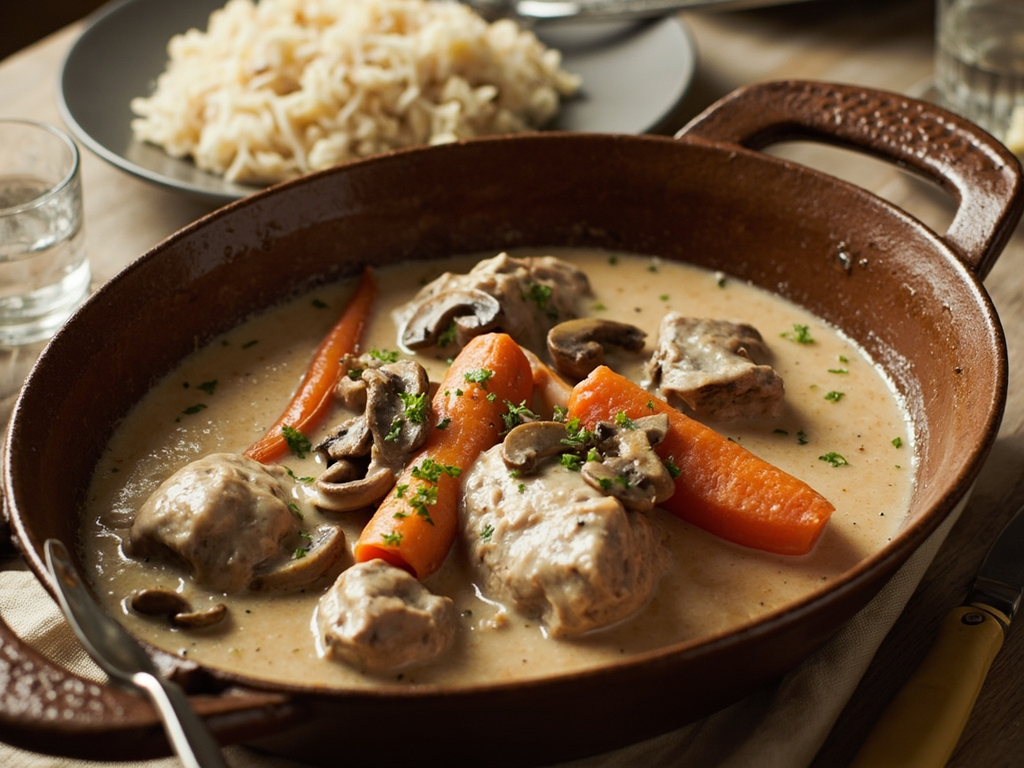
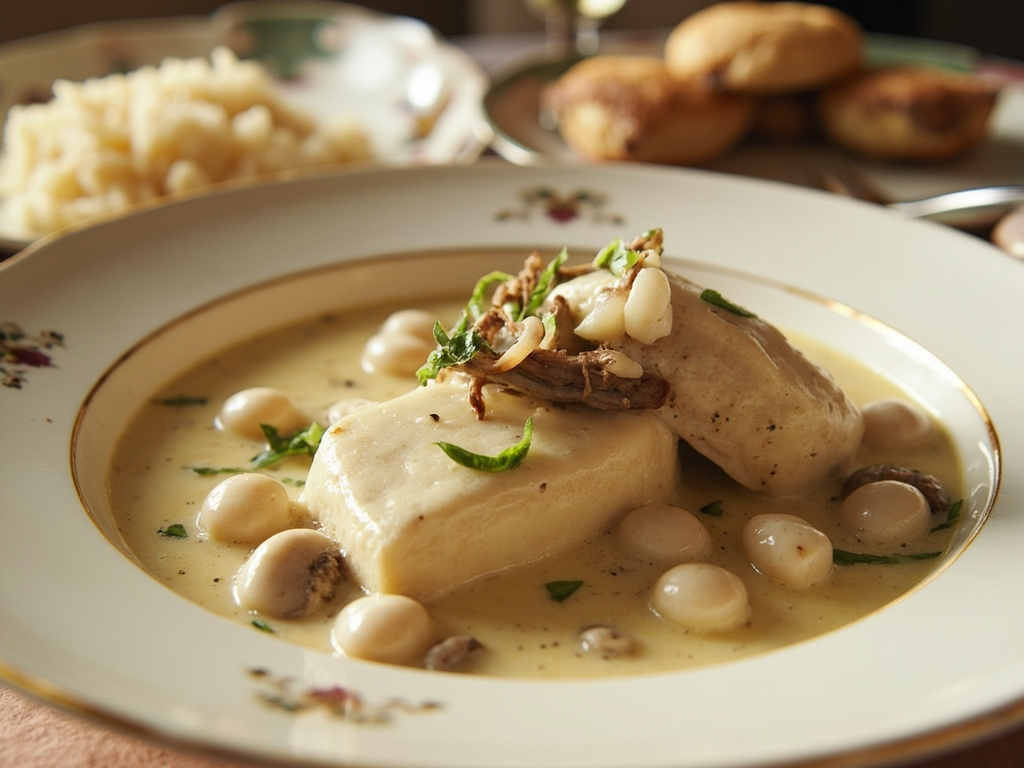
A white veal stew cooked in aromatic broth, garnished with small onions and mushrooms, coated in a velvety sauce bound with egg yolk and brightened with a squeeze of lemon. The great classic of the bourgeois festive table.
When I entertained, it was blanquette or nothing — a dish with substance but not flashy, like me. You cook the veal at a bare simmer, skimming constantly so the sauce stays immaculate white. The liaison is the whole art: you beat the yolks with cream, marry them to the sauce off the heat, especially without letting it boil, otherwise all is lost! A squeeze of lemon to wake it up, and you have a dish that my American guests, I assure you, asked for again.
- •Veal shoulder and breast — a nice piece (stewed meat)
- •Carrot, onion studded with clove, bouquet garni — aromatic garnish (broth flavor)
- •Small onions and button mushrooms — a garnish (garnish)
- •Butter and flour — equal parts (white roux)
- •Egg yolks and cream — a few (final liaison)
- •Lemon — a squeeze (acidity)
Blanquette de veau à l'ancienne
A white veal stew cooked in aromatic broth, garnished with small onions and mushrooms, coated in a velvety sauce bound with egg yolk and brightened with a squeeze of lemon. The great classic of the bourgeois festive table.
Why this dish? Blanquette was the Sunday and reception dish of Parisian bourgeoisie — a stew that is nicely presented and shared. For a woman who hosted actresses, operators, and investors from Solax at her table, it was the prestigious yet unostentatious dish: French to the core, even when served in New Jersey.
When I entertained, it was blanquette or nothing — a dish with substance but not flashy, like me. You cook the veal at a bare simmer, skimming constantly so the sauce stays immaculate white. The liaison is the whole art: you beat the yolks with cream, marry them to the sauce off the heat, especially without letting it boil, otherwise all is lost! A squeeze of lemon to wake it up, and you have a dish that my American guests, I assure you, asked for again.
Ingredients (period version)
- Veal shoulder and breast — a nice piece (stewed meat)
- Carrot, onion studded with clove, bouquet garni — aromatic garnish (broth flavor)
- Small onions and button mushrooms — a garnish (garnish)
- Butter and flour — equal parts (white roux)
- Egg yolks and cream — a few (final liaison)
- Lemon — a squeeze (acidity)
Ingredients
- Veal (shoulder + breast) — 1.2 kg (stewed meat)
- Carrot — 2 (aromatic garnish)
- Onion studded with 2 cloves — 1 (flavor)
- Bouquet garni — 1 (flavor)
- Pearl onions — 200 g (garnish)
- Button mushrooms — 250 g (garnish)
- Butter / flour — 40 g / 40 g (white roux)
- Egg yolks — 2 (liaison)
- Crème fraîche — 10 cl (liaison)
- Lemon juice — 1/2 lemon (acidity)
Method
- Place the veal in a pot, cover with cold water, bring to a simmer, and skim thoroughly.
- Add carrot, clove-studded onion, and bouquet garni, lightly salt, and cook covered at a gentle simmer for 1 hour 15 minutes.
- Cook the pearl onions and mushrooms separately in a little butter and lemon water.
- Prepare a white roux (butter + flour without browning), moisten with strained cooking broth to obtain a velvety sauce; cook for 10 minutes.
- Beat the egg yolks with cream, then off the heat incorporate into the warm sauce without boiling.
- Combine veal, onions, and mushrooms in the sauce, finish with a squeeze of lemon, adjust seasoning, and serve with pilaf rice.
How it was made : Blanquette appears in all major cookbooks of the era. Great care was taken to keep the meat white: constant skimming, no colored roux, gentle cooking. The egg yolk liaison "mounts" the sauce without curdling — a skill passed from cook to cook.
The contemporary twist : Served in individual cassolettes like a "private screening," each portion arranged like a small film set.
Sources : Auguste Escoffier, Le Guide culinaire, 1903 · Mme E. Saint-Ange, Le Livre de cuisine, 1927
Alice Guy · Charactorium