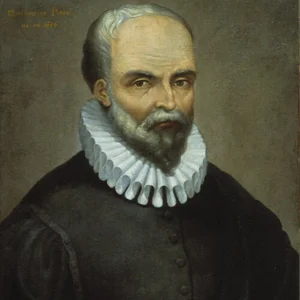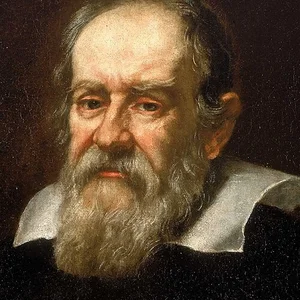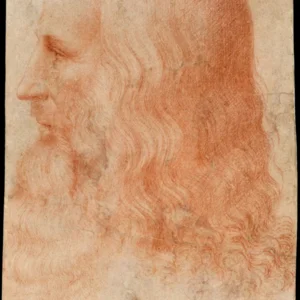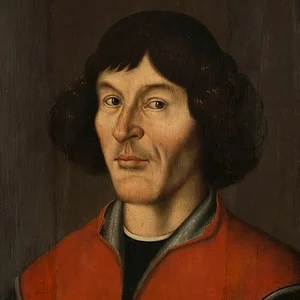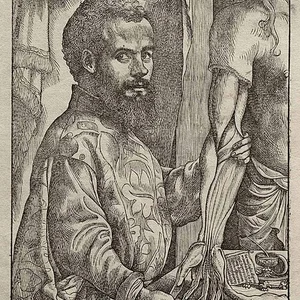

Flemish anatomist of the 16th century, Vesalius revolutionized the study of the human body through systematic dissection and direct observation. He is the author of De Humani Corporis Fabrica (1543), a founding work of modern anatomy that challenged the anatomical errors inherited from Galen.
Andreas Vesalius(1515 — 1564)
Andreas Vesalius
Pays-Bas des Habsbourg
8 min read
Frequently asked questions
Key Facts
- 1543: Publication of De Humani Corporis Fabrica, a revolutionary illustrated anatomy treatise with over 700 detailed plates
- 1515: Born in Brussels, studied medicine in Leuven and Padua
- 1537–1542: Professor at the University of Padua, where he performed public dissections of cadavers
- 1540s–1550s: Corrected more than 200 anatomical errors made by Galen through direct observation
- 1564: Died on the island of Zante (Greece), on his return from a pilgrimage to the Holy Land
Works & Achievements
Major illustrated anatomical treatise with detailed engravings, foundational to modern anatomy. Vesalius corrects the anatomical errors of Galen based on systematic dissection and direct observation of the human body.
Illustrated and condensed summary of the De Humani Corporis Fabrica intended for a wider audience. This work popularizes Vesalius's anatomical discoveries and facilitates their dissemination across Europe.
Specialized treatise devoted to the anatomy of the human skeleton. Vesalius deepens the systematic study of bones with precise illustrations and anatomical comparisons.
Vesalius organizes public dissection sessions in Padua and elsewhere, revolutionizing the teaching of anatomy by prioritizing direct observation on the body rather than reading ancient texts.
Through his dissection work, Vesalius systematically identifies and documents the anatomical errors made by Galen, who had dissected animals rather than humans.
A collection of over 700 woodcuts of exceptional artistic quality produced by Titian's workshop. These detailed illustrations become a model for scientific anatomical representation.
Anecdotes
Vesalius began his anatomical studies in Padua, one of the most prestigious universities in Europe. Unlike the common practice where a professor would read from Galen while an assistant dissected, Vesalius insisted on performing the dissections himself and directly verifying the ancient texts. This revolutionary boldness allowed him to discover that Galen, who had never dissected human cadavers, had made numerous errors by transposing his observations from animals.
In 1543, at only 28 years old, Vesalius published his masterpiece, De Humani Corporis Fabrica (On the Fabric of the Human Body), a magnificently illustrated treatise of 700 pages. This work contains more than 700 detailed illustrations and corrects over 200 anatomical errors attributed to Galen, establishing the foundations of modern anatomy.
Vesalius risked his life by conducting systematic dissections at a time when they were dangerous and sometimes forbidden. He even acquired freshly executed corpses from prisons to obtain anatomically intact specimens, demonstrating his scientific obsession with direct observation of the human body.
Toward the end of his life, Vesalius had to flee the Low Countries for Rome because his public dissection demonstrations and his criticisms of Galen drew hostility from traditionalist physicians. He became the personal physician of Emperor Charles V, which offered him protection and belated recognition for his revolutionary work.
Vesalius invented an innovative pedagogical method: he created detachable anatomical plates that students could assemble and use as practical learning tools. These 'anatomical tables' were ancestors of modern anatomical models and demonstrated his commitment to rigorous scientific teaching.
Primary Sources
I therefore believed it was my duty to correct these errors and establish the foundations of an anatomy truly based on direct observation of the human body through dissection, rather than blindly following the teachings of Galen, who had never dissected a man.
Personal experience and meticulous observation of the human body have taught me that nature reveals its secrets to those who take the trouble to question it directly.
Anatomical images and descriptions must be precise and faithful to observed reality, for it is only through this rigour that we can understand the mechanics of the human body and correct the errors handed down by the ancients.
My systematic dissections have demonstrated that Galen had made several fundamental errors in his description of human anatomy, as he had primarily dissected animals rather than human bodies.
Key Places
Birthplace of Andreas Vesalius in 1515. This city in the Spanish Netherlands shaped his Flemish origins and early education before his university studies.
Major center of his research and teaching work (1537-1543). Vesalius led the anatomy department there and conducted the systematic dissections that form the foundation of his masterwork De Humani Corporis Fabrica.
An exceptional intellectual city where Vesalius established his scientific reputation through his pedagogical innovations in anatomy and his bold criticisms of Galenic errors.
Site of Vesalius's early studies and teaching before his departure for Italy. There he formulated his first critiques of established anatomical theories.
After 1543, Vesalius became personal physician to Emperor Charles V. He practiced successively in Vienna and Madrid, placing his knowledge at the service of the Habsburg court.
Site of his death in 1564 during a pilgrimage to the Holy Land. Vesalius died there at around 49 years of age, far from his centers of scientific activity.
Typical Objects

Surgical instrument with a thin, sharp blade used by Vesalius for systematic dissections. This tool was essential to his method of direct observation of the human body, revolutionary for the time.
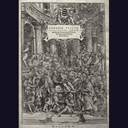
Monumental work by Andreas Vesalius illustrating human anatomy in detail based on direct observation. This treatise revolutionized anatomy by contradicting the errors of Galen and established the foundations of modern anatomy.
📷 Domaine public · Wikimedia Commons ↗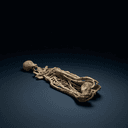
Human body used for anatomical study purposes. Vesalius performed systematic dissections on cadavers, which was controversial at the time but led to major anatomical discoveries.
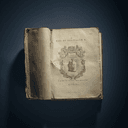
Detailed illustration of the human body or its organs, reproduced by woodcut or copper engraving. The plates of De Fabrica are masterpieces that are both scientific and artistic, characteristic of the Renaissance.
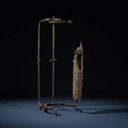
Circular or elevated room arranged for public anatomical demonstrations. Vesalius taught in these university theaters where he performed his dissections before an audience of students and physicians.

Medical works of the Greek physician Galen (2nd century) constituting the official anatomical references of the Middle Ages. Vesalius systematically corrected them, marking a break with the medieval tradition.
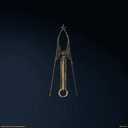
Measuring instrument used to precisely record the proportions and dimensions of anatomical structures. Used by Vesalius to document his observations of the human body with scientific rigor.

Notebooks and journals in which Vesalius recorded his anatomical observations and drawings. These working documents reflect the empirical and meticulous method of the Renaissance scholar.
School Curriculum
Vocabulary & Tags
Key Vocabulary
Tags
Époque
Daily Life
Morning
Vesalius rises early, before dawn, as was customary among Renaissance scholars. He begins with his religious devotions, then prepares to head to the university or the anatomy amphitheater, often walking through the cobblestone streets of Padua or Leuven depending on the period of his life.
Afternoon
He devotes his afternoons to systematic dissections and meticulous observations of the human body, often surrounded by medical students and assistants. These sessions can last several hours, during which he demonstrates his discoveries and corrects Galen's anatomical errors through direct observation and the preparation of precise anatomical plates.
Evening
In the evening, Vesalius writes up his notes, prepares his illustrations and manuscripts, or receives colleagues and visitors in his university lodgings. He also takes part in scholarly discussions in humanist circles, where he debates scientific and medical questions with other high-ranking scholars.
Food
Vesalius, a member of the prosperous learned class, eats a rich diet including red meats, poultry, fish, and seasonal fruits and vegetables. He drinks wine regularly, as was common at the time, and subsists mainly on quality white or grey bread, cheeses, and occasional pastries.
Clothing
As a university anatomist and high-status physician, Vesalius wears Renaissance attire: a long scholar's gown or doublet, puffed sleeves, and sometimes a university toga on official occasions. He takes care of his appearance as any man of his standing would, with a hat, fitted shoes, and occasionally discreet jewelry.
Housing
Vesalius resides in a comfortable urban lodging provided by the universities where he teaches (Leuven, Padua, Bologna), generally situated near the anatomy amphitheater and the faculty of medicine. His bourgeois scholar's dwelling has the amenities of the era: spacious rooms, a personal library, a study, and access to servants or assistants.
Historical Timeline
Period Vocabulary
Visual Style
Un style graphique conjuguant la précision scientifique à l'esthétique artistique de la Renaissance flamande : gravures anatomiques détaillées avec hachures fines, éclairage dramatique soulignant les formes, textures de parchemin vieilli et notations latines, évoquant l'univers des ateliers savants du XVIe siècle.
Sound Ambience
Une ambiance immersive de cabinet d'anatomie Renaissance combinant les sons délicats de la recherche scientifique minutieuse - instruments de dissection, pages qui tournent, quills qui grattent - avec une atmosphère solennelle et studieuse marquée par les cloches d'église et la gravité de découvertes anatomiques révolutionnaires.
Liens externes & ressources
Références
Œuvres
De Humani Corporis Fabrica (La Fabrique du corps humain)
1543
Examen ossium (Étude des os)
1546
Dissections publiques et démonstrations anatomiques
1537-1564
Réfutation des erreurs de Galien
1540-1555
Illustrations anatomiques du Fabrica
1543