 flip
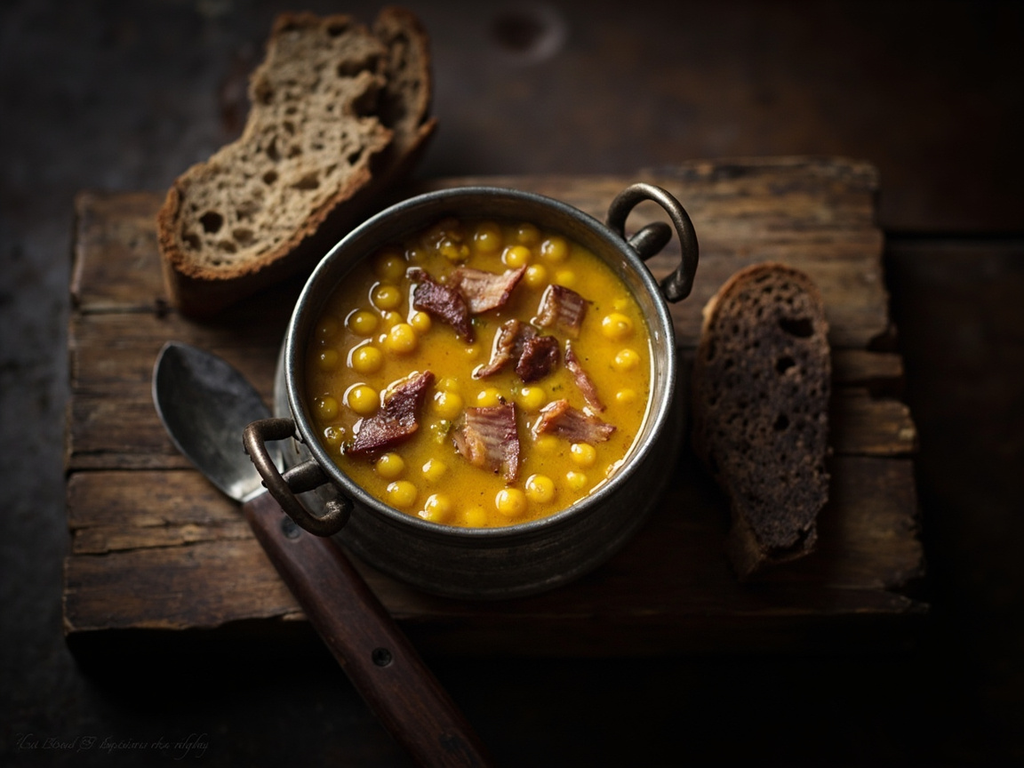
flipBrabant Hutsepot (Mutton and Root Vegetable Stew)
Brabant Hutsepot (Mutton and Root Vegetable Stew)
Why this dish? This is the everyday dish in Vesalius's Brabant: a single pot on the fire, where meat and root vegetables simmer for a long time. As a child in Brussels, in a family of the imperial court, then as a penniless student in Leuven and Padua, Vesalius knew this restorative stew that nourished scholars and craftsmen alike.
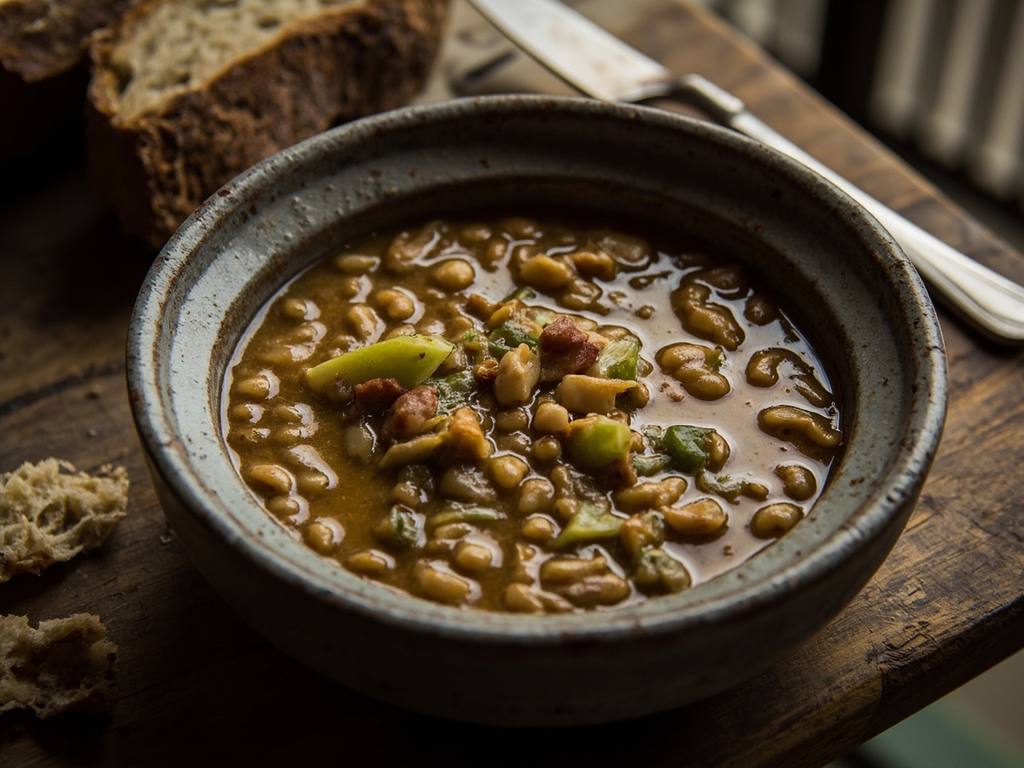
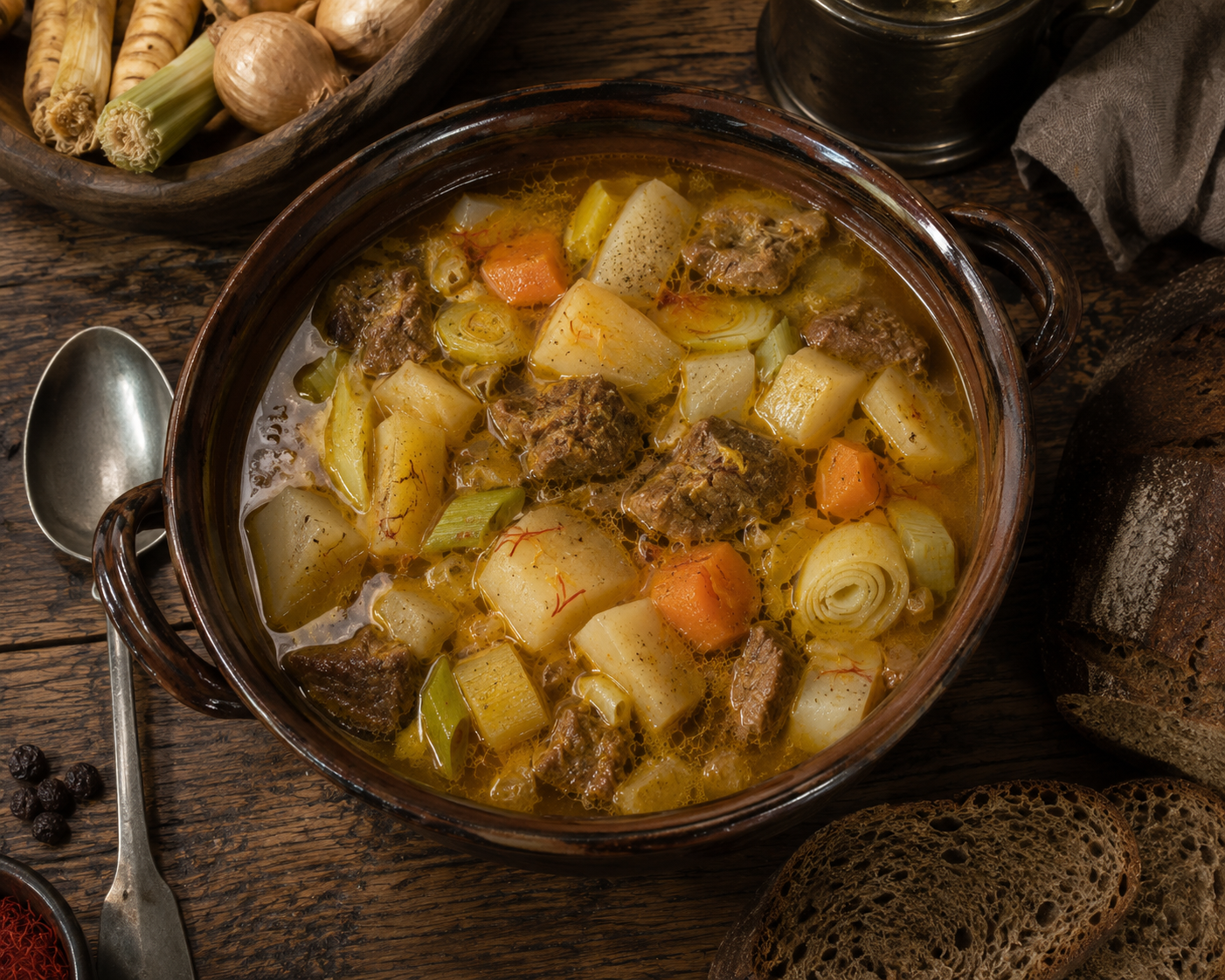
A thick stew of mutton and root vegetables — turnips, parsnips, onions, leeks — simmered for hours in its broth, thickened with bread and just awakened by a hint of saffron and ginger. The quintessential one-pot dish of the Low Countries, with nothing from the New World.
Come closer, reader, and taste what I nourished myself with between two dissections. When I studied the human body late into the night, nothing better comforted the vital spirits than a good hutsepot kept warm on the embers. My mother would put the mutton in with the turnips and leeks from the garden, and thicken it all with breadcrumbs; a pinch of Antwerp saffron warmed the stomach, which, believe the anatomist, is worth more than all bloodlettings. You eat it with a spoon, from a single bowl, and you work better afterward.
- •Mutton (neck, shoulder) — a good piece (stewing meat)
- •Turnips — a handful (sweet root)
- •Parsnips — a few (sweet root)
- •Onions — two or three (aromatic base)
- •Leeks — two (green vegetable)
- •Breadcrumbs — as needed for thickening (thickener)
- •Saffron and ginger — a pinch (spices, color and warmth)
- •Salt — to taste (seasoning)
Brabant Hutsepot (Mutton and Root Vegetable Stew)
A thick stew of mutton and root vegetables — turnips, parsnips, onions, leeks — simmered for hours in its broth, thickened with bread and just awakened by a hint of saffron and ginger. The quintessential one-pot dish of the Low Countries, with nothing from the New World.
Why this dish? This is the everyday dish in Vesalius's Brabant: a single pot on the fire, where meat and root vegetables simmer for a long time. As a child in Brussels, in a family of the imperial court, then as a penniless student in Leuven and Padua, Vesalius knew this restorative stew that nourished scholars and craftsmen alike.
Come closer, reader, and taste what I nourished myself with between two dissections. When I studied the human body late into the night, nothing better comforted the vital spirits than a good hutsepot kept warm on the embers. My mother would put the mutton in with the turnips and leeks from the garden, and thicken it all with breadcrumbs; a pinch of Antwerp saffron warmed the stomach, which, believe the anatomist, is worth more than all bloodlettings. You eat it with a spoon, from a single bowl, and you work better afterward.
Ingredients (period version)
- Mutton (neck, shoulder) — a good piece (stewing meat)
- Turnips — a handful (sweet root)
- Parsnips — a few (sweet root)
- Onions — two or three (aromatic base)
- Leeks — two (green vegetable)
- Breadcrumbs — as needed for thickening (thickener)
- Saffron and ginger — a pinch (spices, color and warmth)
- Salt — to taste (seasoning)
Ingredients
- Mutton neck or shoulder (or lamb) — 1 kg (stewing meat)
- Turnips — 4 medium (sweet root)
- Parsnips — 3 (sweet root)
- Carrots — 2 (colored root)
- Onions — 2 (aromatic base)
- Leeks — 2 (green vegetable)
- Stale bread — 2 slices (thickener)
- Saffron — 1 pinch (color and aroma)
- Ground ginger — 1/2 tsp (spicy warmth)
- Salt and pepper — to taste (seasoning)
Method
- Brown the meat, cut into large pieces, in a Dutch oven until colored.
- Add sliced onions, cover with water, salt, and simmer covered for 1 hour 30 minutes.
- Add turnips, parsnips, carrots, and leeks in chunks, along with saffron and ginger.
- Continue cooking for 45 minutes, until meat and roots are tender.
- Soften the bread in a ladle of broth, then stir back into the pot to thicken.
- Adjust seasoning and serve piping hot, with a spoon, in bowls.
How it was made : Hutsepot (from hutsen, "to shake") refers to anything simmered together in a single pot. In the 16th century, stews were often thickened with bread rather than flour, and saffron served both to color and to "warm" according to humoral medicine. No trace of potato: it would not arrive in the Low Countries until much later.
The contemporary twist : Serve it in a stoneware bowl with a slice of grilled bread rubbed with garlic, and add the saffron at the last minute to keep its golden color.
Andreas Vesalius · Charactorium