 Flip the card
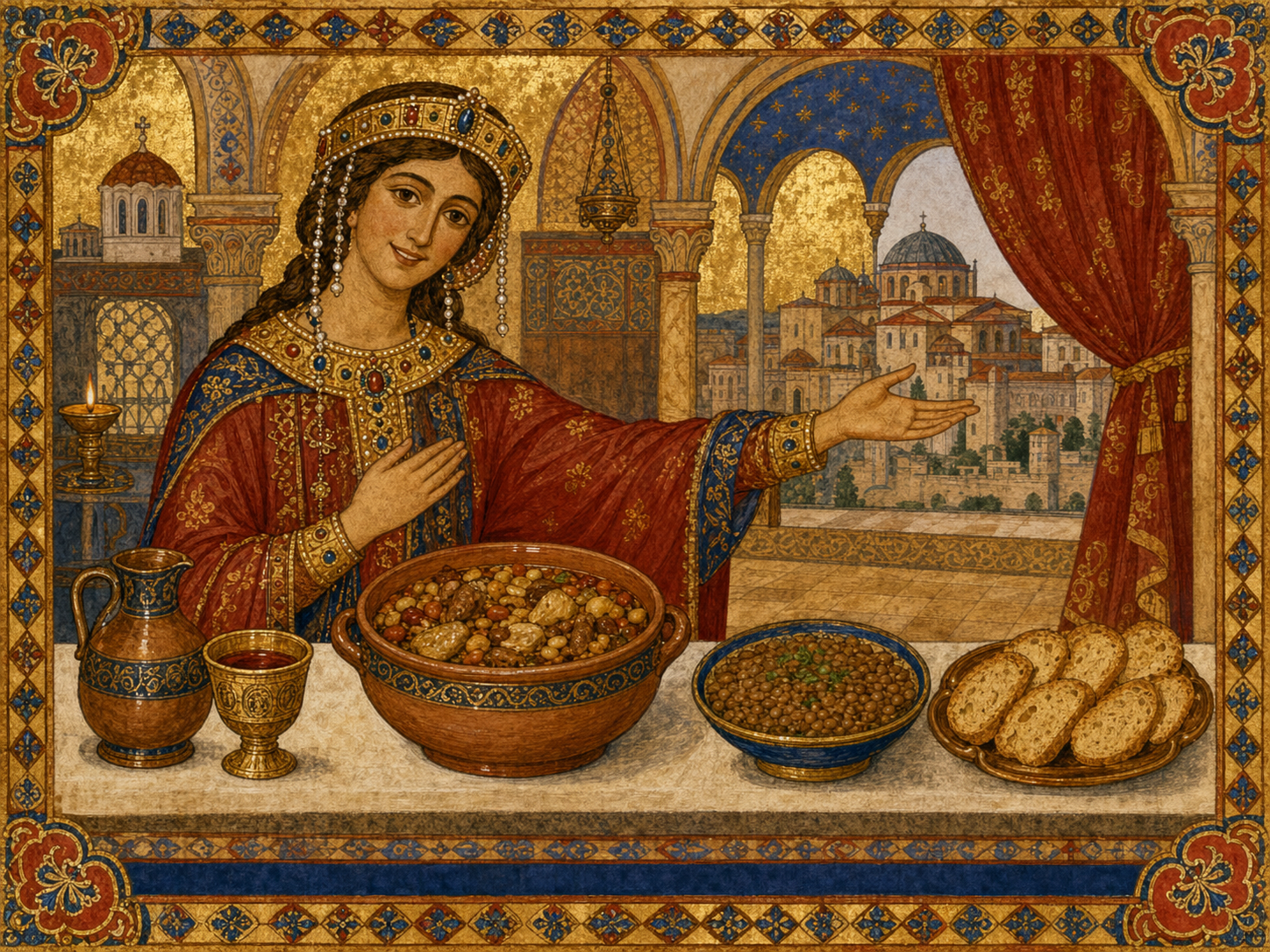
Anna Komnene at the table
On the menu
Byzantine Trápeza — the deipnon table
In Byzantium, the main meal (deipnon) is not divided into starter-main-dessert but is organized around the ártos, wheat bread, the foundation of every table. It is accompanied by prosphágion, what "is eaten with bread" (stews, fish, vegetables), seasoned with brine and spices. Then come the glykýsmata, honey sweets, and diluted wine. In the monastery, the same table becomes austere: dark bread, legumes, and fish on lean days, according to the Orthodox calendar.
Signature : Gáros (Byzantine garum)
A fermented fish brine inherited from Rome, gáros is the king of seasonings in Byzantine cuisine: a few salty, umami drops replace salt in almost everything, from courgette stew to lentil pot. It is held in such high regard that it is served in small flasks at the imperial table.
click to flip back
Anna Komnene at the table
5 period recipes
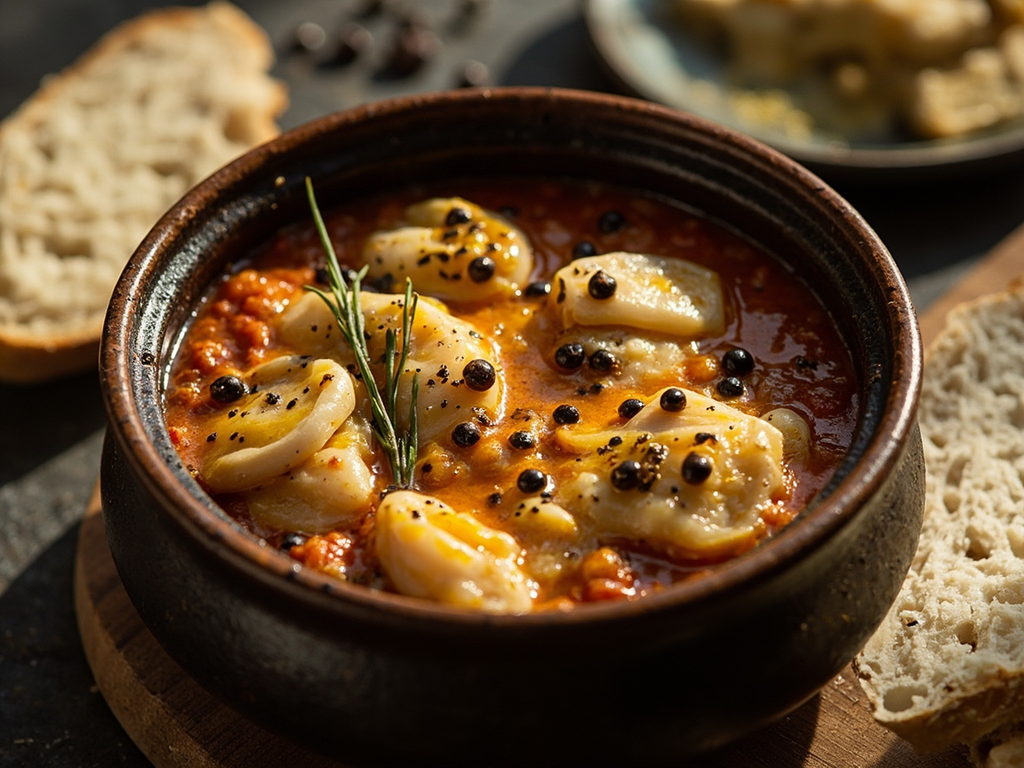 Festive
Monókythron — the one-pot stew
festive prosphágion (single dish in an earthenware pot)
🧂 🍄· 1 h
View the recipe
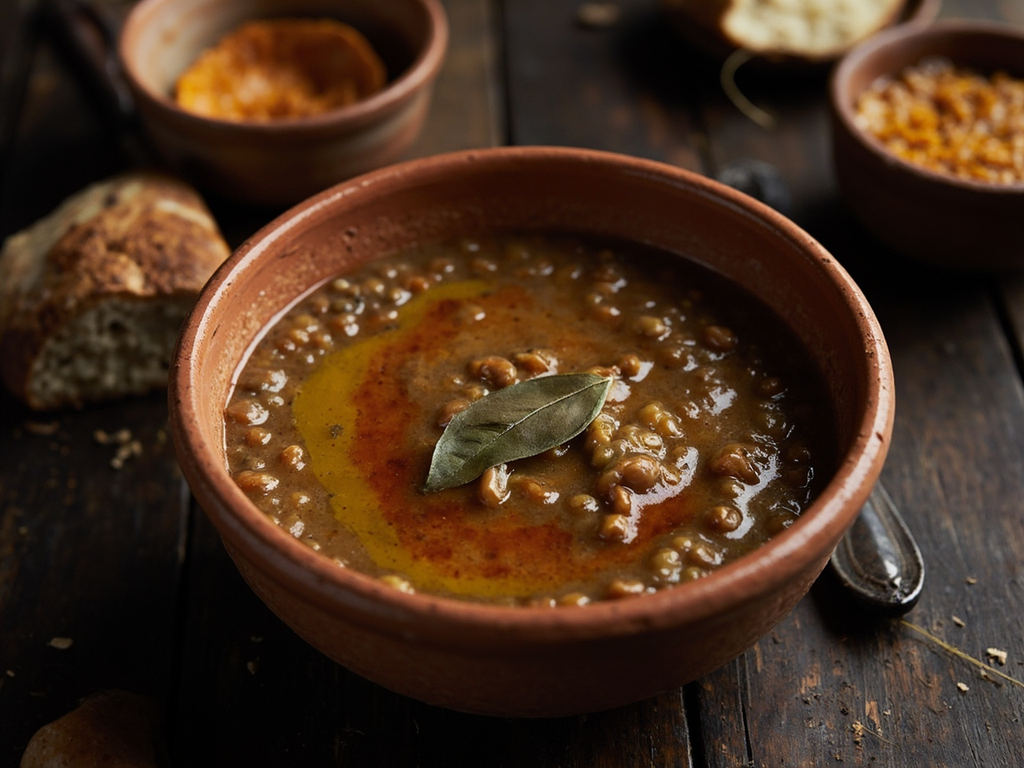 Everyday
Phakḗ — the monastery lentil
lean prosphágion (fast-day legume)
🧂 🍋· 50 min
View the recipe
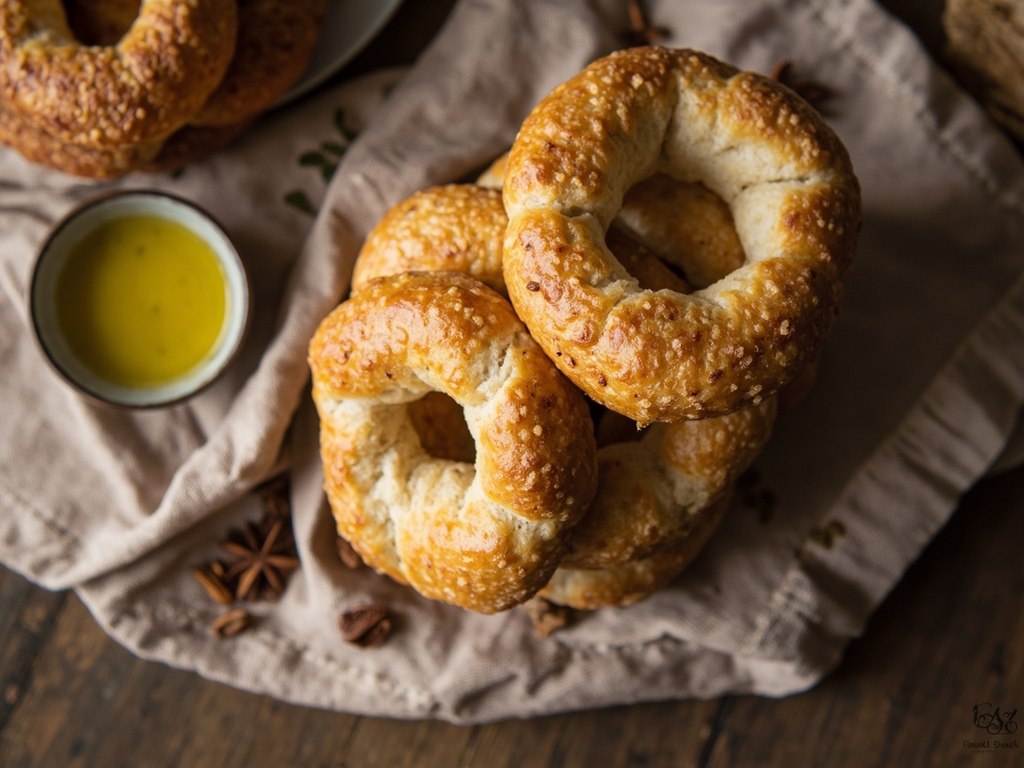 Travel
Paximádia — the twice-baked travel biscuit
ártos for storage (dark twice-baked bread for travel)
🧂· 4 h (including drying)
View the recipe
 Drink
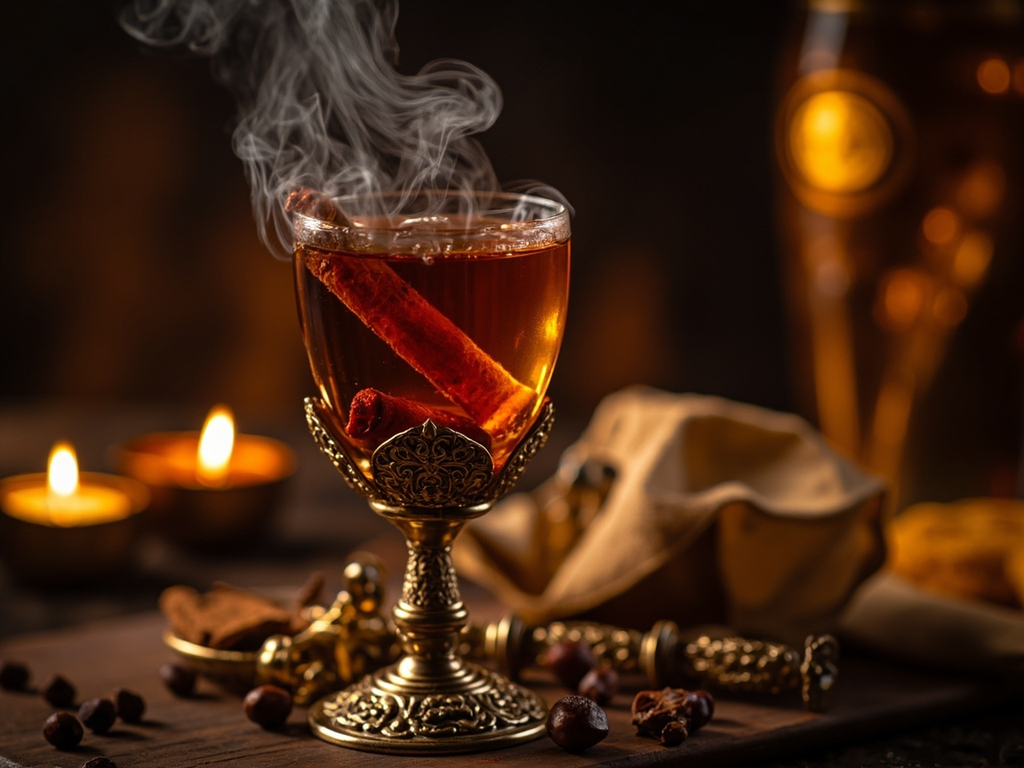
DrinkOinómeli — honeyed spiced wine
table potón (court beverage served with meals)
🍯 🌶️· 20 min
View the recipe
 Remedy
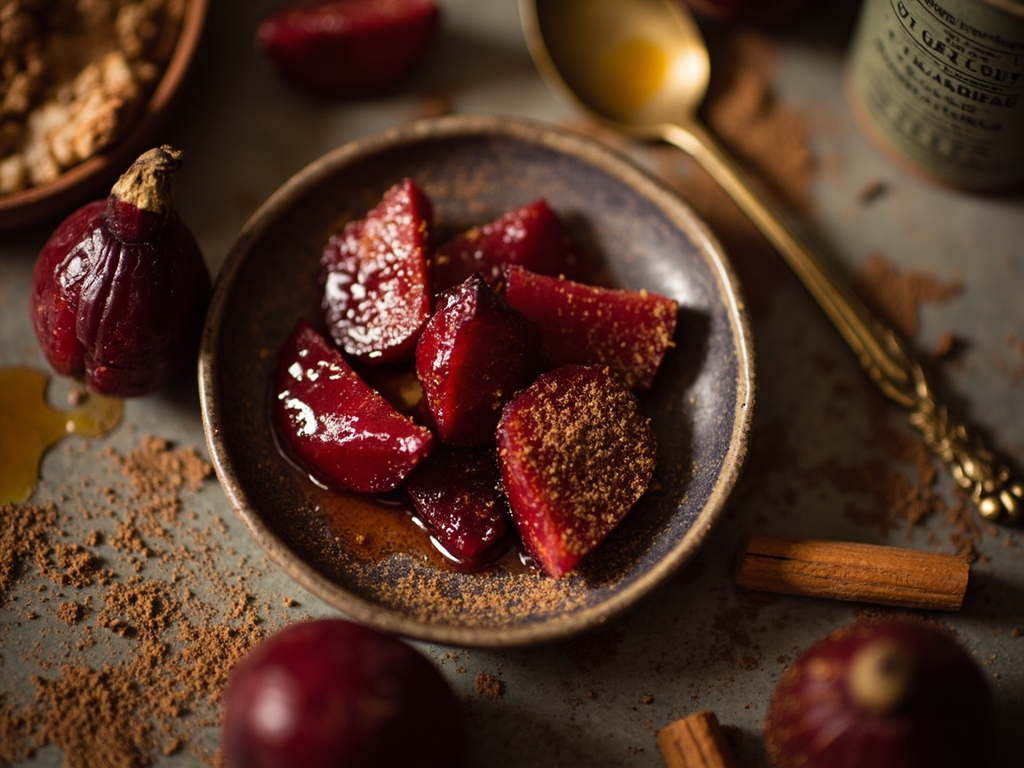
Kydōnáton — quince paste with honey
medicinal glýkysma (end-of-meal sweet remedy)
🍯 🍋· 1 h 30
View the recipe