 flip
flipPaximádia — the twice-baked travel biscuit
Paximádia — the twice-baked travel biscuit
Why this dish? When Anna followed the court on campaign — to Dyrrachium or the borders of the Empire — as in the armies and fleets she describes in the Alexiad, it was paximádion, twice-baked bread that keeps for months, that sustained soldiers and travelers.
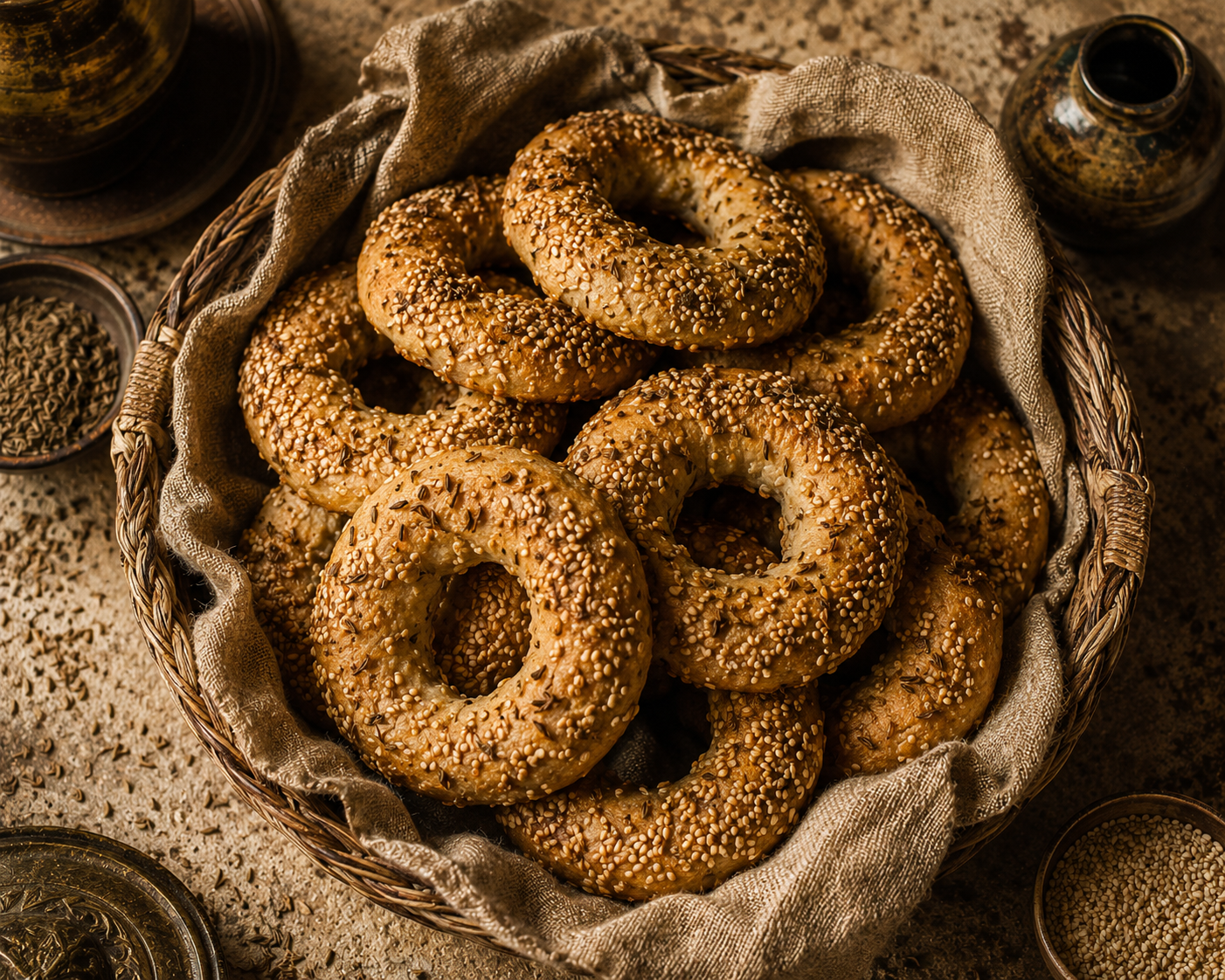
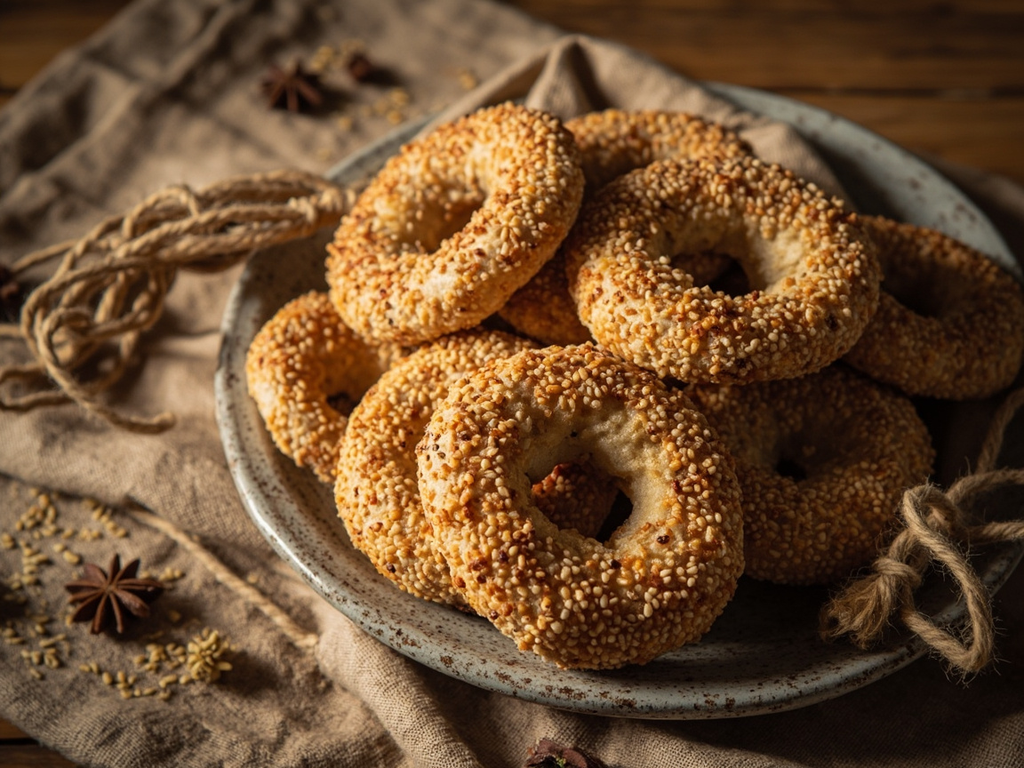
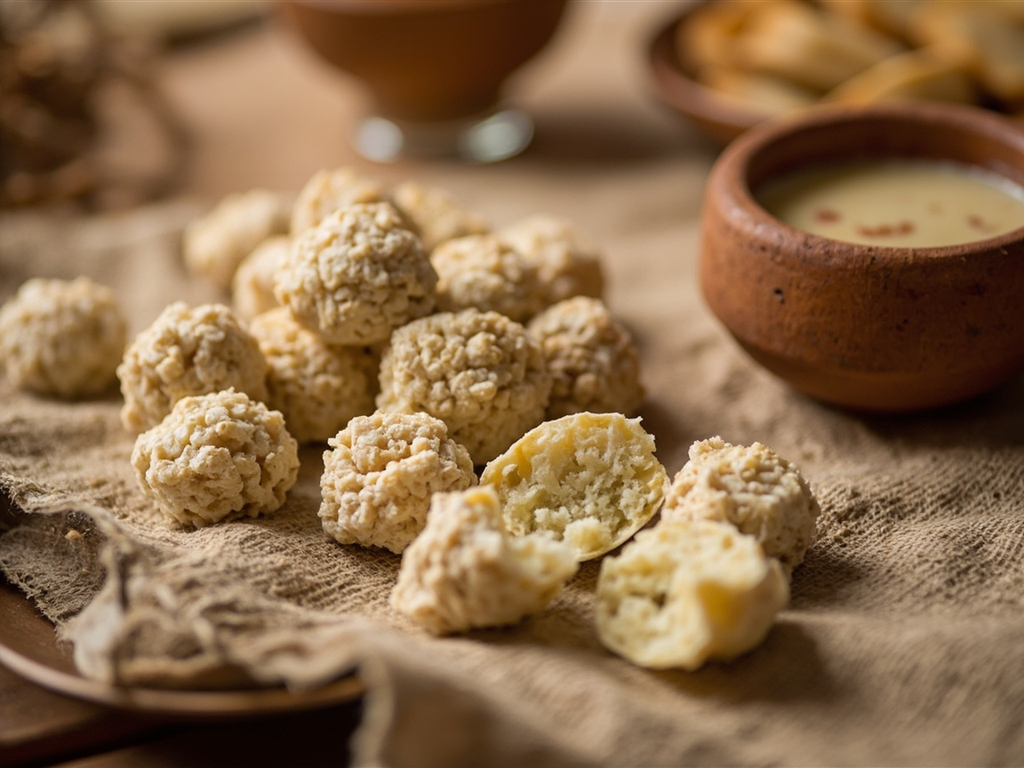
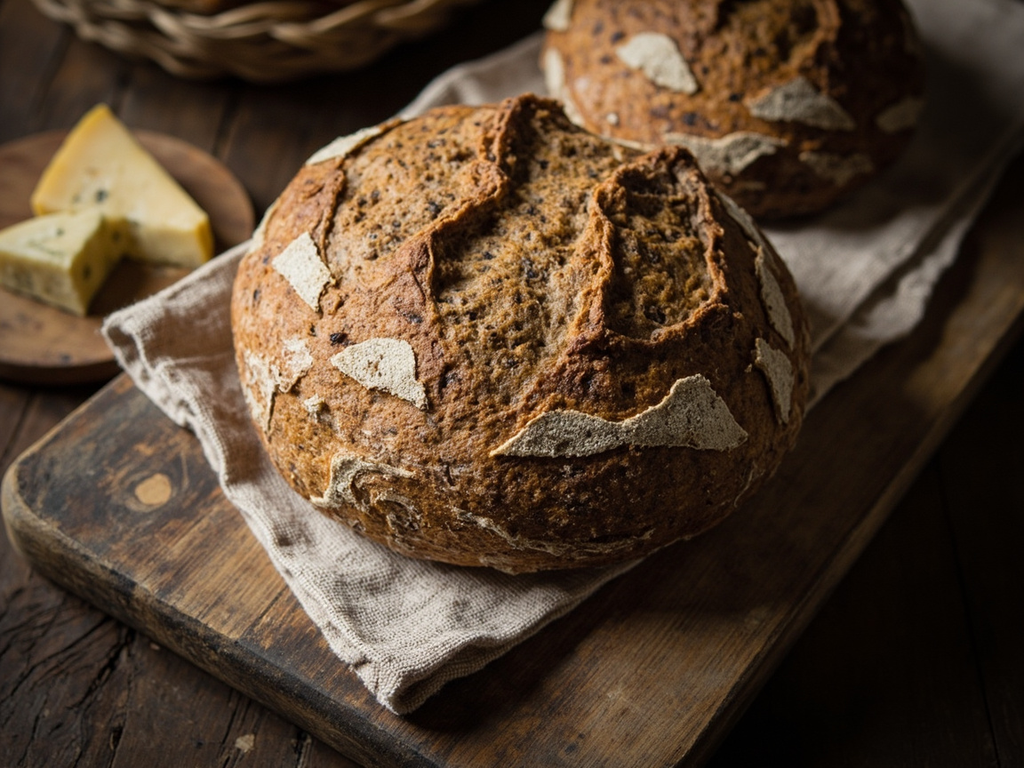
A wheat or barley bread baked, sliced, then dried a second time in the oven until it becomes a hard, light, unspoiling biscuit. It is softened with a little water, wine, or oil before eating. The ancestor of the rusk and Cretan paximadi.
You who take the road, listen to the advice of a princess who followed her father's armies: never leave without your paximádia. The bread is baked, sliced, then returned to the oven to dry completely, and then it keeps for whole moons without ever molding. When hunger takes you on the way, you dip it in water, wine, or a little oil, and it becomes tender again. My father Alexios fed it to his soldiers as far as the marches of the Empire — it is the bread that never betrays the traveler.
- •Barley or whole wheat flour — a good measure (base)
- •Sourdough — a little (fermentation)
- •Water — as needed for dough (hydration)
- •Salt — a pinch (seasoning)
- •Anise or fennel seeds — as desired (flavor and preservation)
Paximádia — the twice-baked travel biscuit
A wheat or barley bread baked, sliced, then dried a second time in the oven until it becomes a hard, light, unspoiling biscuit. It is softened with a little water, wine, or oil before eating. The ancestor of the rusk and Cretan paximadi.
Why this dish? When Anna followed the court on campaign — to Dyrrachium or the borders of the Empire — as in the armies and fleets she describes in the Alexiad, it was paximádion, twice-baked bread that keeps for months, that sustained soldiers and travelers.
You who take the road, listen to the advice of a princess who followed her father's armies: never leave without your paximádia. The bread is baked, sliced, then returned to the oven to dry completely, and then it keeps for whole moons without ever molding. When hunger takes you on the way, you dip it in water, wine, or a little oil, and it becomes tender again. My father Alexios fed it to his soldiers as far as the marches of the Empire — it is the bread that never betrays the traveler.
Ingredients (period version)
- Barley or whole wheat flour — a good measure (base)
- Sourdough — a little (fermentation)
- Water — as needed for dough (hydration)
- Salt — a pinch (seasoning)
- Anise or fennel seeds — as desired (flavor and preservation)
Ingredients
- Whole wheat flour (wheat or barley) — 500 g (base)
- Active sourdough (or 1 packet dry yeast) — 100 g / 7 g (fermentation)
- Warm water — 300 ml (hydration)
- Salt — 1.5 tsp (seasoning)
- Anise or fennel seeds — 1 tbsp (flavor)
Method
- Knead flour, sourdough, water, salt, and seeds into a supple dough; let rise for 2–3 hours.
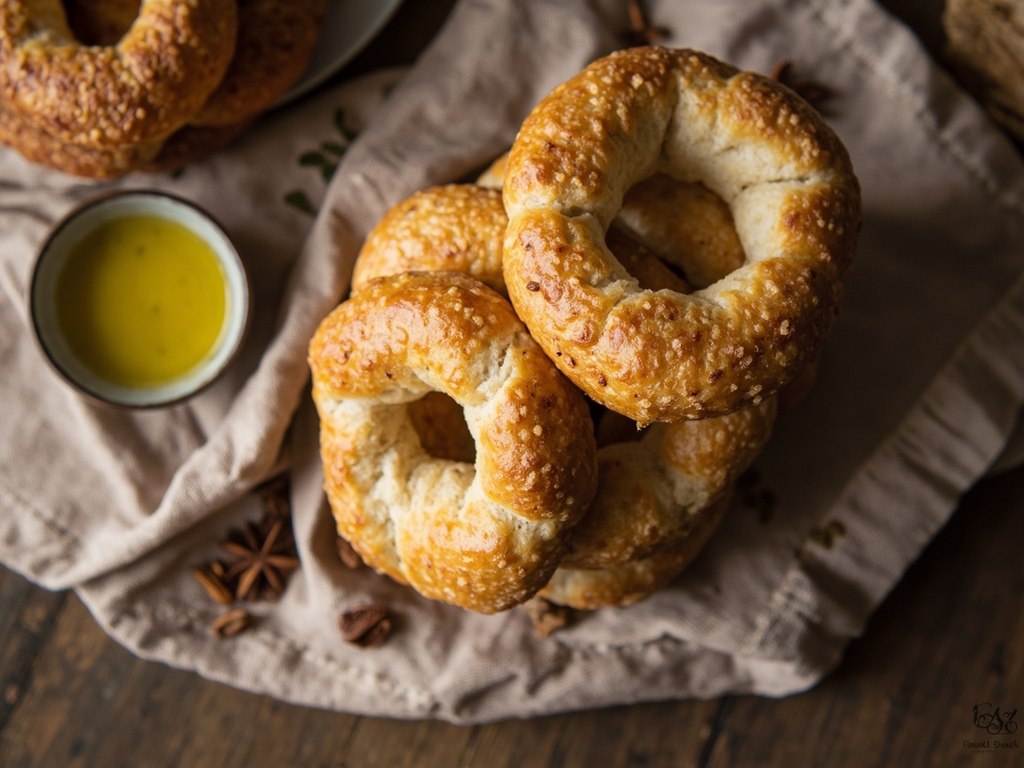
- Shape into flat loaves or rings, let rise again, then bake for 30 minutes at 220°C.
- Let cool slightly, then slice the loaves into large pieces about 2 cm thick.
- Return the slices to the oven at 110°C for 1 to 1.5 hours, until completely dry and hard.
- Cool completely; they keep for weeks in a cloth.
- To eat, dip for a few moments in water, diluted wine, or olive oil.
How it was made : Paximádion takes its name from the baker Paxamos. Double baking means no moisture, hence long preservation: it was the basic ration of Byzantine armies, sailors, and monks. Ships and convoys were loaded with it. The tradition survives today in Cretan paximadi and dakos.
The contemporary twist : Served as dakos: drizzled with oil, rubbed with tomato… but in Anna's time, no tomato! Instead, top with fresh cheese, olives, and oregano, as was then possible.
Sources : Andrew Dalby, Flavours of Byzantium, Prospect Books, 2003 · Anna Comnène, Alexiade (descriptions des campagnes militaires)
Anna Komnene · Charactorium