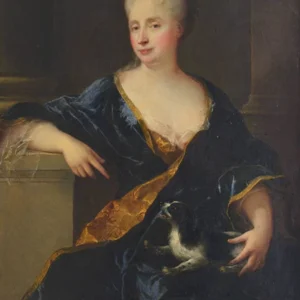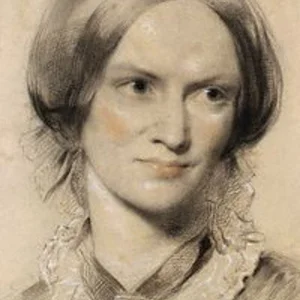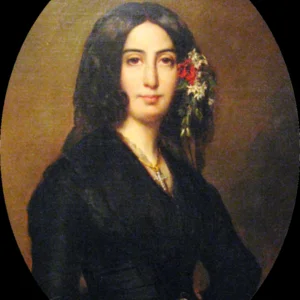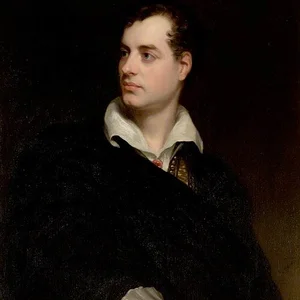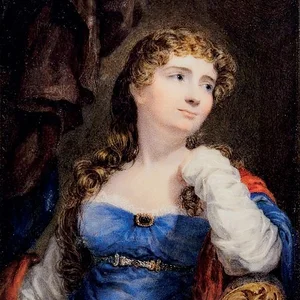

British aristocrat (1792–1860), self-taught mathematician and philanthropist, she married the poet Lord Byron in 1815 before separating from him a year later. She went on to dedicate herself to popular education and social reform, and is the mother of Ada Lovelace, pioneer of computing.
Annabella Milbanke(1792 — 1860)
Anne Isabella Milbanke
Royaume-Uni, royaume de Grande-Bretagne, Royaume-Uni de Grande-Bretagne et d'Irlande
8 min read
Frequently asked questions
Key Facts
- 1792: born at Elemore Hall, Durham, England
- 1815: married the poet Lord Byron, from whom she separated in 1816
- 1815: birth of her daughter Ada Byron, the future Ada Lovelace, pioneer of computing
- From the 1830s onward: active involvement in education reform and the fight against slavery
- 1860: died in London, leaving a notable philanthropic and intellectual legacy
Works & Achievements
Annabella created and funded innovative schools for children from working-class backgrounds, combining academic instruction with vocational training. These schools anticipated the public education reforms of the Victorian era.
By selecting the finest scientific tutors for Ada and encouraging her mathematical studies, Annabella played a decisive role in shaping the woman who would become the world's first computer programmer.
Her collected letters and personal notes, held in the archives of the Bodleian Library in Oxford, stand as a first-rate testimony to the intellectual and social life of Romantic and Victorian England.
Annabella committed herself to several progressive causes, notably the fight against child labour in mines and her support for American abolitionist movements, which she partly funded.
Although Annabella never published these writings during her lifetime, her personal notes and justifications document one of the most famous divorces in English literary history.
Anecdotes
Lord Byron, fascinated by Annabella's passion for mathematics, ironically nicknamed her "the Princess of Parallelograms" in his letters. Far from taking offense, she regarded the epithet as a tribute to her intellectual rigor in a world that expected women to concern themselves with embroidery rather than equations.
After barely a year of marriage, Annabella left Byron in January 1816, taking their daughter Ada, then just five weeks old. The true reasons for the separation — violent behavior, Byron's possible incestuous affair with his half-sister Augusta — were never officially disclosed. Annabella maintained a remarkable public silence for the rest of her life, never seeking to destroy her husband's reputation.
Despite the bitterness of her failed marriage, Annabella actively encouraged her daughter Ada's mathematical gifts. She engaged the finest scientific tutors of the day, convinced that mathematics would discipline the creative and exuberant mind Ada had inherited from her father. This education was partly responsible for Ada Lovelace becoming the world's first computer programmer.
From the 1830s onward, Annabella founded and funded several industrial schools for poor children in Ealing, on the outskirts of London. Unlike the simple charity schools of the era, these institutions combined academic instruction with practical vocational training — a pedagogical approach that was remarkably forward-thinking for its time.
Annabella outlived her own daughter Ada Lovelace, who died of cancer at just 36 in 1852. She survived her by eight years, carrying that grief while continuing her philanthropic work until her own death in 1860 in Esher, Surrey.
Primary Sources
"I do not claim infallibility — I am not even certain of my own opinions on moral matters, but I strive to reason correctly on all subjects that concern me."
Legal document signed in March 1816 by which Lord Byron and Annabella Milbanke agreed to their formal separation, granting custody of Ada to the mother.
Epistolary exchanges attesting to Annabella's serious mathematical education, particularly in algebra and Euclidean geometry, under the guidance of this distinguished tutor.
"I must justify my conduct not by emotion but by facts. My duty to my daughter demands it."
Philanthropic document describing teaching methods combining reading, arithmetic and vocational training, aimed at children from the working classes.
Key Places
The Milbanke family manor where Annabella was born in 1792 and where she married Byron in 1815. This place symbolises both her aristocratic origins and the beginning of her turbulent marriage.
The London residence Byron and Annabella shared during their brief marriage in 1815–1816. It was here that Ada was born and where the couple experienced the growing tensions that led to their separation.
A suburban London property where Annabella settled with Ada after the separation. She established her first industrial schools there and led an intellectually active life away from central London.
The place where Annabella lived out her final years and died in 1860. She continued her philanthropic work there following the death of her daughter Ada in 1852.
An estate inherited by Annabella from her mother Judith Noel, which provided her with considerable financial independence. This fortune enabled her to fund her many educational initiatives.
Typical Objects
Annabella owned a scientific library that was rare for a woman of her era, including works on algebra and geometry. These books symbolized her intellectual commitment, which set her apart from most aristocrats of her time.
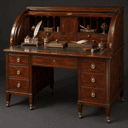
A prolific woman of letters, Annabella maintained an extensive correspondence with intellectuals, philanthropists, and politicians. Her desk was the nerve center of her reformist activities.
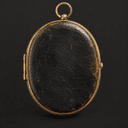
Despite their painful separation, Annabella kept several portraits of Byron — an ambiguous testament to a relationship that had defined a part of her existence and shaped the destiny of their daughter.
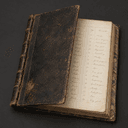
Annabella kept meticulous records of her educational establishments, documenting the progress of the poor children in her care. These records bear witness to the concrete nature of her philanthropic commitment.
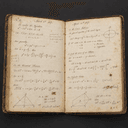
She kept handwritten working notebooks in which she solved problems in algebra and logic. This rigorous practice informed the education she provided to Ada.
A woman of considerable means, Annabella personally managed the finances of her charitable works. Her account books reveal the scale of her investments in popular education.
School Curriculum
Vocabulary & Tags
Key Vocabulary
Tags
Daily Life
Morning
Annabella rose early, a habit cultivated since childhood at the family estate in Seaham. She devoted the first hour of the morning to personal study — mathematics, philosophical reading, or correspondence with intellectuals — before social and domestic obligations took over.
Afternoon
Afternoons were often taken up with managing her philanthropic work: visiting industrial schools, meeting with teachers or beneficiaries, and reviewing the accounts of her foundations. In London, she received visitors or attended the capital's intellectual salons.
Evening
In the evenings, Annabella kept up a voluminous correspondence from her desk. She wrote to social reformers and scientists, and monitored Ada's education through exchanges with her tutors. Family dinners or gatherings with close friends gave her the opportunity to discuss politics, philosophy, and science.
Food
As an aristocratic woman of her era, Annabella followed the dietary habits of the British gentry: morning tea, a light lunch, and a substantial dinner in the evening featuring roasted meats, vegetables from the estate, and English pastries. She was notably temperate in her tastes, in contrast to Byron's excesses, which she had openly criticised.
Clothing
Annabella dressed in keeping with Regency and later Victorian fashion: high-waisted gowns in muslin or silk, cashmere shawls, and hair styled in ringlets or a neat chignon. She favoured understated colours and elegant but unpretentious cuts, reflecting her serious and composed personality.
Housing
Annabella lived successively in several residences: the family manor of Seaham Hall in County Durham, the London townhouse on Piccadilly during her marriage, and then Fordhook in Ealing after their separation. These typical Georgian properties combined reception rooms, well-stocked libraries, and English-style gardens.
Historical Timeline
Period Vocabulary
Visual Style
Esthétique Régence et proto-victorienne : portraits à l'aquarelle ou en mezzotinte, intérieurs géorgiens aux hautes fenêtres, éclairage à la bougie, teintes douces d'ivoire, bleu profond et vert anglais.
Sound Ambience
L'univers sonore d'Annabella mêle le calme studieux d'un cabinet de travail aristocratique — grattement de plume, feuillets de traités mathématiques — aux bruits de la ville géorgienne et aux voix d'enfants apprenant dans ses écoles populaires.
Liens externes & ressources
Références
Œuvres
Fondation des écoles industrielles d'Ealing
vers 1835
Soutien à l'éducation mathématique d'Ada Lovelace
1816-1835
Correspondance philosophique et scientifique (Lovelace-Byron Papers)
1807-1860
Actions pour la réforme sociale et l'abolition de l'esclavage
1840-1860
Mémoires sur la séparation d'avec Byron
vers 1816-1830