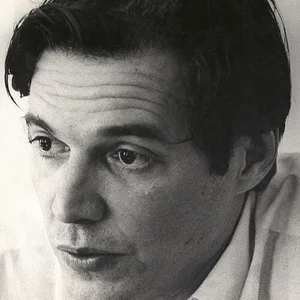

Antônio Carlos Jobim, known as Tom Jobim, was a Brazilian composer, pianist, and guitarist. A co-founder of bossa nova in the late 1950s, he helped spread Brazilian music throughout the world.
Antônio Carlos Jobim(1927 — 1994)
Antônio Carlos Jobim
Brésil
6 min read
Frequently asked questions
Key Facts
- Born on January 25, 1927, in Rio de Janeiro (Brazil)
- Composed the music for the film “Black Orpheus” in 1959, winner of the Palme d'Or at Cannes
- Co-founded bossa nova in the late 1950s with João Gilberto and Vinícius de Moraes
- Composed “Garota de Ipanema” (The Girl from Ipanema) in 1962, one of the most recorded songs in the world
- Died on December 8, 1994, in New York (United States)
Works & Achievements
Song regarded as the birth certificate of bossa nova, with lyrics by Vinicius de Moraes.
Soundtrack to a film that won an award at Cannes and spread Brazilian music across Europe (“A Felicidade”, “Manhã de Carnaval”).
One of the most recorded songs in the world, a universal symbol of bossa nova.
A collaboration with saxophonist Stan Getz, a worldwide hit that swept up several Grammy Awards.
A joint album with Frank Sinatra, the pinnacle of the composer's international recognition.
A major instrumental album blending bossa nova with refined orchestral arrangements.
A song-poem listing the small things of life, often cited among the most beautiful pieces of Brazilian music.
Anecdotes
In 1958, the singer Elizeth Cardoso recorded “Chega de Saudade,” composed by Jobim with lyrics by Vinicius de Moraes. On this record played a young guitarist named João Gilberto, whose syncopated, whispered style would go on to define the sound of bossa nova. It is often cited as the genre's birth.
In 1962, Jobim took part in a historic concert at New York's Carnegie Hall that introduced bossa nova to American audiences. Little accustomed to the international stage, he appeared there alongside other Brazilian musicians and helped launch a genuine craze for the genre in the United States.
His song “Garota de Ipanema” (“The Girl from Ipanema”), written in 1962, was inspired by a young woman, Helô Pinheiro, whom Jobim and Vinicius de Moraes would watch walk past a bar in Rio. Now one of the most recorded songs in the world, it made Ipanema beach famous across the globe.
In 1967, Jobim recorded an entire album with Frank Sinatra, “Francis Albert Sinatra & Antônio Carlos Jobim.” That America's greatest crooner chose to sing his compositions in Portuguese and English shows just how globally recognized the Brazilian composer had become.
A nature lover, Jobim enjoyed watching birds and the Brazilian forest, recurring themes in songs such as “Águas de Março” (“The Waters of March”). This ecological attachment shines through all his late work.
Primary Sources
Olha que coisa mais linda, mais cheia de graça / É ela menina que vem e que passa (Look at this lovely thing, so full of grace / It's her, the young girl who comes and goes by).
É pau, é pedra, é o fim do caminho (It's a stick, it's a stone, it's the end of the road) — a poetic enumeration of life's little things.
Vai minha tristeza e diz a ela que sem ela não pode ser (Go, my sadness, and tell her that without her it cannot be).
Key Places
Jobim's birthplace, the cultural capital where bossa nova was born; its beaches and neighborhoods inspired much of his work.
A chic neighborhood and beach in Rio, immortalized by “Garota de Ipanema,” which Jobim composed there.
A prestigious venue where the 1962 concert introduced bossa nova to American audiences.
The city where Jobim recorded many international albums and where he died in 1994.
Typical Objects

Classical nylon-string guitar, the central instrument of bossa nova, whose syncopated playing in muted chords defines the genre.

Jobim's favorite instrument, on which he composed his refined harmonies and played in concert and in the studio.

Sheets of music on which Jobim wrote down complex melodies and chords, evidence of his work as a composer trained in classical harmony.

Phonographic medium on which the bossa nova albums were pressed, allowing them to spread worldwide in the 1960s.

An essential tool for the murmured singing (“voz e violão”) characteristic of bossa nova, capturing soft, close voices.

Trophy of the American music industry; “The Girl from Ipanema” won one in 1965, cementing bossa nova's status.
School Curriculum
Vocabulary & Tags
Key Vocabulary
Tags
Daily Life
Morning
Often rising late after evenings filled with music, Jobim liked to begin the day quietly at home in Rio. He would happily sit down at the piano to search for melodies, a pencil within reach to jot down his ideas.
Afternoon
The afternoon was split between composition work, rehearsals, and meetings with his lyricists, notably the poet Vinicius de Moraes. He also frequented the recording studios and the bars of Copacabana and Ipanema where musicians would gather.
Evening
Evenings were devoted to concerts, studio sessions, or gatherings among friends where music was played late into the night. These convivial moments (*roda*) nourished his creativity and the exchanges between artists.
Food
Jobim enjoyed Brazilian cuisine, such as feijoada (a stew of black beans and meat) and the tropical fruits so abundant in Rio. Like many musicians of his time, he was happy to pair these meals with a beer or a whisky.
Clothing
He dressed with the relaxed elegance of the Cariocas (the inhabitants of Rio): light shirts suited to the tropical climate, and understated suits for international concerts and photo shoots.
Housing
Jobim lived in Rio de Janeiro, near the beaches and the nature he cherished, in an urban setting bordered by hills and forest. He also regularly stayed in New York for his recordings.