The Two Meals of Tawantinsuyu
In the Inca Empire, people ate not three courses like the French, but twice a day: a *comida* in the morning, around mid-morning, and another in the late afternoon. No starter or dessert: they shared, sitting on the ground on textiles, bowls (*manka*) of thick stew, tubers, and grains, always seasoned with *ají* (chili). Meat was rare and reserved for festivals or nobles. Around the Sapa Inca, meals became state banquets: grains, meat, and *chicha* were redistributed to subjects and gods, for feeding the people and the Sun was an imperial duty.
Signature : Ají (Andean chili) and High-Altitude Drying
Two hallmarks of this cuisine: *ají*, the yellow or red chili that flavors almost every daily dish, and the Andean art of preserving by cold and mountain sun — *chuño* (freeze-dried potato from overnight frost) and *charqui* (dried llama meat). These techniques fed Atahualpa's armies during the civil war and filled the state storehouses (*qollqa*).
Atahualpa at the table
1500 — 1533
5 period recipes
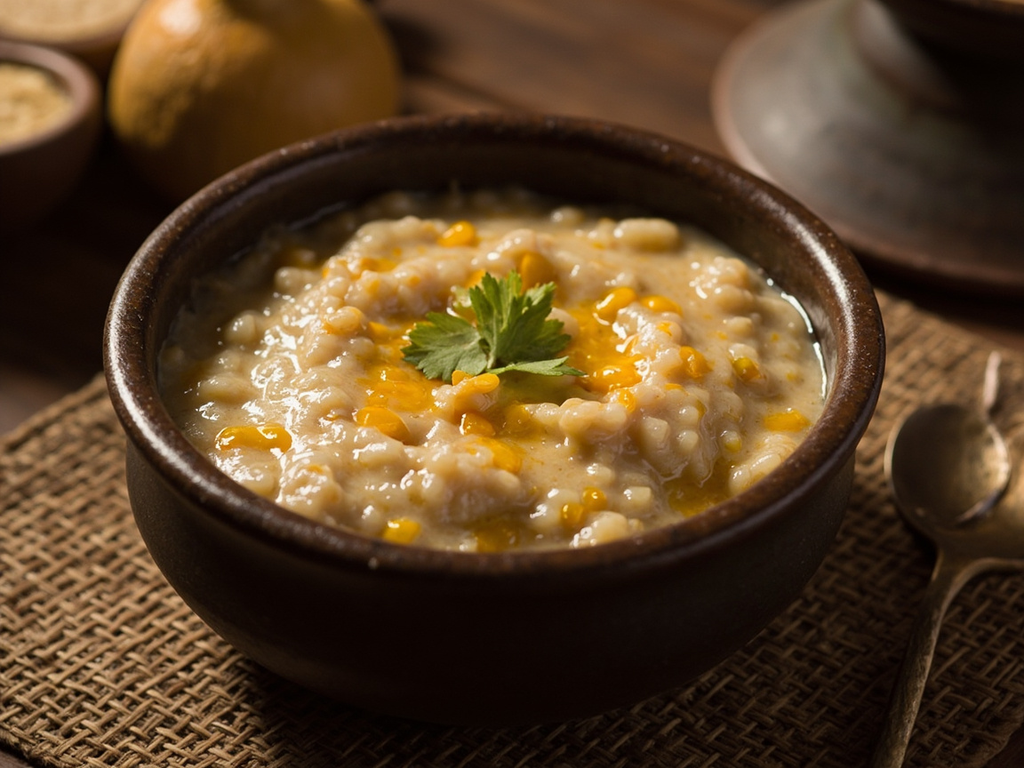 Everyday
Quinoa Lawa with Ají
Morning meal (daily staple stew in *manka*)
🧂 🍄 🌶️· 35 min
View the recipe
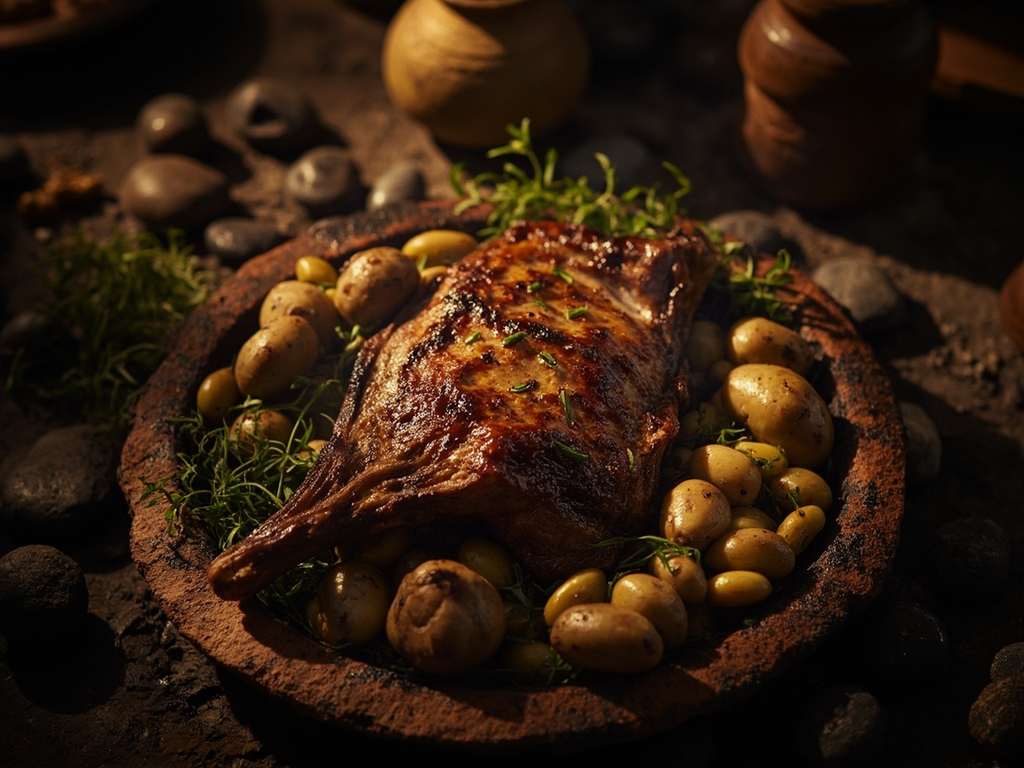 Festive
Watia — Llama and Tubers Cooked Under the Earth
State banquet (feast redistributed by the Sapa Inca)
🍄 🧂· 2 h (including marination)
View the recipe
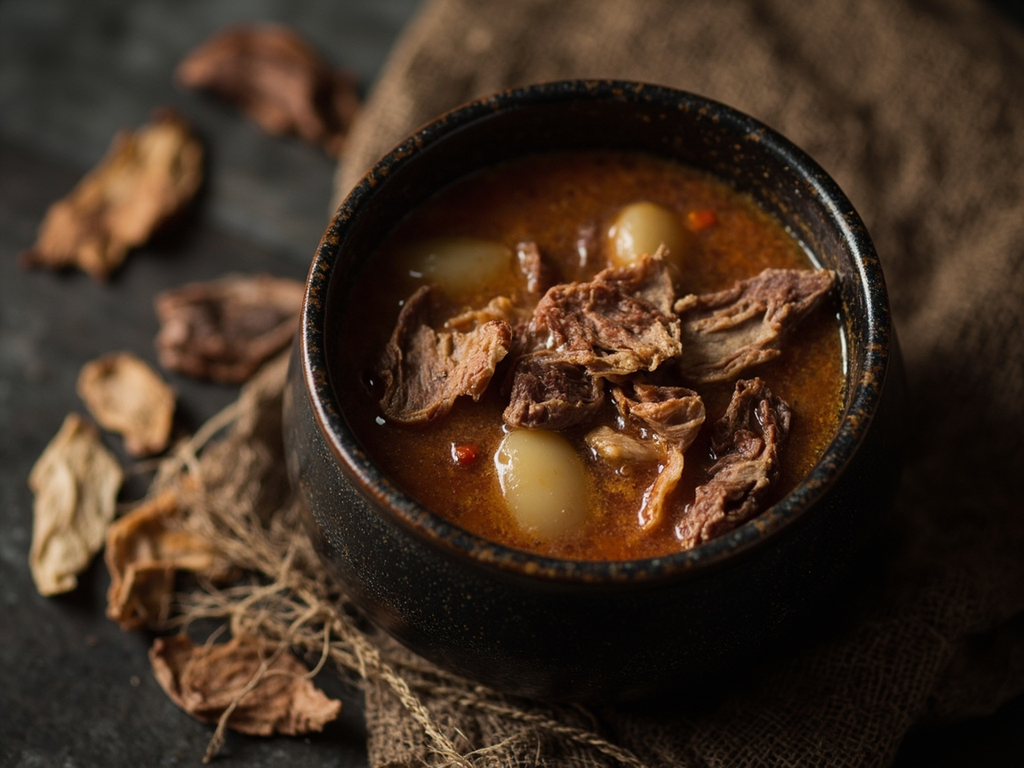 Travel
Charqui and Chuño — The Army Ration
Field provisions (storehouse supplies from *qollqa*)
🧂 🍄· 40 min (excluding drying)
View the recipe
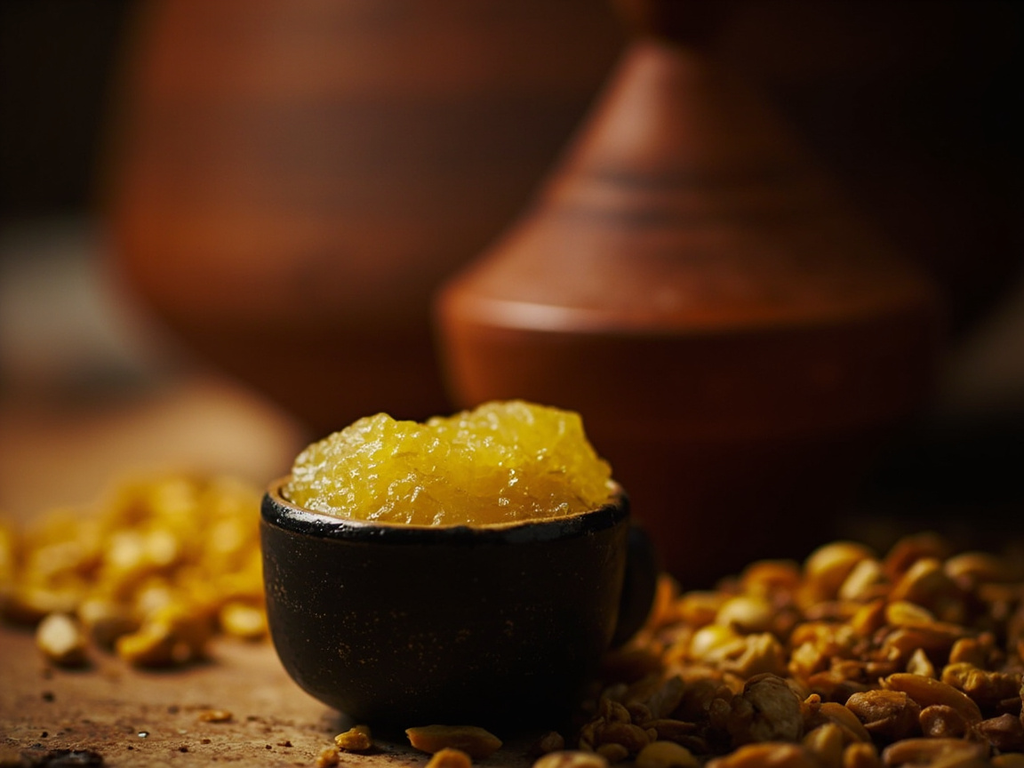 Drink
DrinkChicha de Jora — The Sacred Corn Beer
Ceremonial beverage (libations and Sun banquets)
🫙 🍋· 2 h + 2-4 days fermentation
View the recipe
 Offering
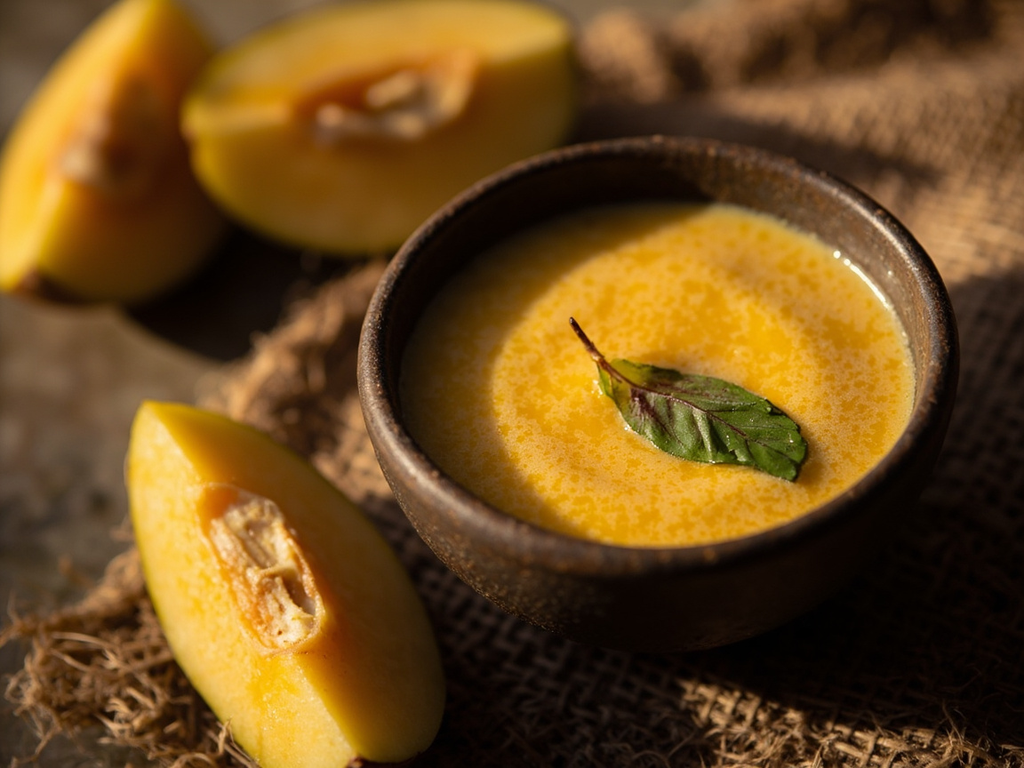
Lucuma and Corn Mazamorra
Offering dish (sweetness of rituals and calendar festivals)
🍯· 25 min
View the recipe