 flip
flipQuinoa Lawa with Ají
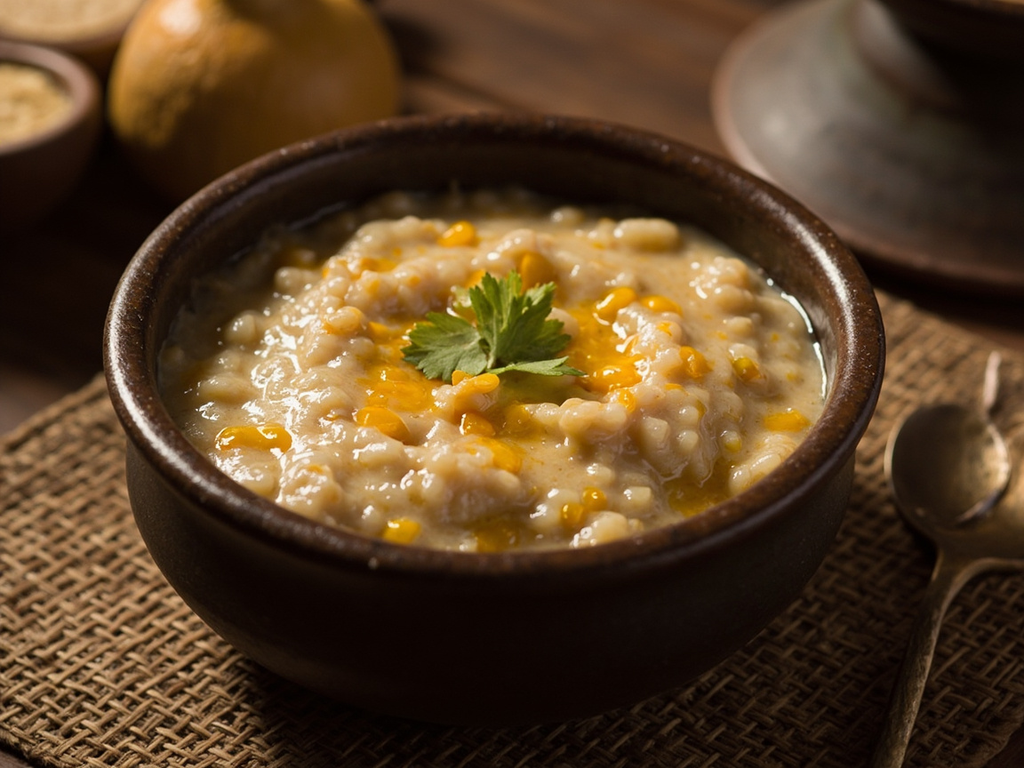
Quinoa Lawa with Ají
Why this dish? Before becoming emperor, Atahualpa grew up in Quito and camped with the northern armies: *lawa*, a thick porridge of quinoa and tubers spiced with *ají*, was the basic dish that fed both terrace farmers and marching soldiers. It is the daily food of all Tawantinsuyu, the food its people lived on.
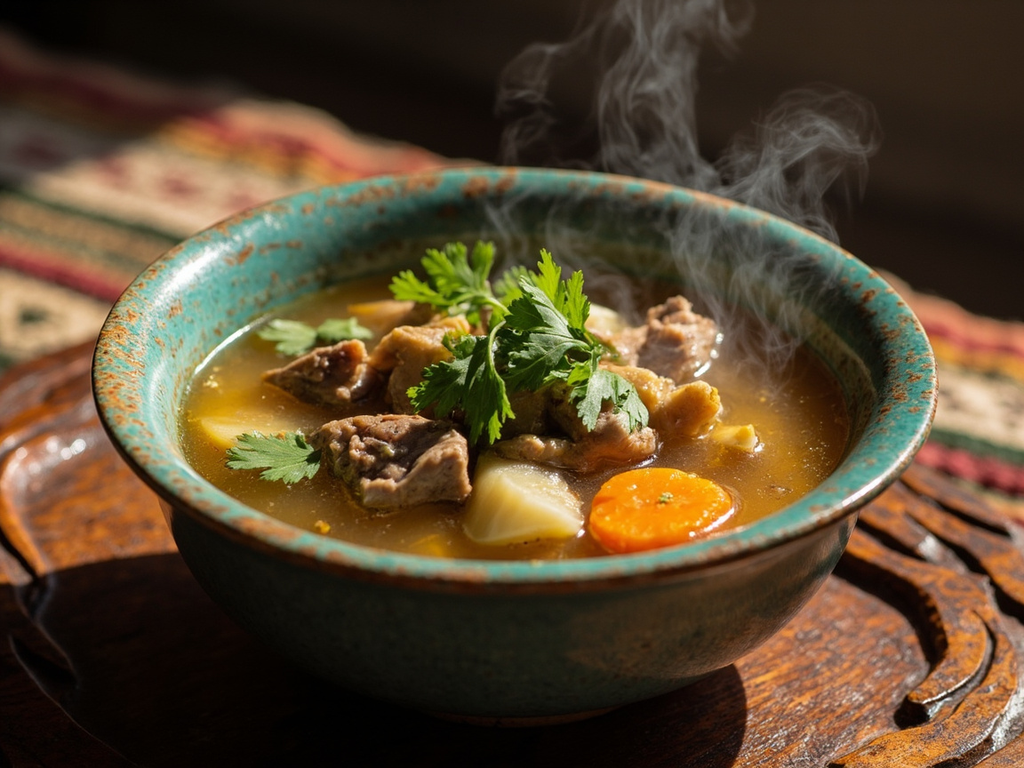
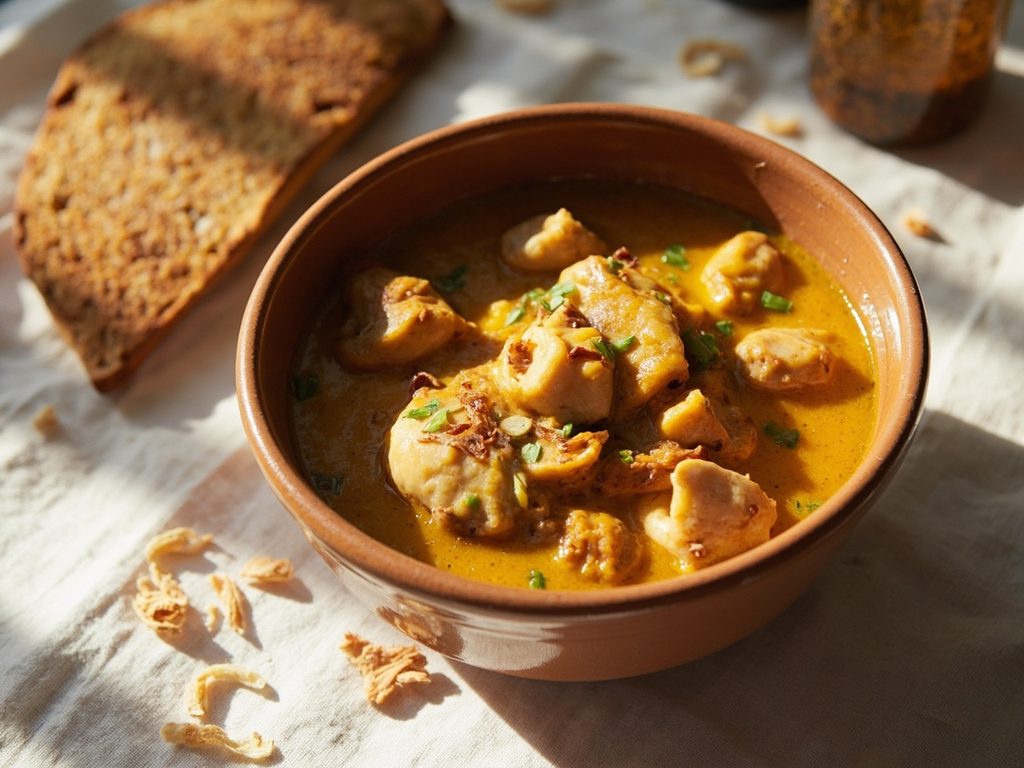
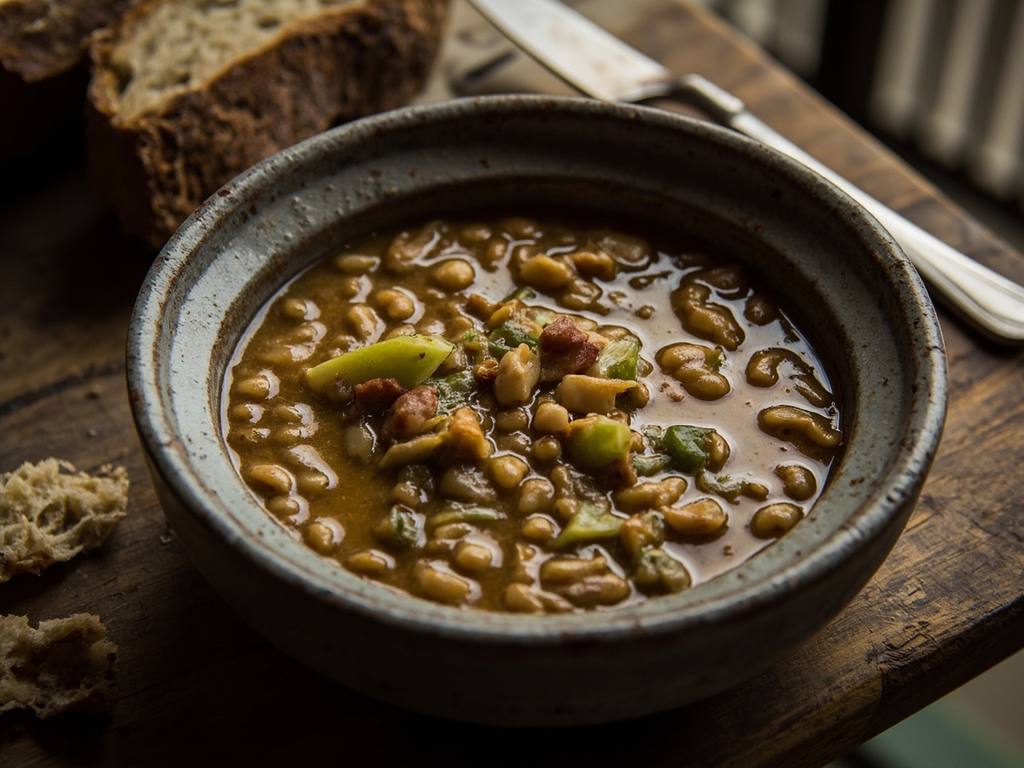
A creamy pottage of quinoa and oca, thickened and flavored with yellow *ají* and mountain herbs. Comforting, nourishing, and made in the same clay pot for centuries.
Stranger, know that I, Atahualpa, son of Inti the Sun, shared this pottage in the cold of the heights before I wore the imperial fringe. We washed the quinoa long to remove its bitterness — never skip this step — then threw it into the boiling *manka* with the oca and a handful of *ají* ground on a stone. My people ate it twice a day, sitting on the earth the gods gave us. It is humble, yes, but it is this sacred grain that keeps armies and empires standing.
- •Quinoa — two handfuls (sacred staple grain)
- •Oca (Andean tuber) — a few tubers (thickener and sweetness)
- •Fresh yellow ají — to taste (spiciness, soul of the dish)
- •Huacatay herb (tagetes) — one sprig (aromatic flavor)
- •Andean rock salt — a pinch (seasoning)
- •Spring water — as needed for the pot (cooking liquid)
Quinoa Lawa with Ají
A creamy pottage of quinoa and oca, thickened and flavored with yellow *ají* and mountain herbs. Comforting, nourishing, and made in the same clay pot for centuries.
Why this dish? Before becoming emperor, Atahualpa grew up in Quito and camped with the northern armies: *lawa*, a thick porridge of quinoa and tubers spiced with *ají*, was the basic dish that fed both terrace farmers and marching soldiers. It is the daily food of all Tawantinsuyu, the food its people lived on.
Stranger, know that I, Atahualpa, son of Inti the Sun, shared this pottage in the cold of the heights before I wore the imperial fringe. We washed the quinoa long to remove its bitterness — never skip this step — then threw it into the boiling *manka* with the oca and a handful of *ají* ground on a stone. My people ate it twice a day, sitting on the earth the gods gave us. It is humble, yes, but it is this sacred grain that keeps armies and empires standing.
Ingredients (period version)
- Quinoa — two handfuls (sacred staple grain)
- Oca (Andean tuber) — a few tubers (thickener and sweetness)
- Fresh yellow ají — to taste (spiciness, soul of the dish)
- Huacatay herb (tagetes) — one sprig (aromatic flavor)
- Andean rock salt — a pinch (seasoning)
- Spring water — as needed for the pot (cooking liquid)
Ingredients
- Quinoa — 150 g (staple grain)
- Oca (or white sweet potato as substitute) — 200 g (thickener and sweetness)
- Ají amarillo (paste or fresh) — 1 tbsp (spiciness)
- Huacatay (or cilantro + mint) — 1 tsp (aroma)
- Salt — 1 tsp (seasoning)
- Water — 1 liter (cooking liquid)
Method
- Rinse the quinoa thoroughly under cold water, rubbing it between your hands, until the water runs clear (this removes the bitter saponin).
- Peel and cut the oca (or sweet potato) into small dice.
- Bring the salted water to a boil, add quinoa and tubers, cook over low heat for 20-25 minutes, stirring.
- Add the *ají* and *huacatay*, cook for another 5 minutes until a thick, bound porridge forms.
- Serve piping hot in a clay bowl.
How it was made : *Lawa* (or *lagua*) in the Andes refers to any grain-thickened stew. Before Spanish wheat arrived, it was thickened with quinoa or maize flour and cooked in a *manka*, an earthenware pot set on a stone hearth. Washing quinoa to remove saponin is a millennia-old Andean skill.
The contemporary twist : A drizzle of *ají*-infused oil and a few puffed quinoa seeds on top for crunch: the terrace stew becomes a contemporary bowl.
Sources : Bernabé Cobo, Historia del Nuevo Mundo (1653) · Garcilaso de la Vega, Comentarios Reales de los Incas (1609)
Atahualpa · Charactorium