 flip
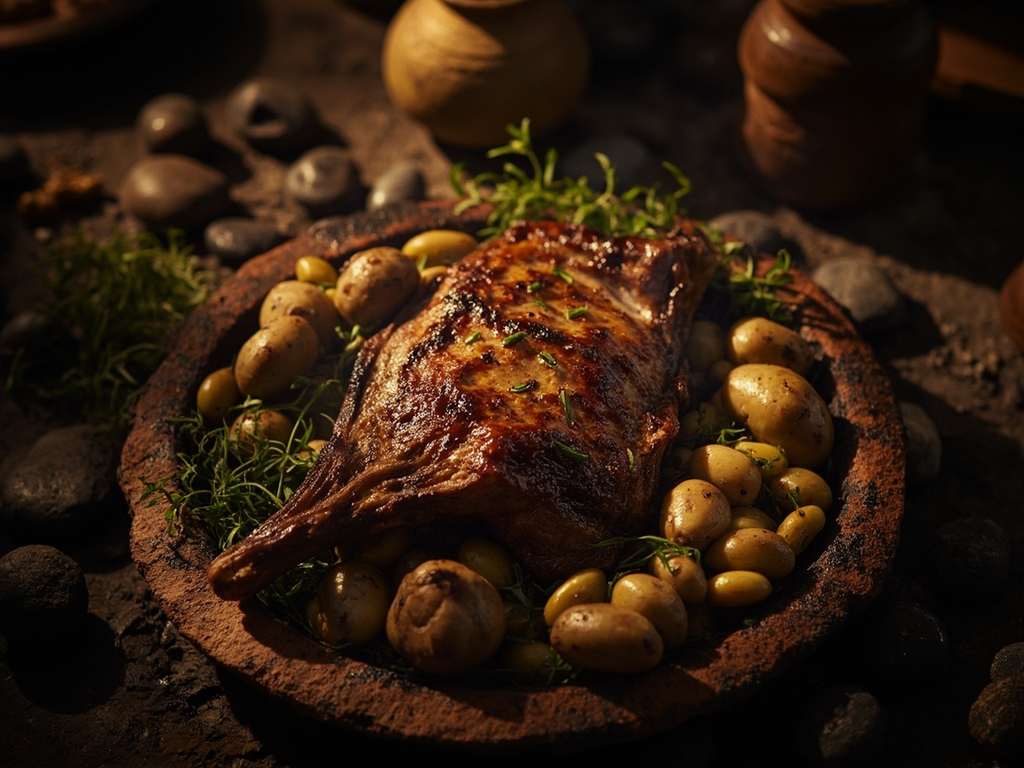
flipWatia — Llama and Tubers Cooked Under the Earth
Watia — Llama and Tubers Cooked Under the Earth
Why this dish? As emperor, Atahualpa offered his warriors and nobles great feasts where llamas from the imperial herd were slaughtered. *Watia*, cooking in an oven of heated earth clods, is the Andean way to celebrate a victory — and the victory over his brother Huáscar was celebrated thus, with plenty of meat and *chicha*.
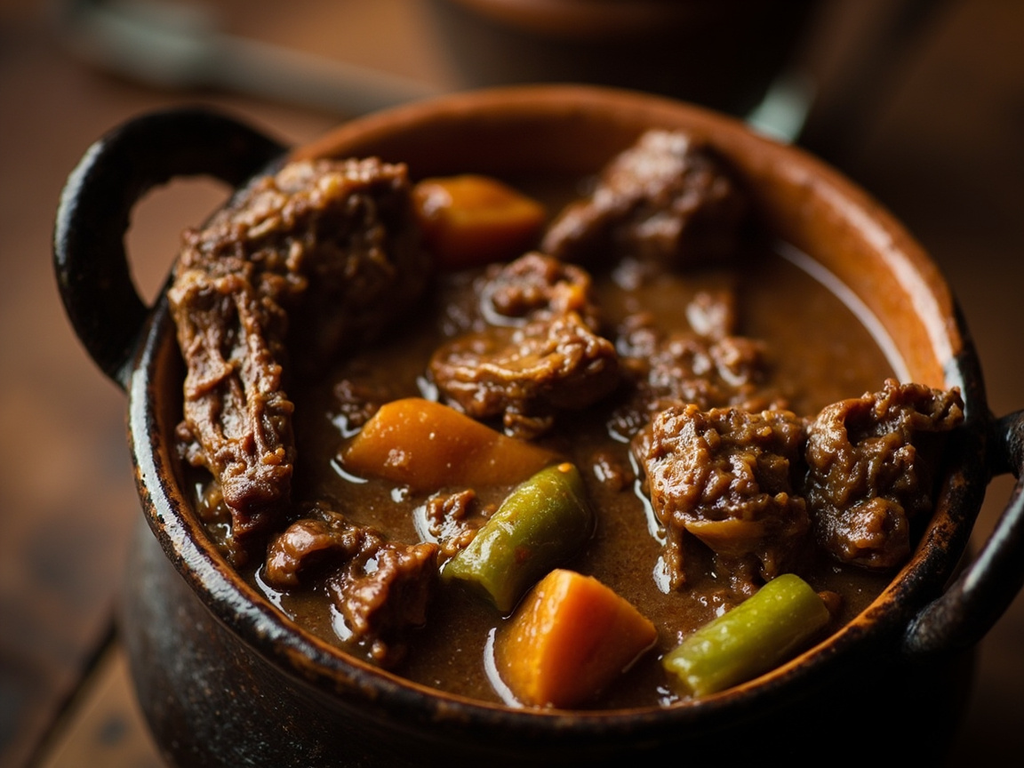
A temporary oven of earth clods, heated by fire, in which llama meat, potatoes, and beans are buried for a slow, smoky cooking. The direct ancestor of Andean *pachamanca*.
When my captains brought me victory, I had the earth ovens built as my fathers the Incas had done. We build a dome of clods, heat it with wood until the earth glows red, then bury the meat of llamas from my herds, the *papas* and beans, and seal the earth over everything. No one touches my leftovers: what I do not eat is burned, for the table of the Sun's son is not shared like that of ordinary men. Be patient: the earth yields a tender, smoky flesh that no open fire can match.
- •Llama meat — one shoulder (centerpiece of the feast)
- •Andean potatoes (papas) — a basket (staple side)
- •Pallar beans (lima beans) — two handfuls (vegetable)
- •Red ají — to taste (spicy marinade)
- •Huacatay and muña herbs — a bunch (mountain aroma)
- •Salt — to taste (seasoning)
Watia — Llama and Tubers Cooked Under the Earth
A temporary oven of earth clods, heated by fire, in which llama meat, potatoes, and beans are buried for a slow, smoky cooking. The direct ancestor of Andean *pachamanca*.
Why this dish? As emperor, Atahualpa offered his warriors and nobles great feasts where llamas from the imperial herd were slaughtered. *Watia*, cooking in an oven of heated earth clods, is the Andean way to celebrate a victory — and the victory over his brother Huáscar was celebrated thus, with plenty of meat and *chicha*.
When my captains brought me victory, I had the earth ovens built as my fathers the Incas had done. We build a dome of clods, heat it with wood until the earth glows red, then bury the meat of llamas from my herds, the *papas* and beans, and seal the earth over everything. No one touches my leftovers: what I do not eat is burned, for the table of the Sun's son is not shared like that of ordinary men. Be patient: the earth yields a tender, smoky flesh that no open fire can match.
Ingredients (period version)
- Llama meat — one shoulder (centerpiece of the feast)
- Andean potatoes (papas) — a basket (staple side)
- Pallar beans (lima beans) — two handfuls (vegetable)
- Red ají — to taste (spicy marinade)
- Huacatay and muña herbs — a bunch (mountain aroma)
- Salt — to taste (seasoning)
Ingredients
- Lamb or lean beef (if llama unavailable) — 800 g (centerpiece)
- Firm-fleshed potatoes — 1 kg (side)
- Fresh large lima beans — 300 g (vegetable)
- Ají panca paste (red) — 2 tbsp (marinade)
- Huacatay (or mint + cilantro) — 1 bunch (aroma)
- Salt and a little water — to taste (marinade)
Method
- Marinate the meat for at least 2 hours with *ají*, chopped herbs, and salt.
- Modern oven version: line a dish with stones or parchment, arrange meat, whole potatoes, and beans, cover with herbs.
- Seal tightly (lid or double foil) to trap steam and earthy aroma.
- Cook at 180°C for 1 hour 30 minutes, until the meat falls apart and potatoes are tender.
- Serve everything steaming, placed on fresh herbs, as if pulled from the earth.
How it was made : *Watia* (or *huatia*) is attested by chroniclers: a dome of dry earth clods was heated, food was buried inside, then the oven was collapsed so the hot earth cooked slowly. Imperial feasts consumed llamas from the state herd; Pedro Pizarro reports that Atahualpa was served by noble women and his leftovers were burned.
The contemporary twist : Served on a slate sprinkled with edible soil (black olive powder) and *muña* flowers, *watia* becomes a chef's nod to 'Pachamama cuisine'.
Sources : Pedro Pizarro, Relación del descubrimiento y conquista de los reinos del Perú (1571) · Bernabé Cobo, Historia del Nuevo Mundo (1653)
Atahualpa · Charactorium