 flip
flipLucuma and Corn Mazamorra
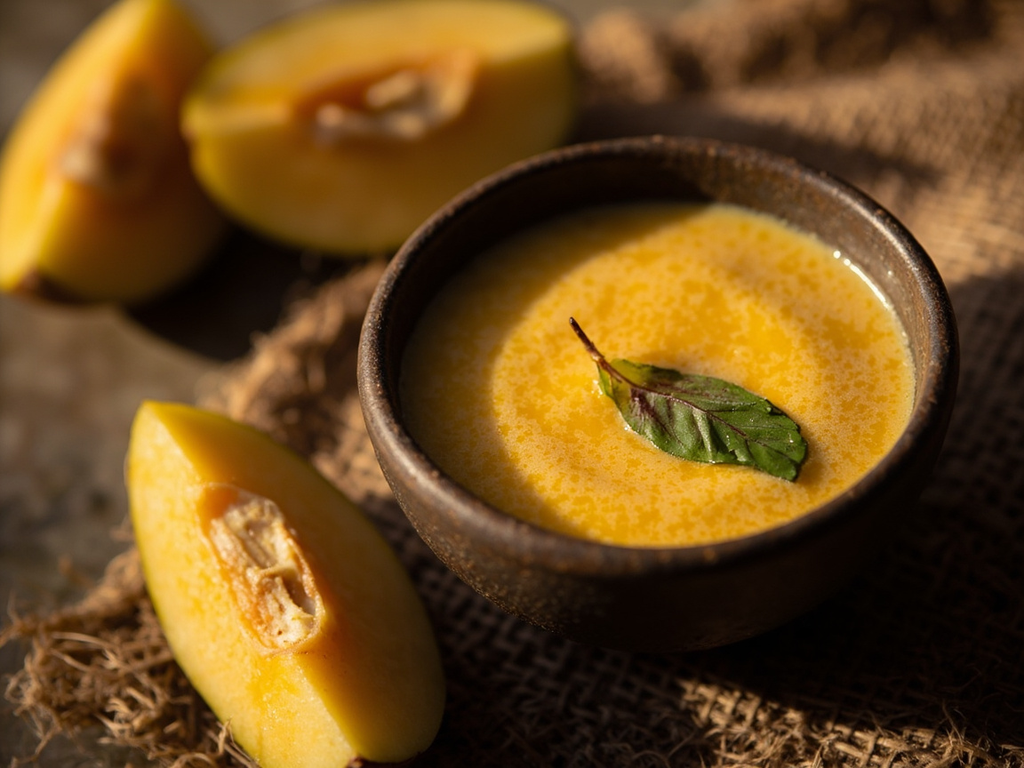
Lucuma and Corn Mazamorra
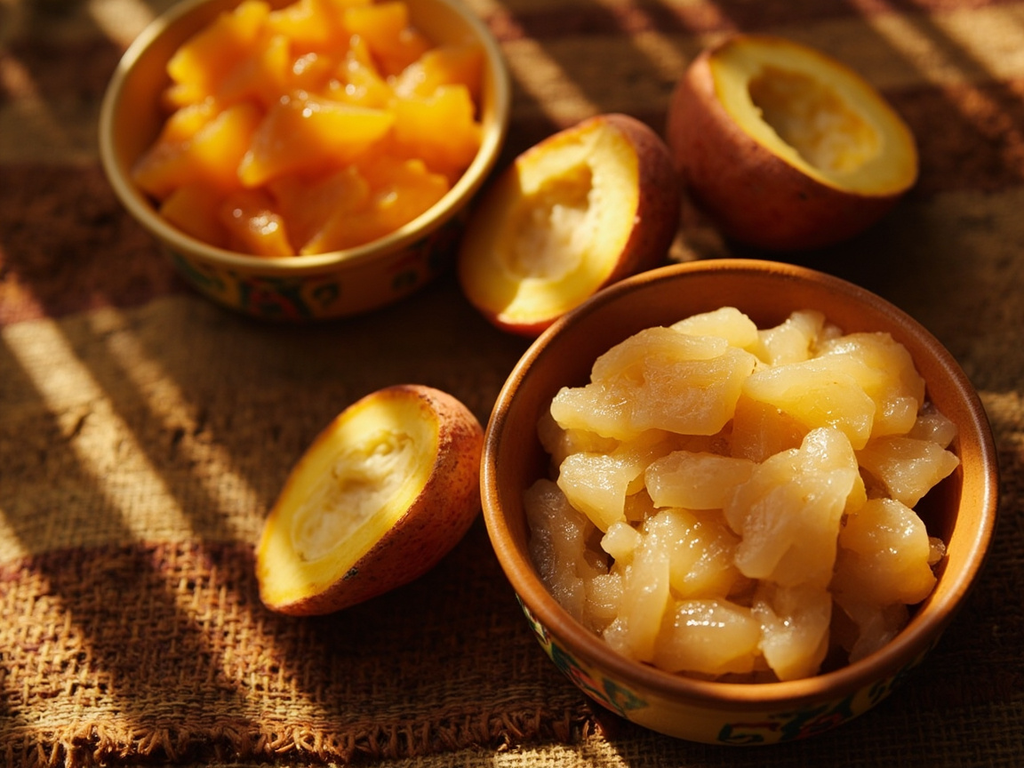
Why this dish? In a world without cane sugar, sweetness came from native fruits: *lúcuma*, with flesh the color of gold like the sacred metal of the Sun, was among the gifts offered. Inspired by these ceremonial sweets, this *mazamorra* evokes the festivals of the imperial calendar that Atahualpa, son of Inti, presided over.
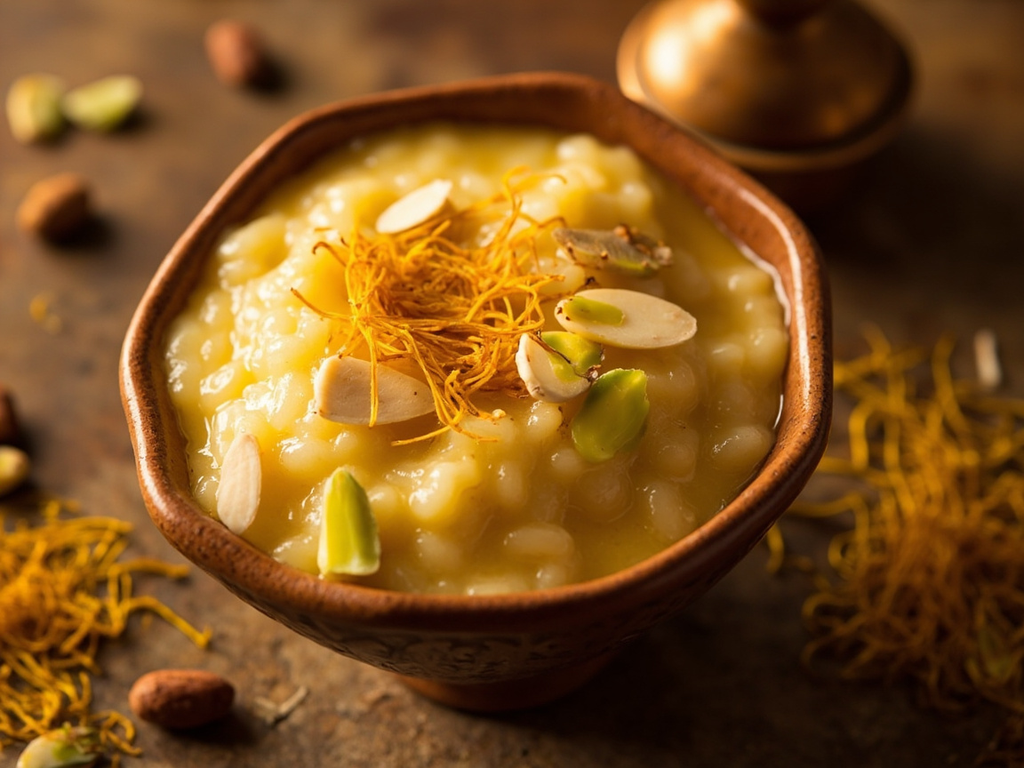
A creamy corn pudding thickened with the sweet, malty pulp of *lúcuma*, perfumed with Andean herbs. The only truly sweet note in the Inca meal, inherited from the golden fruits of the valleys.
Gold is not only in my gardens of Cuzco where fine gold plants grow: it is also in the flesh of the *lúcuma*, sweet as the light of my father the Sun. We pick it ripe, crush it, and mix it with cooked corn flour until it coats the spoon. This sweetness we present as an offering to the *huacas* and share on great feast days. Taste it slowly, stranger, and think that the Sun lets itself be eaten.
- •Ripe lucuma — a few fruits (sweetness and golden color)
- •Corn flour — two handfuls (thickener)
- •Spring water — as needed for creaminess (cooking liquid)
- •Molle (sweet berries) — a little (additional sweetness)
- •Muña (Andean mint) — one leaf (aroma)
Lucuma and Corn Mazamorra
A creamy corn pudding thickened with the sweet, malty pulp of *lúcuma*, perfumed with Andean herbs. The only truly sweet note in the Inca meal, inherited from the golden fruits of the valleys.
Why this dish? In a world without cane sugar, sweetness came from native fruits: *lúcuma*, with flesh the color of gold like the sacred metal of the Sun, was among the gifts offered. Inspired by these ceremonial sweets, this *mazamorra* evokes the festivals of the imperial calendar that Atahualpa, son of Inti, presided over.
Gold is not only in my gardens of Cuzco where fine gold plants grow: it is also in the flesh of the *lúcuma*, sweet as the light of my father the Sun. We pick it ripe, crush it, and mix it with cooked corn flour until it coats the spoon. This sweetness we present as an offering to the *huacas* and share on great feast days. Taste it slowly, stranger, and think that the Sun lets itself be eaten.
Ingredients (period version)
- Ripe lucuma — a few fruits (sweetness and golden color)
- Corn flour — two handfuls (thickener)
- Spring water — as needed for creaminess (cooking liquid)
- Molle (sweet berries) — a little (additional sweetness)
- Muña (Andean mint) — one leaf (aroma)
Ingredients
- Lucuma pulp (fresh or frozen) — 250 g (sweetness and color)
- Cornstarch or corn flour — 3 tbsp (thickener)
- Water — 600 ml (cooking liquid)
- Honey (if molle unavailable) — 1-2 tbsp (additional sweetness)
- Muña or mint — 1 leaf (aroma)
Method
- Dissolve corn flour (or cornstarch) in a little cold water to avoid lumps.
- Heat the remaining water with the *muña* leaf, then pour in the dissolved mixture, stirring constantly.
- Cook over low heat for 8-10 minutes until thickened and coating the spoon.
- Fold in the crushed *lúcuma* pulp and honey, whisk until smooth and golden.
- Pour into bowls, let cool slightly: the *mazamorra* sets as it cools.
How it was made : *Lúcuma*, an Andean fruit with a mealy, malty flesh, is attested well before the Inca Empire (depicted on Mochica ceramics) and was among offerings. Without cane sugar (brought by the Spanish), Inca cuisine drew sweetness from fruits, native bee honey, and *molle* berries. This *mazamorra* is an evocation: the exact form of Inca ceremonial sweets is poorly known.
The contemporary twist : Served chilled as a dessert cream, with a sprinkle of raw cacao (another treasure of the continent): *lúcuma*, star of today's Peruvian ice creams, reconnects with its sacred past.
Sources : Bernabé Cobo, Historia del Nuevo Mundo (1653)
Atahualpa · Charactorium