 Flip the card
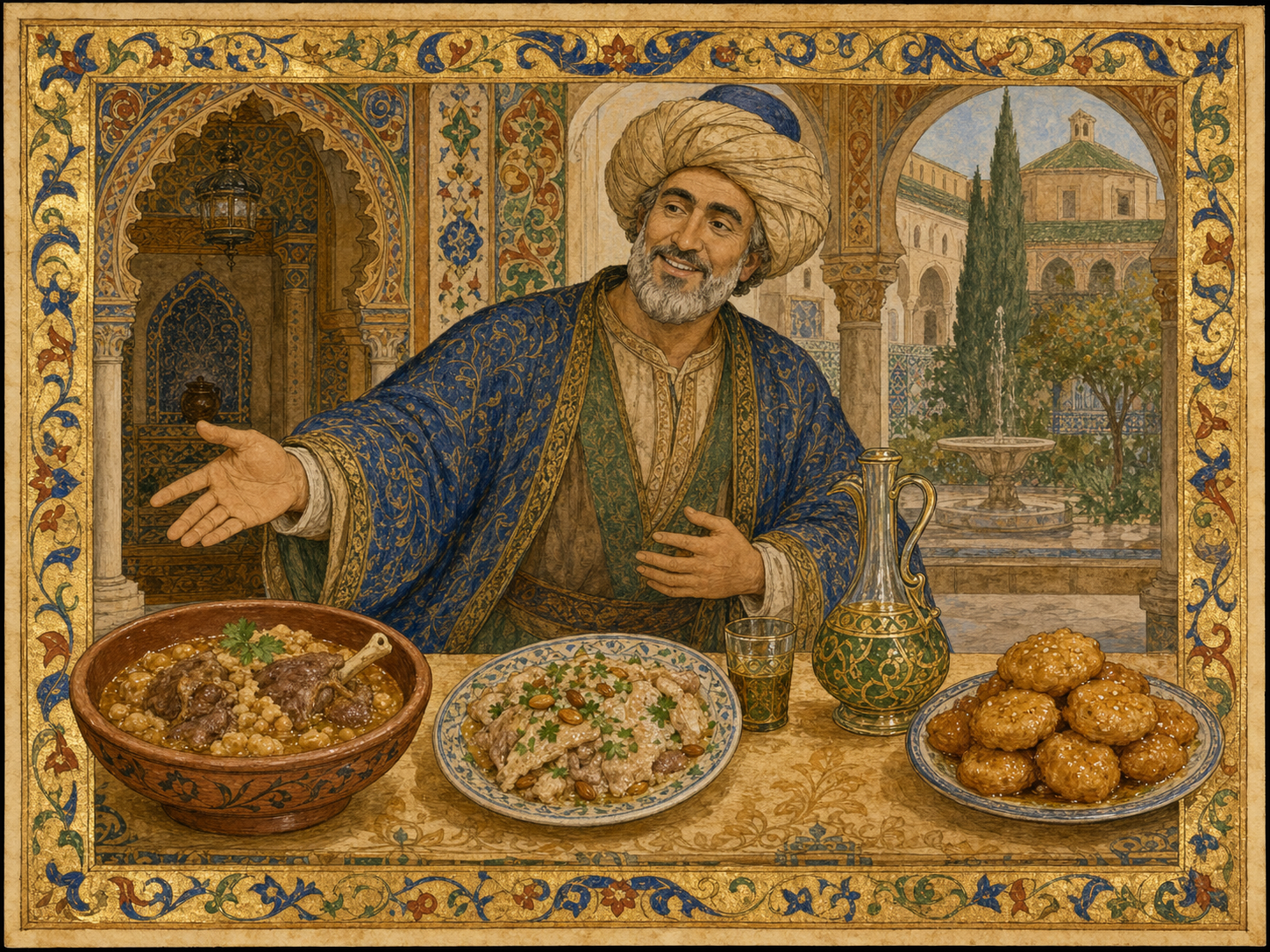
Averroes at the table
1126 — 1198
On the menu
Al-Māʾida — the Andalusian table
In 12th-century Córdoba, meals were not served as "starter, main, dessert" but around a large communal table (al-māʾida) where dishes arrived together or in waves: a base of bread (khubz) broken with the right hand, fragrant meat stews (marqa, tafāyā) scooped up with bread, refreshing syrup drinks (sharāb), and honey-fried sweets to finish. The meal followed both a medical and a gourmet logic: balancing hot and cold, dry and moist, according to the theory of humors inherited from Galen.
Signature : Murrī and saffron
Murrī, a fermented condiment made from mouldy barley and salt (a distant cousin of garum), gives Andalusian dishes their salty-fermented depth; saffron (zaʿfarān) gives them their gold and perfume. Together, they define the cuisine of Al-Andalus in the cookbooks of the time.
click to flip back
Averroes at the table
1126 — 1198
4 period recipes
 Everyday
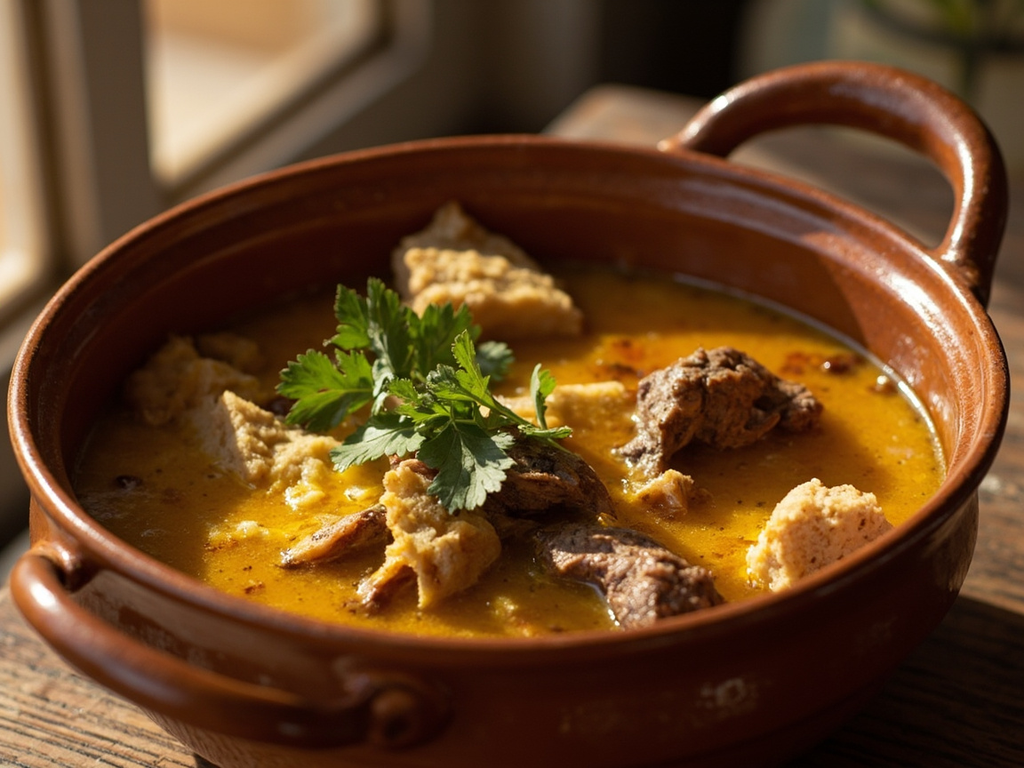
Tharīd with lamb and murrī
Bread-based main dish (tharīd)
🧂 🍄· 1 h 45
View the recipe
 Festive
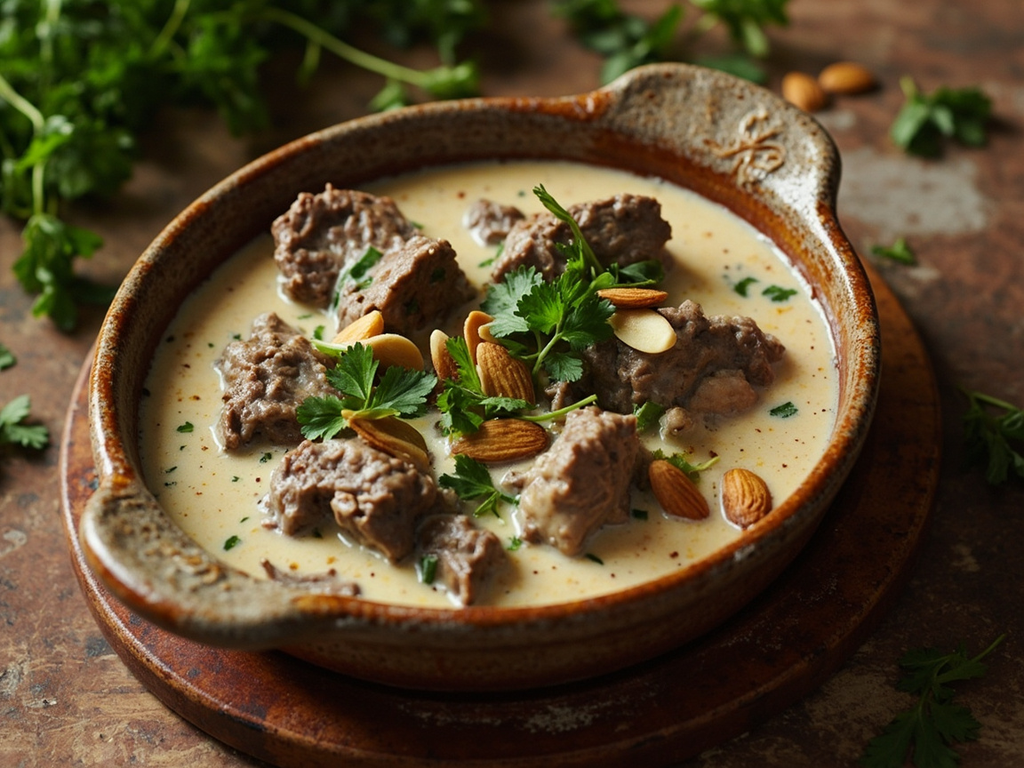
White tafāyā of lamb with almonds and coriander
Festive stew (marqa / tafāyā)
🧂 🌶️· 2 h
View the recipe
 Remedy
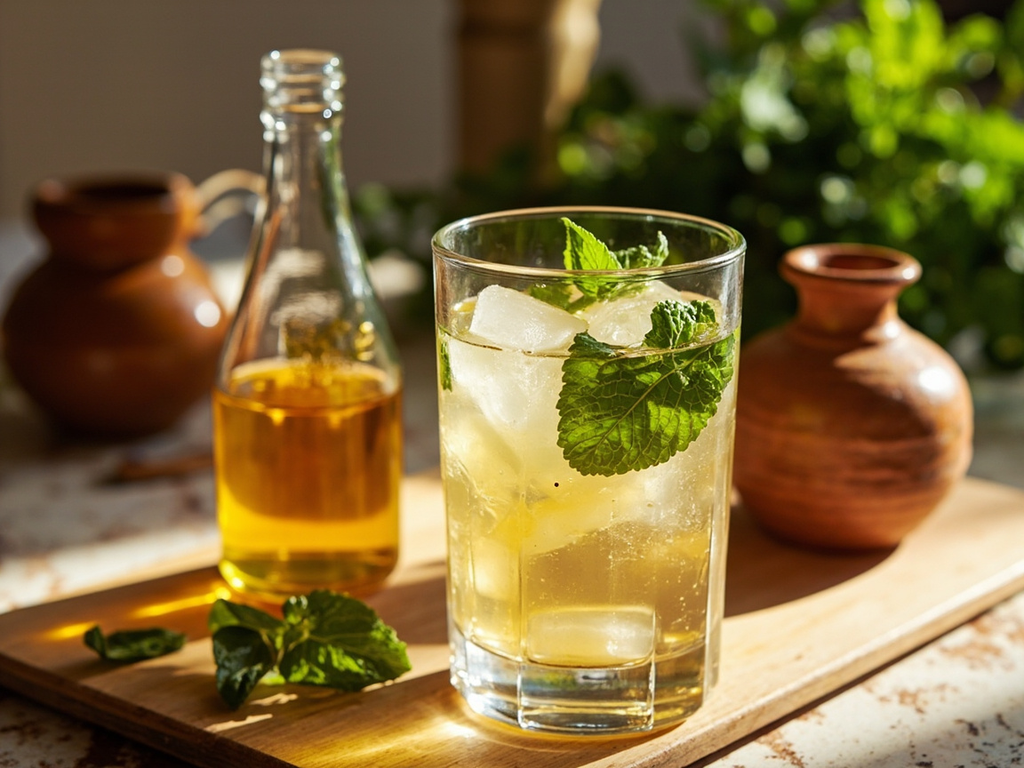
Sikanjabīn — honey and vinegar syrup with mint
Medicinal syrup drink (sharāb)
🍋 🍯· 25 min
View the recipe
 Street food
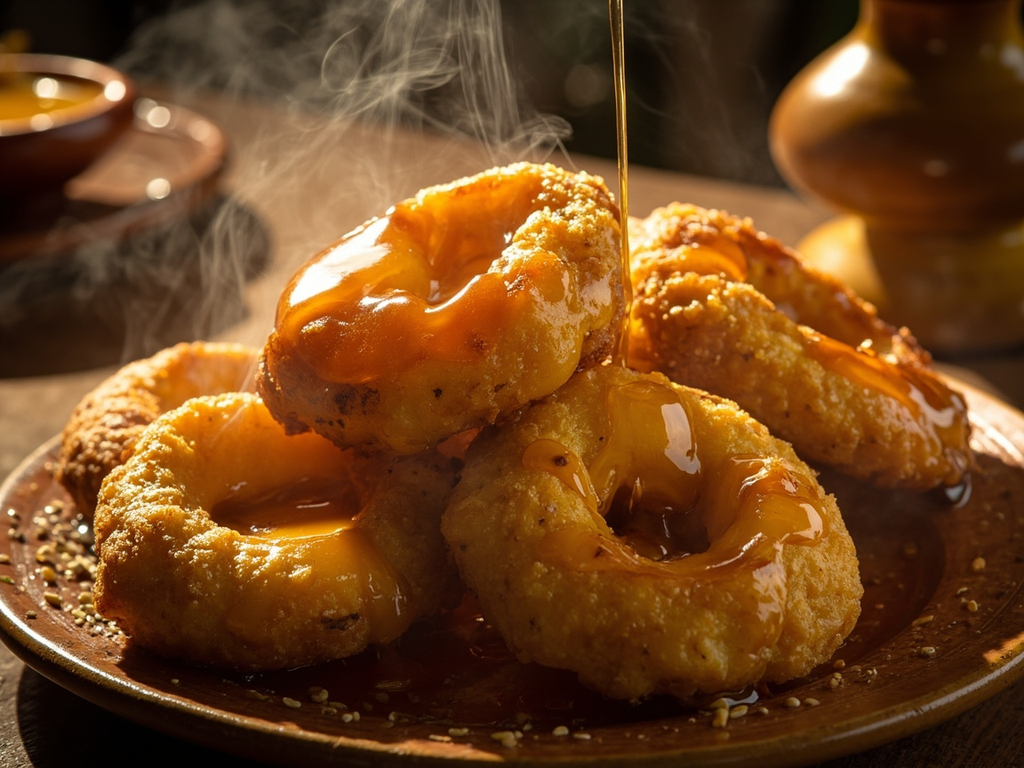
Mujabbana — fresh cheese fritters with honey
Street food treat (to buy at the market)
🍯 🧂· 40 min
View the recipe