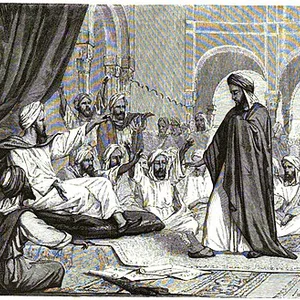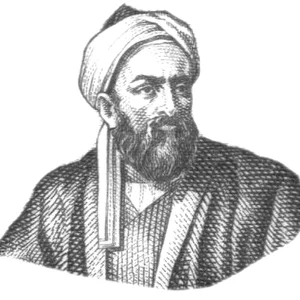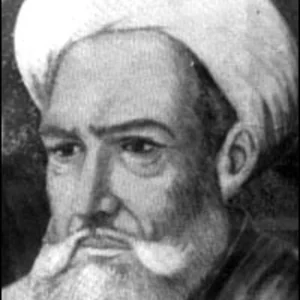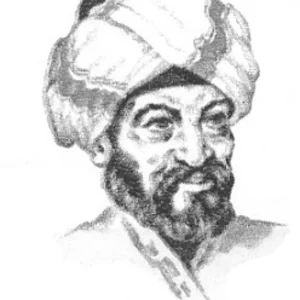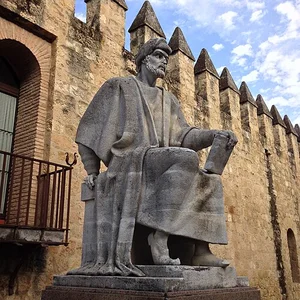

Andalusian philosopher, theologian, and physician (1126–1198), Averroes was the greatest commentator on Aristotle of the Islamic Middle Ages. His works profoundly influenced medieval European philosophy and Islamic thought by reconciling Aristotelian reason with religious faith.
Frequently asked questions
Key Facts
- 1126: Born in Córdoba, Al-Andalus
- 1153: Becomes qadi (judge) of Córdoba and begins developing his commentaries on Aristotle
- 1169–1195: Writes his three types of commentaries on Aristotle's works (short summaries, middle commentaries, and long commentaries)
- 1195: Disgraced by Caliph Yaqub al-Mansur and exiled for his philosophical positions
- 1198: Dies in Marrakesh; his major influence is subsequently felt in Christian Europe through Latin translations
Works & Achievements
A monumental work covering almost the entire Aristotelian corpus. These commentaries earned Averroes the title of 'the Commentator' in medieval Europe and profoundly influenced Latin scholasticism.
A foundational treatise demonstrating that philosophy and Islamic religion are not contradictory. Averroes defends the right — and even the religious duty — to practice philosophy.
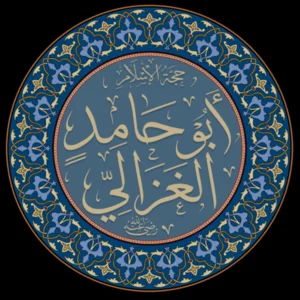
A point-by-point refutation of Al-Ghazali's The Incoherence of the Philosophers. Averroes defends natural causality and philosophical rationality against the attacks of theologians.
A medical encyclopedia in seven books covering anatomy, pathology, pharmacology, and hygiene. Translated into Latin, it was used as a textbook in European universities.
A comparative Islamic law treatise presenting the divergences between different legal schools. A work still studied today in Islamic law faculties.
A rational theology treatise in which Averroes examines the proofs for the existence of God and critiques the methods of Ash'arite and Mu'tazilite theologians.
Anecdotes
Averroes himself recounts that he was introduced to the Almohad caliph Abu Yaqub Yusuf by the philosopher Ibn Tufayl around 1169. The caliph asked him whether the heavens were eternal or created. Averroes, intimidated, hesitated to answer, but the caliph put him at ease by himself laying out the arguments of the philosophers, revealing an impressive breadth of learning.
Averroes held the position of grand qadi (chief judge) of Córdoba, inheriting the post from his father and grandfather before him. This family of jurists was so respected that the title seemed almost hereditary. He administered justice according to Maliki law while continuing his philosophical work.
Around 1195, Averroes fell out of favor with Caliph Al-Mansur, who yielded to pressure from conservative theologians. His philosophical books were publicly burned and he was exiled to Lucena, a small town near Córdoba. He was rehabilitated shortly before his death in 1198, but died in Marrakesh without ever seeing his hometown again.
Averroes was also a distinguished physician. He wrote the Colliget, a monumental medical encyclopedia, and served as personal physician to the Almohad caliph. It is said that he stopped writing on only two days in his life: the day of his wedding and the day of his father's death.
Primary Sources
It is therefore evident, from what we have said, that the study of the books of the Ancients is obligatory under Religious Law, since their aim and purpose in their books is precisely the same purpose that the Law urges us to pursue.
The doctrine of Aristotle is the supreme truth, because his intellect was the limit of human intellect. This is why it has been said of him that he was created and given by divine providence to show the supreme degree of human perfection.
To say that the philosophers are incoherent because they affirm natural causality is to deny the very order that God established in his creation. For knowledge of God comes through knowledge of his creatures.
Medicine is not a conjectural art but a science founded on certain principles. The physician must know the general causes of diseases before treating particular cases.
Key Places
Averroes' birthplace and intellectual capital of Al-Andalus. He served there as chief qadi and spent most of his life surrounded by his libraries.
Capital of the Almohad empire where Averroes met the caliph and where he died in 1198. It was in this city that he received the commission to comment on Aristotle.
Religious and intellectual center of Córdoba where Averroes taught and debated. This exceptional monument symbolizes the cultural influence of Al-Andalus.
Small town near Córdoba where Averroes was exiled in 1195 following his disgrace. He lived there in isolation for approximately two years.
Major city of Al-Andalus where Averroes stayed on several occasions. He also served there as qadi before being appointed to Córdoba.
Typical Objects

Averroes worked from Arabic translations of Aristotle's works, which he commented on line by line. These manuscripts were the heart of his daily intellectual activity.

The calamus, a reed sharpened to a point, was the writing instrument of the Arab-Muslim world. Averroes, a prolific author, is said to have written more than 20,000 pages over the course of his life.
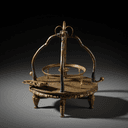
A common scientific instrument among Andalusian scholars, used for astronomy and timekeeping. Averroes had an interest in astronomy and criticized the Ptolemaic model.

As a physician, Averroes studied and commented on the works of Galen, the great doctor of Greek antiquity. His Colliget is part of this Greco-Arabic medical tradition.

As chief qadi of Córdoba, Averroes used the jurisprudence texts of the Maliki school to render his judgments. He himself wrote a treatise on comparative Islamic law.

Andalusian scholars often worked at night by the light of chiseled copper oil lamps. Averroes was known for his long nights of study and writing.
School Curriculum
Vocabulary & Tags
Key Vocabulary
Daily Life
Morning
Averroes rose before dawn for the fajr prayer, then devoted the early morning hours to reading and commenting on Aristotle's texts. He worked in his study, surrounded by manuscripts, making the most of the natural light and morning quiet.
Afternoon
The afternoon was often dedicated to his duties as chief qadi at the court of Córdoba, where he dispensed justice and ruled on civil and religious disputes. He also received students and took part in scholarly discussions within the city's intellectual circles.
Evening
In the evening, after the maghrib prayer, Averroes returned to his writing, often working late into the night by the light of an oil lamp. He composed his philosophical commentaries and medical treatises, pausing only rarely.
Food
Food in Al-Andalus in the 12th century was varied and shaped by Arab-Berber traditions. Averroes, as a physician, advocated a balanced diet: wheat bread, vegetables, fruit (oranges, figs, grapes), olive oil, and lamb. Spices such as saffron, cumin, and coriander accompanied the dishes.
Clothing
Averroes wore the dress of a high-ranking Andalusian scholar: a long djellaba of fine wool or cotton, usually white or in a subdued colour, worn over a shirt (qamis). As qadi, he wore a turban (imama) wrapped in the Almohad fashion, and a burnous for outings.
Housing
Averroes lived in a typical Cordovan bourgeois residence, organized around an inner patio with a fountain and orange-tree garden. The house included a study (maktaba) richly stocked with manuscripts, reception rooms with horseshoe arches, and floors adorned with zellige tilework.
Historical Timeline
Period Vocabulary
Visual Style
Style visuel inspiré de l'art islamique andalou et de l'architecture almohade du XIIe siècle, mêlant arabesques géométriques, arcs outrepassés et calligraphie maghrébine dans des tons de bleu lapis-lazuli, d'ocre chaud et de vert jardin.
Sound Ambience
L'atmosphère sonore d'un savant andalou à Cordoue au XIIe siècle : entre l'appel à la prière, le murmure des étudiants dans les madrasas et le calme studieux d'un cabinet de travail avec ses fontaines.
Liens externes & ressources
Références
Œuvres
Commentaires sur Aristote (Grand, Moyen et Petit)
1169-1198
Fasl al-Maqal (Discours décisif)
vers 1179
Tahafut al-Tahafut (L'Incohérence de l'Incohérence)
vers 1180
Kulliyyat fi al-Tibb (Colliget)
vers 1162
Bidayat al-Mujtahid (Le Commencement pour celui qui fait l'effort)
vers 1167
Kashf 'an Manahij al-Adilla (Dévoilement des méthodes de preuve)
vers 1179