 flip
flipMujabbana — fresh cheese fritters with honey
Mujabbana — fresh cheese fritters with honey
Why this dish? Mujabbana was THE street snack of Al-Andalus: vendors sold it piping hot in the squares of Seville and Córdoba, cities where Averroes lived and served as judge. No one could cross an Andalusian souk without encountering these cheese fritters drizzled with honey — a taste of the street that the great qadi surely knew.
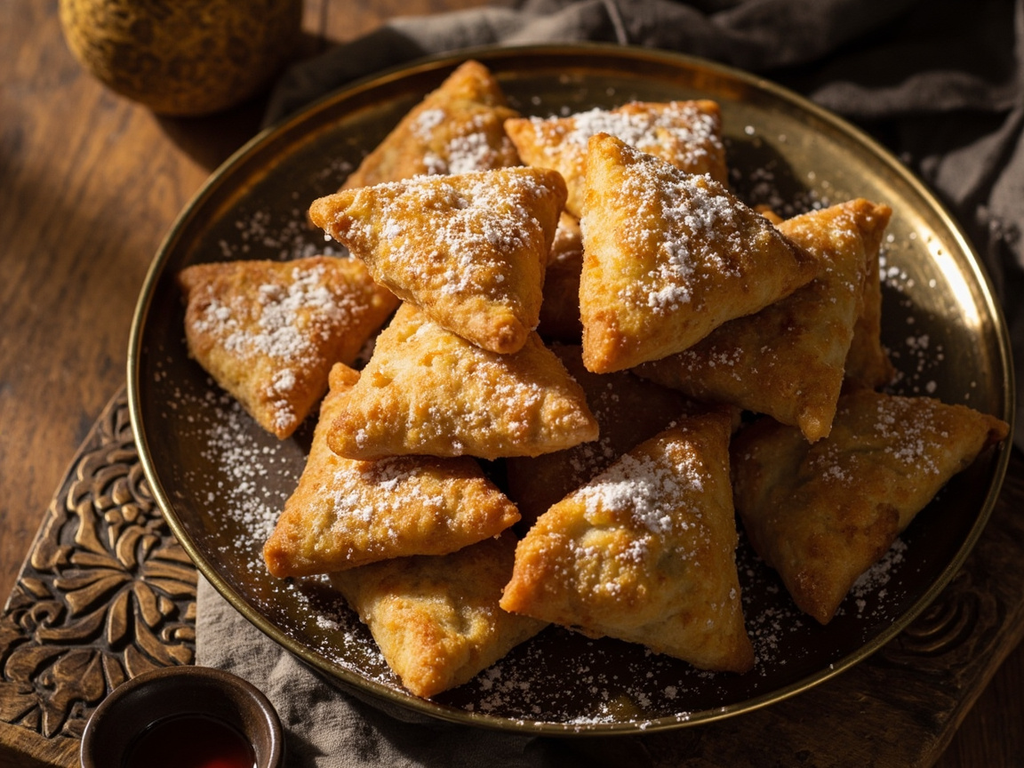
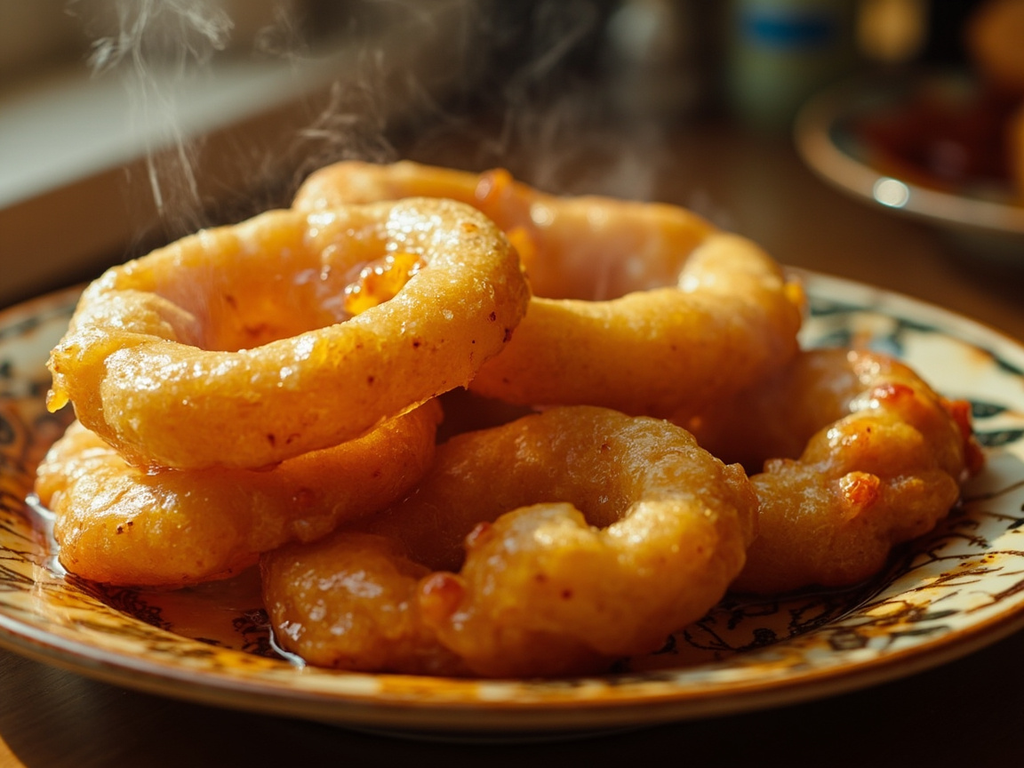
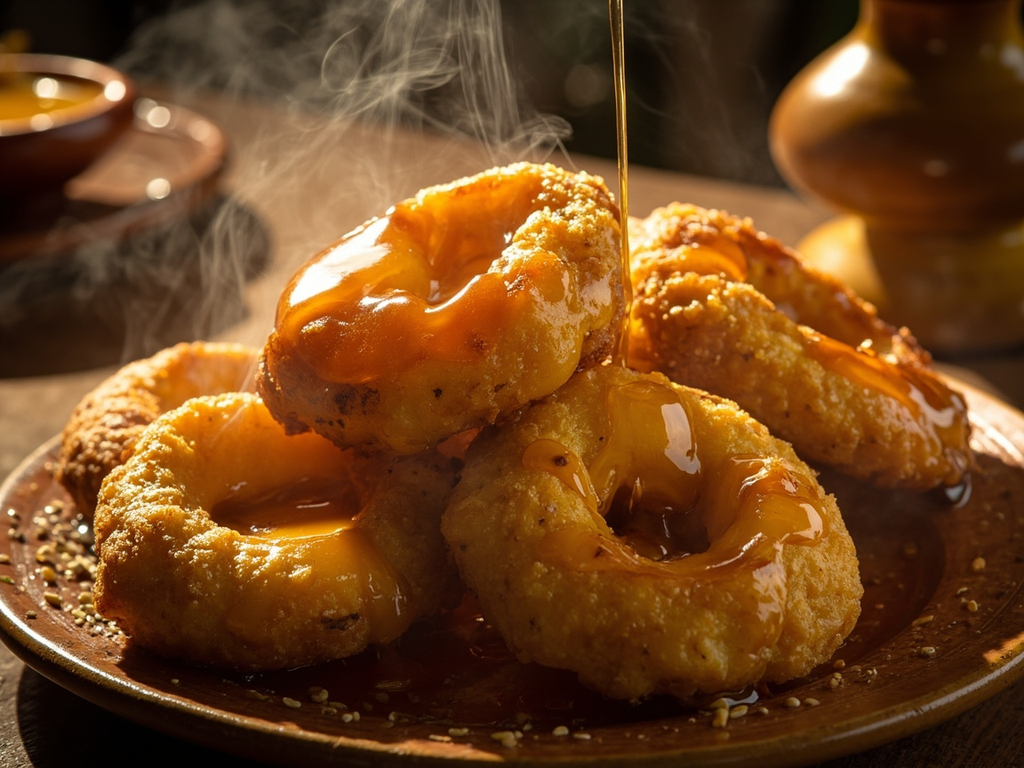
Small fritters of fresh cheese wrapped in batter, fried in olive oil and drizzled with warm honey. Crispy outside, gooey inside, both salty from the cheese and sweet from the honey.
Go then through the streets of Seville at the hour when the vendor cries out his mujabbana, piping hot: you will smell the oil sizzle and the honey flow. One mixes fresh cheese with a little flour to bind it, forms small balls, throws them into boiling oil, then drowns them in honey as soon as they come out, golden. Eat them without waiting, burning hot — for the scholar himself, I admit, is not always master of his appetite.
- •Fresh cheese (ewe's or goat's) — a good amount (fritter heart)
- •Wheat flour — enough to bind (dough binder)
- •Eggs — a few (binder)
- •Olive oil — for frying (cooking)
- •Honey — generously (sweet coating)
- •Orange blossom water (optional) — a few drops (aroma)
Mujabbana — fresh cheese fritters with honey
Small fritters of fresh cheese wrapped in batter, fried in olive oil and drizzled with warm honey. Crispy outside, gooey inside, both salty from the cheese and sweet from the honey.
Why this dish? Mujabbana was THE street snack of Al-Andalus: vendors sold it piping hot in the squares of Seville and Córdoba, cities where Averroes lived and served as judge. No one could cross an Andalusian souk without encountering these cheese fritters drizzled with honey — a taste of the street that the great qadi surely knew.
Go then through the streets of Seville at the hour when the vendor cries out his mujabbana, piping hot: you will smell the oil sizzle and the honey flow. One mixes fresh cheese with a little flour to bind it, forms small balls, throws them into boiling oil, then drowns them in honey as soon as they come out, golden. Eat them without waiting, burning hot — for the scholar himself, I admit, is not always master of his appetite.
Ingredients (period version)
- Fresh cheese (ewe's or goat's) — a good amount (fritter heart)
- Wheat flour — enough to bind (dough binder)
- Eggs — a few (binder)
- Olive oil — for frying (cooking)
- Honey — generously (sweet coating)
- Orange blossom water (optional) — a few drops (aroma)
Ingredients
- Firm fresh cheese (e.g., drained mozzarella or fresh ewe's cheese) — 250 g (fritter heart)
- Flour — 120 g (dough binder)
- Egg — 1 (binder)
- Olive oil (or neutral oil) — for deep frying (cooking)
- Honey — 150 g, warmed (sweet coating)
- Orange blossom water — 1 tsp (aroma)
Method
- Finely crumble or grate the well-drained fresh cheese.
- Mix with flour and egg to form a malleable, non-sticky dough (adjust flour as needed).
- Shape into small balls or quenelles the size of a walnut.
- Deep-fry in hot oil (170 °C) until golden and puffed.
- Drain, then drizzle with warm honey scented with orange blossom water.
- Serve immediately, very hot.
How it was made : Mujabbana (from jubn, "cheese") is attested as street food in medieval Al-Andalus; the poet Ibn Quzmān mentions the vendors who sold it. Andalusian recipes had it fried and drizzled with honey — a popular snack, far from refined banquets.
The contemporary twist : Stacked in a pyramid street-food style, with saffron honey and pistachio crumble, to eat with fingers from a paper cone.
Sources : Kitāb al-ṭabīkh fī al-Maghrib wa al-Andalus (anonymous Almohad) · Ibn Quzmān, Dīwān (references to mujabbana vendors)
Averroes · Charactorium