 flip
flipYavāgū — daily barley porridge
Yavāgū — daily barley porridge
Why this dish? Yavāgū, a thin barley or rice porridge, was the humblest daily meal of ancient India — that of the lowly, the sick, the ascetics. Bhūmi Devi is the patient goddess who feeds each day, without fanfare: this modest porridge is her ordinary presence at everyone's table, the discreet gift of the earth day after day.
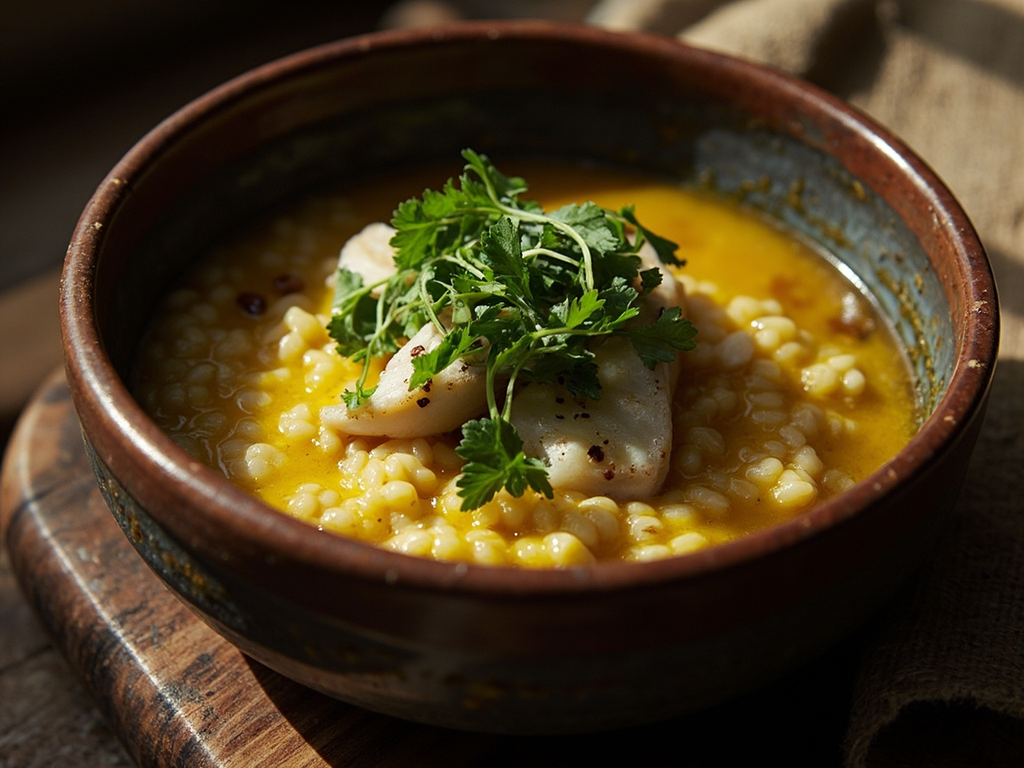
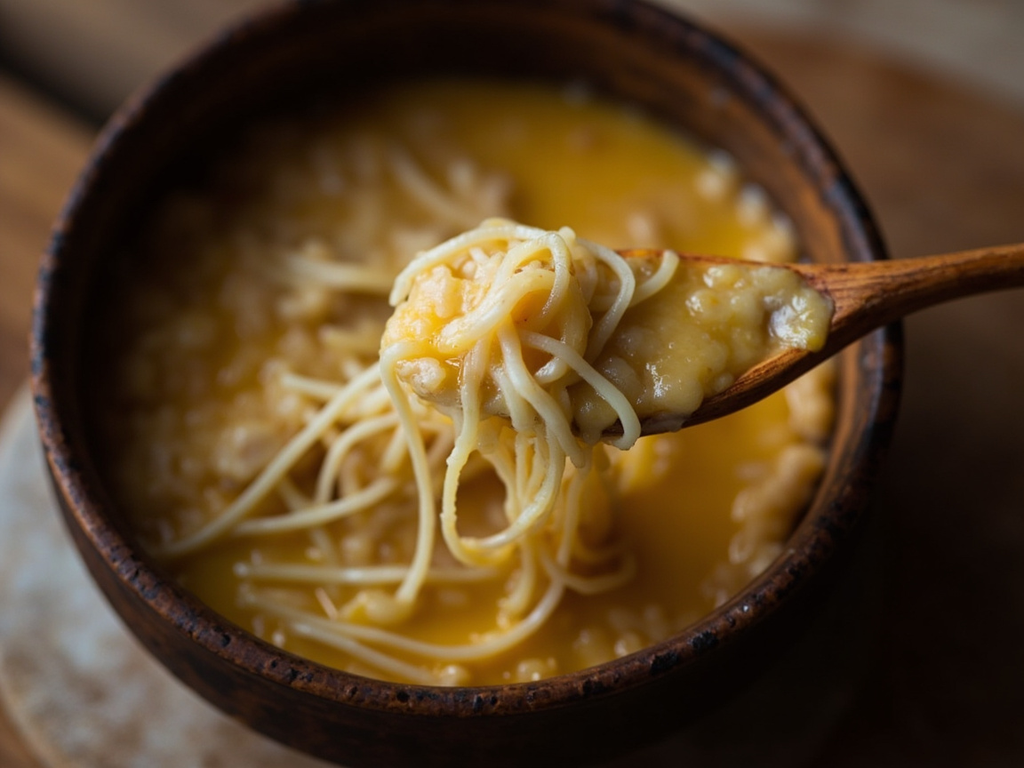
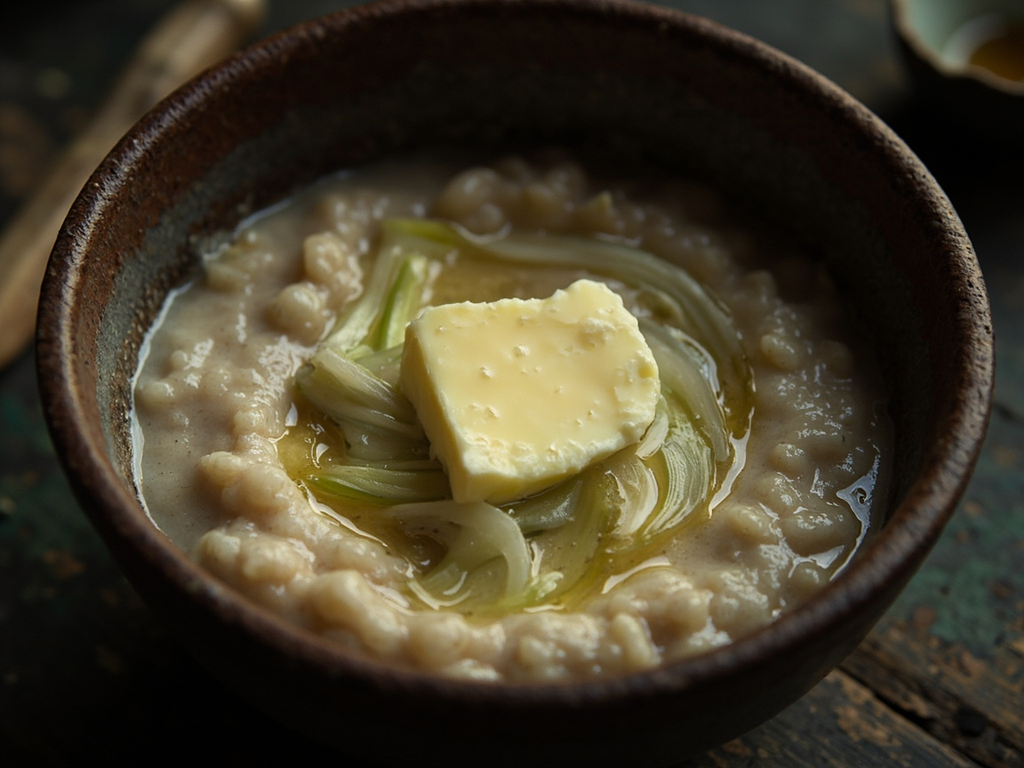
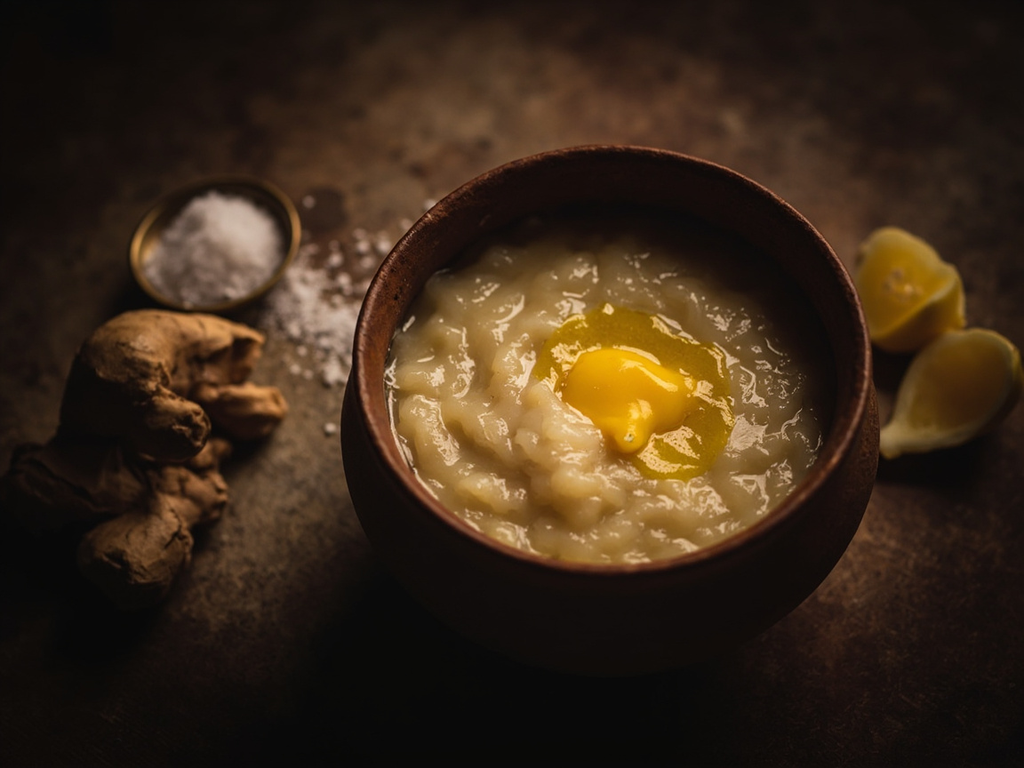
A warm and comforting barley porridge, simmered until creamy, lightly salted and brightened with ginger. The everyday food, simple and digestible, that speaks of the earth's daily faithfulness.
Every day, without a sound, I feed you — and it is in this modest porridge that you recognize me best. No feast here, no abundance of honey: just my barley melted in water and milk, a little salt, a ginger root to awaken the belly. Eat it warm in the morning, child, as your ancestors did and theirs before them: the earth does not tire of giving, nor the wise of thanking.
- •Crushed barley (yava) — a handful (base cereal)
- •Spring water — in abundance (cooking)
- •Milk (optional) — a splash (sweetness, creaminess)
- •Rock salt — a pinch (seasoning)
- •Fresh ginger — a sliver (digestion)
- •Clarified butter — a drop (finish)
Yavāgū — daily barley porridge
A warm and comforting barley porridge, simmered until creamy, lightly salted and brightened with ginger. The everyday food, simple and digestible, that speaks of the earth's daily faithfulness.
Why this dish? Yavāgū, a thin barley or rice porridge, was the humblest daily meal of ancient India — that of the lowly, the sick, the ascetics. Bhūmi Devi is the patient goddess who feeds each day, without fanfare: this modest porridge is her ordinary presence at everyone's table, the discreet gift of the earth day after day.
Every day, without a sound, I feed you — and it is in this modest porridge that you recognize me best. No feast here, no abundance of honey: just my barley melted in water and milk, a little salt, a ginger root to awaken the belly. Eat it warm in the morning, child, as your ancestors did and theirs before them: the earth does not tire of giving, nor the wise of thanking.
Ingredients (period version)
- Crushed barley (yava) — a handful (base cereal)
- Spring water — in abundance (cooking)
- Milk (optional) — a splash (sweetness, creaminess)
- Rock salt — a pinch (seasoning)
- Fresh ginger — a sliver (digestion)
- Clarified butter — a drop (finish)
Ingredients
- Pearl barley or barley flakes — 80 g (base)
- Water — 600 ml (cooking)
- Milk — 100 ml (optional) (creaminess)
- Salt — 1 pinch (seasoning)
- Fresh grated ginger — 1 tsp (fragrance, digestion)
- Ghee — 1 tsp (finish)
Method
- Rinse the barley and place it in cold water with the grated ginger.
- Bring to a boil, then lower the heat and simmer for 30 to 40 minutes, stirring occasionally, until the grains burst and the porridge thickens.
- Add the milk if desired and the salt, cook for another 5 minutes.
- Serve warm in a bowl, with the drop of ghee melted on top.
- For a thinner version (clear yavāgū for convalescents), strain and keep only the nourishing liquid.
How it was made : Yavāgū (thin barley or rice gruel) is cited in ancient medical and ritual texts, including Āyurveda, as a daily food and gentle remedy for the stomach. It was made in various consistencies depending on whether one aimed to nourish a worker, a sick person, or a faster; ginger and rock salt were the basic seasonings.
The contemporary twist : Presented as an 'Ayurvedic porridge' for mornings, topped with a drizzle of honey and a few slivered almonds for the sweet version.
Sources : Caraka Saṃhitā (sections on grain diets) · Achaya, K.T., Indian Food: A Historical Companion
Bhumi Devi · Charactorium