Russian Table: Zakuski, Foundation Soup, and Honey Sweets
The Russian meal of the early 18th century is not divided into starter-main-dessert but opens with *zakuski* (small savory, pickled, and smoked bites eaten standing, often with vodka), continues with a hot foundation soup (*shchi* or *oukha*) that structures the whole meal, then roasted or pastry-encased dishes; sweets are honey-based and fermented beverages (*kvas*, *medovukha*) or hot spiced drinks circulate from start to finish. At the court of Peter the Great, this peasant foundation was adorned with refined dishes from Western Europe.
Signature : Lactic Fermentation and Honey
The heart of this cuisine is controlled sourness: sauerkraut, salted mushrooms, *kvas*, and rye sourdough bread — a necessity of the long winter that became a national taste. Honey, due to the rarity and cost of cane sugar, sweetens and perfumes everything, from sweets to hot drinks.
Catherine I at the table
4 period recipes
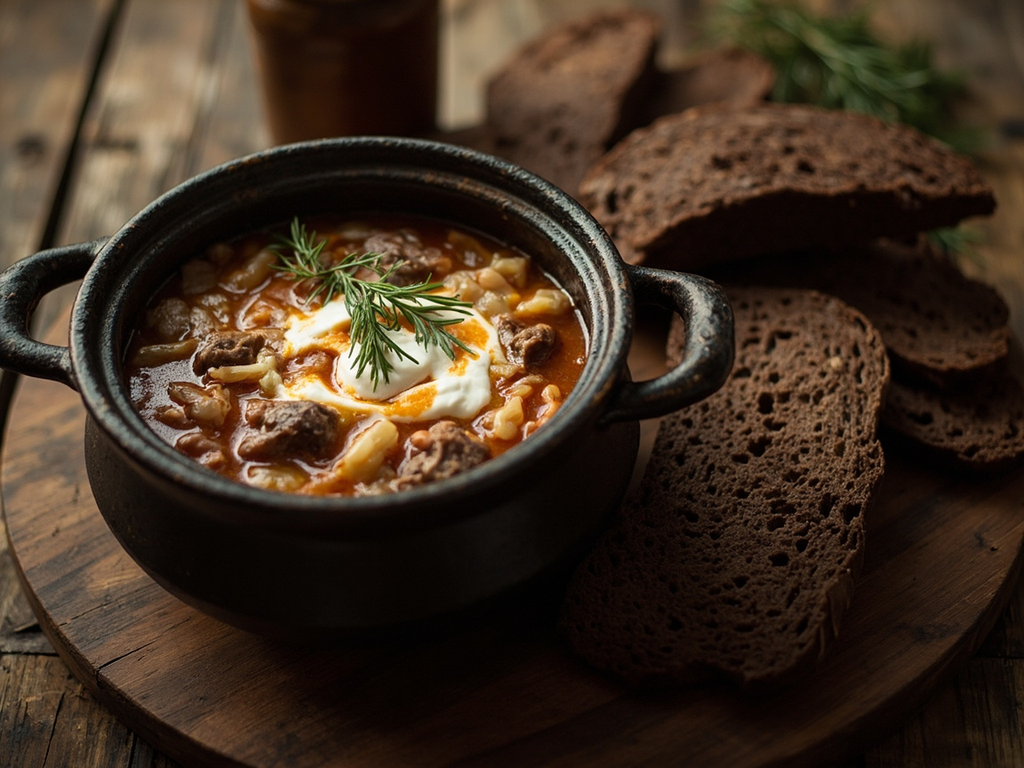 Everyday
Sour Shchi with Sauerkraut
Foundation Soup (the dish that anchors the whole meal)
🧂 🍄 🫙· 2 h 45
View the recipe
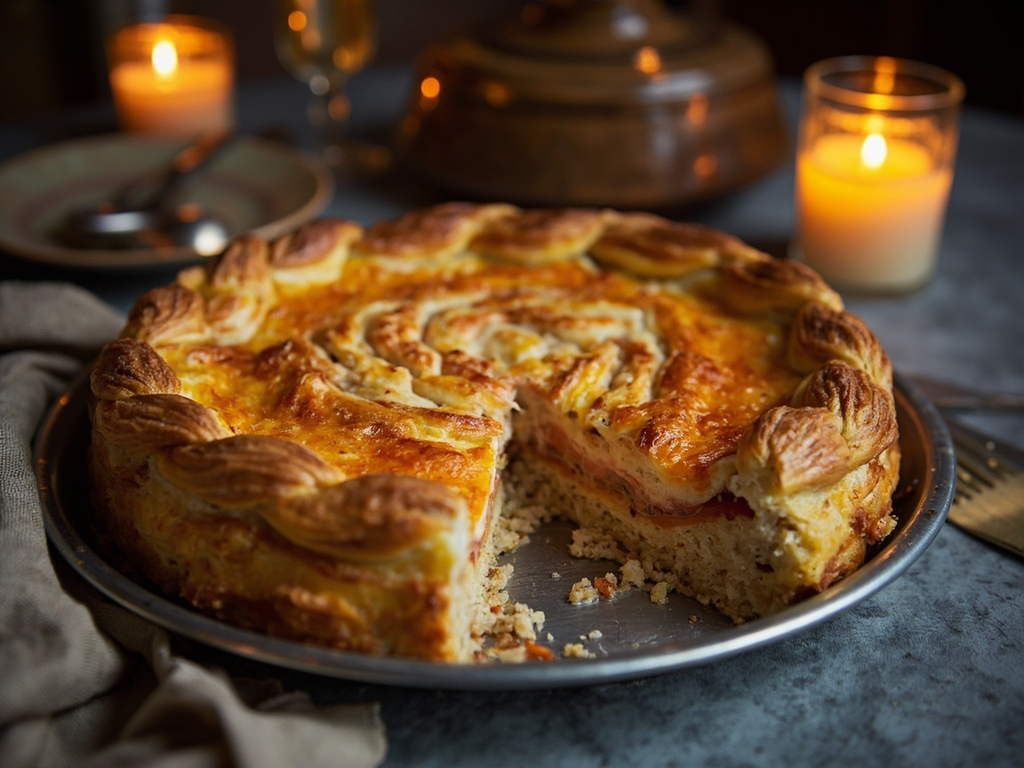 Festive
Court Koulibiac of Fish
Festive Pastry Dish (feast-day table)
🧂 🍄· 1 h 30
View the recipe
 Drink
DrinkSbiten with Honey and Spices
Circulating Hot Drink (pre-tea era)
🍯 🌶️· 30 min
View the recipe
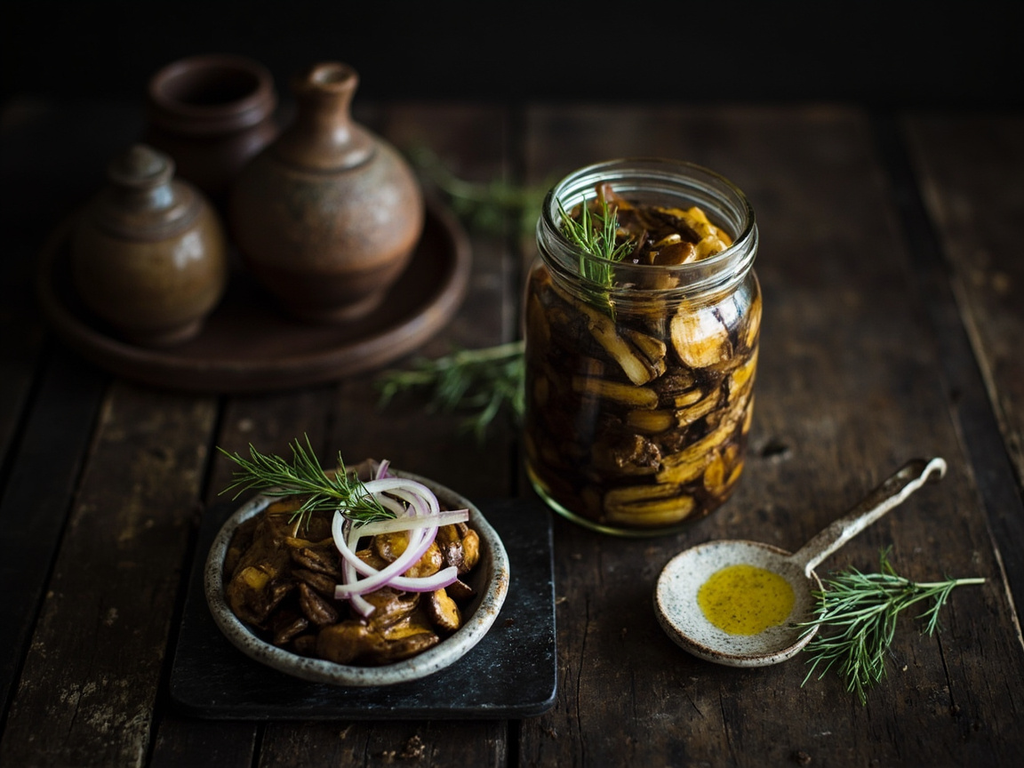 Preserving
Salted Mushrooms of the Northern Forests
Zakuski of Reserve (pantry bite)
🍋 🫙 🍄· 30 min + 5 à 7 jours de fermentation
View the recipe