 flip
flipSour Shchi with Sauerkraut
Sour Shchi with Sauerkraut
Why this dish? *Shchi* is the quintessential Russian soup, eaten from peasant to empress. Born of humble Baltic peasant origins, Catherine knew this sour cabbage broth long before she knew the gold of the Kremlin; it remained on the imperial table as the root of the country she ruled.
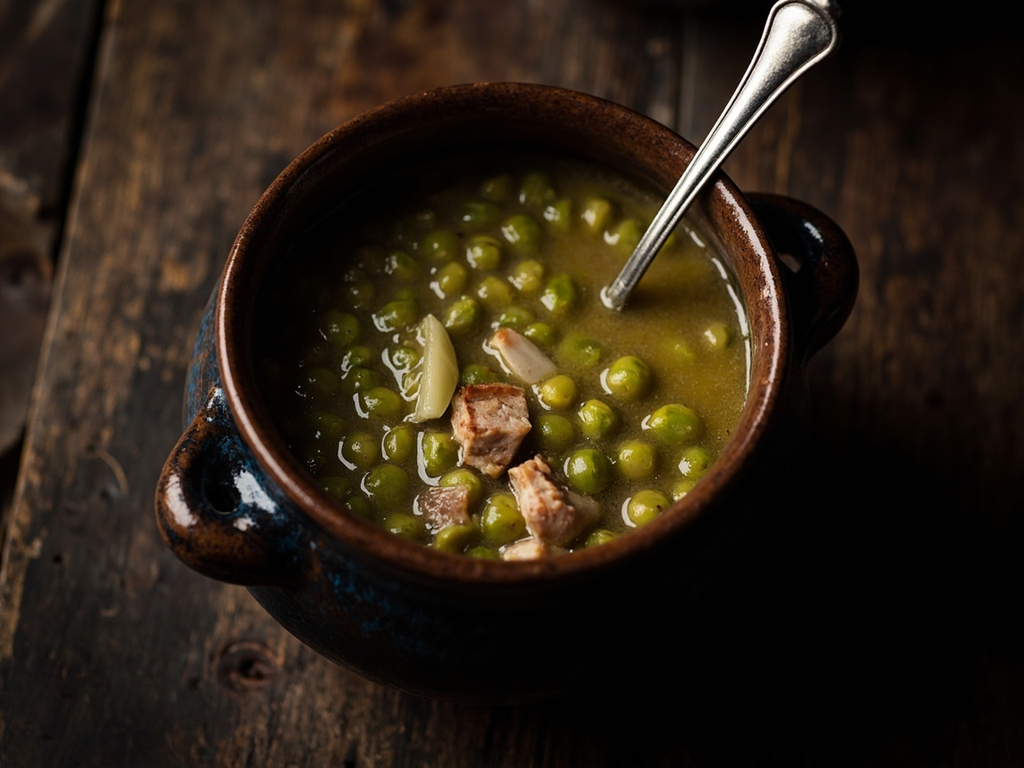
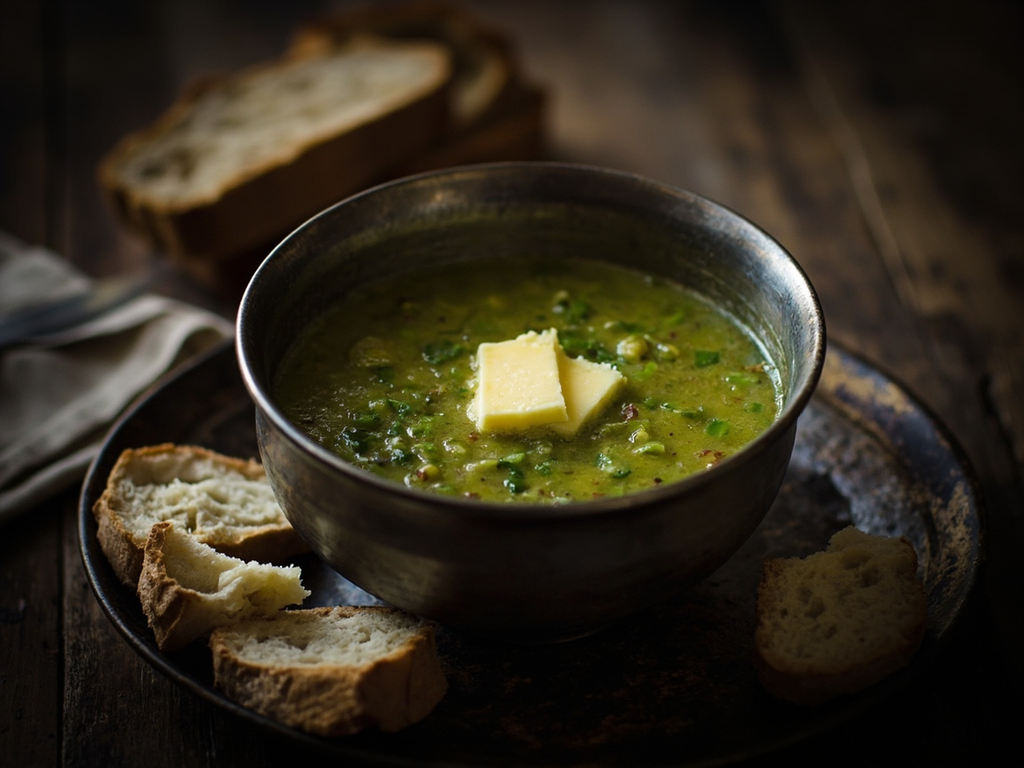
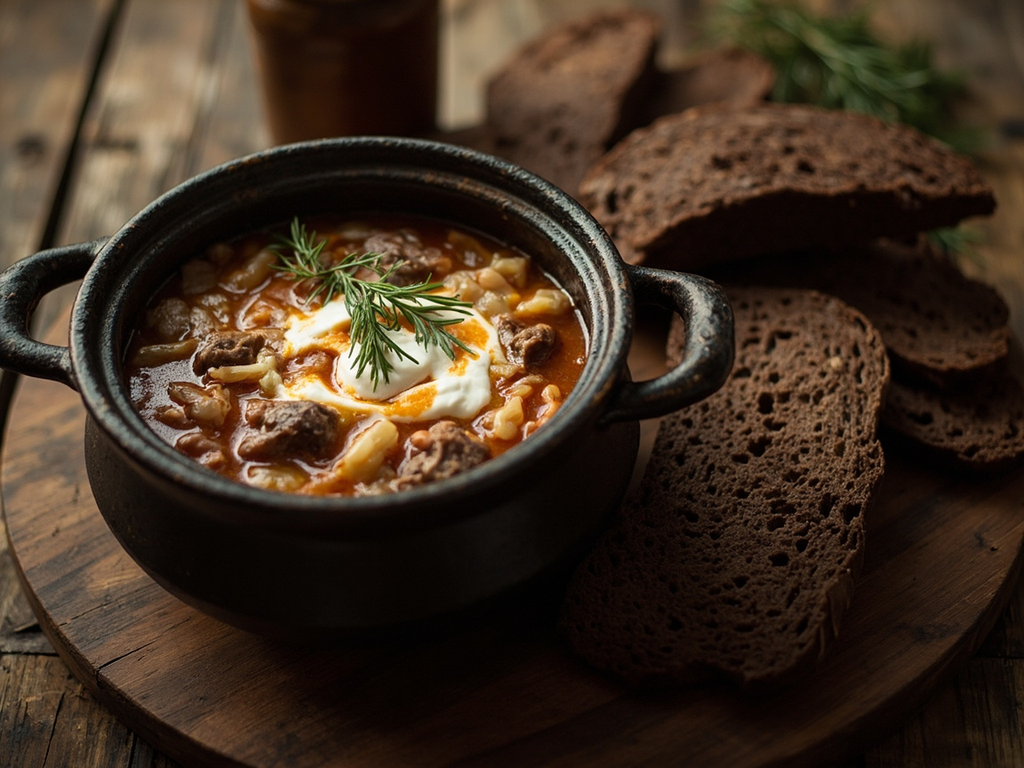
A thick, comforting soup of sauerkraut simmered with meat, perfumed with dill, whose lactic acidity awakens the palate. Served piping hot with black bread and a spoonful of sour cream.
Come close, and do not be fooled by the gilding of my table: this sour cabbage broth is what I was served when I was but an orphan of the Marienburg lands, and I do not deny it. Let it simmer long with the meat, for *shchi* suffers no haste; the longer it lingers on the embers, the better it becomes, and even better the next day. A spoonful of sour cream, a hunk of black bread, and you are as satisfied as a soldier of my late husband. Remember this: no crown warms better than a good winter soup.
- •Fermented cabbage (sauerkraut) — a large bowl (sour base)
- •Beef or pork brisket — a fine piece (broth and meat)
- •Onion — two (aromatic)
- •Parsley root and carrot — a few (background sweetness)
- •Dill and caraway seeds — a handful (perfume)
- •Sour cream (smetana) — at serving (creamy binder)
Sour Shchi with Sauerkraut
A thick, comforting soup of sauerkraut simmered with meat, perfumed with dill, whose lactic acidity awakens the palate. Served piping hot with black bread and a spoonful of sour cream.
Why this dish? *Shchi* is the quintessential Russian soup, eaten from peasant to empress. Born of humble Baltic peasant origins, Catherine knew this sour cabbage broth long before she knew the gold of the Kremlin; it remained on the imperial table as the root of the country she ruled.
Come close, and do not be fooled by the gilding of my table: this sour cabbage broth is what I was served when I was but an orphan of the Marienburg lands, and I do not deny it. Let it simmer long with the meat, for *shchi* suffers no haste; the longer it lingers on the embers, the better it becomes, and even better the next day. A spoonful of sour cream, a hunk of black bread, and you are as satisfied as a soldier of my late husband. Remember this: no crown warms better than a good winter soup.
Ingredients (period version)
- Fermented cabbage (sauerkraut) — a large bowl (sour base)
- Beef or pork brisket — a fine piece (broth and meat)
- Onion — two (aromatic)
- Parsley root and carrot — a few (background sweetness)
- Dill and caraway seeds — a handful (perfume)
- Sour cream (smetana) — at serving (creamy binder)
Ingredients
- Raw sauerkraut — 500 g (sour base)
- Beef brisket for braising — 600 g (broth and meat)
- Onions — 2 (aromatic)
- Carrot — 1 (sweetness)
- Fresh dill — 1 small bunch (perfume)
- Thick crème fraîche — 4 tbsp (binder at serving)
- Bay leaf, peppercorns — 2 leaves, 6 grains (seasoning)
Method
- Cover the meat with cold water, skim, and let simmer covered for 1h30 with bay leaf and pepper.
- Sauté sliced onion and carrot, add drained sauerkraut and braise for 15 min.
- Combine everything in the broth, add the diced meat, and simmer another 40 min over very low heat.
- Adjust salt, add chopped dill at the end of cooking.
- Serve piping hot with a spoonful of cream and rye bread.
How it was made : *Shchi* was cooked in a Russian oven (*pechka*) where the cast-iron pot simmered for hours at gentle, declining heat — hence its depth of flavor. A distinction was made between "rich" *shchi* with meat for feast days and "empty" *shchi* for fasting periods, made with water and cabbage alone. It was often prepared in large quantities to be eaten for several days, or even frozen in blocks in winter.
The contemporary twist : Served in individual mini cocottes with a toasted rye bread disk as a lid, and dill sprinkled like green rain on top.
Sources : William Pokhlebkin, « La cuisine nationale de nos peuples » · Domostroï (recueil domestique russe, XVIe s.)
Catherine I · Charactorium