 Flip the card
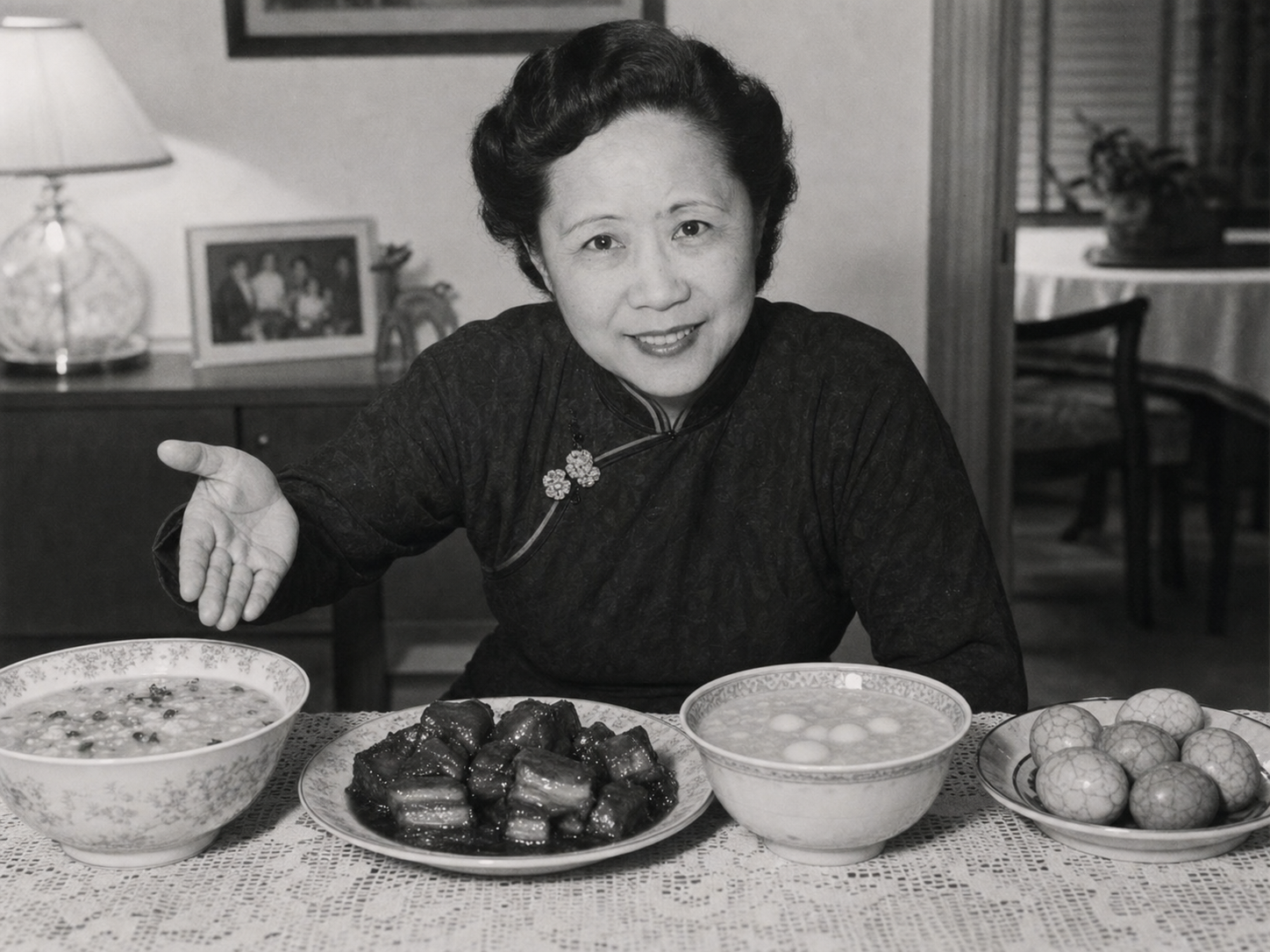
Chien-Shiung Wu at the table
1912 — 1997
On the menu
The Jiangnan Table: fàn and cài
In the Lower Yangtze region of China where Wu grew up, a meal revolves around fàn (white rice, the nourishing foundation) accompanied by several cài (dishes that 'help the rice go down'): a stir-fried vegetable, a braised dish to share, a clear soup, and on festive days, a fermented sweet. There is no starter-main-dessert sequence: everything arrives together at the center, everyone picks with their chopsticks, and the hostess ensures bowls are never empty. Wu, known for her generous table, recreated this structure even in her New York apartment.
Signature : Hóngshāo: rock sugar and Shaoxing wine
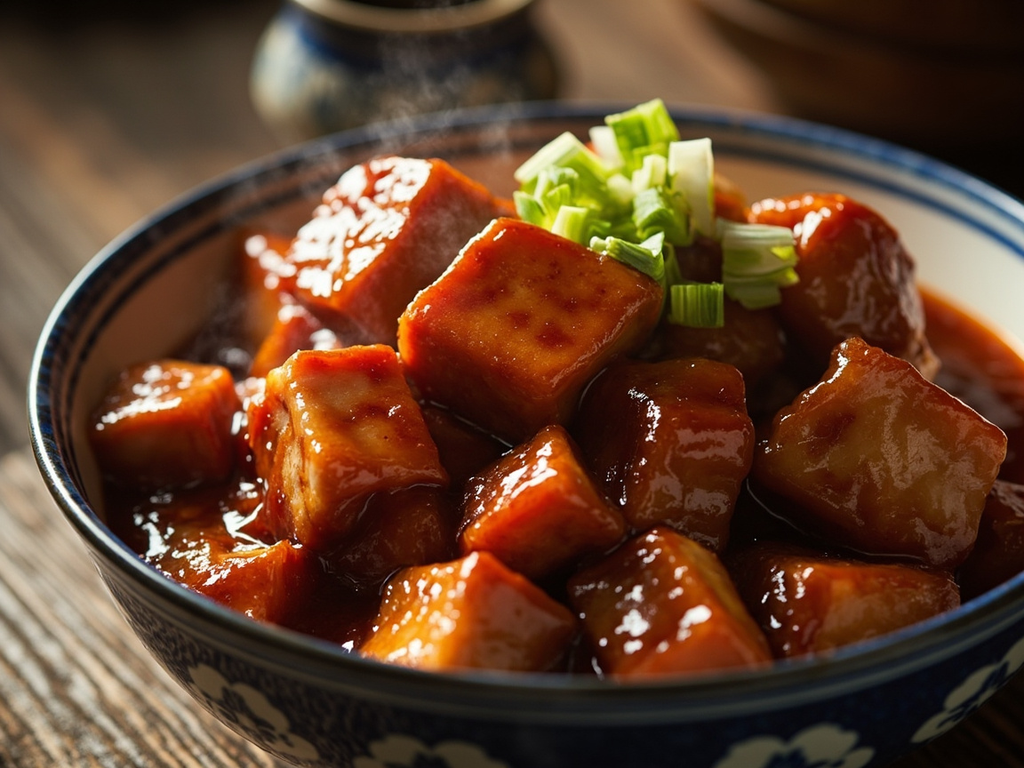
The hallmark of Shanghai and Jiangnan cuisine is 'red braising' (hóngshāo): rock sugar is caramelized, then the meat is simmered long in soy sauce and Shaoxing yellow wine (huángjiǔ). The result, lacquered and glossy, blends sweet and savory — a taste of home that Wu carried everywhere.
click to flip back
Chien-Shiung Wu at the table
1912 — 1997
5 period recipes
 Everyday
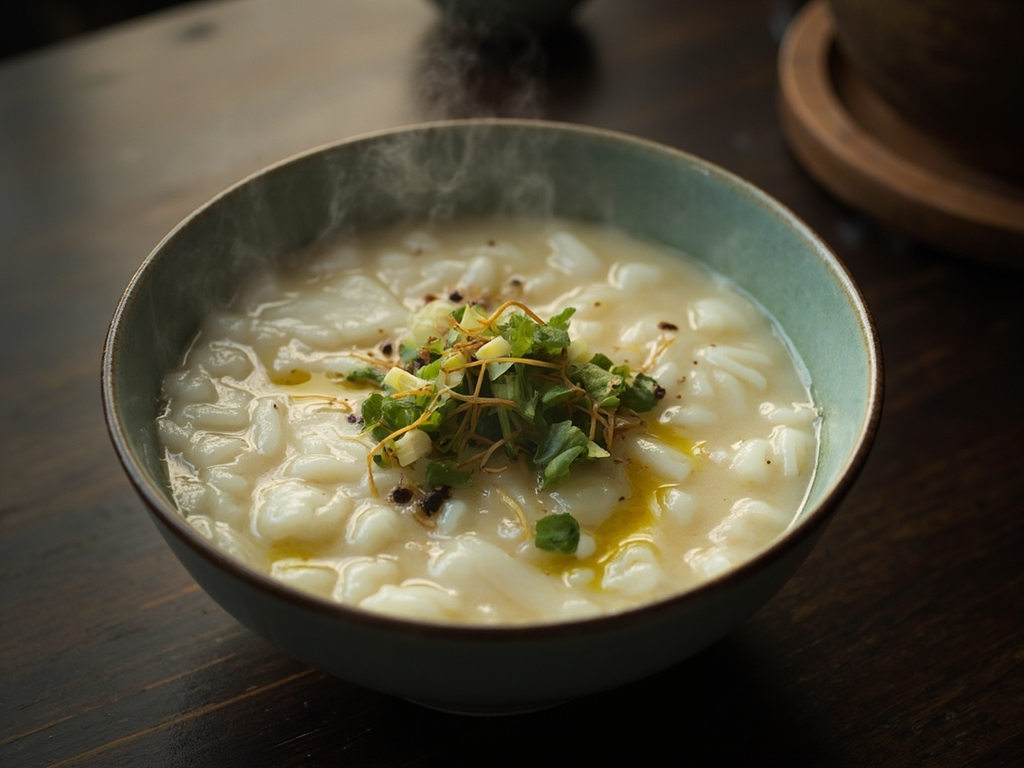
Rice congee with salted vegetables (xián zhōu)
morning fàn — the bowl foundation that opens the day
🍄 🧂· 60 min
View the recipe
 Festive
Shanghai red-braised pork (hóngshāo ròu)
festive cài — the lacquered dish shared at the center of the table
🍯 🧂 🍄· 2 h
View the recipe
 Drink
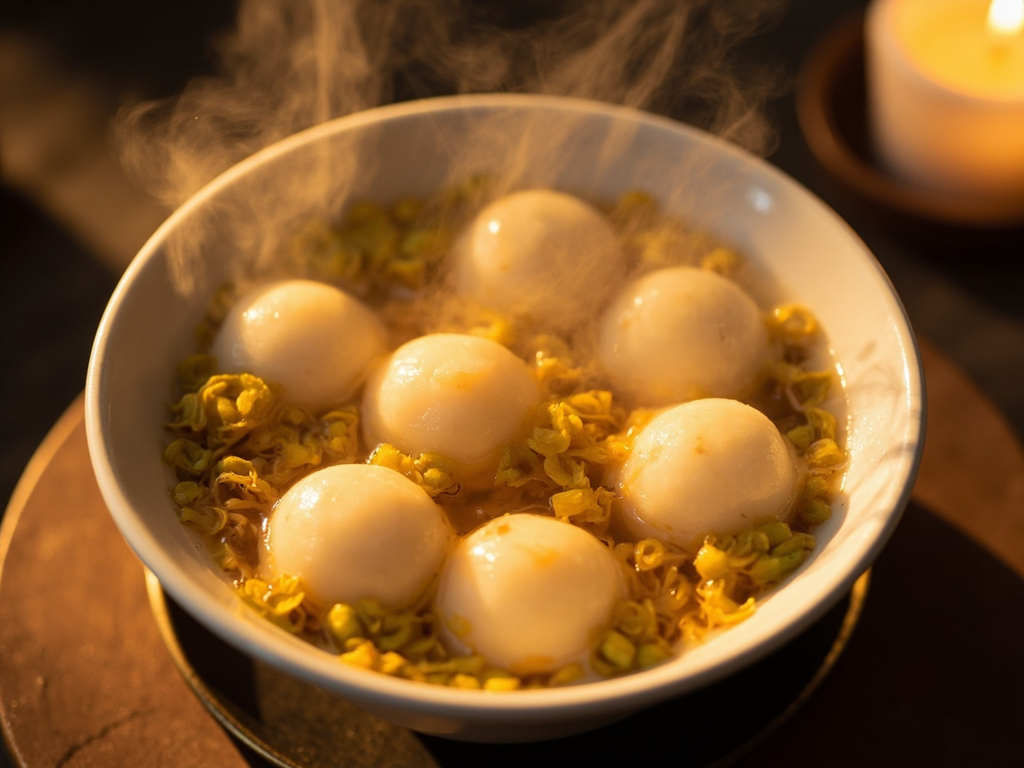
DrinkSweet fermented rice soup with glutinous rice pearls (jiǔ niàng tāng yuán)
tián diǎn — the warm fermented sweet at the end of a banquet
🍯 🫙· 40 min
View the recipe
 Street food
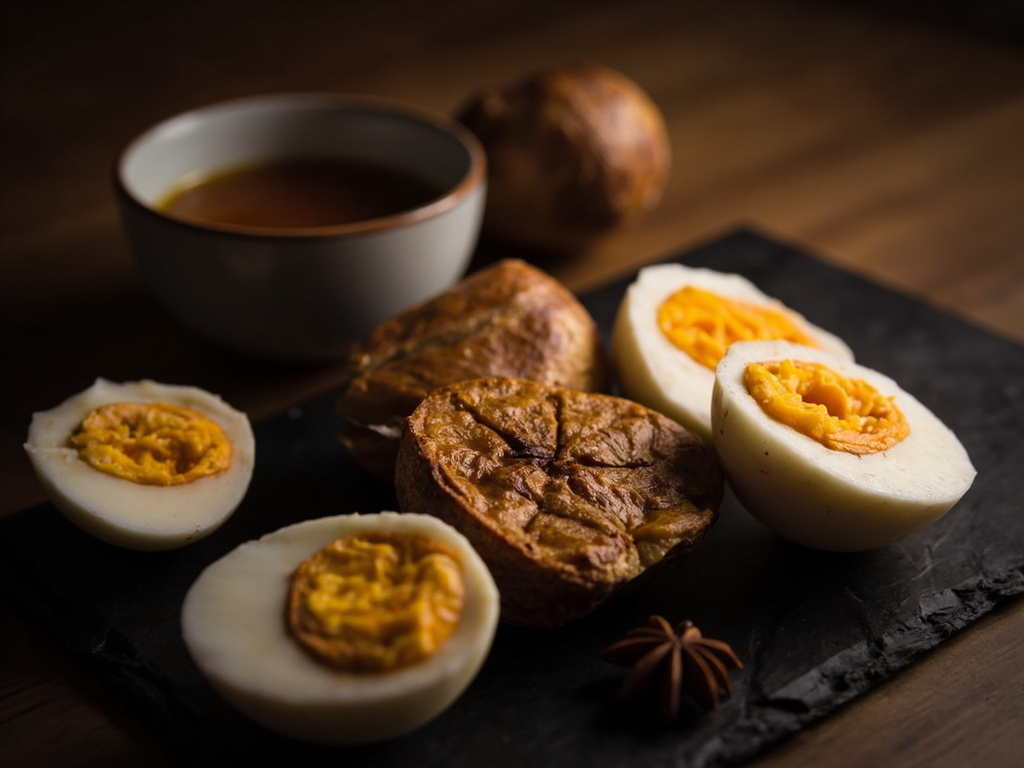
Tea-marbled eggs (chá yè dàn)
xiǎo chī — the street snack you slip into your pocket
🧂 🍄 🌶️· 45 min (+ resting)
View the recipe
 Remedy
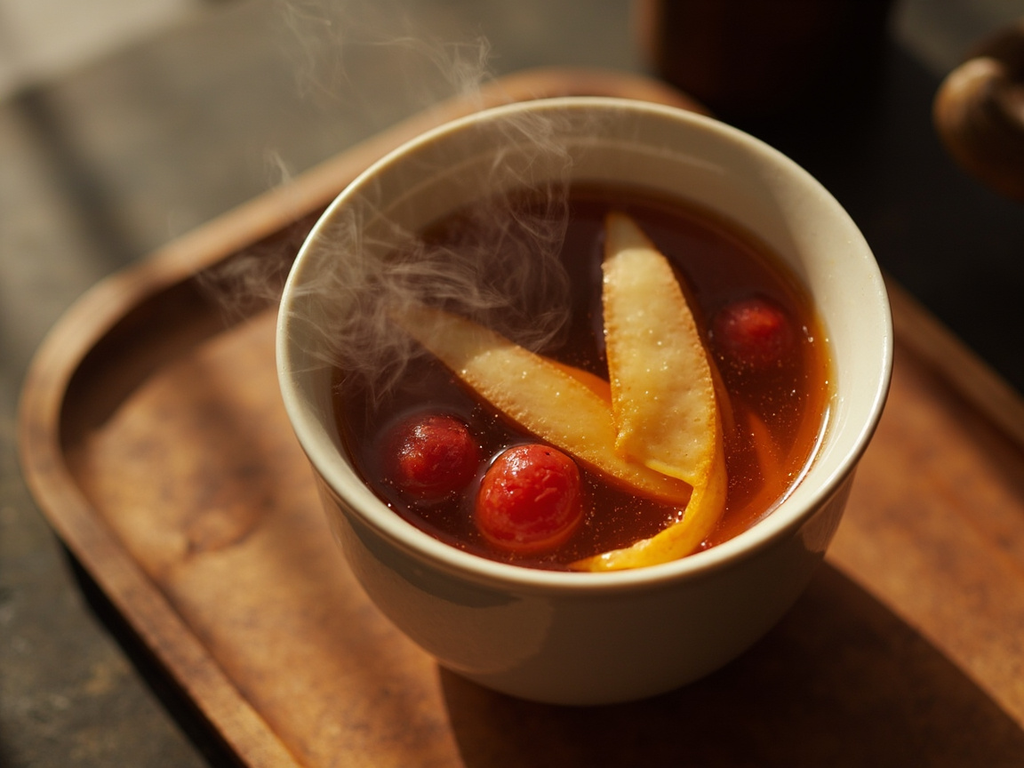
Ginger tea with brown sugar (jiāng táng chá)
tāng remedy — the hot infusion that warms and heals
🌶️ 🍯· 25 min
View the recipe