 Flip the card
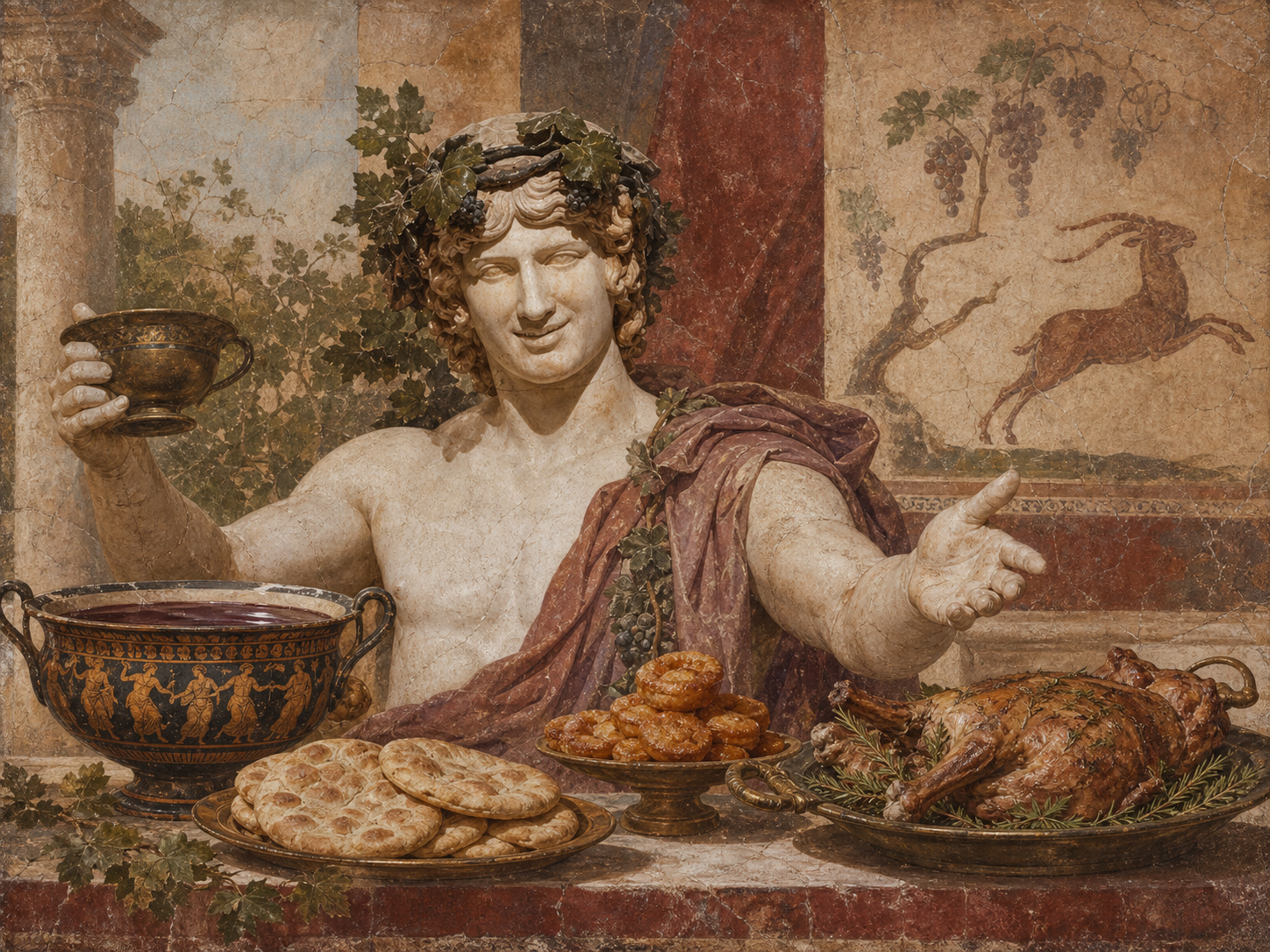
Dionysus at the table
On the menu
The deipnon and the symposion
The ancient Greek meal is divided into two parts. First, the deipnon, the nourishing part: barley cakes (maza), bread, cheese, olives, sometimes sacrificed meat. Then, once the tables are cleared and hands washed, comes the symposion, the time for shared wine. First, a few drops are poured to the gods (the libation), then the master of the banquet sets the mixture of water and wine in the large krater that all will drink while conversing, singing, and listening to the lyre. To drink wine undiluted, without mixing it with water, was to behave like a barbarian—or a god. And the god of wine, that's me.
Signature : Wine mixed with water in the krater
The central gesture of every Greek banquet: wine is never drunk pure. It is mixed with water (often three or four parts water to one part wine) in a large vessel called a krater, sometimes sweetened with honey or scented with resin, thyme, or cinnamon. This is the heart of the cult of Dionysus.
click to flip back
Dionysus at the table
5 period recipes
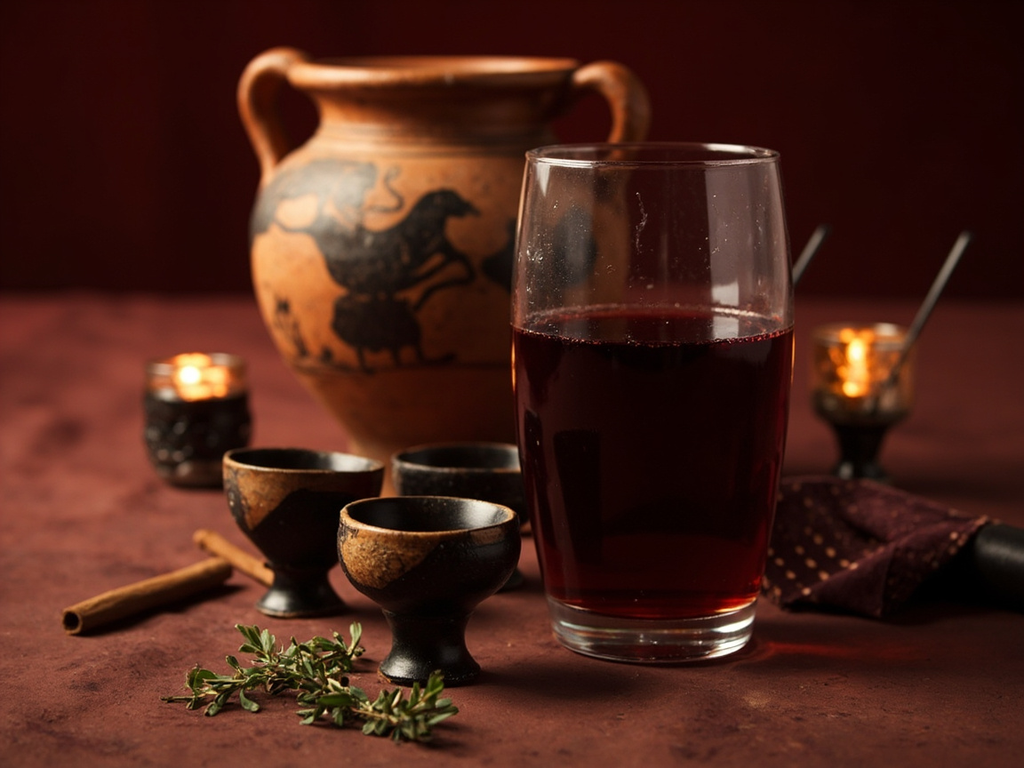 Drink
DrinkHoneyed wine from the krater for libation
Symposion — the wine of sharing
🫙 🍯 🍋· 20 min
View the recipe
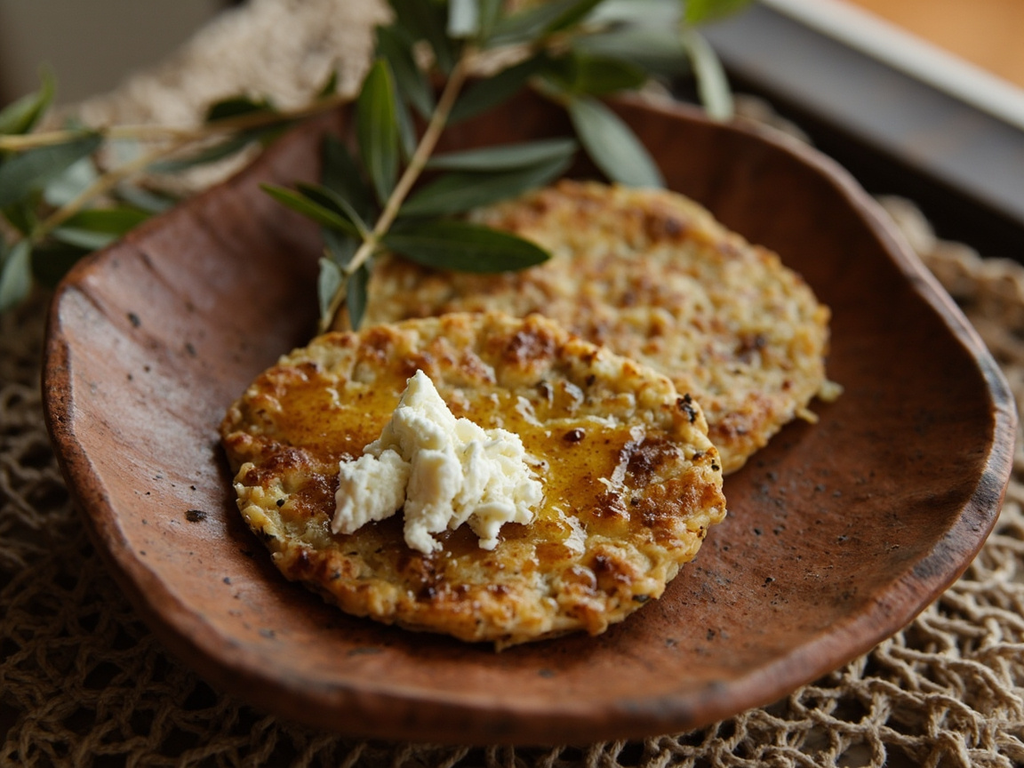 Everyday
Maza, everyday barley cake
Deipnon — the nourishing foundation
☕ 🧂· 30 min
View the recipe
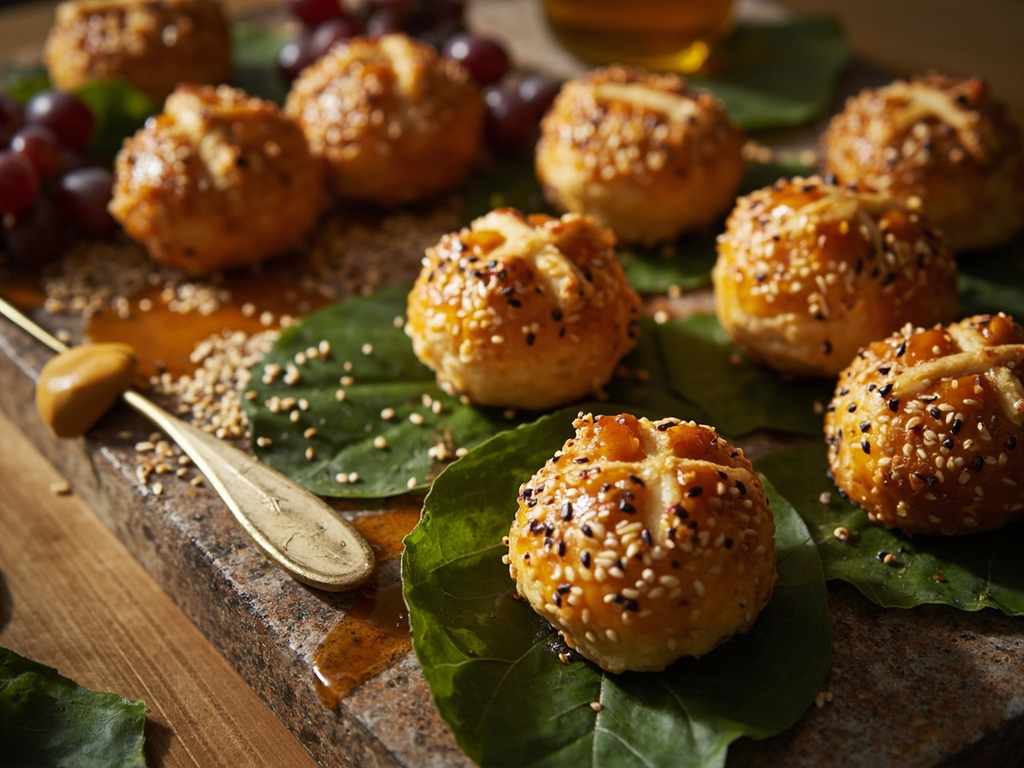 Offering
Popana, honey cakes for offering
Tragemata — the share of the gods and desserts
🍯· 45 min
View the recipe
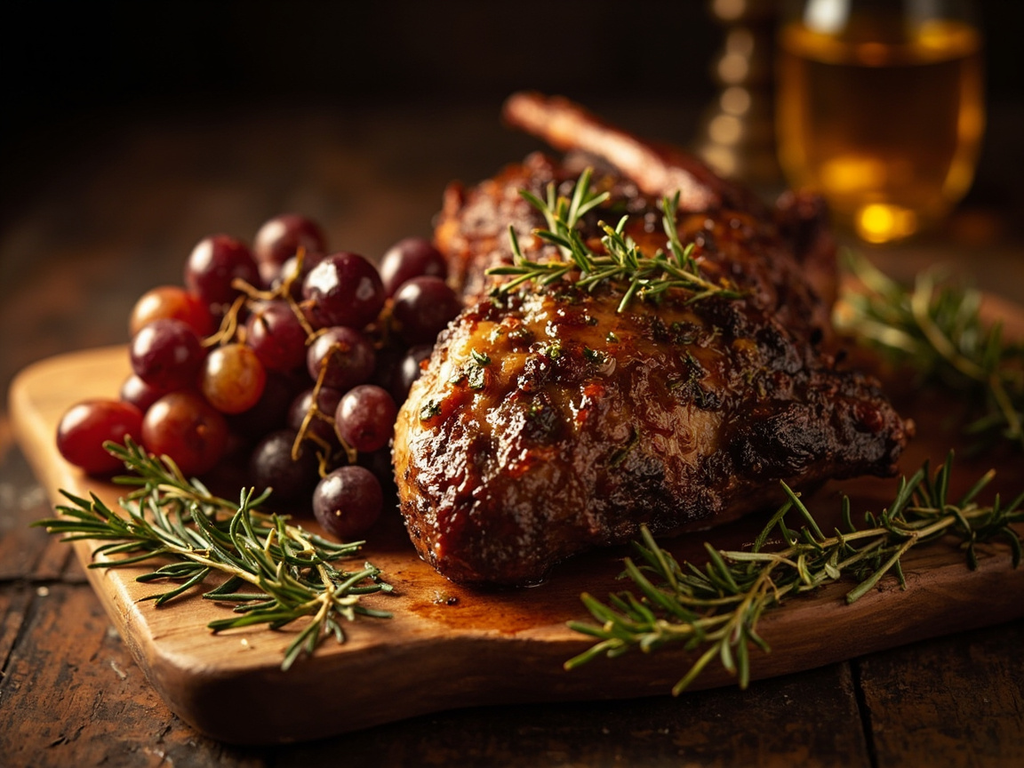 Festive
Herb-roasted kid goat for festive sacrifice
Deipnon — meat for special days
🧂 🍄· 2 h 30
View the recipe
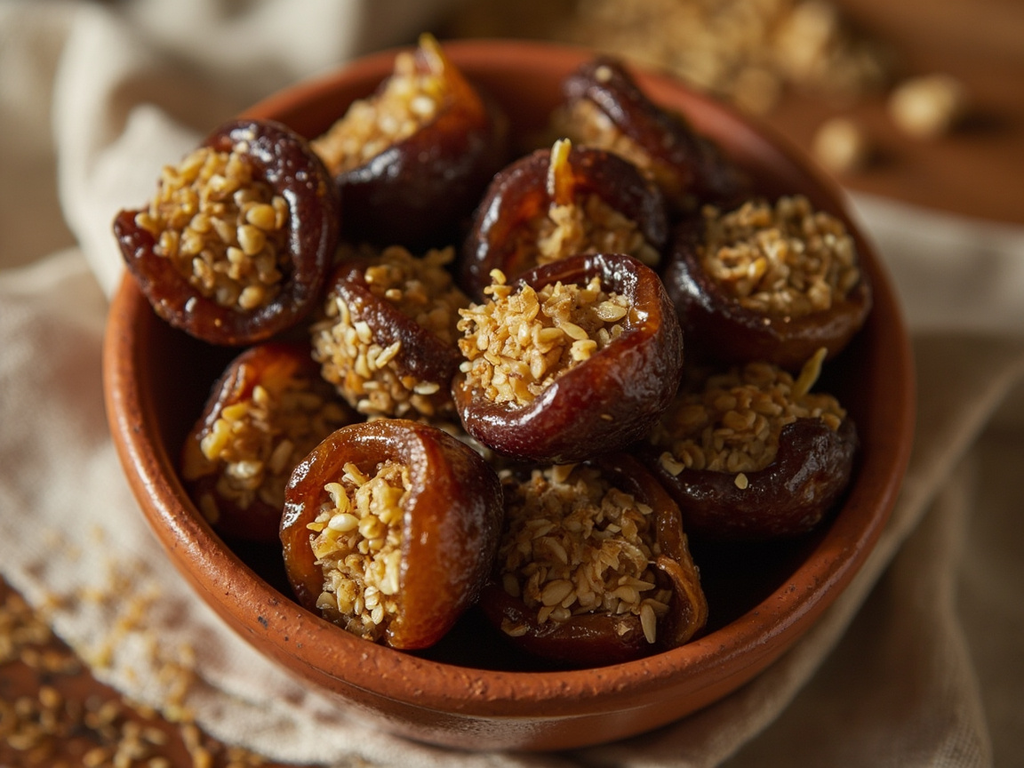 Travel
Honeyed sesame dried figs for travel
Tragemata — sweets for the end of the banquet and the road
🍯 🫙· 25 min
View the recipe