 flip
flipHerb-roasted kid goat for festive sacrifice
Herb-roasted kid goat for festive sacrifice
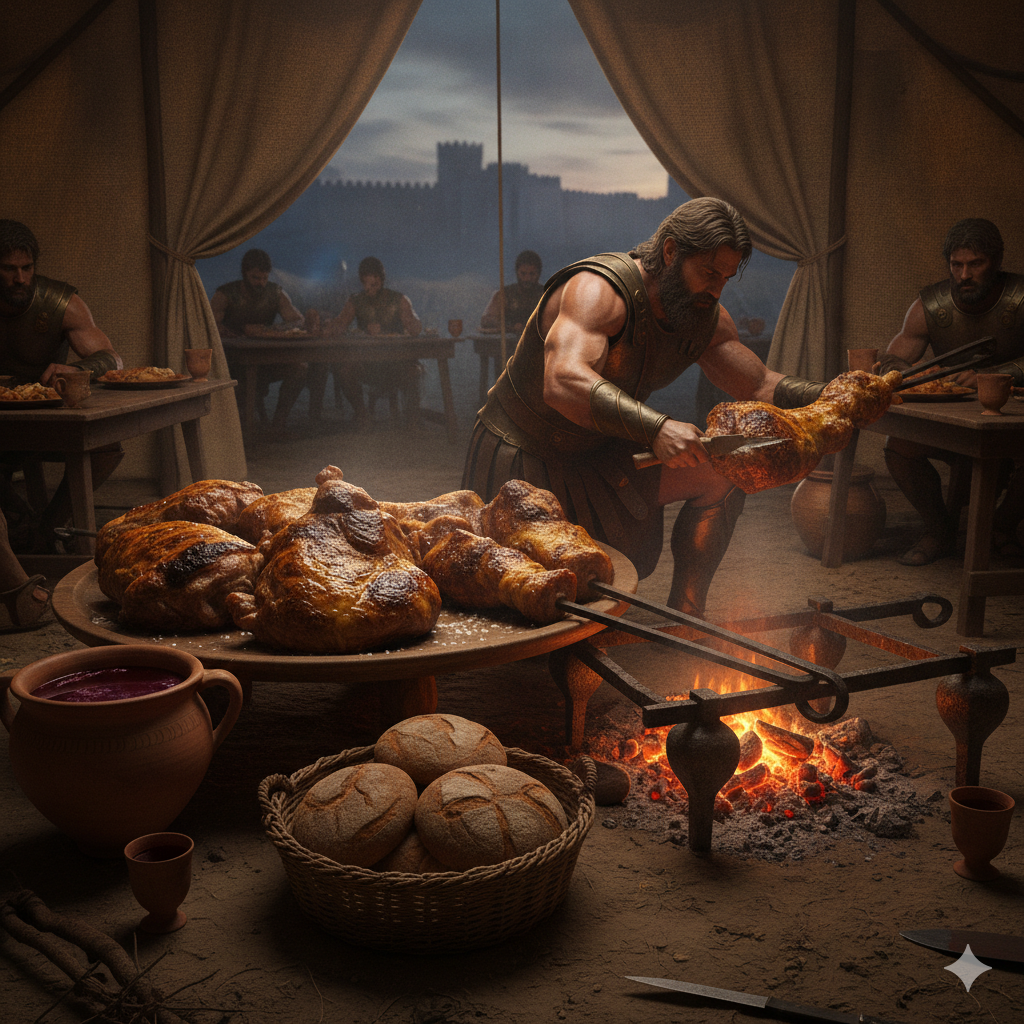
Why this dish? The goat and kid were the animals of Dionysus par excellence—the word 'tragedy' itself is said to come from 'goat song' (tragos). During the Dionysia, goats were sacrificed and their roasted meat then fed the city's banquet.
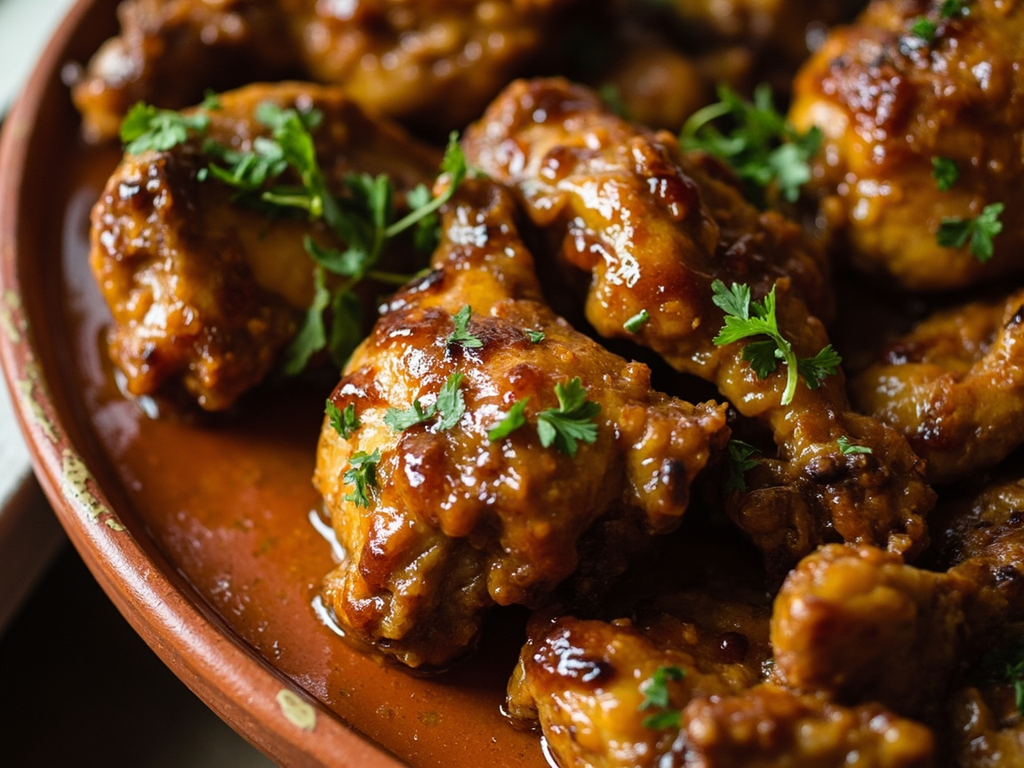
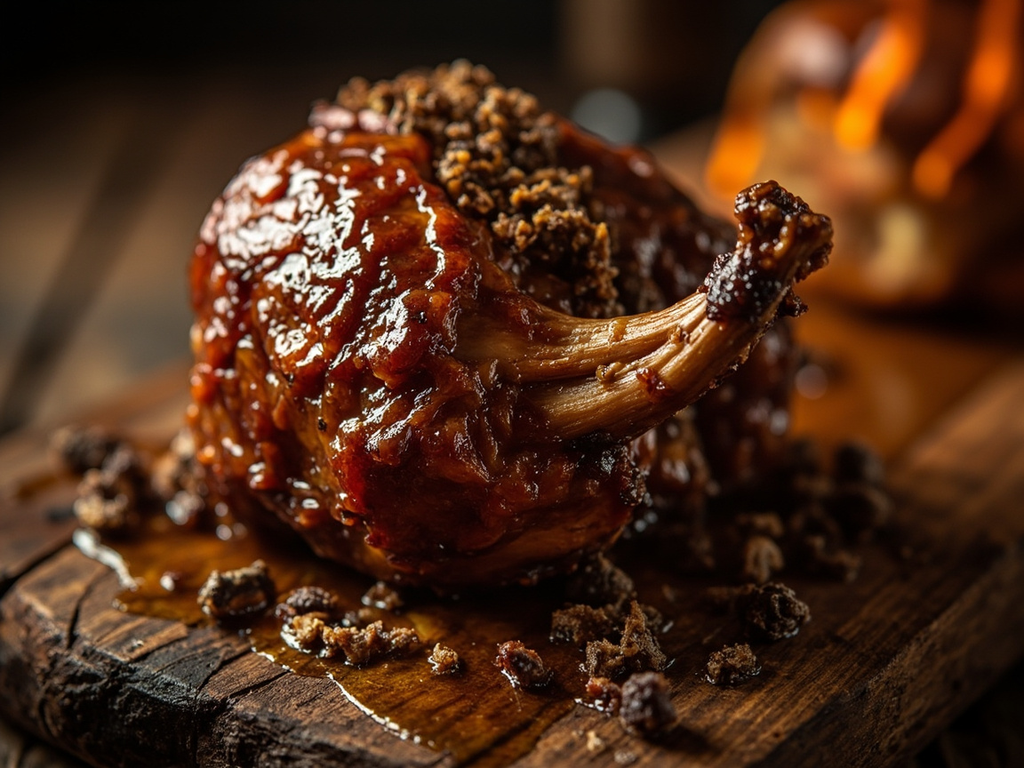
Slow-roasted kid goat, rubbed with herbs from the hills, olive oil, and salt, basted in its own juices. The meat for feast days, reserved for sacrifices and great civic celebrations.
The goat is my animal, mortal—it is from its hoarse song that tragedy was born, performed in my theater at the foot of the Acropolis! On the days of my great festivals, let the kid be led to the altar, let the portion of fat and thighs be burned for the gods, and let the rest roast on the spit, rubbed with wild thyme and oil. The whole city then eats the same meat: that is how a people is made. Pour me wine while it cooks, and tend the embers.
- •Kid goat (shoulder or leg) — a fine piece (sacrificial meat)
- •Olive oil — generously (coats and nourishes)
- •Wild thyme, oregano, savory — a handful (scent of the hills)
- •Sea salt — to taste (seasoning)
- •Honey — a drizzle (glaze at end of cooking)
Herb-roasted kid goat for festive sacrifice
Slow-roasted kid goat, rubbed with herbs from the hills, olive oil, and salt, basted in its own juices. The meat for feast days, reserved for sacrifices and great civic celebrations.
Why this dish? The goat and kid were the animals of Dionysus par excellence—the word 'tragedy' itself is said to come from 'goat song' (tragos). During the Dionysia, goats were sacrificed and their roasted meat then fed the city's banquet.
The goat is my animal, mortal—it is from its hoarse song that tragedy was born, performed in my theater at the foot of the Acropolis! On the days of my great festivals, let the kid be led to the altar, let the portion of fat and thighs be burned for the gods, and let the rest roast on the spit, rubbed with wild thyme and oil. The whole city then eats the same meat: that is how a people is made. Pour me wine while it cooks, and tend the embers.
Ingredients (period version)
- Kid goat (shoulder or leg) — a fine piece (sacrificial meat)
- Olive oil — generously (coats and nourishes)
- Wild thyme, oregano, savory — a handful (scent of the hills)
- Sea salt — to taste (seasoning)
- Honey — a drizzle (glaze at end of cooking)
Ingredients
- Shoulder or leg of kid goat (or lamb) — 1.2 kg (main piece)
- Olive oil — 6 tbsp (marinade and basting)
- Fresh thyme, oregano, and savory — 3 tbsp (fragrance)
- Coarse sea salt — 2 tsp (seasoning)
- Honey — 1 tbsp (glaze)
Method
- Rub the meat with olive oil, salt, and the chopped herbs, then let rest for at least one hour.
- Roast in the oven at 160°C (or on a spit over coals) for 1.5 to 2 hours, basting regularly with the juices and a little oil.
- Twenty minutes before the end, brush with a drizzle of honey and increase the heat to caramelize the surface.
- Let rest for ten minutes, then carve and serve with maza cakes and olives.
How it was made : Animal sacrifice was the heart of Greek religious festivals. The gods were offered the bones wrapped in fat, whose smoke rose to Olympus, while the men shared the roasted or boiled meat. The kid, a modest animal, was linked to Dionysus and the theatrical celebrations of the Athenian Dionysia.
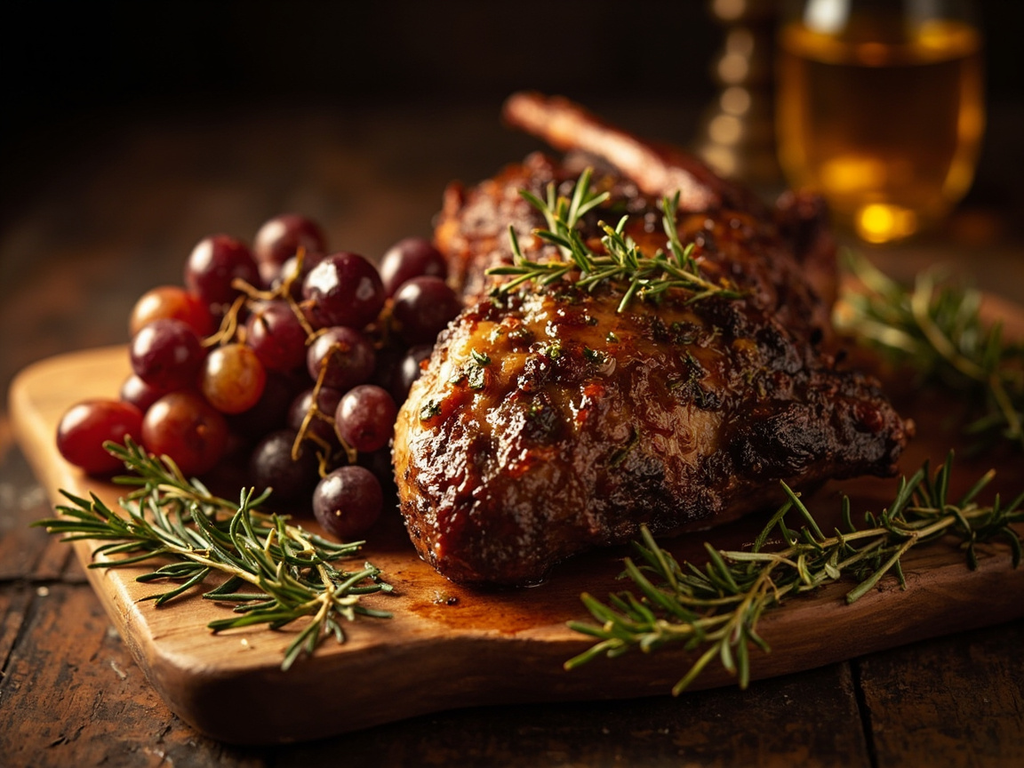
The contemporary twist : Presented as 'Dionysia roast' on an olive wood board, sprinkled with fresh herbs and a few roasted grapes: the Greek feast on a plate.
Sources : Homer, The Iliad (descriptions of sacrifices and feasts) · Marcel Detienne and Jean-Pierre Vernant, The Cuisine of Sacrifice among the Greeks
Dionysus · Charactorium