 flip
flipPopana, honey cakes for offering
Popana, honey cakes for offering
Why this dish? Small cakes of flour and honey—popana and pelanoi—were placed on the altars of Dionysus, as of the other gods. Inspired by these offerings, this round cake marked with a cross recalls what was presented to the god before banquets and festivals.
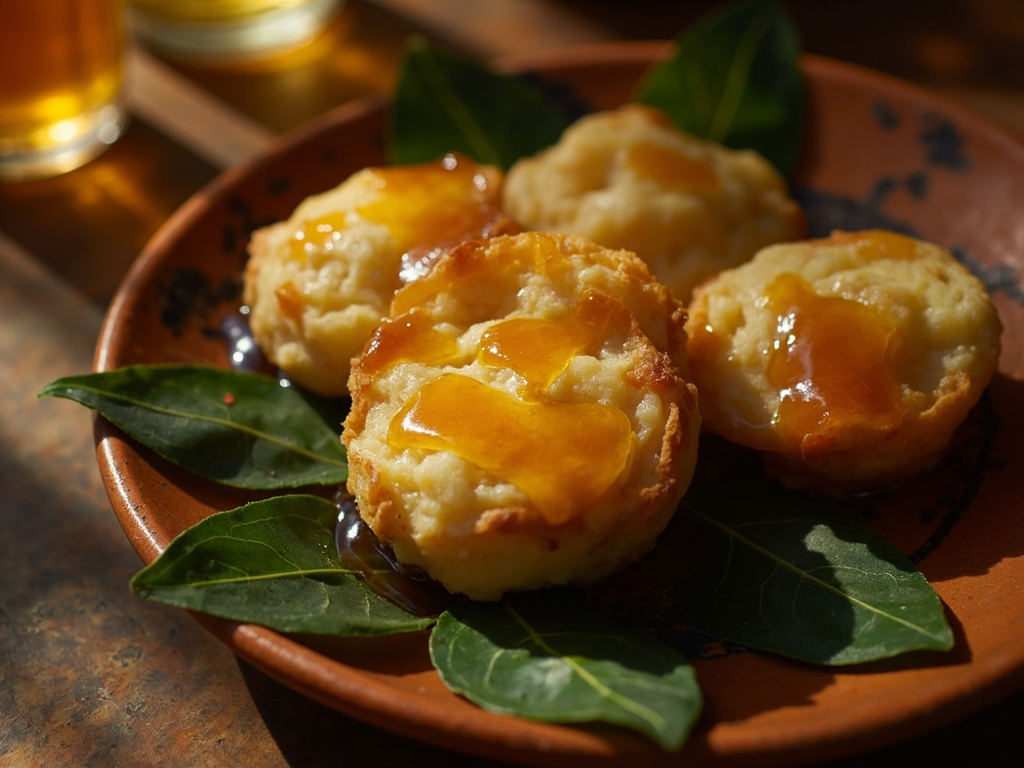
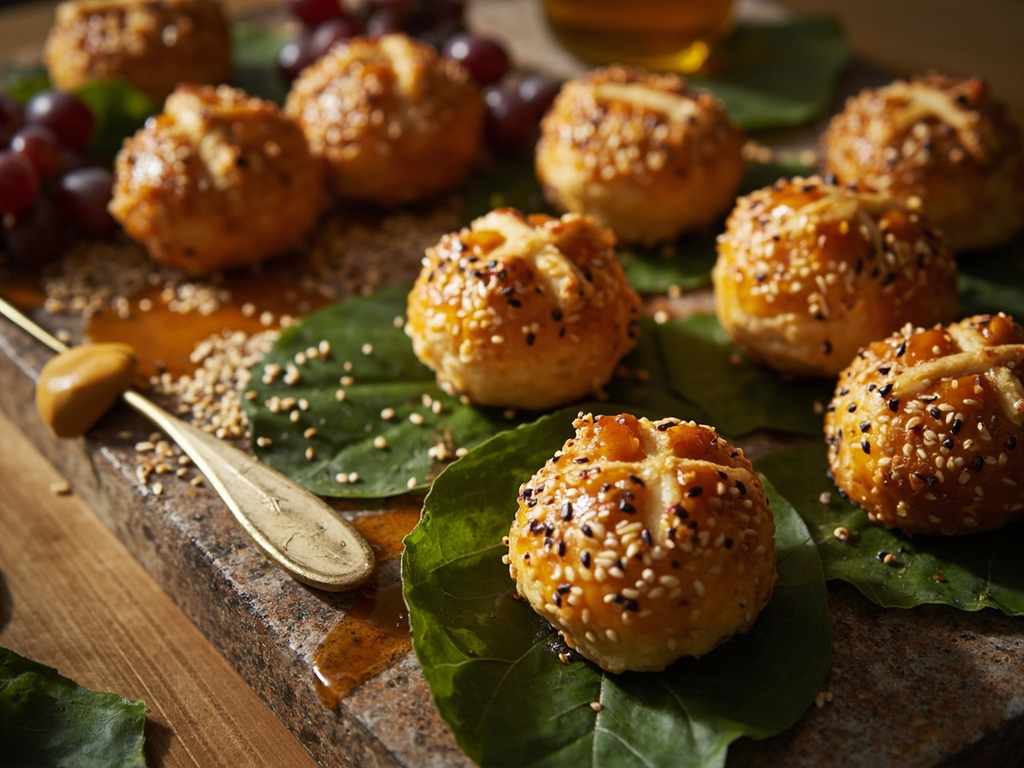
A small, round, soft cake of flour, honey, and sesame, scented with sweet wine. Sweet and fragrant, it evokes the offerings placed on altars—a sweetness shared between gods and men.
You wish to honor me, mortals? No need to slaughter a whole herd. Knead me these little round cakes, golden with honey and rolled in sesame, and set them on my altar among the ivy leaves. The sweet smoke rising to heaven is enough for me—and what the god does not eat, share among yourselves, laugh, and let not a crumb be lost. That is a piety that pleases me!
- •Wheat flour — two handfuls (base)
- •Honey — generously (sweetness and binder)
- •Sesame seeds — a handful (fragrance and crunch)
- •Sweet wine or must (epsema) — a little (fragrance and moisture)
- •Olive oil — a drizzle (softness)
Popana, honey cakes for offering
A small, round, soft cake of flour, honey, and sesame, scented with sweet wine. Sweet and fragrant, it evokes the offerings placed on altars—a sweetness shared between gods and men.
Why this dish? Small cakes of flour and honey—popana and pelanoi—were placed on the altars of Dionysus, as of the other gods. Inspired by these offerings, this round cake marked with a cross recalls what was presented to the god before banquets and festivals.
You wish to honor me, mortals? No need to slaughter a whole herd. Knead me these little round cakes, golden with honey and rolled in sesame, and set them on my altar among the ivy leaves. The sweet smoke rising to heaven is enough for me—and what the god does not eat, share among yourselves, laugh, and let not a crumb be lost. That is a piety that pleases me!
Ingredients (period version)
- Wheat flour — two handfuls (base)
- Honey — generously (sweetness and binder)
- Sesame seeds — a handful (fragrance and crunch)
- Sweet wine or must (epsema) — a little (fragrance and moisture)
- Olive oil — a drizzle (softness)
Ingredients
- Wheat flour — 200 g (base)
- Honey — 120 g (sweetness)
- Sesame seeds — 40 g (coating)
- Sweet wine (Muscat) or reduced grape juice — 5 cl (fragrance)
- Mild olive oil — 3 tbsp (softness)
Method
- Mix the flour with the oil and half the honey, then add the sweet wine until a soft dough forms.
- Shape into small round cakes and mark a cross on top with the tip of a knife (ancient ritual gesture).
- Bake at 180°C for about 15 minutes until golden.
- Upon removal, brush with the remaining warmed honey and roll the edges in sesame seeds.
How it was made : The Greeks offered the gods a whole family of ritual cakes (popana, pelanoi, pemmata), made of flour, honey, sometimes cheese and seeds. Popana were often round and marked with crosses or bumps. Sugar did not exist: honey was the only sweetener, and sesame, imported from the East, a prized refinement.
The contemporary twist : Served warm at the end of the meal as 'cookies of the gods' with honey and sesame: a tiny but spectacular dessert, presented on a bed of vine leaves.
Sources : Athenaeus of Naucratis, Deipnosophists (catalogue of Greek cakes) · Andrew Dalby, Food in the Ancient World from A to Z
Dionysus · Charactorium