 flip
flipMaza, everyday barley cake
Maza, everyday barley cake
Why this dish? Before the wine always came solid food. Barley maza was the bread of the common Greek, the basis of every deipnon, including those that opened onto Dionysian festivals. It was eaten before raising the first cup.
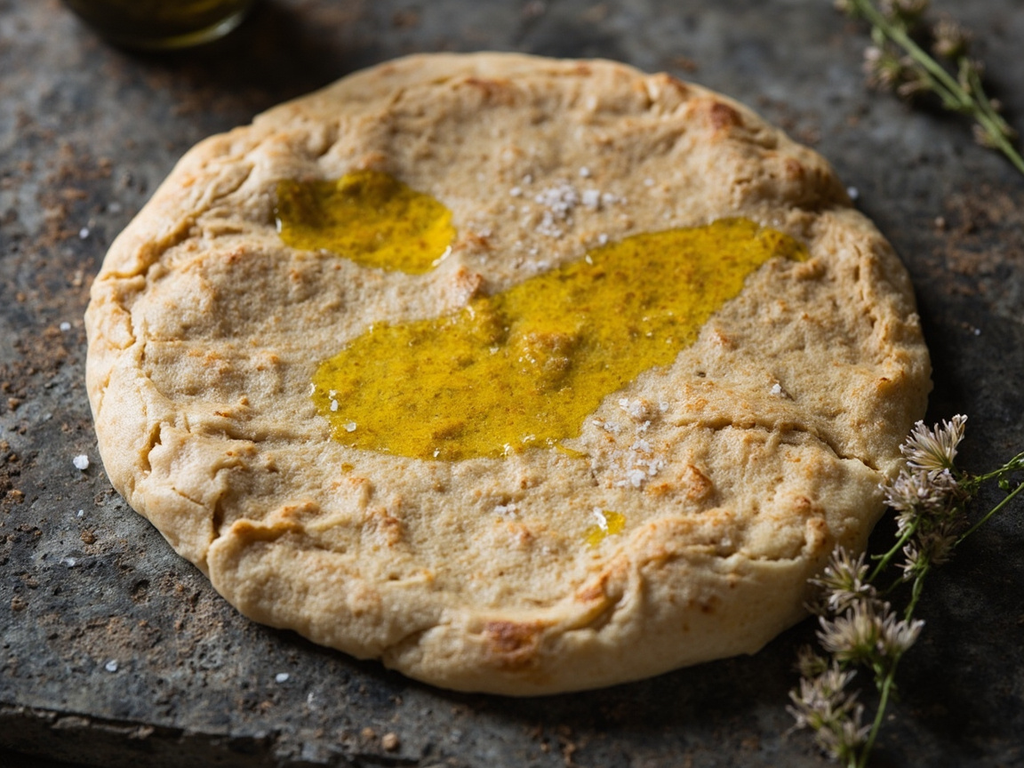
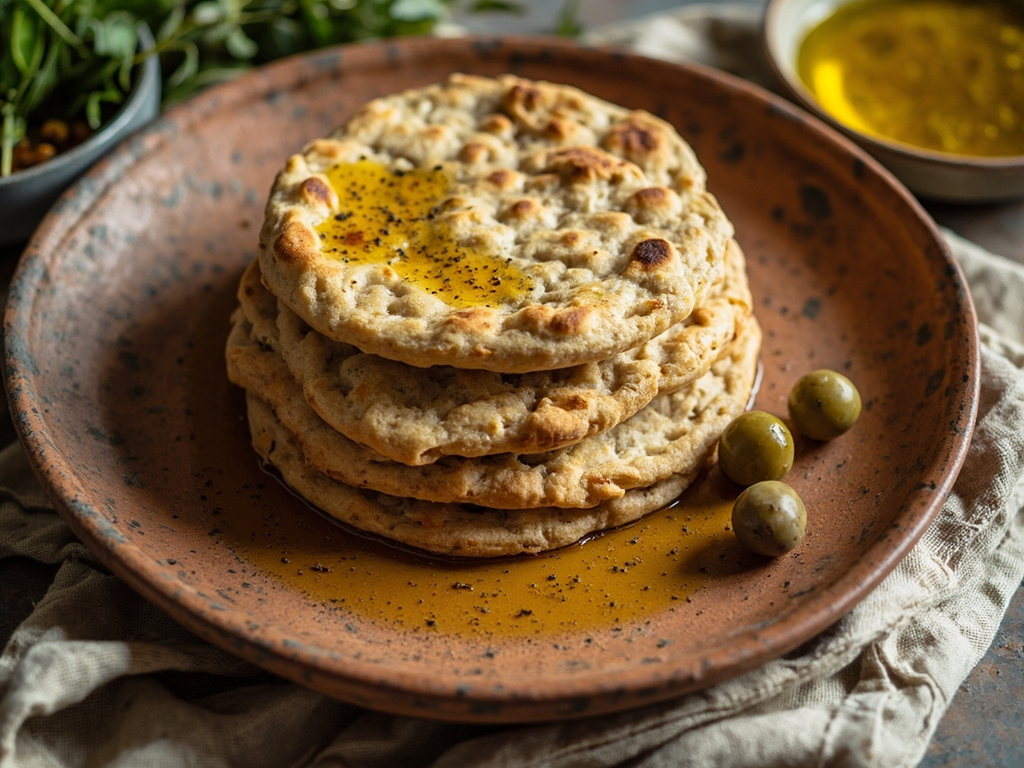
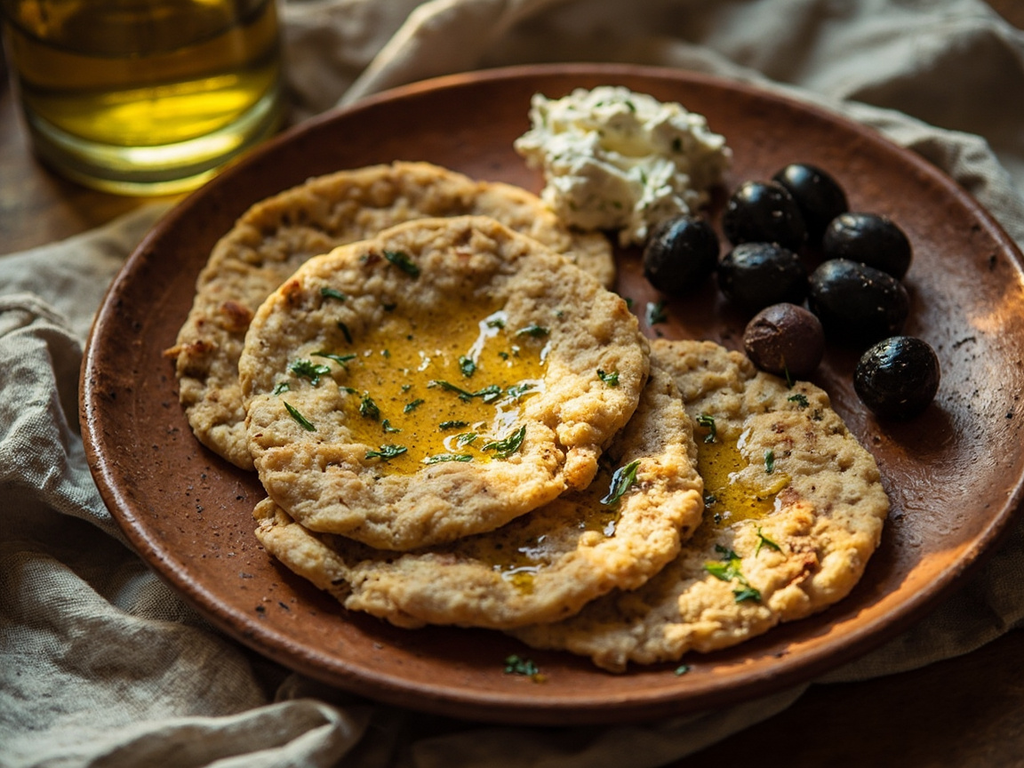
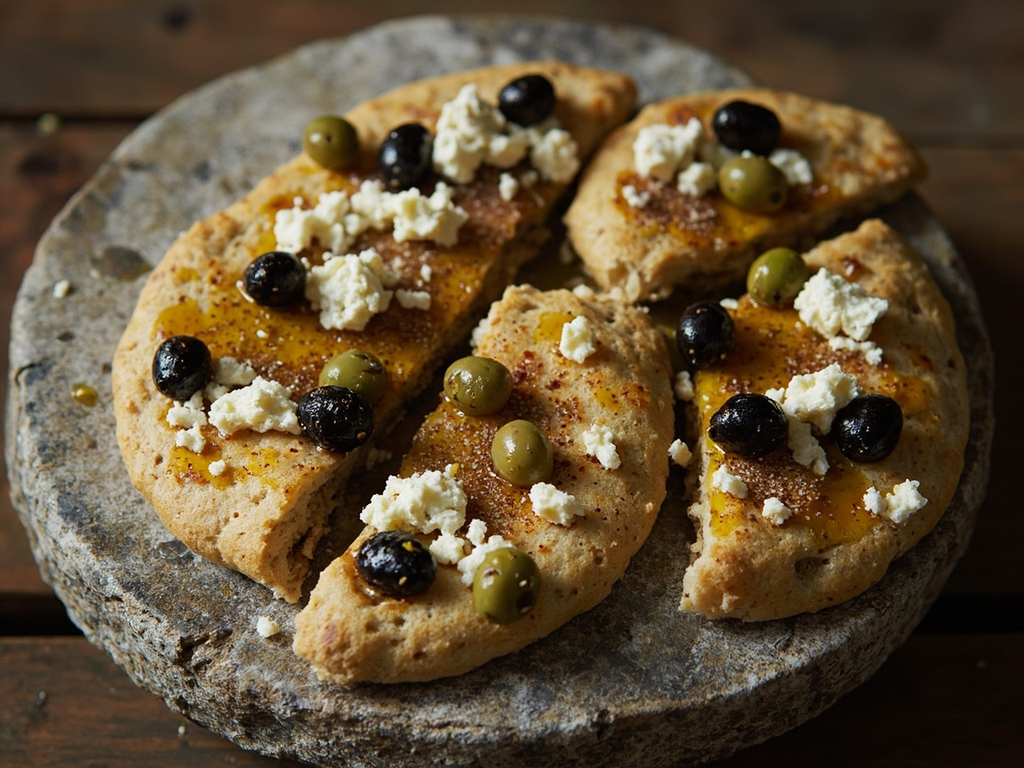
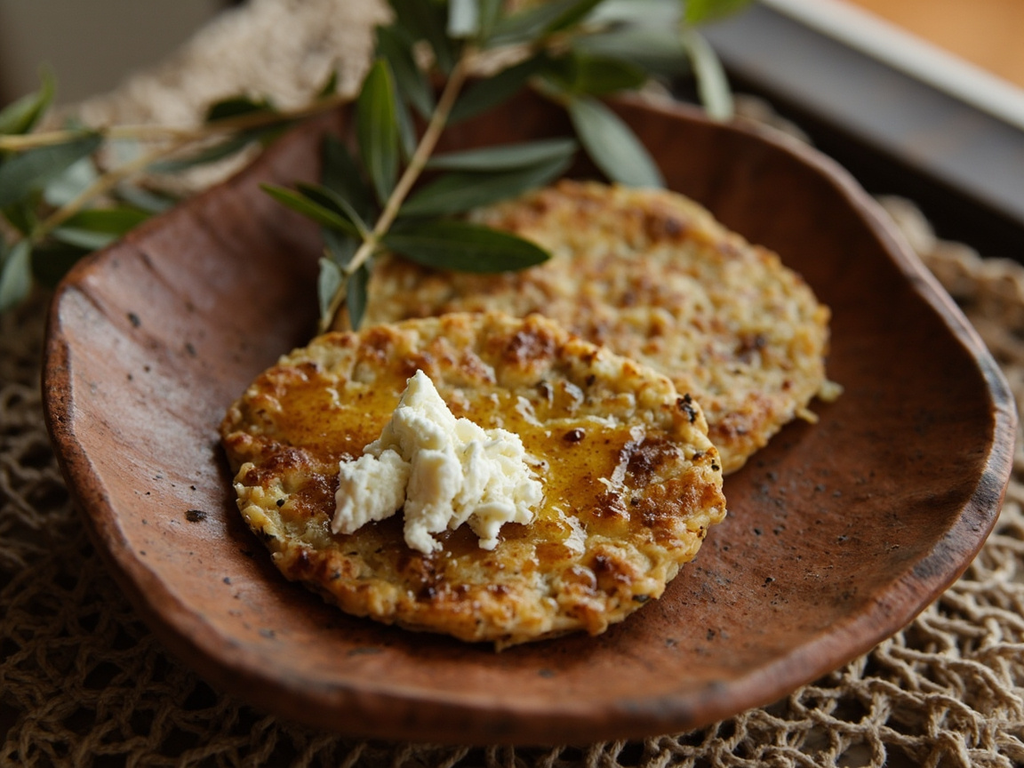
A dense, rustic cake of roasted barley kneaded with olive oil and water, sometimes enlivened with cheese and honey. The simple, fortifying staple of ancient Greeks.
You think perhaps I feed on nothing but wine and ecstasy? The bellies of men need something else before they can sing. Before my cup goes round, let the tables be filled with this honest barley cake! Roast your grain, grind it, knead it with oil and water until it holds in the hand—a shepherd from Mount Nysa asks no more. Eat first, mortal, and you will dance better afterward.
- •Roasted barley flour (alphita) — two handfuls (base)
- •Olive oil — a drizzle (binder and flavor)
- •Water (or a little wine) — as needed (kneading)
- •Fresh goat cheese — a little (optional topping)
- •Sea salt — a pinch (seasoning)
Maza, everyday barley cake
A dense, rustic cake of roasted barley kneaded with olive oil and water, sometimes enlivened with cheese and honey. The simple, fortifying staple of ancient Greeks.
Why this dish? Before the wine always came solid food. Barley maza was the bread of the common Greek, the basis of every deipnon, including those that opened onto Dionysian festivals. It was eaten before raising the first cup.
You think perhaps I feed on nothing but wine and ecstasy? The bellies of men need something else before they can sing. Before my cup goes round, let the tables be filled with this honest barley cake! Roast your grain, grind it, knead it with oil and water until it holds in the hand—a shepherd from Mount Nysa asks no more. Eat first, mortal, and you will dance better afterward.
Ingredients (period version)
- Roasted barley flour (alphita) — two handfuls (base)
- Olive oil — a drizzle (binder and flavor)
- Water (or a little wine) — as needed (kneading)
- Fresh goat cheese — a little (optional topping)
- Sea salt — a pinch (seasoning)
Ingredients
- Barley flour — 200 g (base)
- Olive oil — 3 tbsp (binder)
- Warm water — 10 cl approx. (kneading)
- Crumbled fresh goat cheese — 50 g (topping)
- Salt and honey — to taste (seasoning)
Method
- Lightly toast the barley flour in a dry pan for a few minutes to bring out its nutty flavor, then let cool.
- Mix the flour, salt, and oil, then add the water little by little until a firm, cohesive dough forms.
- Shape into flat cakes about one centimeter thick.
- Cook on a hot stone or in a dry pan for a few minutes on each side. Serve plain, or topped with fresh cheese and a drizzle of honey.
How it was made : Barley, more rustic than wheat, was the everyday grain in Greece. It was often eaten as maza: a paste of roasted, unleavened barley, kneaded cold, which sometimes did not even need to be cooked. It was the staple food, as opposed to artos, the more prestigious wheat bread.
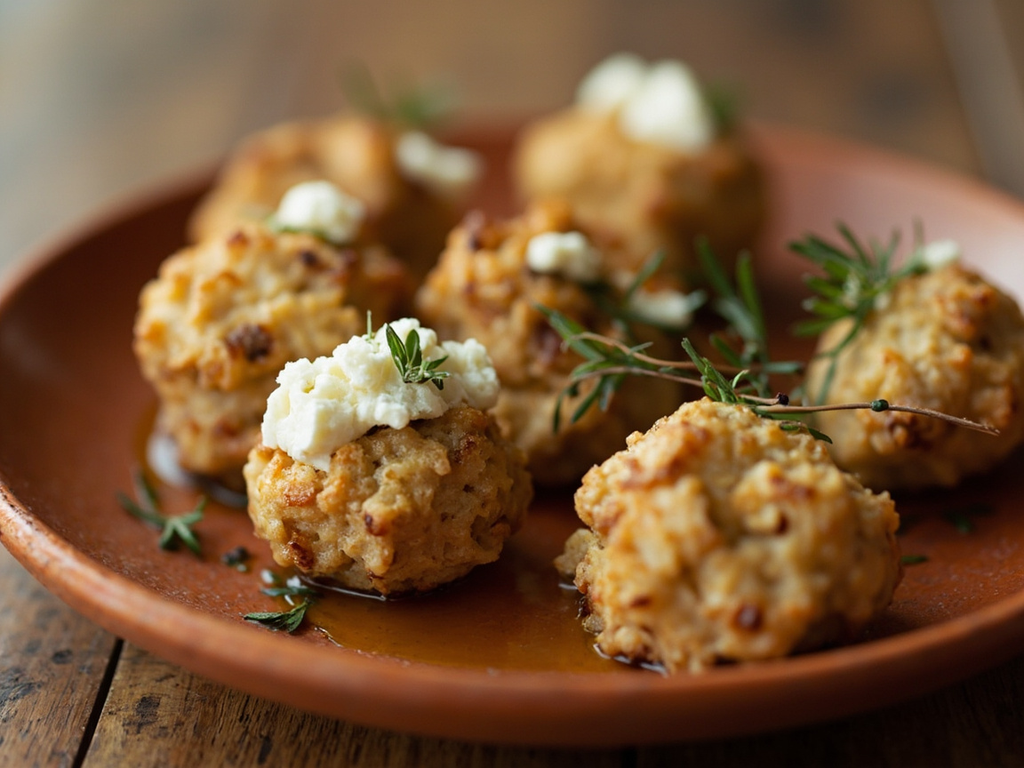
The contemporary twist : An 'Ancient-style barley cake' served warm with fresh goat cheese and a drizzle of thyme honey: a Greek tartine 2500 years old, perfect for an appetizer.
Sources : Athenaeus of Naucratis, Deipnosophists · Aristophanes, mentions of maza in the comedies
Dionysus · Charactorium