Sitos and opson, then symposion
The classic Greek meal unfolds in two stages. First, the deipnon: a sitos (the cereal base—bread or barley cake) accompanied by an opson (the "what-goes-with-it": cheese, olives, pulses, sometimes fish). Then comes the symposion, the drinking banquet where wine mixed with water flows, punctuated by honey cakes (tragemata), music, and speeches—exactly the setting of Plato's *Symposium* where Diotima speaks. To the gods and the dead, liquid offerings are reserved separately: libations poured from the phiale.
Signature : Hymettus honey and toasted barley
Two threads tie this whole table together: barley, the mother grain of the Greek world (daily bread, drink of the mysteries), and the thyme-scented honey of the Attic hills, which is not just a sweetener but the sacred link between humans and gods, present in the festival cake as in the libation.
Diotima at the table
450 av. J.-C. — 300 av. J.-C.
5 period recipes
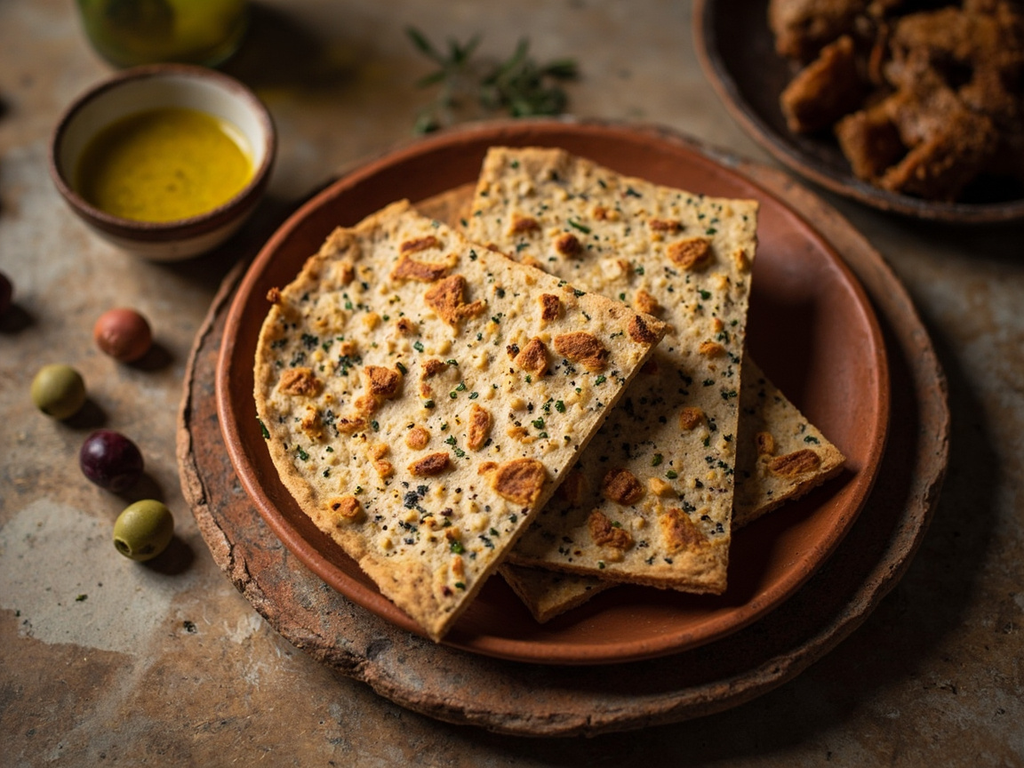 Everyday
Maza, the barley cake
Sitos — the cereal base that opens every meal
🧂 ☕· 30 min
View the recipe
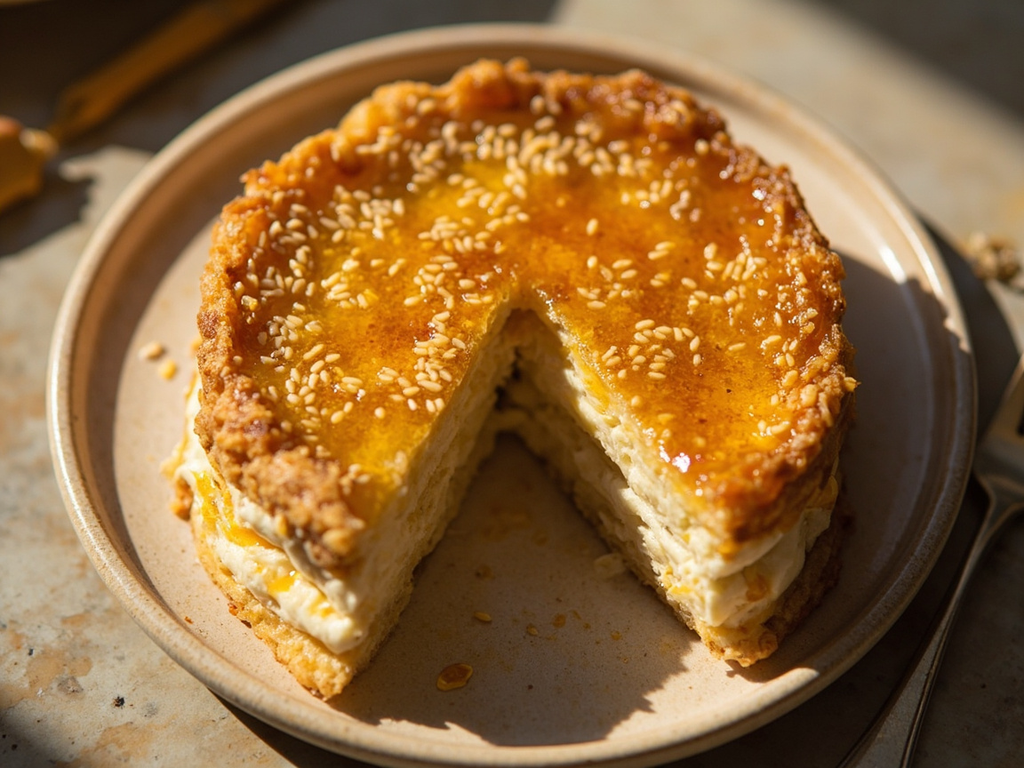 Festive
Plakous with honey and fresh cheese
Tragemata — the sweets of the symposion, served at the second course
🍯· 1 h
View the recipe
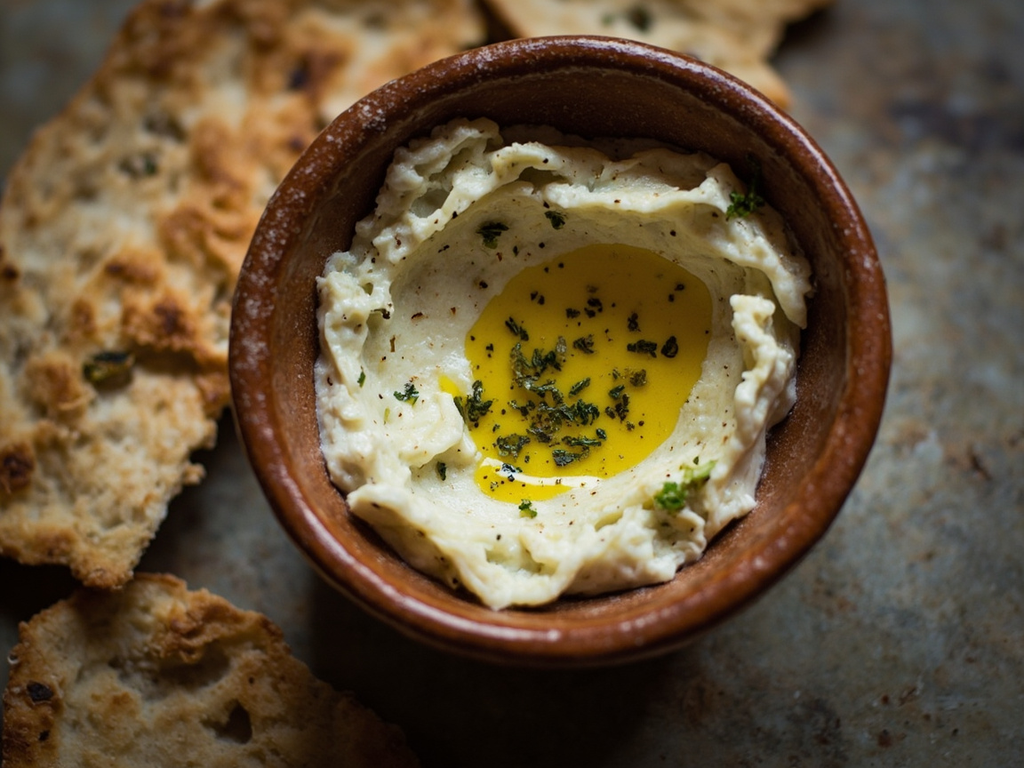 Preserving
Myttotos, the garlic paste with cheese and vinegar
Opson — the pungent relish that enhances the sitos and keeps well
🍋 🧂 🍄· 15 min
View the recipe
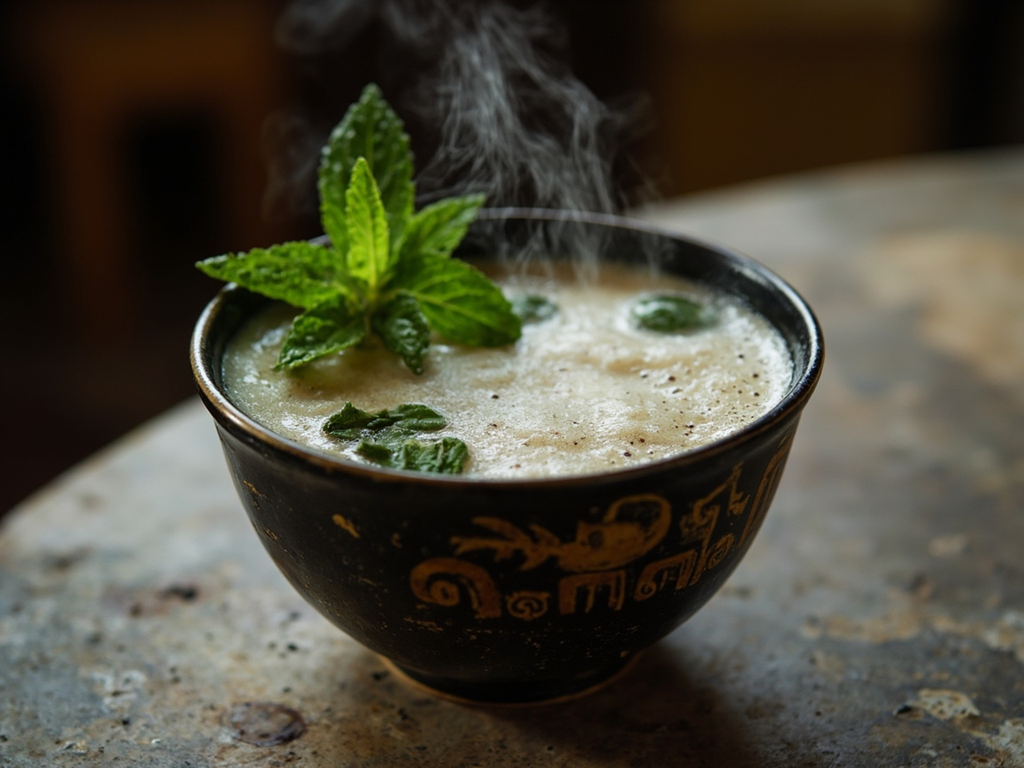 Offering
Kykeon of the mysteries
Ritual drink — consumed outside the meal, in the sacred context of initiation
☕ 🫙· 15 min
View the recipe
 Drink
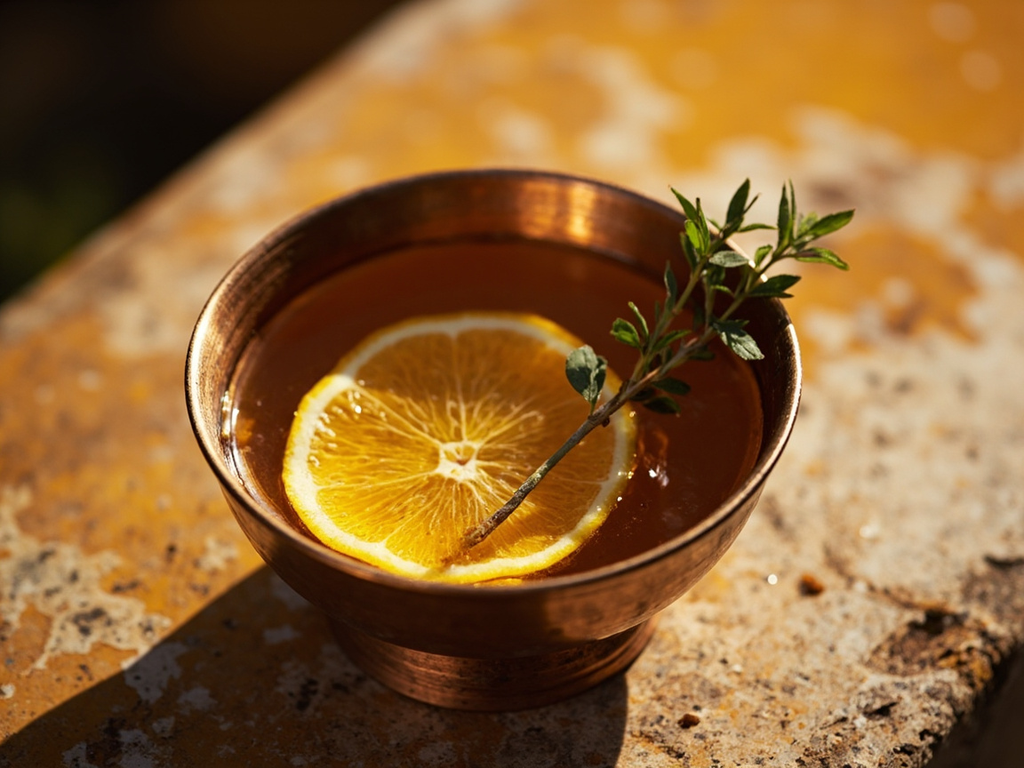
DrinkMelikraton, the libation mead
Spondé — the libation drink poured from the phiale before drinking
🍯· 10 min
View the recipe