 flip
flipMyttotos, the garlic paste with cheese and vinegar
Myttotos, the garlic paste with cheese and vinegar
Why this dish? In a modest Greek household, a store of myttotos is kept cool: a strong opson that enlivens the rather bland maza of ordinary days. For a simple life like that of an Arcadian priestess, it is the art of drawing much flavor from little.
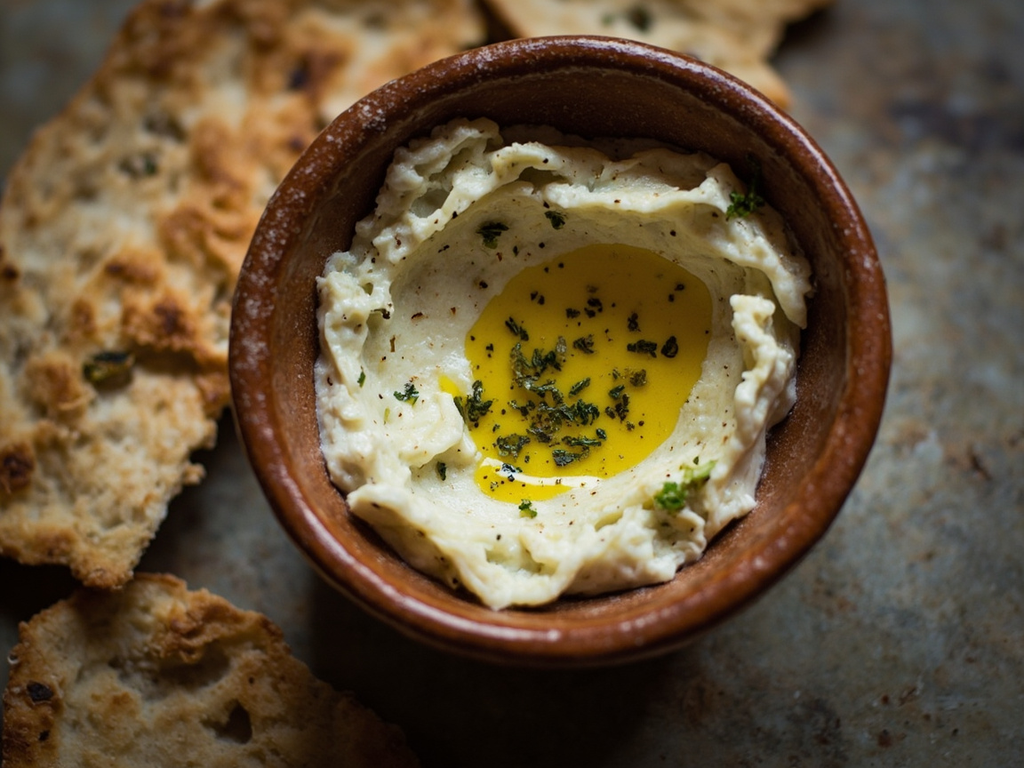
A rustic, powerful paste of pounded garlic, goat cheese, vinegar, and herbs, bound with oil and softened with a hint of honey. Tangy, salty, garlicky: it keeps for days and transforms any bread.
You think you need a feast to eat well? Think again. With a little garlic pounded in the mortar, some dry cheese, a splash of vinegar, and leek from the garden, I fed my household for days. A drop of honey to reconcile the sour and the strong, and there is the myttotos, stored in its jar, protected under oil. Spread it on your barley cake: little, well understood, is better than too much. That too is knowing how to love what you have at hand.
- •Garlic cloves — a few (pungent base)
- •Grated dry goat cheese — a good portion (body and umami)
- •Wine vinegar — a splash (acidity and preservation)
- •Leek or herbs (coriander, mint) — to flavor (freshness)
- •Olive oil — to bind (binder and protection)
- •Honey — a drop (balance)
Myttotos, the garlic paste with cheese and vinegar
A rustic, powerful paste of pounded garlic, goat cheese, vinegar, and herbs, bound with oil and softened with a hint of honey. Tangy, salty, garlicky: it keeps for days and transforms any bread.
Why this dish? In a modest Greek household, a store of myttotos is kept cool: a strong opson that enlivens the rather bland maza of ordinary days. For a simple life like that of an Arcadian priestess, it is the art of drawing much flavor from little.
You think you need a feast to eat well? Think again. With a little garlic pounded in the mortar, some dry cheese, a splash of vinegar, and leek from the garden, I fed my household for days. A drop of honey to reconcile the sour and the strong, and there is the myttotos, stored in its jar, protected under oil. Spread it on your barley cake: little, well understood, is better than too much. That too is knowing how to love what you have at hand.
Ingredients (period version)
- Garlic cloves — a few (pungent base)
- Grated dry goat cheese — a good portion (body and umami)
- Wine vinegar — a splash (acidity and preservation)
- Leek or herbs (coriander, mint) — to flavor (freshness)
- Olive oil — to bind (binder and protection)
- Honey — a drop (balance)
Ingredients
- Garlic — 3 cloves (pungent base)
- Aged grated goat cheese — 120 g (body and umami)
- Red wine vinegar — 1 tbsp (acidity and preservation)
- Finely chopped leek greens or fresh herbs — 2 tbsp (freshness)
- Extra virgin olive oil — 4 tbsp (binder and protection)
- Honey — 1 tsp (balance)
- Salt — a pinch (seasoning)
Method
- Pound the garlic with a pinch of salt in a mortar (or crush finely) until a paste forms.
- Add the grated cheese and mash to combine.
- Incorporate the vinegar, honey, then gradually the olive oil to obtain a soft paste.
- Mix in the leek or herbs. Taste and adjust vinegar/honey.
- Pack into a small jar, cover with a film of olive oil, and store in the refrigerator: keeps 4-5 days. Serve on maza.
How it was made : Myttotos was a popular condiment mentioned by Aristophanes, made from garlic, cheese, honey, and vinegar, sometimes with added leek or egg. In a kitchen without refrigeration, the garlic, vinegar, and oil layer served both to preserve and to flavor. It was the everyday opson that gave zest to the basic barley cake.
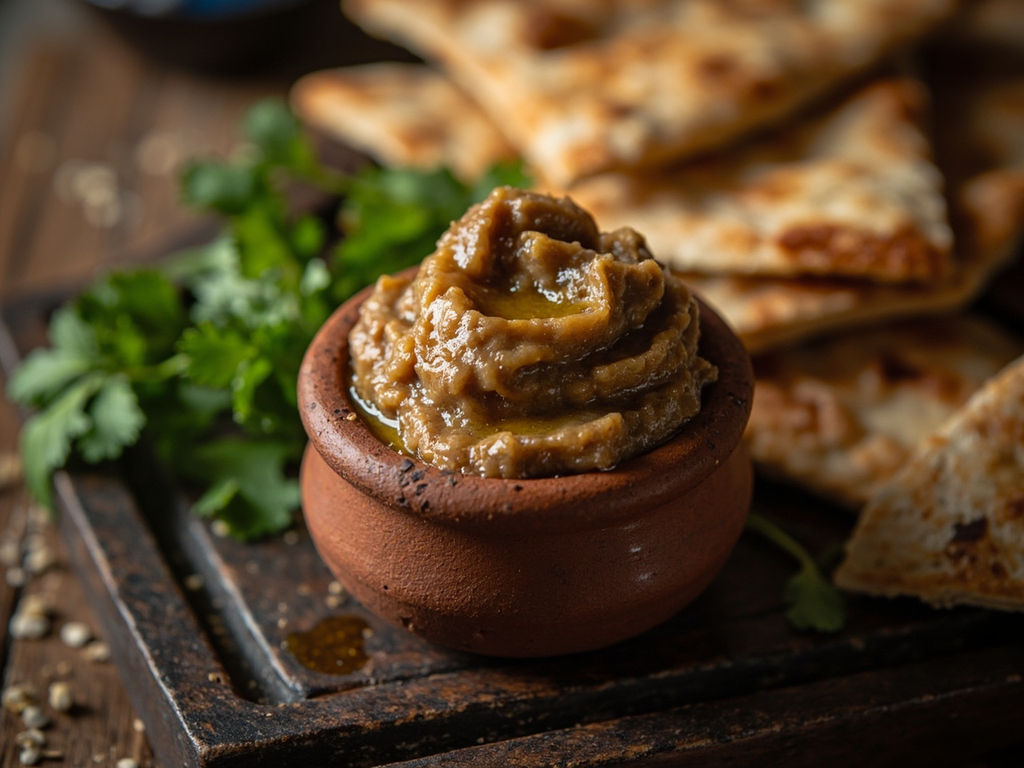
The contemporary twist : Present it as an "ancient pesto" in a small bowl, with vegetable sticks and pita chips: a bold dip for a sharing platter.
Sources : Aristophanes (mentions of myttotos in comedies) · Andrew Dalby, *Food in the Ancient World from A to Z* · James Davidson, *Courtesans and Fishcakes: The Consuming Passions of Classical Athens*
Diotima · Charactorium