 flip
flipMaza, the barley cake
Maza, the barley cake
Why this dish? Maza is the bread of the poor and the wise alike: less prestigious than wheat bread, it is what nourishes Diotima's Arcadia, a land of shepherds and barley fields. The philosopher is content with little, and this cake is the humble foundation on which the rest of the table rests.
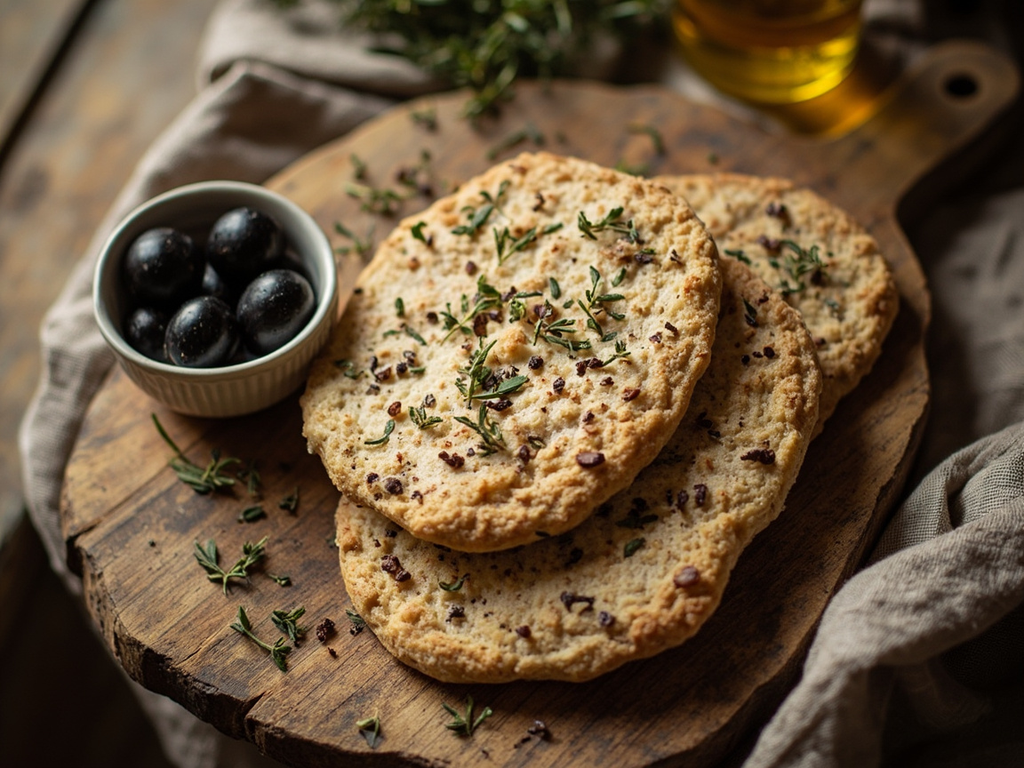
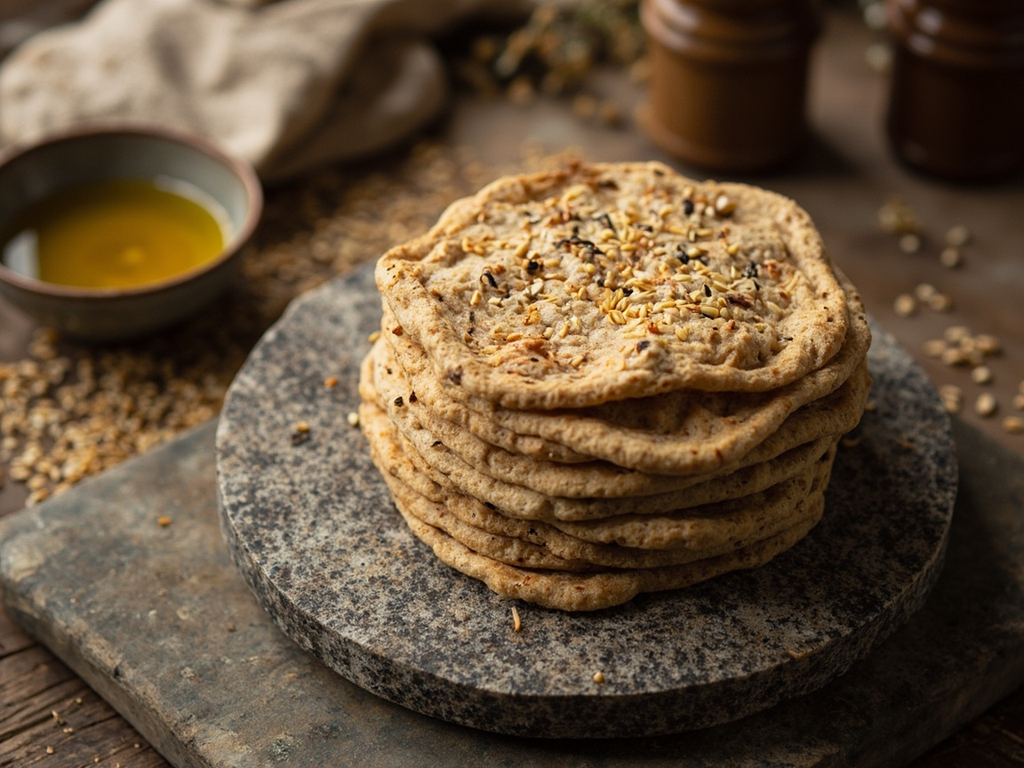
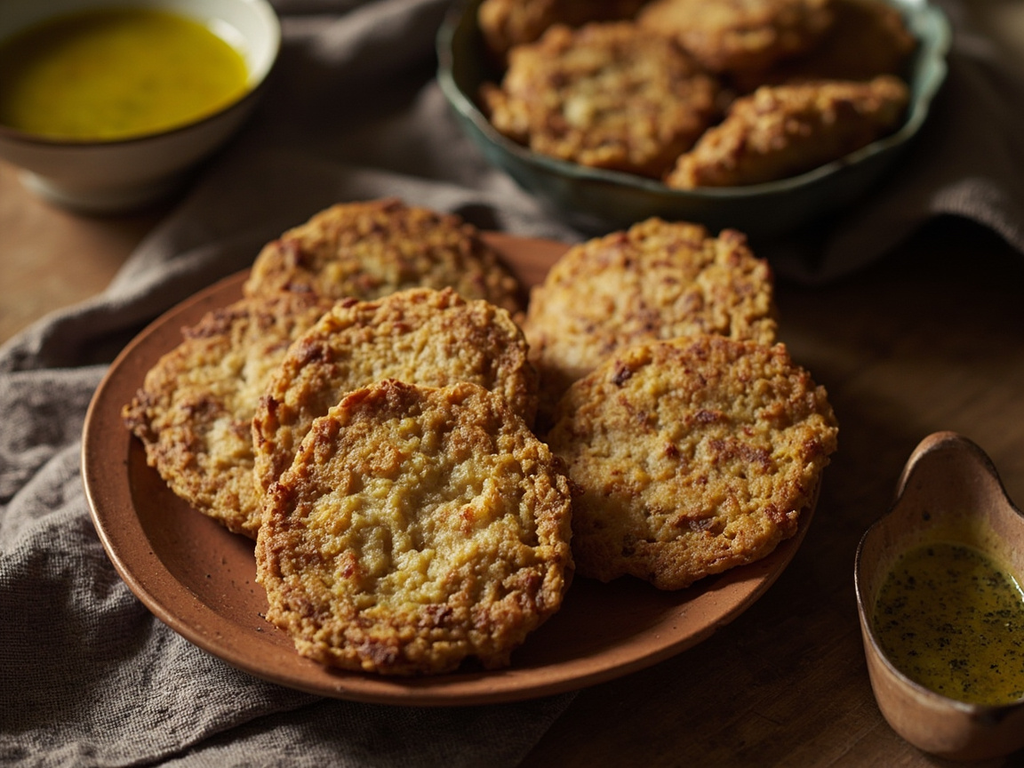
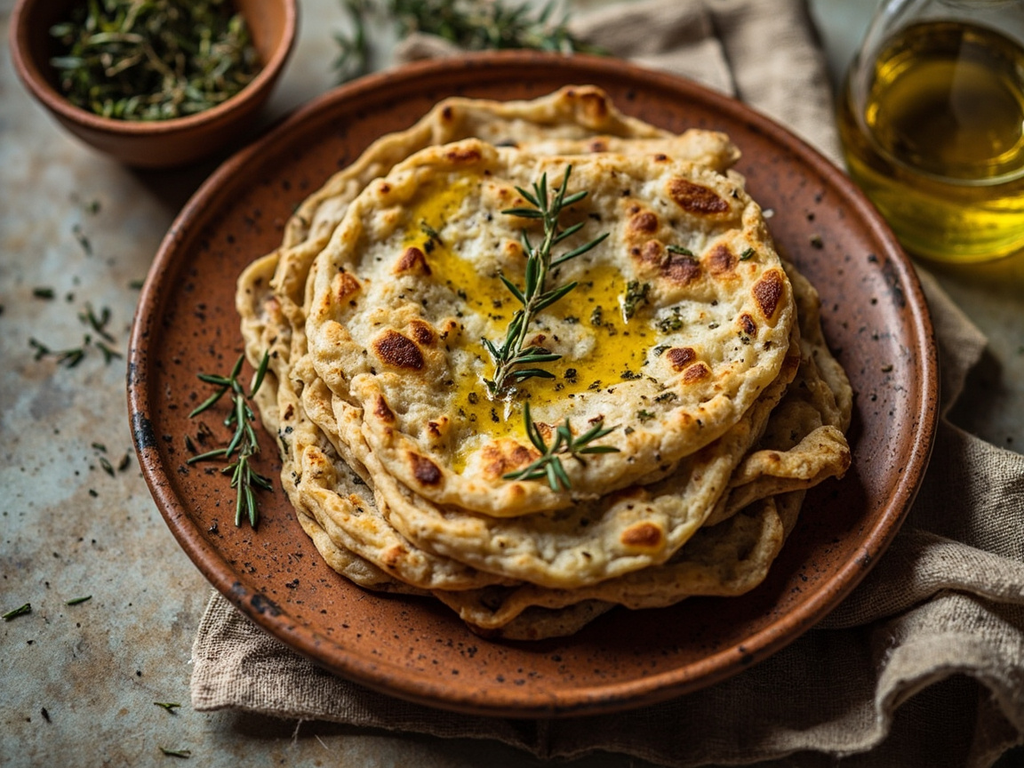
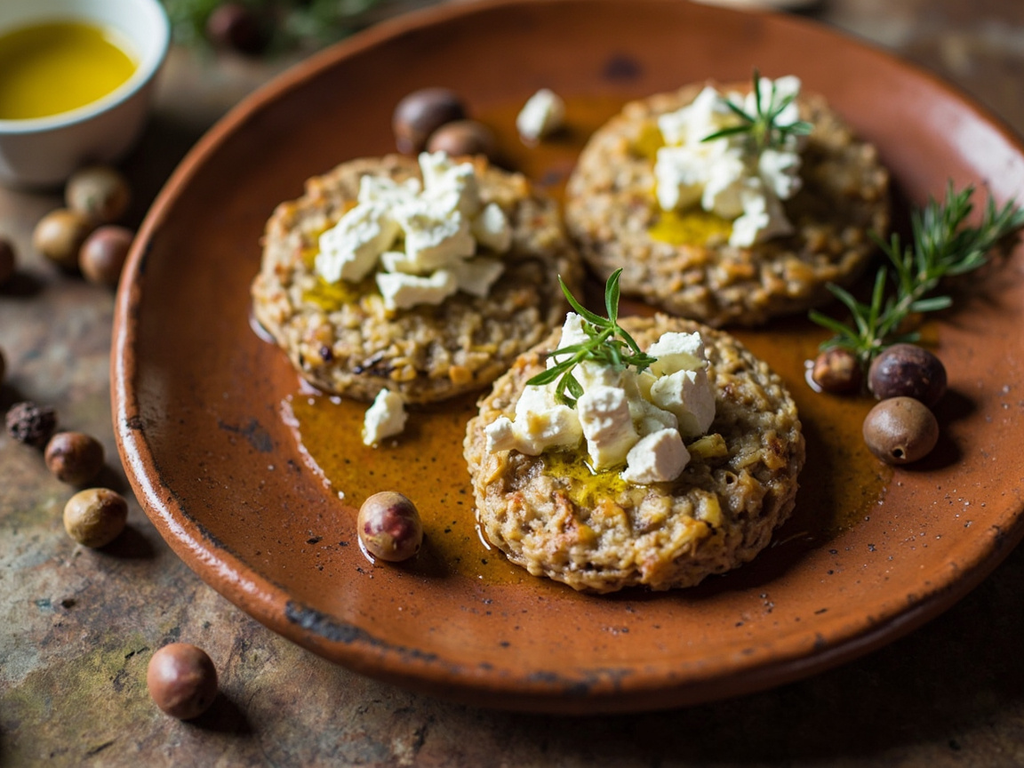
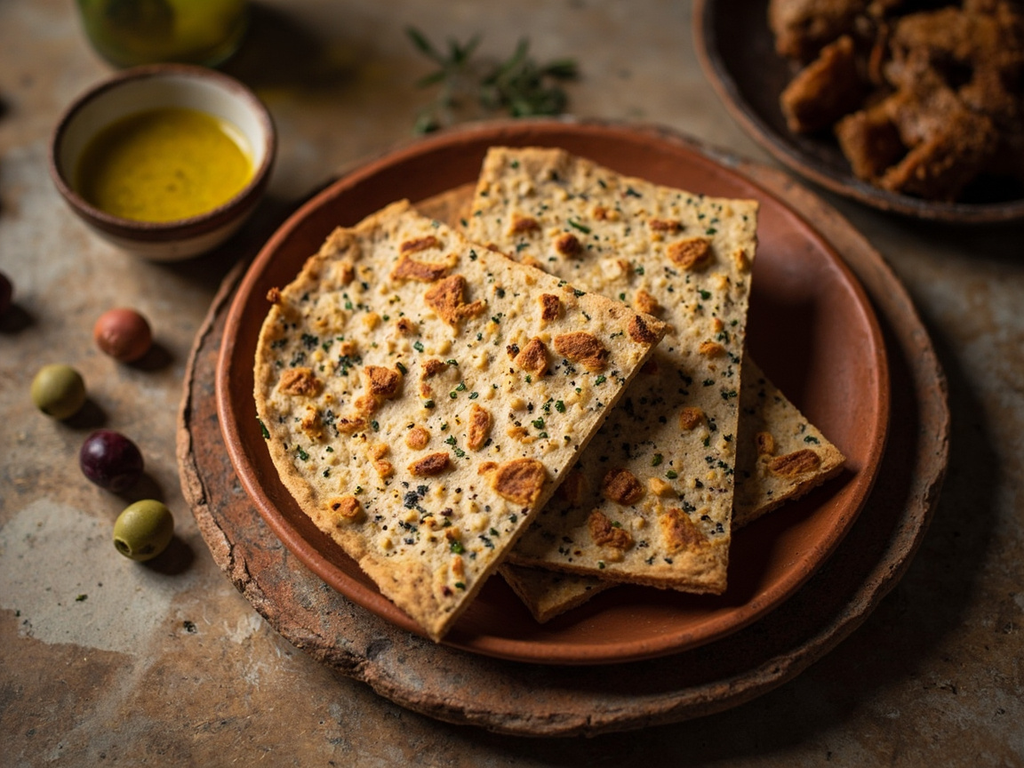
A flat cake of toasted barley kneaded with water and olive oil, dense and rustic, with a slightly roasted flavor. You break it by hand to sop up sauces or to accompany cheese and olives.
Listen, you who wish to know: before climbing toward the Beautiful, you must first eat the barley of the earth. Among us in Arcadia, we toasted the grain on a hot stone before grinding it, and the smell rose like a humble incense. I kneaded this maza with my own hands, a drizzle of olive oil, a pinch of sea salt, and it sat in the palm like something true. Never scorn this cake: it is the first rung of the ladder, the body that must be fed so that the soul, afterward, has the strength to rise.
- •Toasted barley flour — two generous handfuls (cereal base)
- •Warm spring water — as needed for kneading (binder)
- •Olive oil — a drizzle (softness and flavor)
- •Sea salt — a pinch (seasoning)
Maza, the barley cake
A flat cake of toasted barley kneaded with water and olive oil, dense and rustic, with a slightly roasted flavor. You break it by hand to sop up sauces or to accompany cheese and olives.
Why this dish? Maza is the bread of the poor and the wise alike: less prestigious than wheat bread, it is what nourishes Diotima's Arcadia, a land of shepherds and barley fields. The philosopher is content with little, and this cake is the humble foundation on which the rest of the table rests.
Listen, you who wish to know: before climbing toward the Beautiful, you must first eat the barley of the earth. Among us in Arcadia, we toasted the grain on a hot stone before grinding it, and the smell rose like a humble incense. I kneaded this maza with my own hands, a drizzle of olive oil, a pinch of sea salt, and it sat in the palm like something true. Never scorn this cake: it is the first rung of the ladder, the body that must be fed so that the soul, afterward, has the strength to rise.
Ingredients (period version)
- Toasted barley flour — two generous handfuls (cereal base)
- Warm spring water — as needed for kneading (binder)
- Olive oil — a drizzle (softness and flavor)
- Sea salt — a pinch (seasoning)
Ingredients
- Barley flour — 200 g (cereal base)
- Warm water — 120 to 140 ml (binder)
- Extra virgin olive oil — 2 tbsp (softness and flavor)
- Fine salt — 1/2 tsp (seasoning)
Method
- For an authentic taste, toast the barley flour in a dry pan over low heat for 3-4 minutes, stirring, until fragrant (it will darken slightly).
- Mix flour and salt, add oil, then gradually add water, kneading until you have a soft, non-sticky dough.
- Shape into 4 cakes about 1 cm thick.
- Cook them 4-5 minutes per side in a hot, lightly oiled pan (or on a hot stone) until golden and marked.
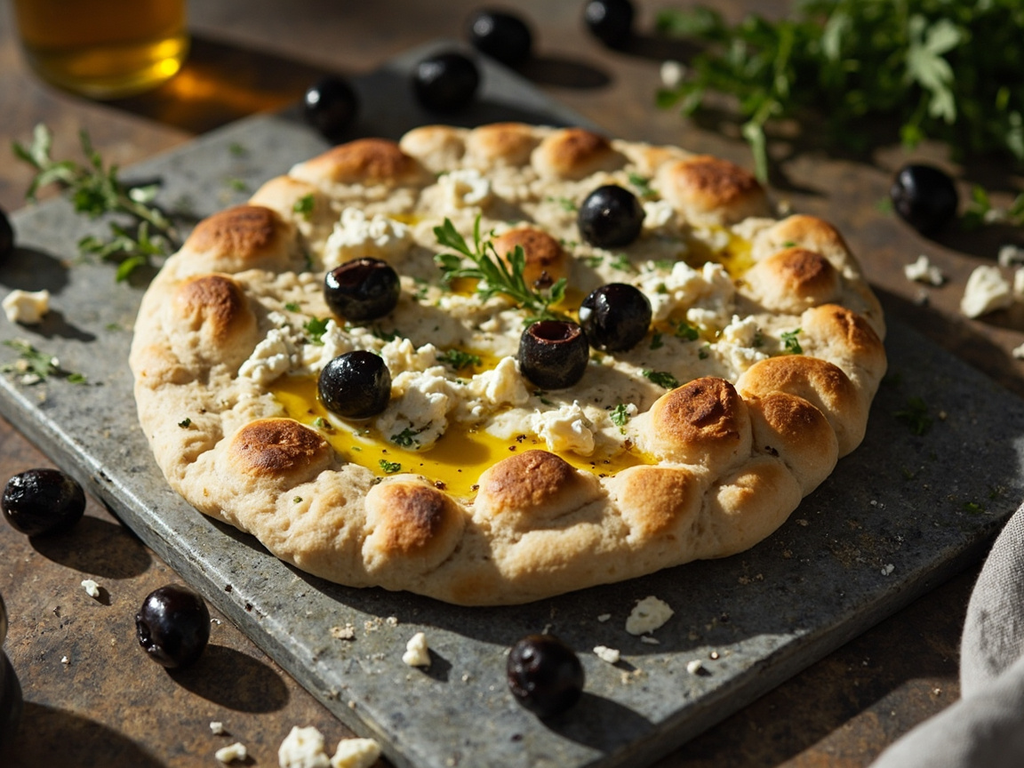
- Serve warm, to be broken by hand, with fresh cheese, olives, or olive oil.
How it was made : Barley grew better than wheat on Greece's poor soils: maza was therefore the daily bread, while leavened wheat bread remained rarer and more prized. The grain was often toasted before grinding, which helped preservation and gave that roasted flavor. Some mazai were not even cooked, simply kneaded and eaten raw by peasants and soldiers.
The contemporary twist : Serve as mini cakes for an aperitif, topped with fresh goat cheese, a drizzle of honey, and a mint leaf: the Greek triad in one bite.
Sources : Plato, *Symposium* · Andrew Dalby, *Siren Feasts: A History of Food and Gastronomy in Greece* · Athenaeus of Naucratis, *The Deipnosophists*
Diotima · Charactorium