 flip
flipKykeon of the mysteries
Kykeon of the mysteries
Why this dish? Diotima is above all a priestess, one who "initiates" Socrates into the mysteries of love as one is initiated into the Eleusinian Mysteries. The kykeon is precisely the barley drink that the initiates drank: no dish better conveys her role as a guide toward the sacred.
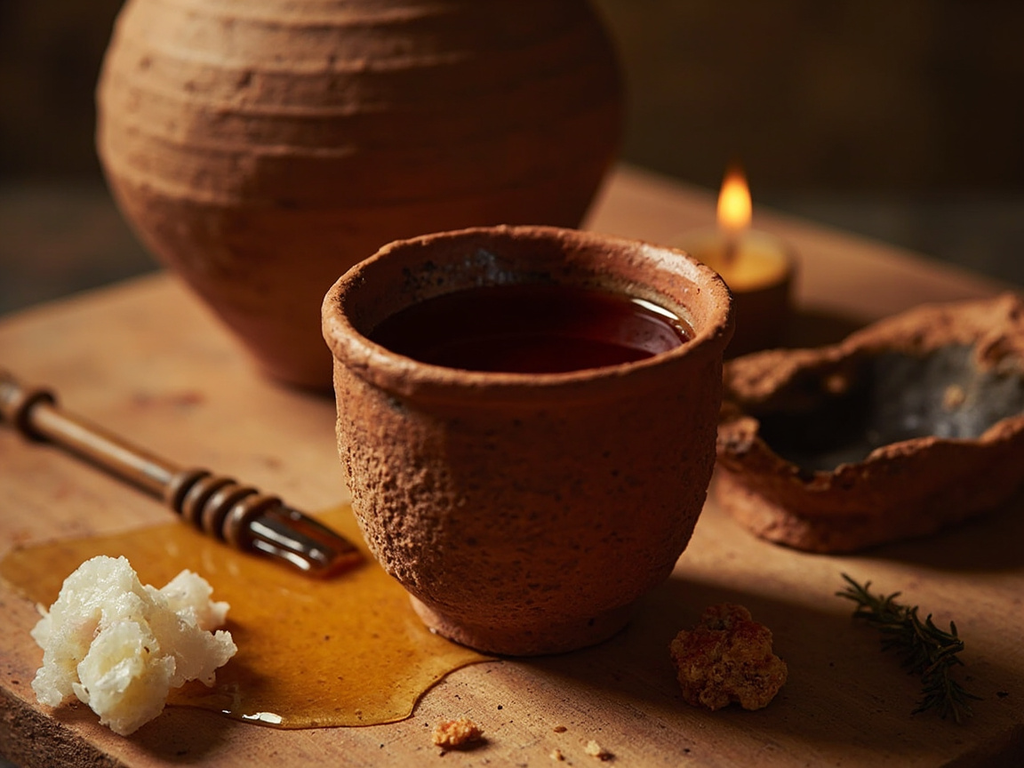
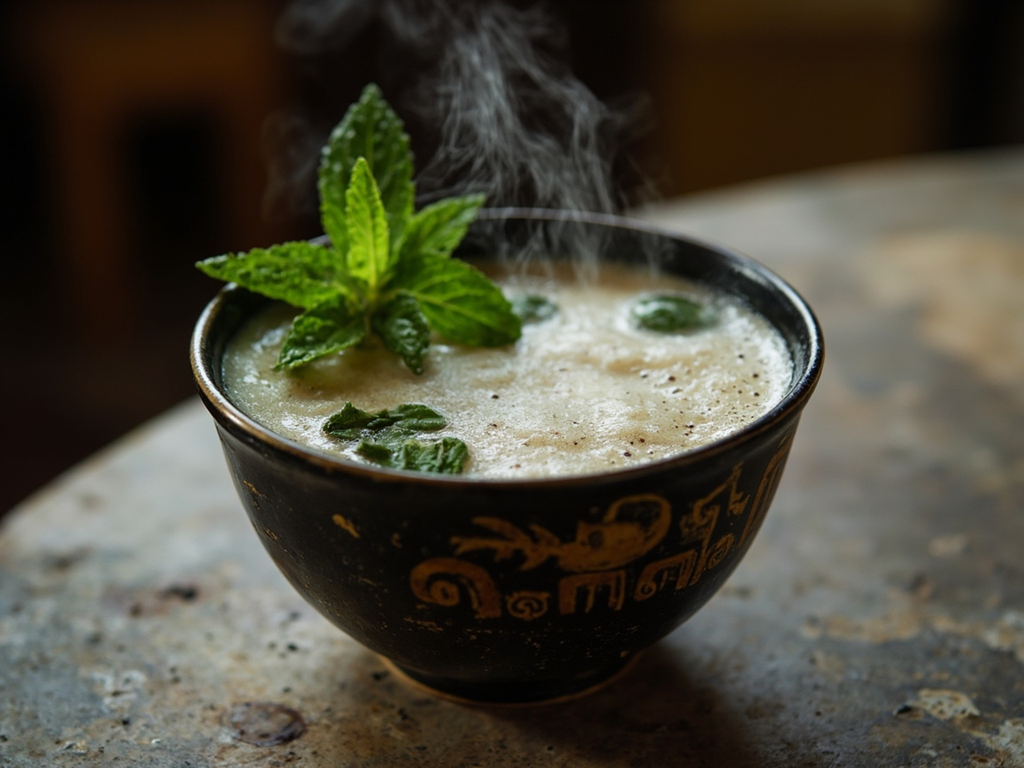
A thick, ancient drink: barley flour mixed with water, flavored with pennyroyal (a wild mint) and a little grated goat cheese. Astringent, herbaceous, both food and drink—inspired by the initiation brew, not a reproduction of a sacred rite.
Come closer, and drink slowly, for this is not a wine of pleasure but a threshold. The barley mixed with cold water, a pinch of pennyroyal gathered on the hill, a little grated cheese that clouds the brew: this is how we break the fast before great things. At Eleusis, the initiates drank it to leave the ordinary world behind; I offer it to you so that your body may calm and your soul may set forth. Close your eyes: first the bitterness, then the coolness of mint—this is already an ascent.
- •Toasted barley flour — two spoonfuls (nourishing body)
- •Fresh spring water — a bowl (base)
- •Pennyroyal or wild mint — a few leaves (ritual scent)
- •Grated goat cheese — a pinch (thickness (Homeric version))
- •Honey — to taste (optional) (sweeten)
Kykeon of the mysteries
A thick, ancient drink: barley flour mixed with water, flavored with pennyroyal (a wild mint) and a little grated goat cheese. Astringent, herbaceous, both food and drink—inspired by the initiation brew, not a reproduction of a sacred rite.
Why this dish? Diotima is above all a priestess, one who "initiates" Socrates into the mysteries of love as one is initiated into the Eleusinian Mysteries. The kykeon is precisely the barley drink that the initiates drank: no dish better conveys her role as a guide toward the sacred.
Come closer, and drink slowly, for this is not a wine of pleasure but a threshold. The barley mixed with cold water, a pinch of pennyroyal gathered on the hill, a little grated cheese that clouds the brew: this is how we break the fast before great things. At Eleusis, the initiates drank it to leave the ordinary world behind; I offer it to you so that your body may calm and your soul may set forth. Close your eyes: first the bitterness, then the coolness of mint—this is already an ascent.
Ingredients (period version)
- Toasted barley flour — two spoonfuls (nourishing body)
- Fresh spring water — a bowl (base)
- Pennyroyal or wild mint — a few leaves (ritual scent)
- Grated goat cheese — a pinch (thickness (Homeric version))
- Honey — to taste (optional) (sweeten)
Ingredients
- Barley flour (or ground barley flakes) — 3 tbsp (nourishing body)
- Cold water — 250 ml (base)
- Mint (if pennyroyal unavailable) — 4-5 leaves (scent)
- Fresh grated goat cheese — 1 tbsp (optional) (thickness)
- Honey — 1 tsp (optional) (sweeten bitterness)
Method
- If using barley flakes, grind them finely; otherwise use barley flour.
- Whisk the barley into the cold water vigorously to avoid lumps.
- Crush the mint leaves between your fingers and add them; let steep 5-10 minutes.
- For the oldest version, stir in the grated cheese and whisk: the drink should remain cloudy and slightly thick.
- Adjust with a little honey if the bitterness is too strong, stir before drinking (the kykeon separates on standing).
How it was made : Kykeon ("the mixture") appears as early as Homer: Circe and then Hecamede prepare it with barley, grated cheese, and wine or honey. In the *Homeric Hymn to Demeter*, it is the water-barley-pennyroyal version, without wine, that the goddess drinks—and which became the drink of the Eleusinian Mysteries, consumed by initiates to break their fast. As much a drink as a food, it was drunk cold and needed constant stirring, as the barley settled at the bottom.
The contemporary twist : Serve well chilled in a shallow bowl, as an ancient "drinkable porridge": a barley and mint smoothie to tell as the philosophers' drink.
Sources : Homer, *Iliad* (Book XI, Hecamede's kykeon) · *Homeric Hymn to Demeter* · Andrew Dalby, *Siren Feasts: A History of Food and Gastronomy in Greece*
Diotima · Charactorium