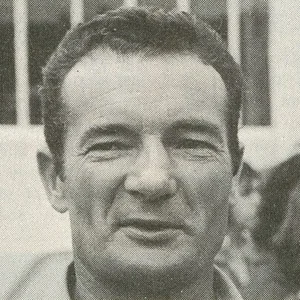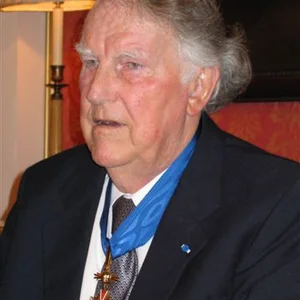

New Zealand mountaineer and explorer, Edmund Hillary was the first man to reach the summit of Everest (8,849 m) on 29 May 1953, accompanied by Sherpa Tenzing Norgay. He then devoted his life to helping the people of Nepal.
Edmund Hillary(1919 — 2008)
Edmund Hillary
Nouvelle-Zélande
8 min read
Frequently asked questions
Famous Quotes
« We knocked the bastard off.»
« It is not the mountain we conquer, but ourselves.»
Key Facts
- 29 May 1953: first summit of Everest with Tenzing Norgay, during the British expedition led by John Hunt
- 1958: participates in the Commonwealth Trans-Antarctic Expedition via the South Pole
- 1960–1961: leads an expedition in search of the Yeti in the Himalayas
- Founds the Himalayan Trust (1960) to build schools and hospitals in Nepal
- 2008: dies in Auckland at the age of 88, a national icon of New Zealand
Works & Achievements
The first proven ascent of the world's highest summit, accomplished with Sherpa Tenzing Norgay as part of the British expedition led by John Hunt. This achievement marked a turning point in the history of exploration and made Hillary a worldwide celebrity.
A personal account of the Everest ascent, written by Hillary himself. Translated into many languages, this book remains an essential reference for understanding the real conditions of the 1953 expedition.
Hillary led a motorized team to the South Pole, becoming one of the few men in history to have reached both geographic extremes of the Earth in a single lifetime. The expedition demonstrated the value of motorized vehicles in polar environments.
A charitable organization founded by Hillary to build schools, hospitals, and infrastructure in Sherpa villages across Nepal. More than 30 schools and several medical clinics were established through his efforts over 48 years.
A complete autobiography in which Hillary recounts his adventures from Everest to Antarctica and reflects on the meaning of exploration and humanitarian commitment. The title encapsulates his philosophy of life.
Anecdotes
On the morning of 29 May 1953, Hillary and Tenzing Norgay left their Camp IX at 8,500 metres in freezing temperatures. They reached the summit at around 11:30 a.m. Hillary took photographs of Tenzing holding up the flags of the UN, Nepal, and the United Kingdom — but not the other way round: Tenzing did not know how to use the camera. That iconic shot of Tenzing remains one of the most famous in the history of mountaineering.
News of the ascent reached London during the night of 1–2 June 1953, just in time for the coronation of Queen Elizabeth II. British newspapers headlined the double event as a glorious omen for the new reign. The coincidence turned Hillary into a hero of the Empire, and he was immediately knighted by the Queen.
Hillary and Tenzing never publicly agreed on who had set foot on the summit first. Out of mutual respect and to avoid any nationalist dispute, they simply declared that they had reached it 'together'. This discretion speaks to the deep respect that bound the two men despite their very different backgrounds.
In 1958, Hillary took part in the Commonwealth Trans-Antarctic Expedition and reached the South Pole overland on 4 January, becoming the first person to do so since Amundsen in 1911 and Scott in 1912. He was nonetheless criticised by his expedition leader Vivian Fuchs for pushing ahead to the Pole without waiting for the rest of the group.
After conquering Everest, Hillary devoted much of his life to helping the Sherpa communities of Nepal. He founded the Himalayan Trust in 1960, which built more than 30 schools and several hospitals in Nepal. He often said that this humanitarian work was his greatest achievement — far beyond the ascent of Everest.
Primary Sources
My first sensation was one of relief — relief that the long grind was over; that the summit had been reached before our oxygen supplies had dropped to a critical level... I looked at Tenzing and in spite of the balaclava, goggles and oxygen mask all encrusted with ice, I could see his infectious grin of sheer delight.
Hillary and Tenzing reached the summit of Everest at 11.30 a.m. on 29th May 1953. The highest point on earth had been attained for the first time in recorded history. Both men were fit and well. There was no sign of any previous party having visited the summit.
I had learnt that even the mediocre can have adventures and even the fearful can achieve. I had discovered that however modest your abilities, if you persist and put one foot in front of the other, remarkable things can happen.
Summit of Everest reached on 29 May by Hillary and Tenzing. All well.
Key Places
Edmund Hillary's birthplace, where he was born on 20 July 1919 and died on 11 January 2008. He was given a state funeral there.
The highest point on Earth at 8,849 metres, on the border between Nepal and Tibet. Hillary and Tenzing set foot there on 29 May 1953 at 11:30 a.m., for the first time in recorded history.
The starting point for Everest expeditions, located at approximately 5,364 metres above sea level. It was here that the 1953 British expedition organised its rotation climbs before the final summit push.
A Sherpa village where Hillary built one of the first Himalayan Trust hospitals, providing medical care to isolated local communities at high altitude.
Hillary reached the South Pole on 4 January 1958, becoming the first explorer to do so overland since the expeditions of Amundsen (1911) and Scott (1912).
Typical Objects

An essential tool for any mountaineer, the ice axe serves as a walking stick, a brake in case of a slip, and a means of progressing on ice. Hillary used it throughout the Everest ascent to secure every step on the icy slopes.

Metal spikes attached to the soles of boots to grip ice and hard-packed snow. Without the right crampons, Hillary and Tenzing's ascent of Everest's final slopes would have been impossible.

Above 7,500 metres, the air is so thin that a climber cannot function without supplemental oxygen. The 1953 expedition used improved equipment, and Hillary carefully managed the oxygen cylinders to maximise their supply all the way to the summit.

Hillary carried a camera to the summit and used it to photograph Tenzing holding up the flags. These images are among the most widely reproduced of the twentieth century and remain the only direct visual record of the climb.

At the time, climbing ropes were made of natural hemp, far less effective than modern synthetic ropes. Hillary and Tenzing were connected by such a rope — a symbol of the absolute interdependence of roped partners at high altitude.

Lightweight and built to withstand fierce winds, the tent allowed Hillary and Tenzing to spend the night at Camp IX at 8,500 m before their final push. Its sturdiness and insulation were critical in ensuring both men were fit to reach the summit the following day.
School Curriculum
Vocabulary & Tags
Key Vocabulary
Tags
Daily Life
Morning
During Himalayan expeditions, Hillary and his companions rose before dawn, sometimes at 2 or 3 in the morning. It was vital to make progress early, before the sun softened the snow and made the slopes unstable. Breakfast at base camp consisted of oatmeal, biscuits, hot tea, and sometimes canned bacon.
Afternoon
Afternoons at high altitude were reserved for resting in the tents, maintaining equipment, and planning the next stages. Wind, weather conditions, and the need for acclimatization made it necessary to limit physical exertion in the middle of the day. Hillary also devoted time to keeping his expedition diary.
Evening
In the evenings at base camp, the team gathered in the large mess tent to dine together, share weather observations, and decide on the next day's strategy. Meals, prepared by the Sherpas, blended Western provisions (canned goods, chocolate, cheese) with local dishes based on rice, dal, and yak butter tea.
Food
On expedition, food had to be both calorie-dense and light to carry. Hillary ate biscuits, cheese, chocolate, smoked bacon, freeze-dried soups, and drank plenty of sweet tea to compensate for the dehydration caused by altitude. Above 7,000 m, appetite diminished sharply and the men had to force themselves to eat.
Clothing
Hillary wore woolen underwear, multiple layers of fleece wool pullovers, a down-padded suit, and a windproof outer shell. Leather-lined wool gloves and a wool balaclava topped with double-lens glacier goggles were essential. All together it weighed several kilograms and made every movement laborious.
Housing
On expedition, Hillary stayed successively in the lodge-houses of Nepali villages during the approach, then in increasingly smaller tents as the ascent progressed. At Camp IX, at 8,500 metres, he shared a tiny tent with Tenzing, battling violent winds throughout the night before the final summit push. In Kathmandu, between expeditions, he stayed in modest hotels or with local contacts.
Historical Timeline
Period Vocabulary
Liens externes & ressources
Références
Œuvres
Ascension de l'Everest (29 mai 1953)
1953
High Adventure (récit d'expédition)
1955
Expédition transantarctique du Commonwealth — atteinte du Pôle Sud
4 janvier 1958
Himalayan Trust (fondation humanitaire)
1960
Nothing Venture, Nothing Win (autobiographie)
1975