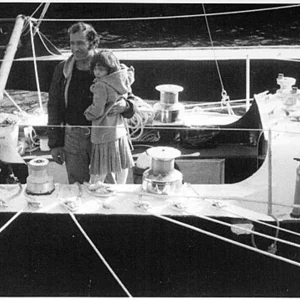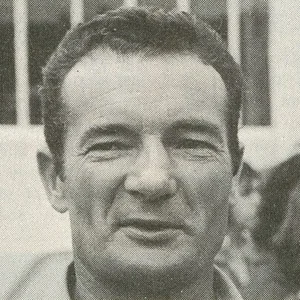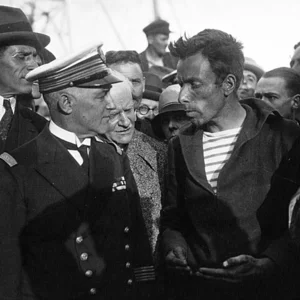

Alain Gerbault (1893-1941) was a French sailor, World War I aviator, and top-level tennis player. He made the first solo east-to-west crossing of the Atlantic, then a solo round-the-world sailing voyage between 1923 and 1929.
Alain Gerbault(1893 — 1941)
Alain Gerbault
France
6 min read
Frequently asked questions
Key Facts
- Born on 17 November 1893 in Laval, died on 16 December 1941 in Dili (Timor)
- Fighter pilot during World War I (1914-1918)
- First solo east-to-west crossing of the North Atlantic in 1923 aboard the Firecrest
- Solo round-the-world sailing voyage from 1923 to 1929
- Author of successful travel narratives, including “In Quest of the Sun” (1929)
Works & Achievements
First solo crossing of the North Atlantic from east to west, from Gibraltar to New York in 101 days. A navigational feat regarded as legendary.
The account of his crossing, which became a best-seller and made him famous throughout France.
A circumnavigation of nearly 40,000 miles aboard the Firecrest, one of the first ever completed single-handed.
A two-volume account of his voyage around the world, from New York to Tahiti and then along the return route.
A book celebrating the beauty and culture of the Pacific islands he had explored.
A posthumous book denouncing the ravages of colonization on the Polynesian peoples and their culture.
Anecdotes
In 1923, Alain Gerbault left Gibraltar aboard the Firecrest, an old English cutter built in 1892, to reach New York single-handed. The crossing lasted 101 days: his boat took on water, his food supplies rotted and he nearly starved to death, but he became the first person to cross the North Atlantic solo from east to west.
Before becoming a sailor, Gerbault had lived two other lives: a fighter pilot during the First World War, then a skilled tennis player in the 1920s. It was while gazing at the sea from the French Riviera that he decided to give everything up and set off under sail.
When he arrived in New York in September 1923, Gerbault was welcomed as a hero by an enormous crowd and the American press. Back in France, he received the Legion of Honour for his feat — he who had set off almost unknown.
During his voyage around the world, Gerbault fell in love with Polynesia. He learned the language, organized sporting competitions for young Tahitians and defended their traditions, which he saw as threatened by colonization — he would write a book about it with a disillusioned title, “A Paradise Is Dying.”
Gerbault died alone in 1941 on the island of Timor, carried off by illness in the midst of the Second World War. Six years later, in 1947, his ashes were brought back to Bora Bora, the island he had loved so much, where he rests today.
Primary Sources
I was setting off alone, on a small boat, to cross the Atlantic. No insurance, no possible rescue: I would have to rely on myself alone and on my old Firecrest.
Happiness — I found it in these Pacific islands, among people who had remained simple and free, far from the noise and money of the cities.
The civilization we bring to these happy peoples has given them nothing but diseases, new needs, and sorrow.
Key Places
Alain Gerbault's birthplace in 1893, far from the sea that would become his passion.
Starting point of his solo crossing of the Atlantic on June 6, 1923.
Port of arrival of the first east-to-west Atlantic crossing, after 101 days at sea; he was welcomed there as a hero.
Port where Gerbault triumphantly completed his round-the-world voyage in July 1929.
Polynesian island he cherished and where his ashes were buried in 1947.
Pacific island where Gerbault died alone and ill in December 1941, during the Second World War.
Typical Objects

An old 11-metre wooden English cutter built in 1892, aboard which Gerbault crossed the Atlantic and then sailed around the world. Heavy and worn out, it symbolizes his rejection of modern comfort.

A navigation instrument that measures the height of the sun and stars to calculate one's position on the open sea. Without it, Gerbault would have been unable to find his way alone across the ocean.

A compass mounted on a gimbal, allowing a steady course to be held despite the rolling of the boat. It was his constant guide during long solo crossings.

A notebook in which Gerbault recorded his position, the weather, and his impressions day after day. These notes formed the basis of his successful travel accounts.

A reminder of his first career as a top-level athlete in the 1920s. Gerbault even took it with him to the Pacific to teach young Polynesians.

The fighter pilot gear he wore during the First World War. This experience of danger shaped his taste for solitary adventure.

Sails that Gerbault had to trim and repair alone, sometimes in the middle of a storm. Mastering the rigging made the difference between survival and shipwreck.
School Curriculum
Vocabulary & Tags
Key Vocabulary
Daily Life
Morning
At sea, Gerbault woke at daybreak to check his course and the condition of the sails after the night. He took the sun's altitude with a sextant to calculate his position—the only way to know where he was on the vast expanse of the ocean.
Afternoon
Afternoons were devoted to working the rigging, to the endless repairs of the old Firecrest, and to writing his logbook. When the weather allowed, he read or swam in the sea alongside the boat.
Evening
At dusk, he shortened sail to spend the night safely and prepared a frugal meal. Alone beneath the stars, he jotted down his impressions and kept watch, for no help was possible if anything went wrong.
Food
On board, his diet was limited to canned food, ship's biscuits, rice, and carefully rationed fresh water. During his first crossing, his spoiled provisions nearly left him to starve; at ports of call, he feasted on fresh fruit and fish.
Clothing
While sailing, Gerbault wore simple, sturdy clothes, often an oilskin to protect himself from the spray and the storms. In the tropics, he gladly adopted light dress, sometimes going barefoot, in the manner of the Polynesians.
Housing
For a long time his "home" was the cramped, damp cabin of the Firecrest, cluttered with charts, instruments, and provisions. Ashore in Polynesia, he lived simply in huts at the edge of the lagoon, refusing luxury.
Historical Timeline
Period Vocabulary
Liens externes & ressources
Références
Œuvres
Traversée de l'Atlantique en solitaire (Firecrest)
1923
Seul à travers l'Atlantique
1924
Tour du monde en solitaire à la voile
1924-1929
À la poursuite du soleil
1929
Îles de beauté
1941
Un paradis se meurt
1949