Naptanu — the Mesopotamian meal centered on bread and beer
For the Sumerians and Akkadians, the meal (naptanu) revolved around two pillars: barley or emmer bread (baked as flatbread or dense loaf) and barley beer (kaš), drunk through a straw from a shared jar. Alongside were porridge or barley soup, onions, garlic, dates, sesame, and on feast days, grilled or boiled meat. No starter-main-dessert: everything was shared at once, from the simplest (soaked bread) to the richest (mutton stew), with beer flowing from start to finish.
Signature : Fermented barley (bappir and kaš)
Barley is the soul of the Mesopotamian table. Turned into bread (as bappir, a sourdough loaf also used for brewing) and then into beer, it embodies the passage from wild to civilized — exactly the destiny of Enkidu, who becomes human the day he tastes bread and drinks the beer of Shamhat.
Enkidu at the table
5 period recipes
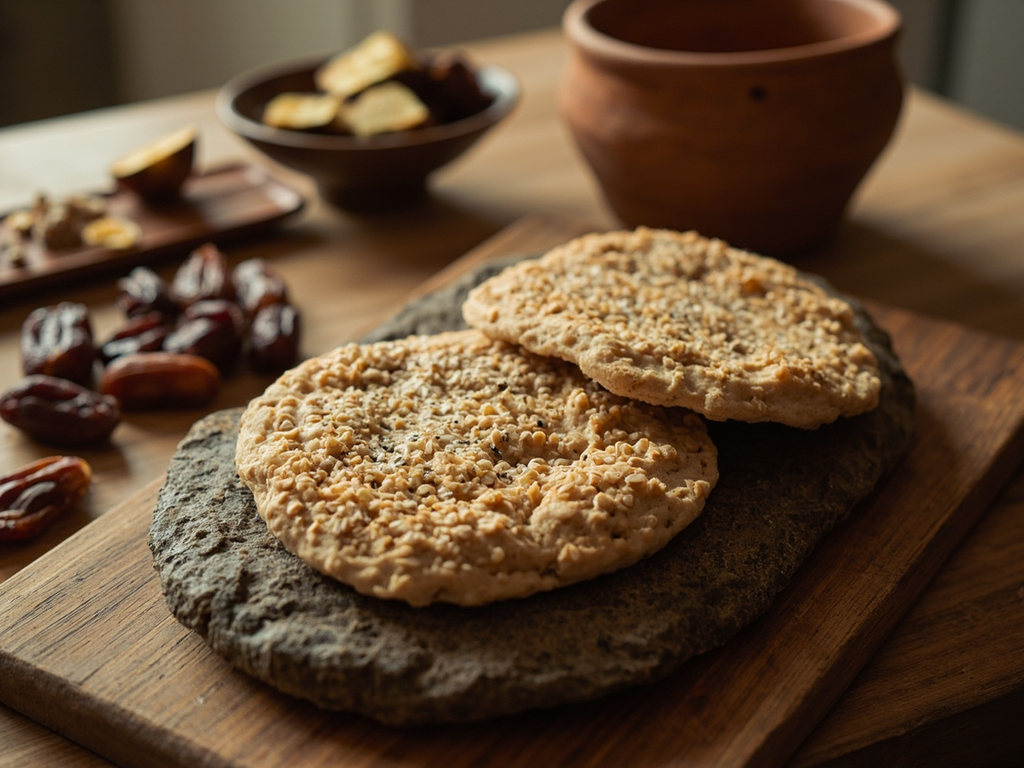 Everyday
Akalu — the barley flatbread of the steppe
Pillar of the naptanu (the daily shared bread)
🧂· 30 min (+ 6 to 8 h fermentation)
View the recipe
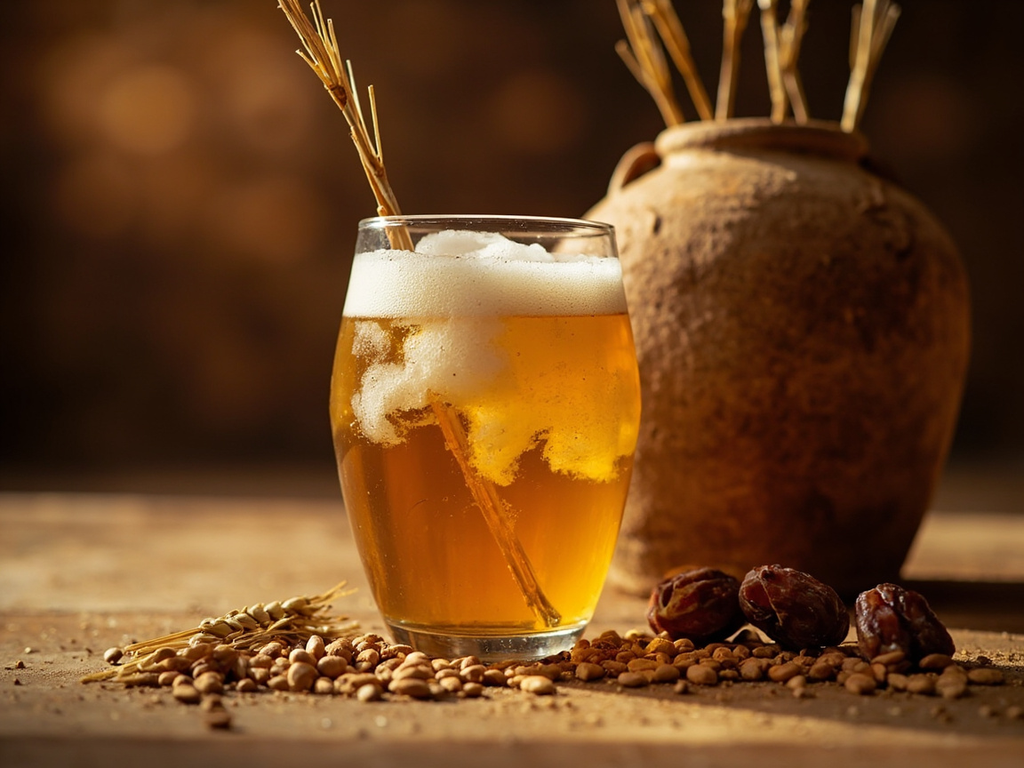 Drink
DrinkKaš — barley beer drunk with a straw
Beverage-foundation of the naptanu (drunk from a shared jar)
🫙 🍋· 1 h 30 (+ 3 to 5 days fermentation)
View the recipe
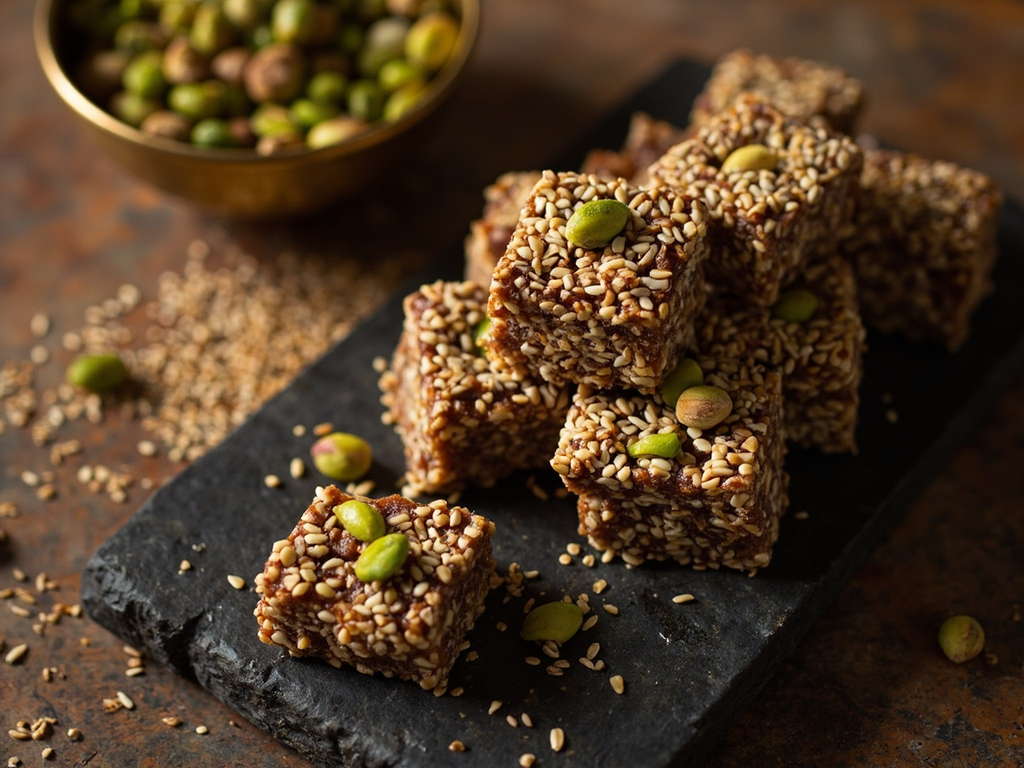 Offering
Mersu with dates and sesame — the sweetness of the gods
Festive dish and offering of the naptanu (banquet and temple cake)
🍯· 30 min (+ 1 h resting)
View the recipe
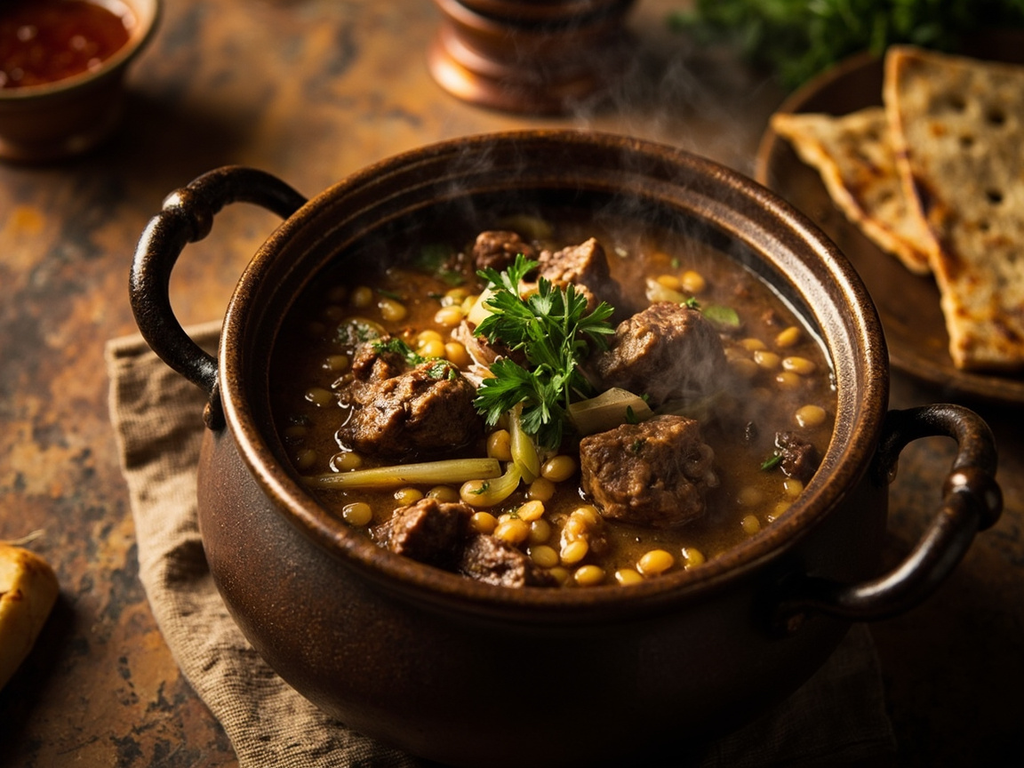 Festive
Tuʾu — barley stew with mutton and leeks
Rich dish of the naptanu (the meat-day stew)
🧂 🍄· 2 h
View the recipe
 Travel
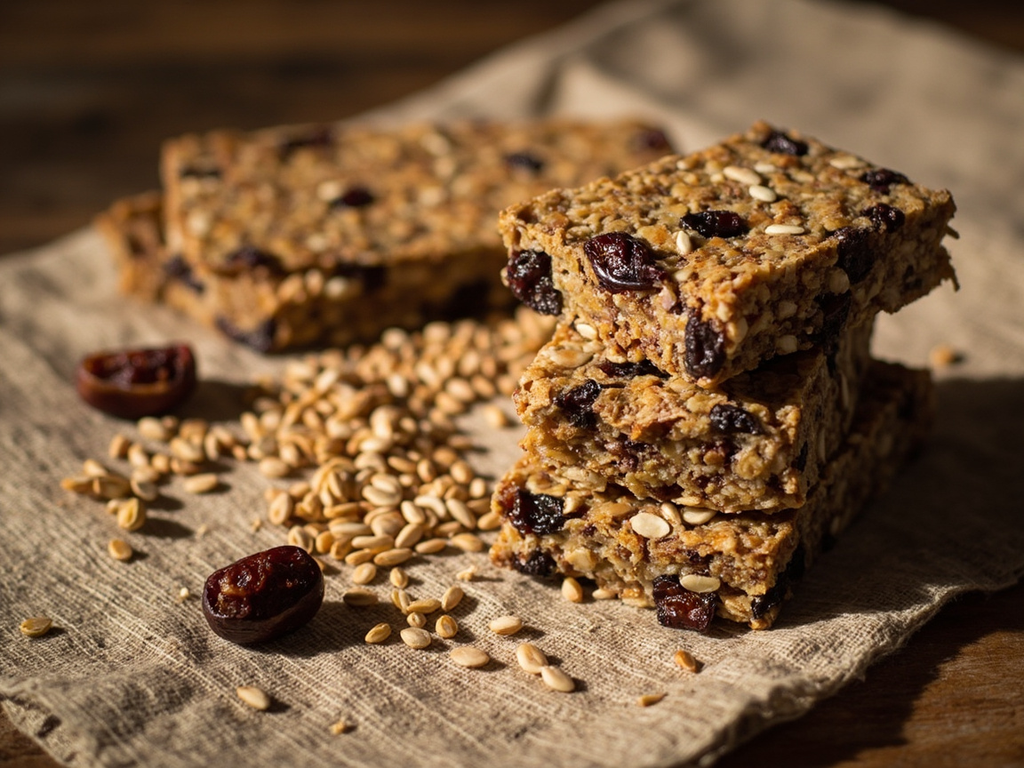
Hunter's provisions — figs, sesame and toasted barley for the road
Snack of the nomadic naptanu (the steppe and trail ration)
🍯 🧂· 40 min (+ drying)
View the recipe