 flip
flipAkalu — the barley flatbread of the steppe
Akalu — the barley flatbread of the steppe
Why this dish? This is THE dish of Enkidu's transformation. Raised among beasts, he knew only grass; Shamhat offers him bread and says 'Eat the bread, Enkidu, that is life.' This barley flatbread is the first human food he brings to his mouth — the threshold between nature and culture.
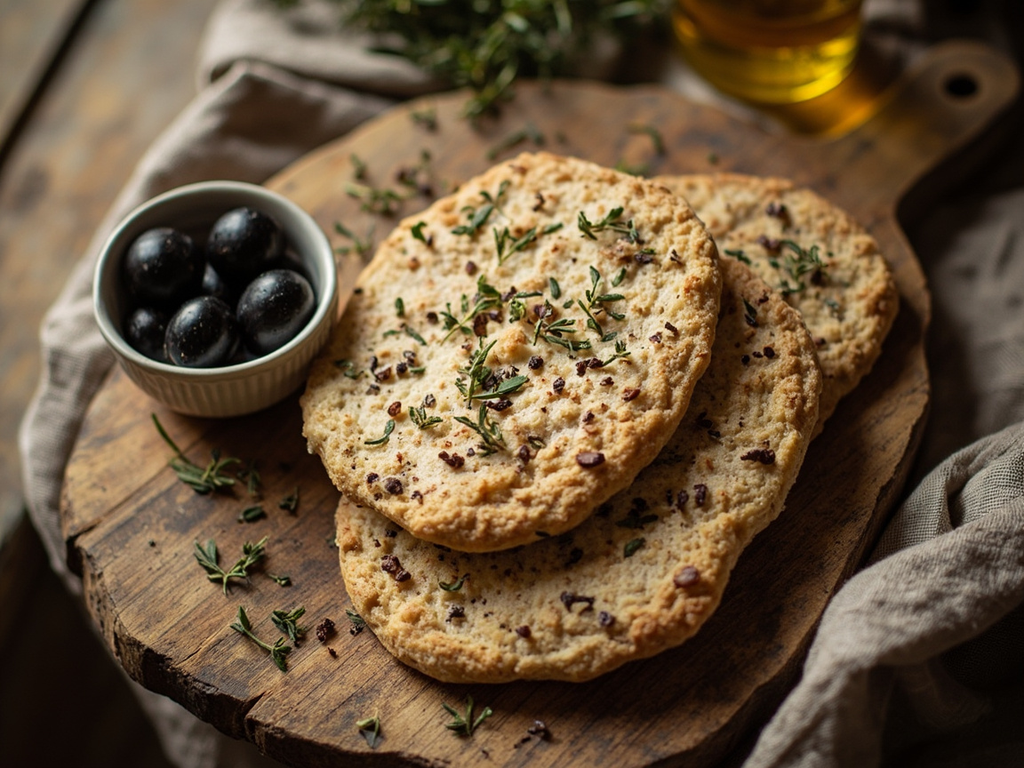
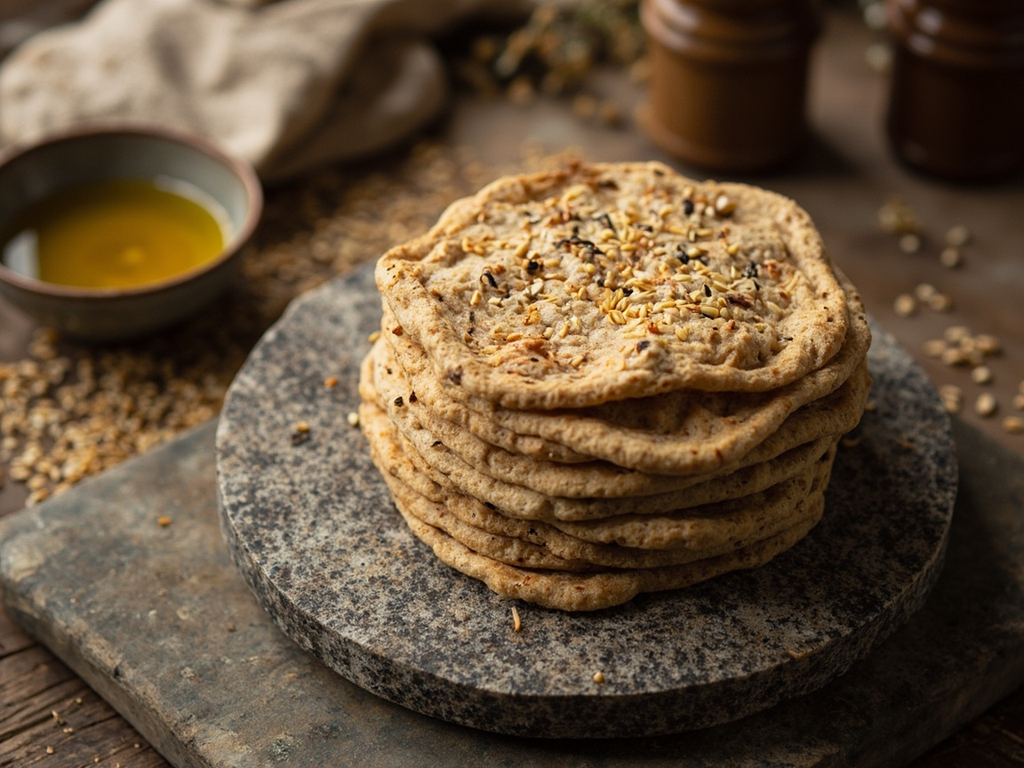
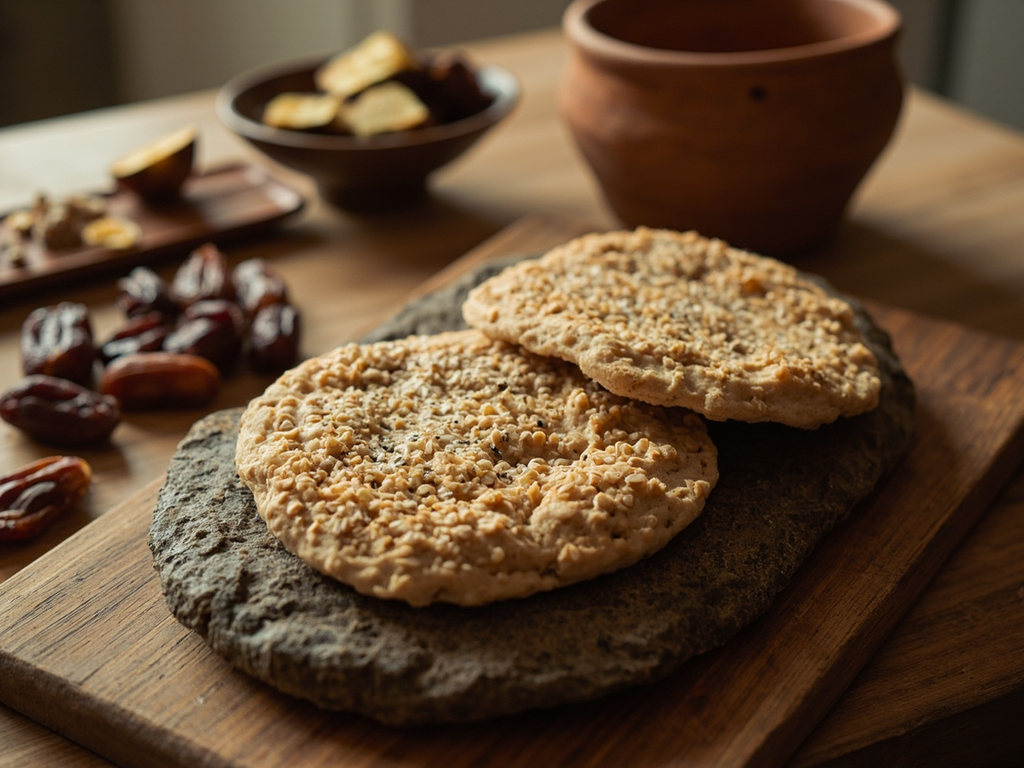
A dense, slightly sour flatbread baked on a hot stone or against the wall of a clay oven. The humblest and most sacred bread of Mesopotamia, broken at every meal.
Listen, you who read me: I, Enkidu, ran naked with the gazelles, I grazed on grass and lapped water from ponds like a beast. Then the woman placed this warm flatbread before me and told me to eat. I hesitated, as a beast hesitates. I bit — and the barley grain made me a man. Knead your barley, let it sour overnight, and bake it on the hearth stone: that is how one becomes civilized.
- •Barley flour ground on a quern — a good measure (base of the dough)
- •Natural sourdough (leftover soured dough) — a handful (leavening and acidity)
- •River water — as needed (binding)
- •Rock salt — a pinch (seasoning)
Akalu — the barley flatbread of the steppe
A dense, slightly sour flatbread baked on a hot stone or against the wall of a clay oven. The humblest and most sacred bread of Mesopotamia, broken at every meal.
Why this dish? This is THE dish of Enkidu's transformation. Raised among beasts, he knew only grass; Shamhat offers him bread and says 'Eat the bread, Enkidu, that is life.' This barley flatbread is the first human food he brings to his mouth — the threshold between nature and culture.
Listen, you who read me: I, Enkidu, ran naked with the gazelles, I grazed on grass and lapped water from ponds like a beast. Then the woman placed this warm flatbread before me and told me to eat. I hesitated, as a beast hesitates. I bit — and the barley grain made me a man. Knead your barley, let it sour overnight, and bake it on the hearth stone: that is how one becomes civilized.
Ingredients (period version)
- Barley flour ground on a quern — a good measure (base of the dough)
- Natural sourdough (leftover soured dough) — a handful (leavening and acidity)
- River water — as needed (binding)
- Rock salt — a pinch (seasoning)
Ingredients
- Barley flour — 300 g (base)
- Whole wheat flour (to help rising) — 100 g (structure)
- Active liquid sourdough — 80 g (fermentation)
- Warm water — 220 ml (binding)
- Salt — 6 g (seasoning)
- Sesame seeds — 1 tbsp (optional) (finishing)
Method
- Mix the flours, salt, sourdough and water until you get a soft, slightly sticky dough.
- Cover and let ferment 6 to 8 hours at room temperature, until it puffs slightly and smells sour.
- Divide into balls, flatten into flatbreads about 1 cm thick, sprinkle with sesame seeds.
- Heat a pizza stone or dry cast-iron skillet very hot.
- Cook each flatbread 4 to 5 minutes per side, until blistered and browned.
- Eat warm, torn by hand, dipped in a little sesame oil or beer.
How it was made : Barley was the dominant cereal of Lower Mesopotamia (wheat tolerated salty soils poorly). It was ground on a stone quern, kneaded into a dough often simply soured by spontaneous fermentation, and baked on a stone, under ashes, or slapped against the wall of a clay tannour oven. Barley bread fed peasants, workers, and soldiers.
The contemporary twist : Serve it as 'bread of civilization' on a rough wooden board with a drizzle of toasted sesame oil and a few split dates: the exact meal Shamhat might have set before Enkidu.
Enkidu · Charactorium