 flip
flipHunter's provisions — figs, sesame and toasted barley for the road
Hunter's provisions — figs, sesame and toasted barley for the road
Why this dish? Before Uruk, Enkidu is the man of the steppe, and even civilized he sets out with Gilgamesh on the long journey to the Cedar Forest. This compact, non-perishable mix of toasted grains, figs and sesame is the food carried when walking for days far from any oven — the ration of the wild man turned travel companion.
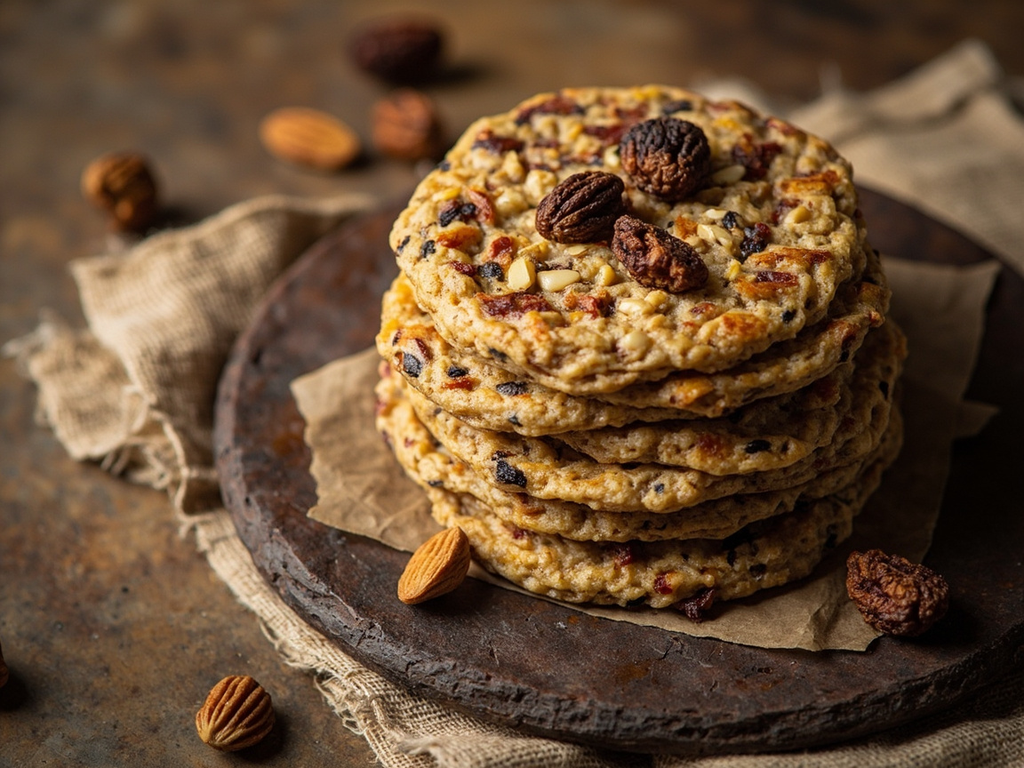
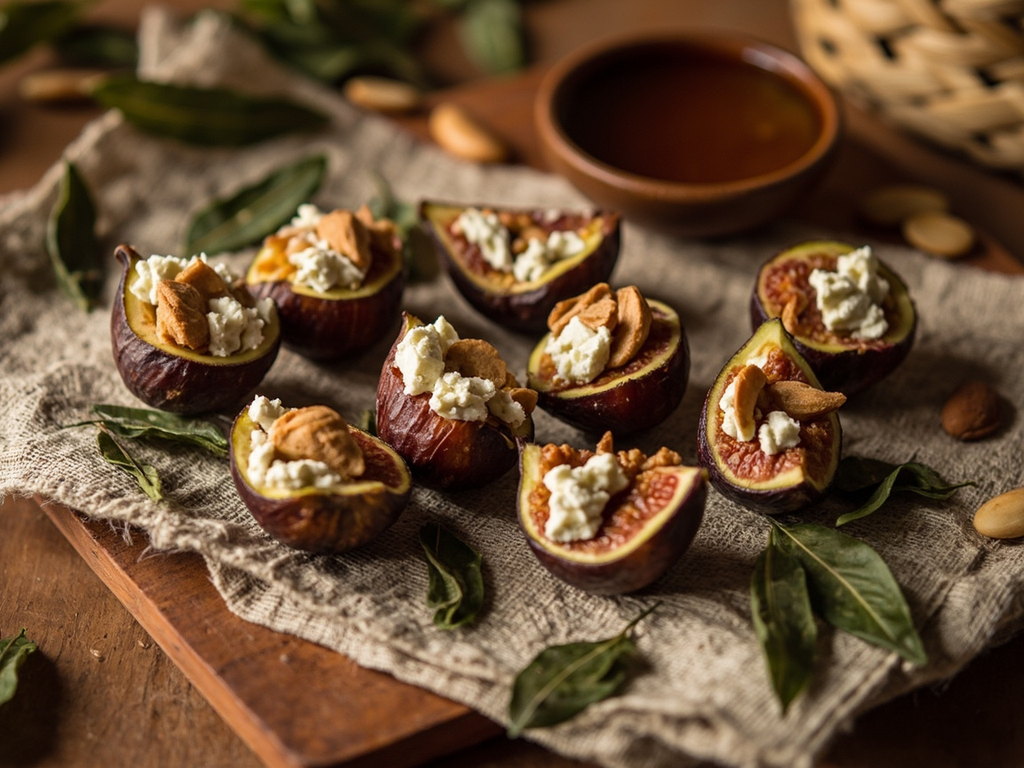
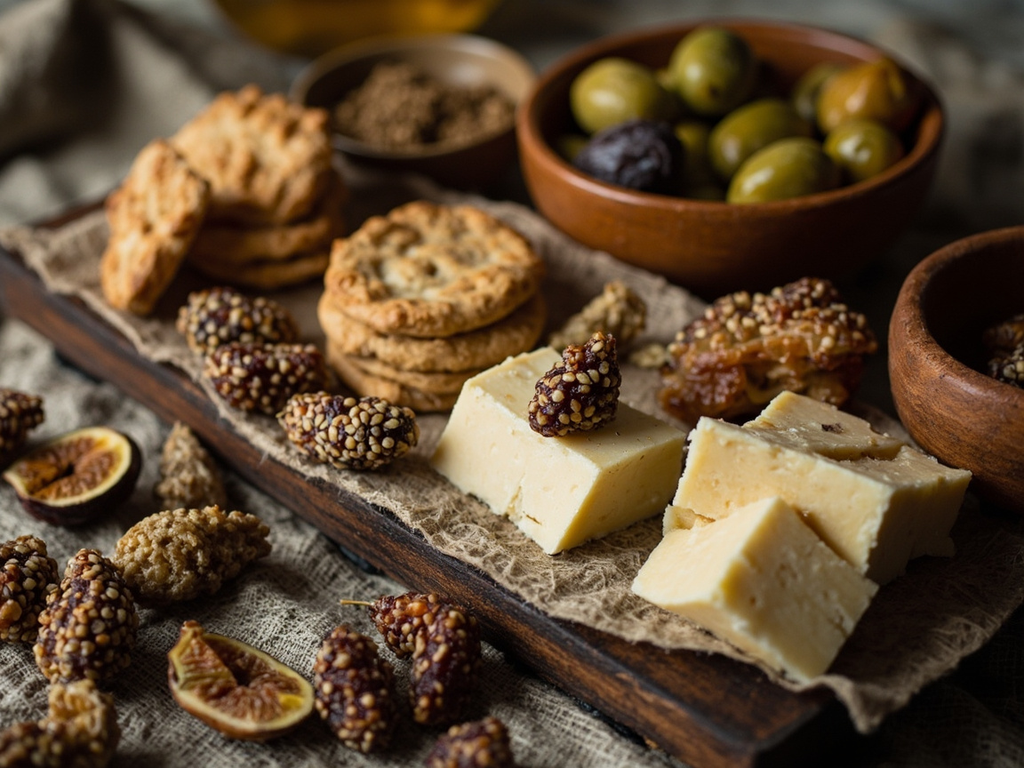
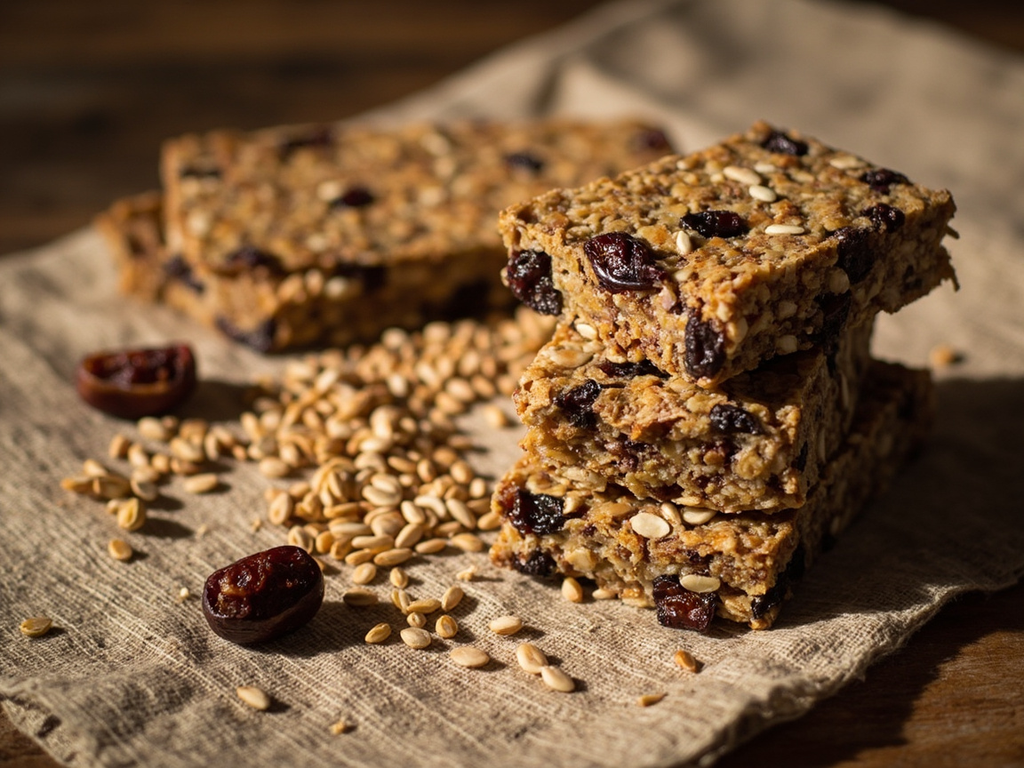
A handful of energy: crushed toasted barley, dried figs and dates, sesame and a little honey, pressed into hard bars that keep and are eaten on the move.
When we set out for the Cedar Forest, you don't carry a cauldron on the steppe. You toast the barley until it smells like hazelnuts, crush it, bind it with dried figs and sesame, squeeze tight in your hand. It lasts moons, it doesn't rot, and when hunger bites mid-march, you break off a piece and go on. It is the food of one who ran with the beasts and hasn't forgotten how to live outside.
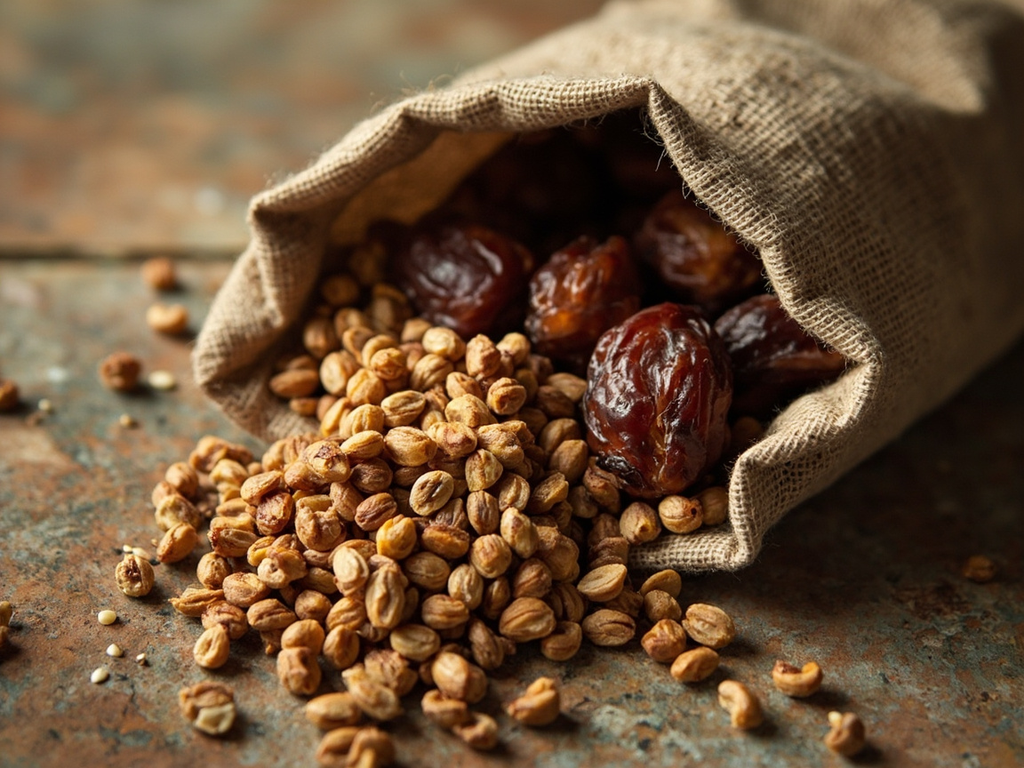
- •Toasted and coarsely crushed barley — a measure (energy base)
- •Dried figs — a handful (sugar and binder)
- •Dried dates — a handful (sugar)
- •Toasted sesame seeds — a handful (flavor and fat)
- •Honey — a drizzle (binder)
- •Salt — a pinch (preservation and flavor)
Hunter's provisions — figs, sesame and toasted barley for the road
A handful of energy: crushed toasted barley, dried figs and dates, sesame and a little honey, pressed into hard bars that keep and are eaten on the move.
Why this dish? Before Uruk, Enkidu is the man of the steppe, and even civilized he sets out with Gilgamesh on the long journey to the Cedar Forest. This compact, non-perishable mix of toasted grains, figs and sesame is the food carried when walking for days far from any oven — the ration of the wild man turned travel companion.
When we set out for the Cedar Forest, you don't carry a cauldron on the steppe. You toast the barley until it smells like hazelnuts, crush it, bind it with dried figs and sesame, squeeze tight in your hand. It lasts moons, it doesn't rot, and when hunger bites mid-march, you break off a piece and go on. It is the food of one who ran with the beasts and hasn't forgotten how to live outside.
Ingredients (period version)
- Toasted and coarsely crushed barley — a measure (energy base)
- Dried figs — a handful (sugar and binder)
- Dried dates — a handful (sugar)
- Toasted sesame seeds — a handful (flavor and fat)
- Honey — a drizzle (binder)
- Salt — a pinch (preservation and flavor)
Ingredients
- Dry-toasted barley flakes or semolina — 150 g (base)
- Chopped dried figs — 100 g (sweet binder)
- Chopped pitted dates — 80 g (sugar and binder)
- Toasted sesame seeds — 50 g (flavor)
- Honey — 2 tbsp (binder)
- Salt — 1 pinch (balance)
Method
- Toast the barley in a dry pan until nutty-smelling, let cool.
- Blend figs and dates into a sticky paste with a pinch of salt.
- Mix the toasted barley, sesame and fruit paste; add honey to bind.
- Press firmly into a frame or by hand to form well-packed bars.
- Let dry in the air for a few hours, then wrap in a cloth.
- Keeps for several weeks in a dry place — the true travel ration.
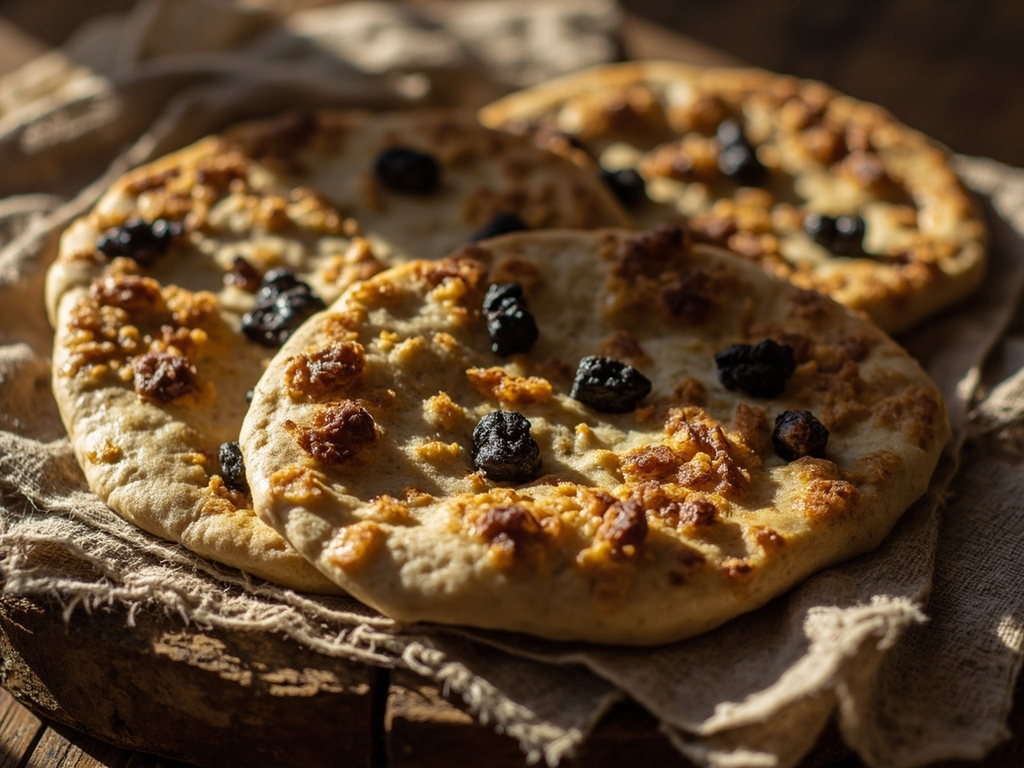
How it was made : Travelers, soldiers and shepherds of Mesopotamia carried concentrated, stable foods: toasted grains, dried fruits (figs, dates, raisins), sesame and hard flatbreads. Toasting barley made it non-perishable and easy to transport, and the sugar from dried fruits provided energy for long marches across the steppe — a universal principle of ancient nomadic rations, the exact details of which are reconstructed.
The contemporary twist : Cut into bars and wrap in tied kraft paper: 'Gilgamesh energy bars' for hiking or school bags.
Enkidu · Charactorium