 Flip the card
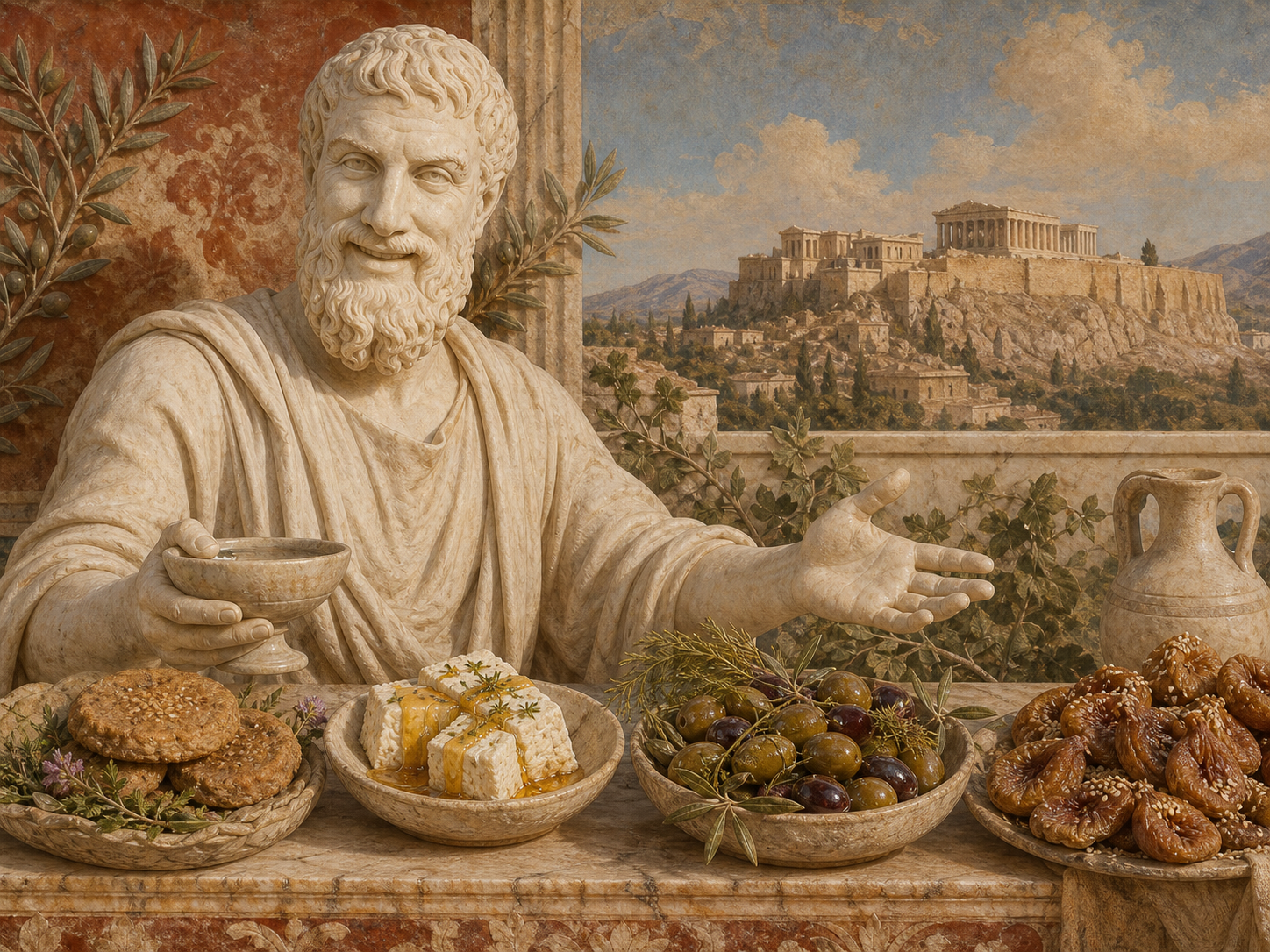
Epicurus at the table
341 av. J.-C. — 269 av. J.-C.
On the menu
Sitos & opson — the frugal Greek meal
The ancient Greek meal revolves around two poles: sitos, the staple food made from grains (barley flatbread or bread), and opson, what is eaten 'with' it to enhance the sitos (olives, cheese, vegetables, sometimes fish). The deipnon (evening meal) ends with tragemata, little nibbled sweets — dried figs, nuts, honey — often during the symposion, where wine is always mixed with water. In Epicurus's Garden, this structure is pushed toward the greatest sobriety: sitos dominates, opson remains tiny, and pleasure arises precisely from this simplicity.
Signature : Barley and olive oil of the Garden
Barley maza, kneaded with water and a drizzle of oil, is the emblem of the Epicurean table: the humblest food in Greece, it suffices to appease hunger and achieve aponia (absence of pain). Olive oil, honey, and a little cheese sent by a friend are enough to turn this frugality into a feast.
click to flip back
Epicurus at the table
341 av. J.-C. — 269 av. J.-C.
5 period recipes
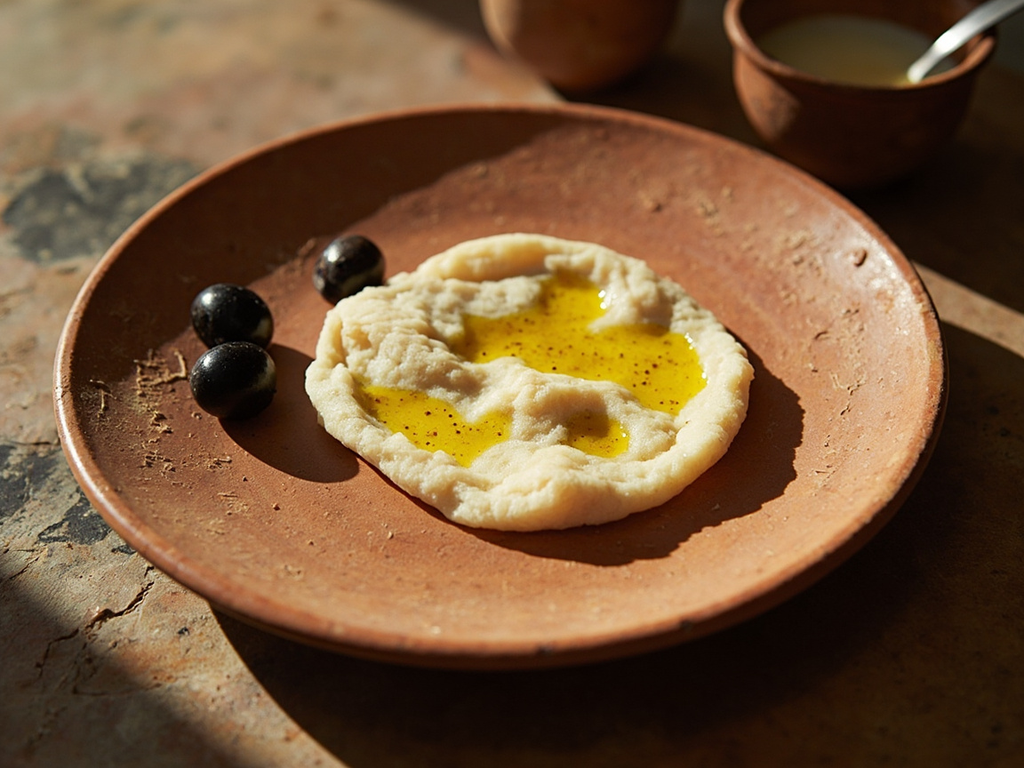 Everyday
Garden barley maza
Sitos (the staple food of the meal)
🧂 ☕· 20 min
View the recipe
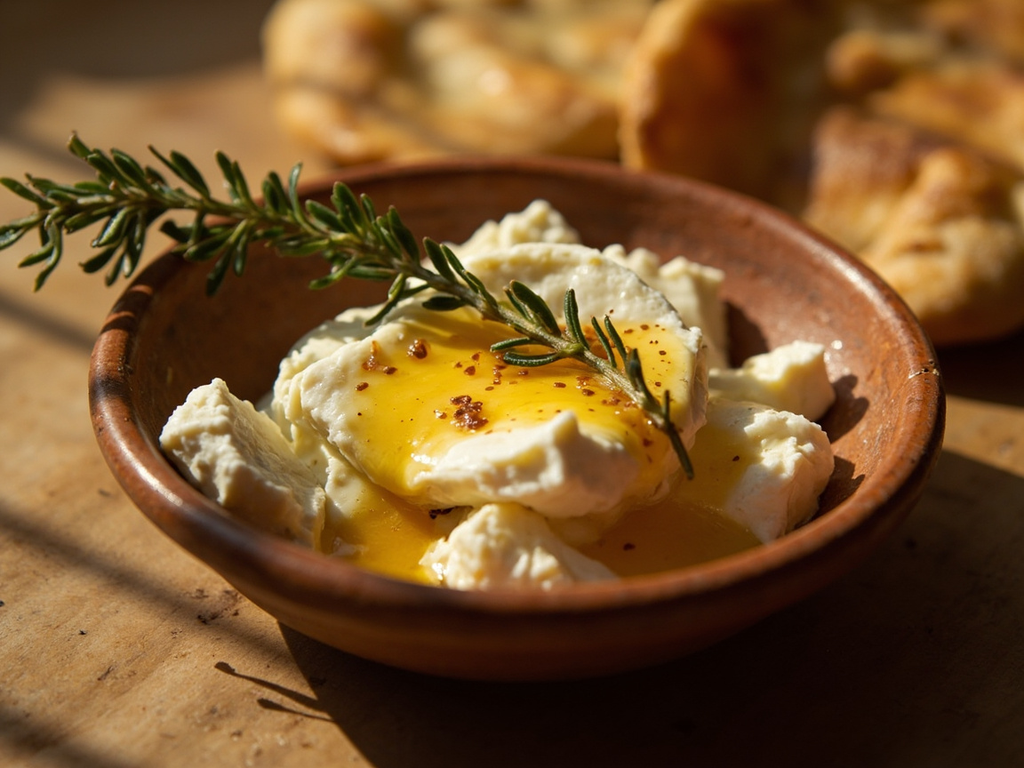 Festive
Tyros with honey and thyme — for 'making a feast'
Opson (the accompaniment that enhances the sitos)
🍯 🧂· 10 min
View the recipe
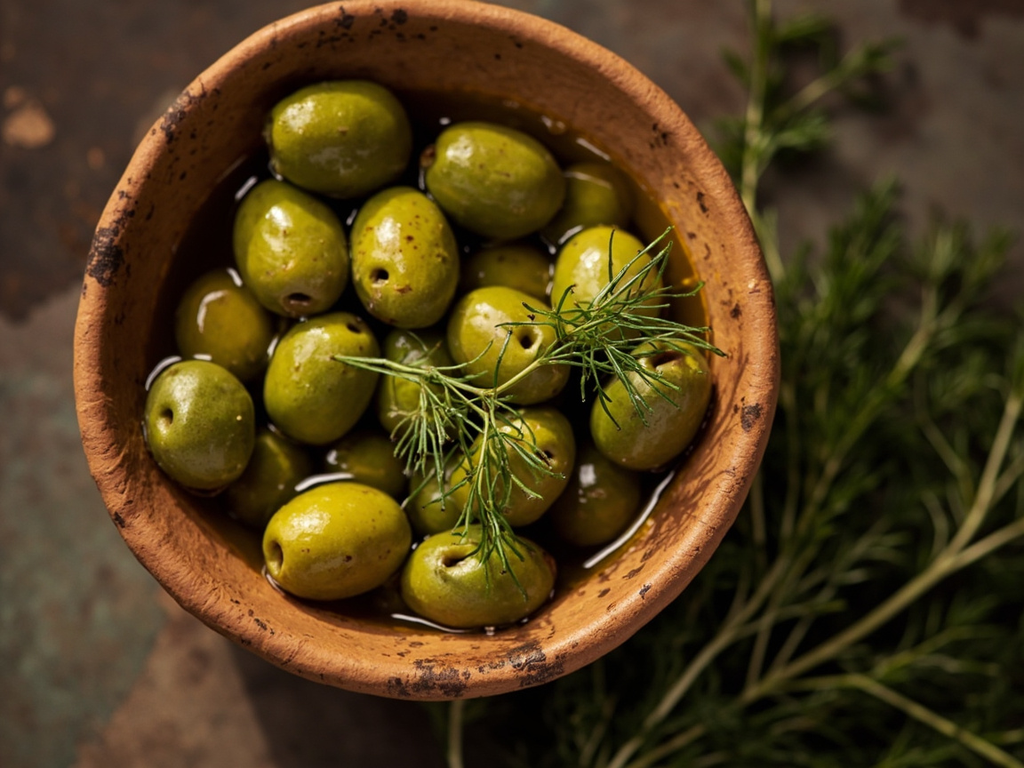 Preserving
Garden olives in fennel brine
Opson de garde (the larder reserve)
🧂 ☕ 🫙· 20 min (+ 2 to 3 weeks resting)
View the recipe
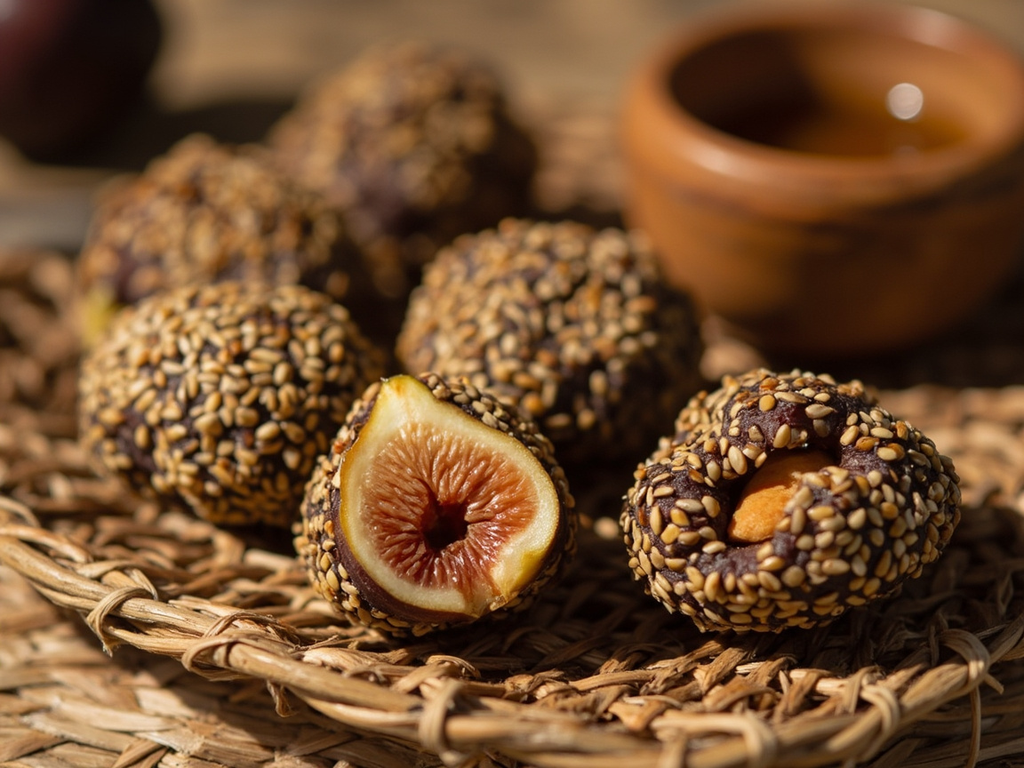 Travel
Ischades — sesame dried figs for the road
Tragema (sweet nibbled at the end of the meal or on the go)
🍯· 25 min (excluding drying)
View the recipe
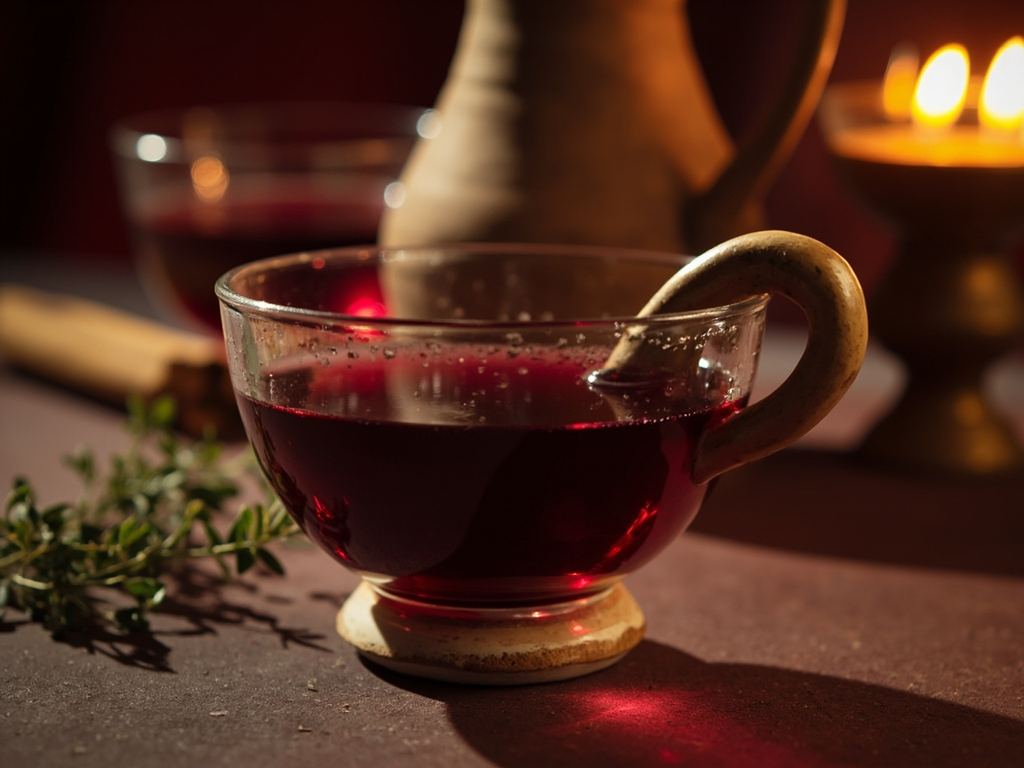 Drink
DrinkWine cut with water, honey, and cinnamon of the time
Symposion (the wine moment, after the deipnon)
🍯 🍋· 15 min
View the recipe