 flip
flipTyros with honey and thyme — for 'making a feast'
Tyros with honey and thyme — for 'making a feast'
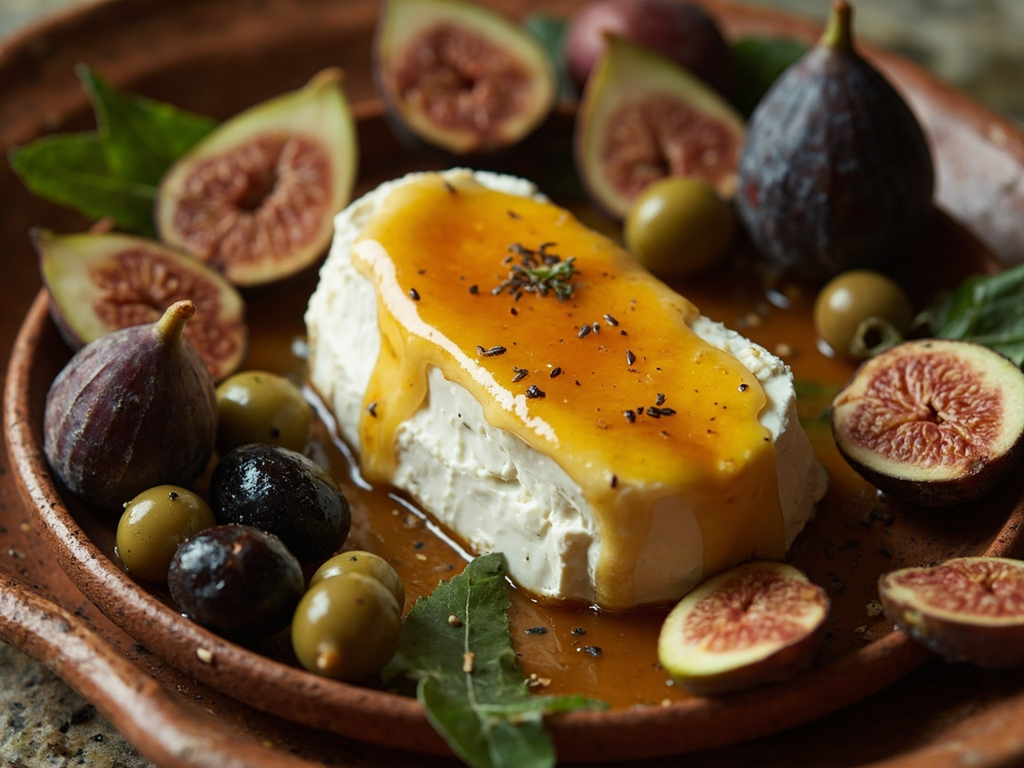
Why this dish? Epicurus wrote to a friend asking him to send 'a little pot of cheese, so that I may make a feast whenever I wish'. This fresh cheese drizzled with honey was his idea of luxury: an excess so modest it becomes tender and almost comical.
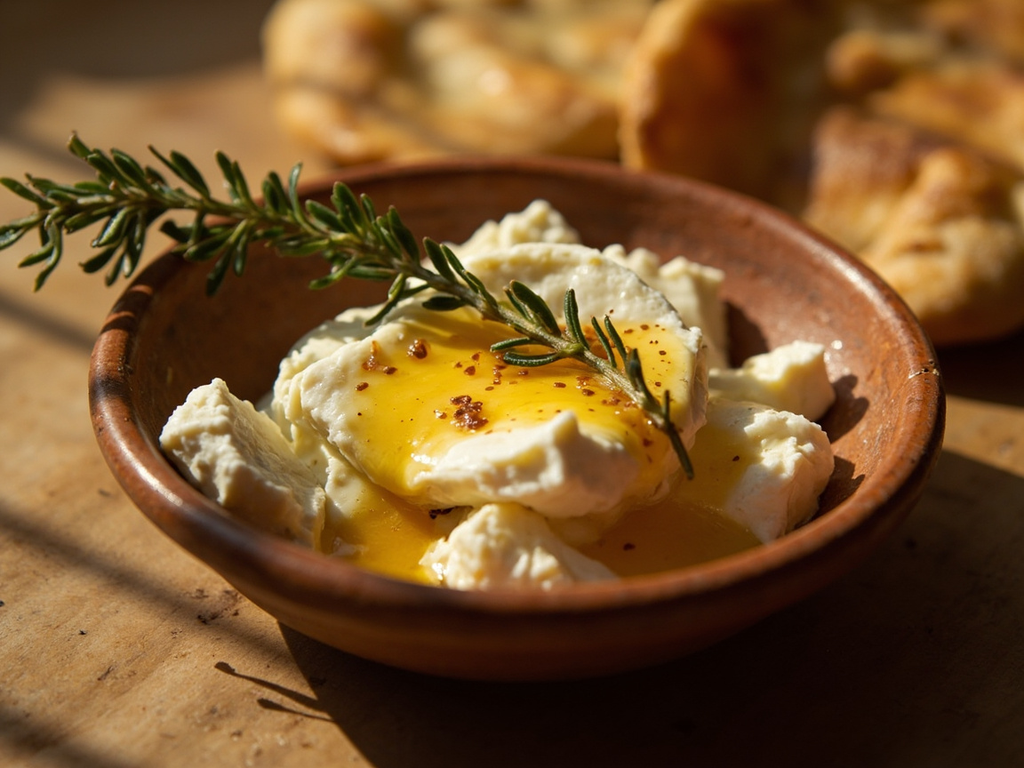
Fresh goat or sheep cheese, drizzled with honey and perfumed with thyme, served on maza. The only indulgence Epicurus allowed himself — proof that you can celebrate with almost nothing.
You want to know what a feast day was for me? A friend sent me a little pot of cheese, and then I said to myself: today, I will make a feast! I placed it on my barley flatbread, poured a little Hymettus honey, crumbled thyme on top — and that feast was worth, in my eyes, all the golden banquets of the great. Understand: it is not quantity that brings joy, but the contentment of a heart that lacks nothing.
- •Fresh goat or sheep cheese (tyros) — a small pot (star)
- •Honey (from Hymettus) — a few spoonfuls (sweetness)
- •Fresh thyme — a few sprigs (flavor)
- •Barley maza — one flatbread (base)
Tyros with honey and thyme — for 'making a feast'
Fresh goat or sheep cheese, drizzled with honey and perfumed with thyme, served on maza. The only indulgence Epicurus allowed himself — proof that you can celebrate with almost nothing.
Why this dish? Epicurus wrote to a friend asking him to send 'a little pot of cheese, so that I may make a feast whenever I wish'. This fresh cheese drizzled with honey was his idea of luxury: an excess so modest it becomes tender and almost comical.
You want to know what a feast day was for me? A friend sent me a little pot of cheese, and then I said to myself: today, I will make a feast! I placed it on my barley flatbread, poured a little Hymettus honey, crumbled thyme on top — and that feast was worth, in my eyes, all the golden banquets of the great. Understand: it is not quantity that brings joy, but the contentment of a heart that lacks nothing.
Ingredients (period version)
- Fresh goat or sheep cheese (tyros) — a small pot (star)
- Honey (from Hymettus) — a few spoonfuls (sweetness)
- Fresh thyme — a few sprigs (flavor)
- Barley maza — one flatbread (base)
Ingredients
- Fresh goat cheese (like brousse or faisselle) — 150 g (star)
- Liquid honey (thyme or wildflower) — 2 tbsp (sweetness)
- Fresh thyme — 4 to 5 sprigs (flavor)
- Barley flatbread (recipe r1) — 1 to 2 (base)
- Toasted sesame seeds — 1 tsp (optional) (crunch)
Method
- Drain the fresh cheese and place it in a dome on a plate or on the warm barley flatbread.
- Generously drizzle with honey.
- Sprinkle thyme leaves on top and, if desired, scatter toasted sesame seeds.
- Serve immediately, to be eaten directly with fingers or pieces of flatbread.
How it was made : Tyros, fresh cheese from goat or sheep milk, was a common opson. The pairing of fresh cheese and honey is attested as early as Archaic Greece (found in early cheese 'cakes'). Honey from Mount Hymettus near Athens was considered the best in the Greek world.
The contemporary twist : Arrange as a 'Garden plate': a quenelle of cheese, a thread of honey, thyme flowers, and a handwritten label 'the philosopher's feast'.
Sources : Diogenes Laërtius, Lives and Opinions of Eminent Philosophers, X (letter where Epicurus asks for a pot of cheese) · Andrew Dalby, Siren Feasts: A History of Food and Gastronomy in Greece (1996)
Epicurus · Charactorium