 flip
flipGarden olives in fennel brine
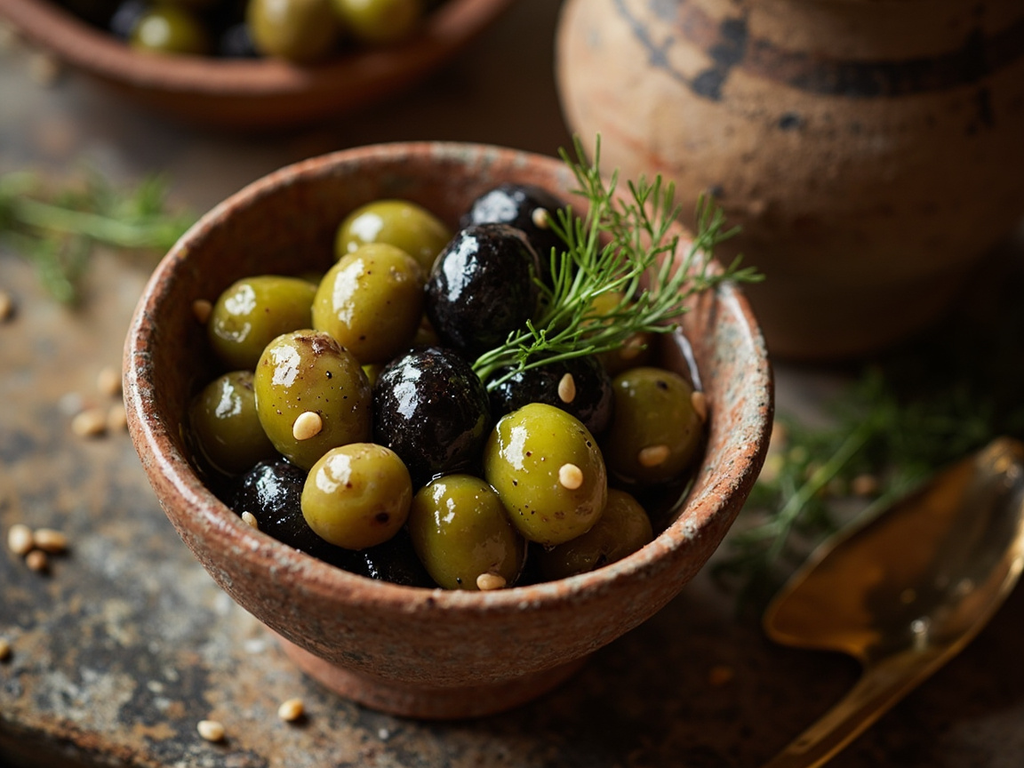
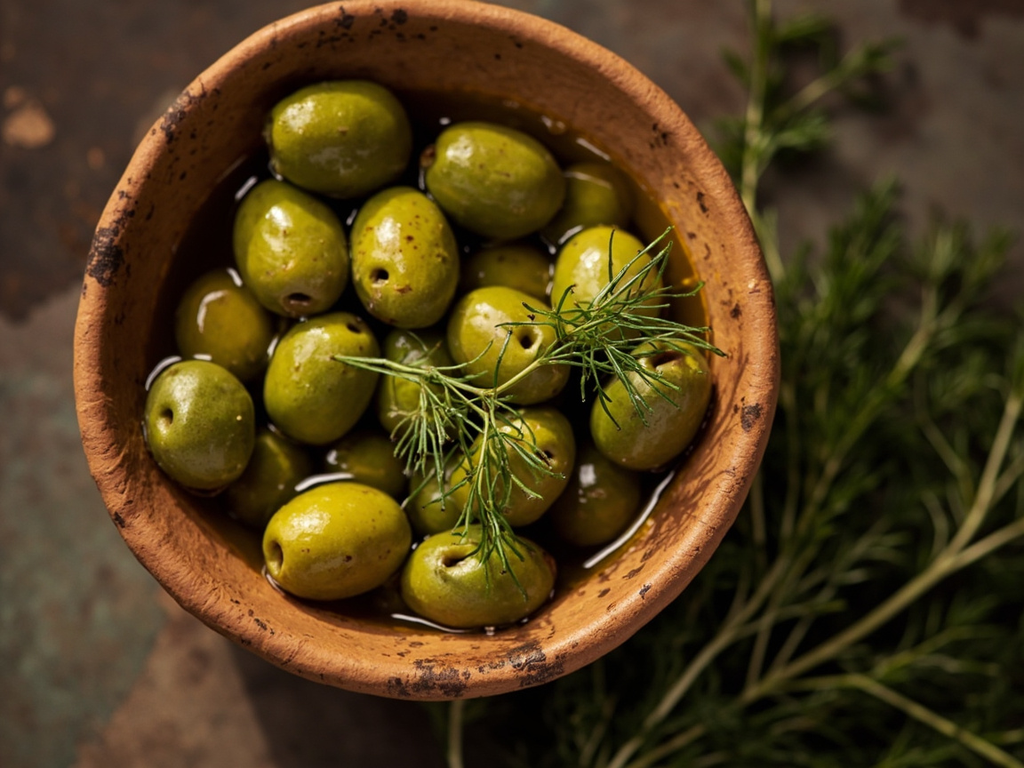
Garden olives in fennel brine
Why this dish? Olives grew in the Garden (Kepos) itself that Epicurus bought at the gates of Athens to live and teach. Preserved in brine, they provided the humblest opson all year round, the one that accompanies the daily maza.
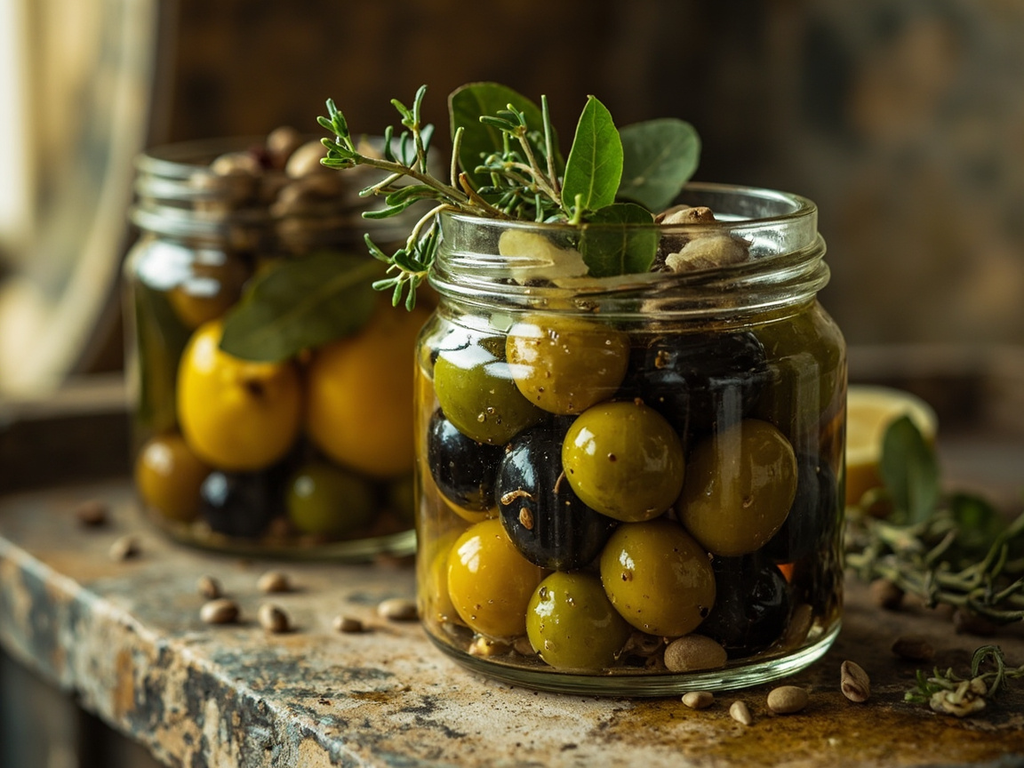
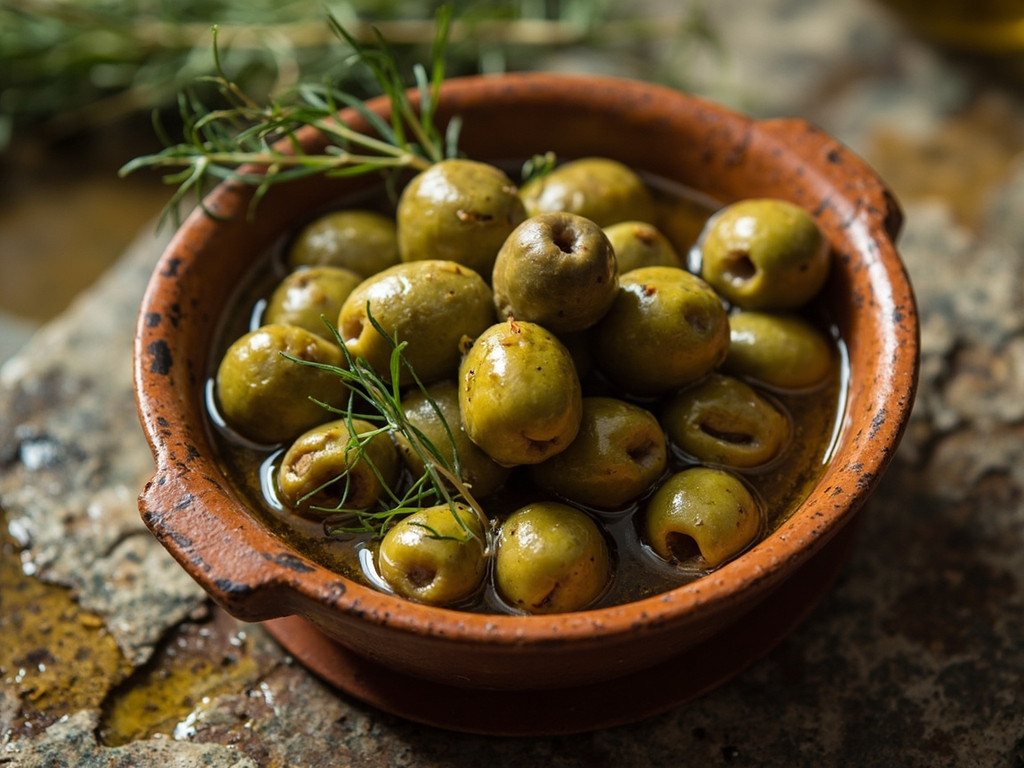
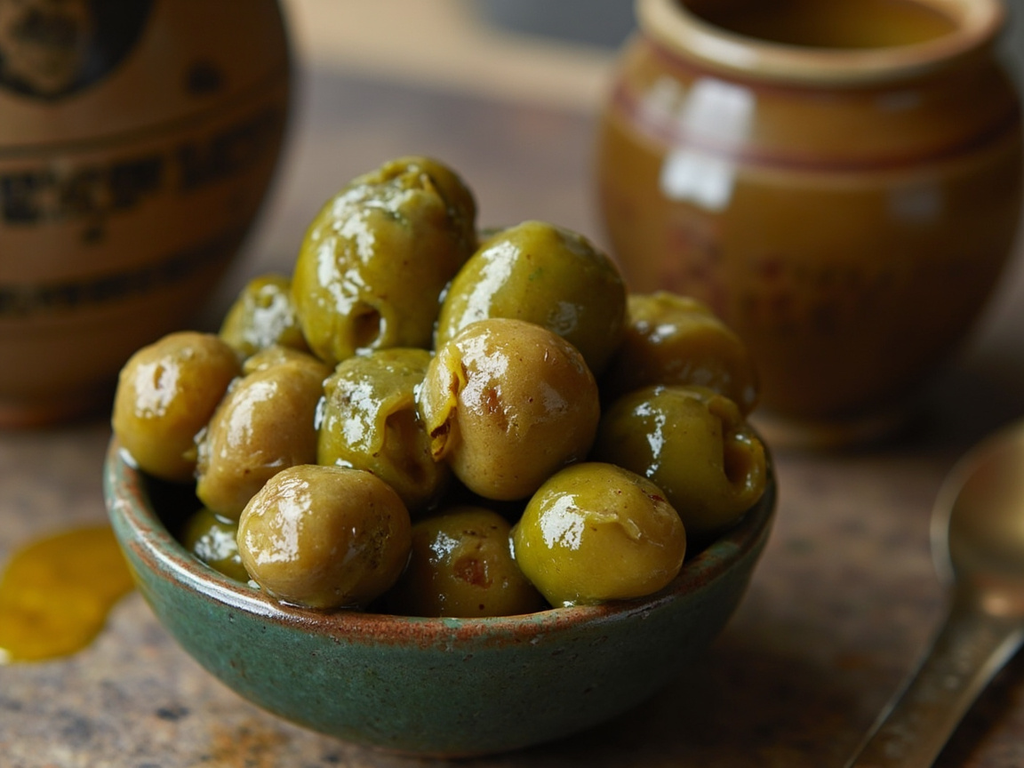
Green olives rid of their bitterness and preserved in a brine flavored with fennel and savory. A reserve that lasts months — the philosopher's basic opson.
These olives, I picked them in my own garden, where my friends came to learn to live without fear. The bitter olive, water makes it sweet with time; brine keeps it all winter. Take two or three on your flatbread, and you have a complete meal. See how nature has made easy to find what is necessary, and difficult to attain only what is vain.
- •Fresh green olives — a jar (star)
- •Spring water — to cover (debittering and brine)
- •Sea salt — to saturation (preservation)
- •Wild fennel and savory — a few branches (flavor)
- •Wine vinegar — a splash (acidity and preservation)
Garden olives in fennel brine
Green olives rid of their bitterness and preserved in a brine flavored with fennel and savory. A reserve that lasts months — the philosopher's basic opson.
Why this dish? Olives grew in the Garden (Kepos) itself that Epicurus bought at the gates of Athens to live and teach. Preserved in brine, they provided the humblest opson all year round, the one that accompanies the daily maza.
These olives, I picked them in my own garden, where my friends came to learn to live without fear. The bitter olive, water makes it sweet with time; brine keeps it all winter. Take two or three on your flatbread, and you have a complete meal. See how nature has made easy to find what is necessary, and difficult to attain only what is vain.
Ingredients (period version)
- Fresh green olives — a jar (star)
- Spring water — to cover (debittering and brine)
- Sea salt — to saturation (preservation)
- Wild fennel and savory — a few branches (flavor)
- Wine vinegar — a splash (acidity and preservation)
Ingredients
- Raw green olives (untreated) — 500 g (star)
- Water — 1 to 1.5 L (debittering and brine)
- Coarse salt — 100 g per liter of final brine (preservation)
- Fennel seeds and stalks — 1 tbsp (flavor)
- Savory or thyme — 2 sprigs (flavor)
- Wine vinegar — 2 tbsp (acidity and preservation)
Method
- Crack each olive with a knife. Cover with cold water in a jar.
- Change the water daily for 8 to 12 days to remove bitterness (taste to judge).
- Prepare a brine: 100 g salt per liter of water, brought to a boil then cooled.
- Drain the olives, place them in a jar with fennel and savory, cover with brine and add vinegar.
- Seal and let rest in a cool place for at least 2 to 3 weeks before tasting. Keeps for several months.
How it was made : Greeks preserved olives in brine, sometimes in vinegar or grape must, flavored with fennel, coriander, or fig leaves. Cato the Elder, shortly after, gives precise recipes — proof that the technique was ancient and widespread in the Mediterranean.
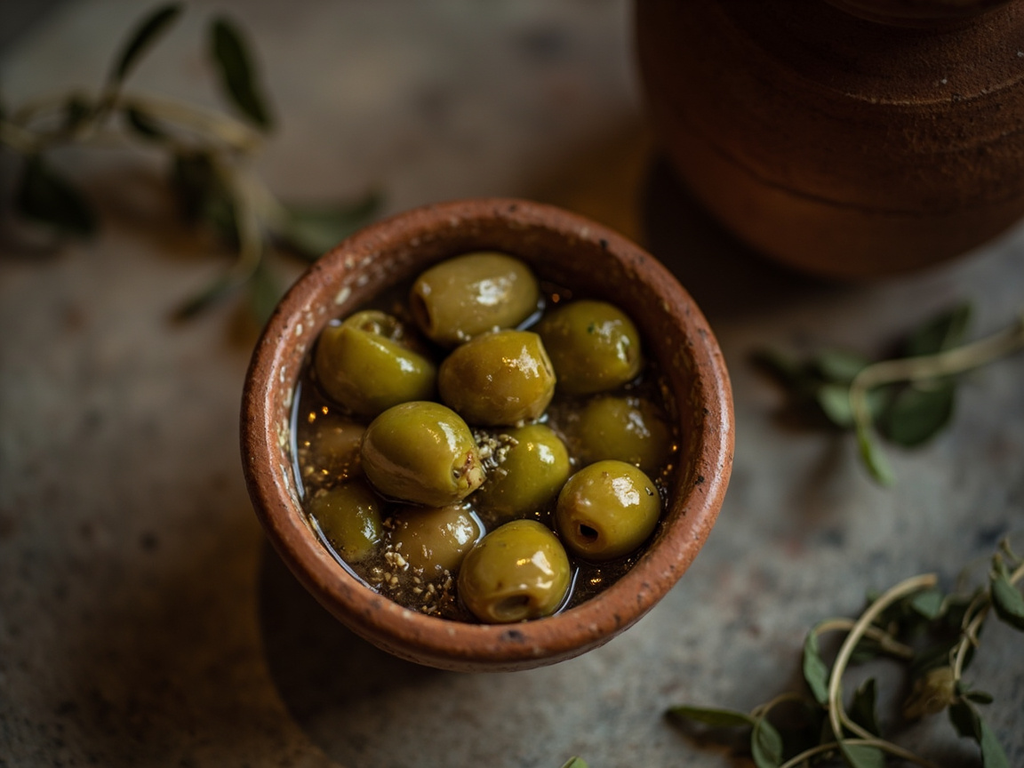
The contemporary twist : Serve in a small earthenware bowl with a lemon zest and a drizzle of oil, 'Garden tapas' style before the meal.
Sources : Cato the Elder, De agricultura (recipes for preserved olives) · Andrew Dalby, Food in the Ancient World from A to Z (2003), entry 'olive'
Epicurus · Charactorium