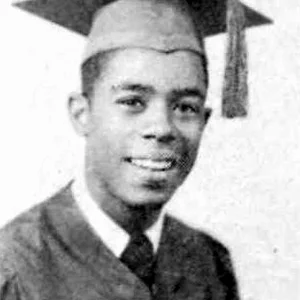

Eric Dolphy (1928-1964) was an American jazz multi-instrumentalist, a virtuoso of the alto saxophone, the flute, and the bass clarinet. A major figure of avant-garde jazz and free jazz, he collaborated with Charles Mingus, John Coltrane, and Ornette Coleman before dying prematurely at the age of 36.
Eric Dolphy(1928 — 1964)
Eric Dolphy
États-Unis
6 min read
Frequently asked questions
Famous Quotes
« When you hear music, after it's over, it's gone in the air. You can never capture it again.»
Key Facts
- Born on June 20, 1928, in Los Angeles into a family of West Indian descent
- Joined Chico Hamilton's band in 1958, then became a key collaborator of Charles Mingus from 1960 onward
- A pioneer in using the bass clarinet as a solo instrument in jazz
- Recorded his masterpiece, the album 'Out to Lunch!', in 1964 for the Blue Note label
- Died on June 29, 1964, in Berlin, from complications of undiagnosed diabetes, at just 36 years old
Works & Achievements
Dolphy's first album as a bandleader, revealing his personal voice on alto sax and bass clarinet.
Album featuring an unaccompanied alto saxophone solo on “Tenderly” and a tribute to Charlie Parker, showcasing his mastery.
A 37-minute manifesto record of collective improvisation; Dolphy plays bass clarinet on it, giving the free jazz movement its name.
Dolphy wrote the arrangements for this orchestral Coltrane album, proving his talent as a composer and arranger.
A live recording with the young trumpeter Booker Little, capturing the energy of the New York scene.
Considered his masterpiece, recorded for Blue Note with Freddie Hubbard, Bobby Hutcherson, Richard Davis and Tony Williams; a peak of modern jazz.
Dolphy's final recording, made in the Netherlands shortly before his death, famous for his closing spoken words about how music, once played, vanishes into the air.
Anecdotes
Eric Dolphy transformed the bass clarinet — a deep, bulky instrument almost never used for solos — into a true voice of jazz. Before him, hardly anyone dared to improvise at length on it: Dolphy made it his signature, with phrases that leap, growl, and sing all at once.
Passionate about birdsong, Dolphy said that birds influenced the way he played. He told how, in California, when he practiced at home, the birds would whistle along with him; he would then stop to answer them on the flute or the saxophone, and you can hear these imitated trills in several of his solos.
In 1961, critics at Down Beat magazine branded the new music of Dolphy and John Coltrane “anti-jazz,” so strange did it seem to them. Rather than losing their temper, the two musicians replied calmly in an interview that became famous, explaining that they were simply searching for new sounds and new freedoms.
Dolphy died in Berlin in 1964, at only 36, from a diabetic coma. The tragedy was made worse by prejudice: the doctors, convinced that a Black jazz musician had been taking drugs, failed to treat him properly, even though Dolphy never drank and never used drugs. His diabetes had simply never been diagnosed.
A few weeks before his death, during the recording of the album Last Date in the Netherlands, Dolphy spoke a line that became legendary: “When you hear music, after it's over, it's gone in the air. You can never capture it again.” A deeply moving thought in light of how near his own end was.
Primary Sources
When you hear music, after it's over, it's gone in the air. You can never capture it again.
In it, Dolphy explains his search for new sounds and describes how birdsong shaped the way he improvised, in response to critics who spoke of “anti-jazz.”
The pieces “Hat and Beard” (dedicated to pianist Thelonious Monk) and “Gazzelloni” (dedicated to Italian classical flutist Severino Gazzelloni) reflect his tributes and influences.
Key Places
Dolphy's birthplace, where he grew up, studied music and made his professional debut before leaving for New York.
The heart of the avant-garde jazz scene where Dolphy played in clubs like the Five Spot and the Village Vanguard with Mingus and Coltrane.
The legendary studio of the Blue Note label where his masterpiece Out to Lunch! was recorded in February 1964.
The town where Dolphy recorded Last Date for Dutch radio, just a few weeks before his death.
The place where Dolphy collapsed and died of a diabetic coma on June 29, 1964, during his European tour.
Typical Objects

Dolphy's primary instrument, from which he drew leaping phrases and unexpected intervals that left their mark on avant-garde jazz.

A low-pitched instrument that he was one of the first to establish as a solo voice in jazz, becoming his signature.

On this instrument, Dolphy imitated birdsong and drew inspiration from classical music, notably the composer Edgard Varèse.

A thin strip of cane that makes the saxophone and clarinet vibrate; an object that every jazz wind player chooses and adjusts with care.

Dolphy, a serious and studious musician, wrote out his complex themes such as “Hat and Beard” and “Gazzelloni.”

The format on which Out to Lunch! appeared in 1964; vinyl was the main medium for listening to the jazz of the era.

Like many jazzmen of his time, Dolphy took the stage elegantly dressed, in a jacket and tie.
School Curriculum
Vocabulary & Tags
Key Vocabulary
Tags
Daily Life
Morning
A musician of rare versatility, Dolphy often began his day with long hours of technical work on his three instruments. He worked through scales, exercises and improvisations, endlessly searching for new sounds.
Afternoon
His afternoons might be devoted to rehearsals with his own groups or those of Mingus and Coltrane, as well as to the study of classical music scores. He analyzed in particular the works of the modern composer **Edgard Varèse**, whom he admired.
Evening
In the evening came the concerts in New York's jazz clubs, such as the Five Spot or the Village Vanguard. The sets stretched late into the night, alternating written pieces and long improvisations shared with other great soloists.
Food
Contrary to the cliché of the night-owl jazzman, Dolphy led a sober life: he didn't drink alcohol and didn't use drugs. Tragically, he was unaware that he suffered from diabetes, a disease linked to the level of sugar in the blood that caused his death.
Clothing
On stage, he wore the elegant attire of the jazzmen of his era: a dark suit, shirt and tie, sometimes a hat. This polished appearance contrasted with the boldness of his music.
Housing
Dolphy first lived in Los Angeles at his parents' home, then in New York apartments in the early 1960s. As a traveling musician, he also spent a great deal of time on tour, staying in hotels, notably in Europe.