 Flip the card
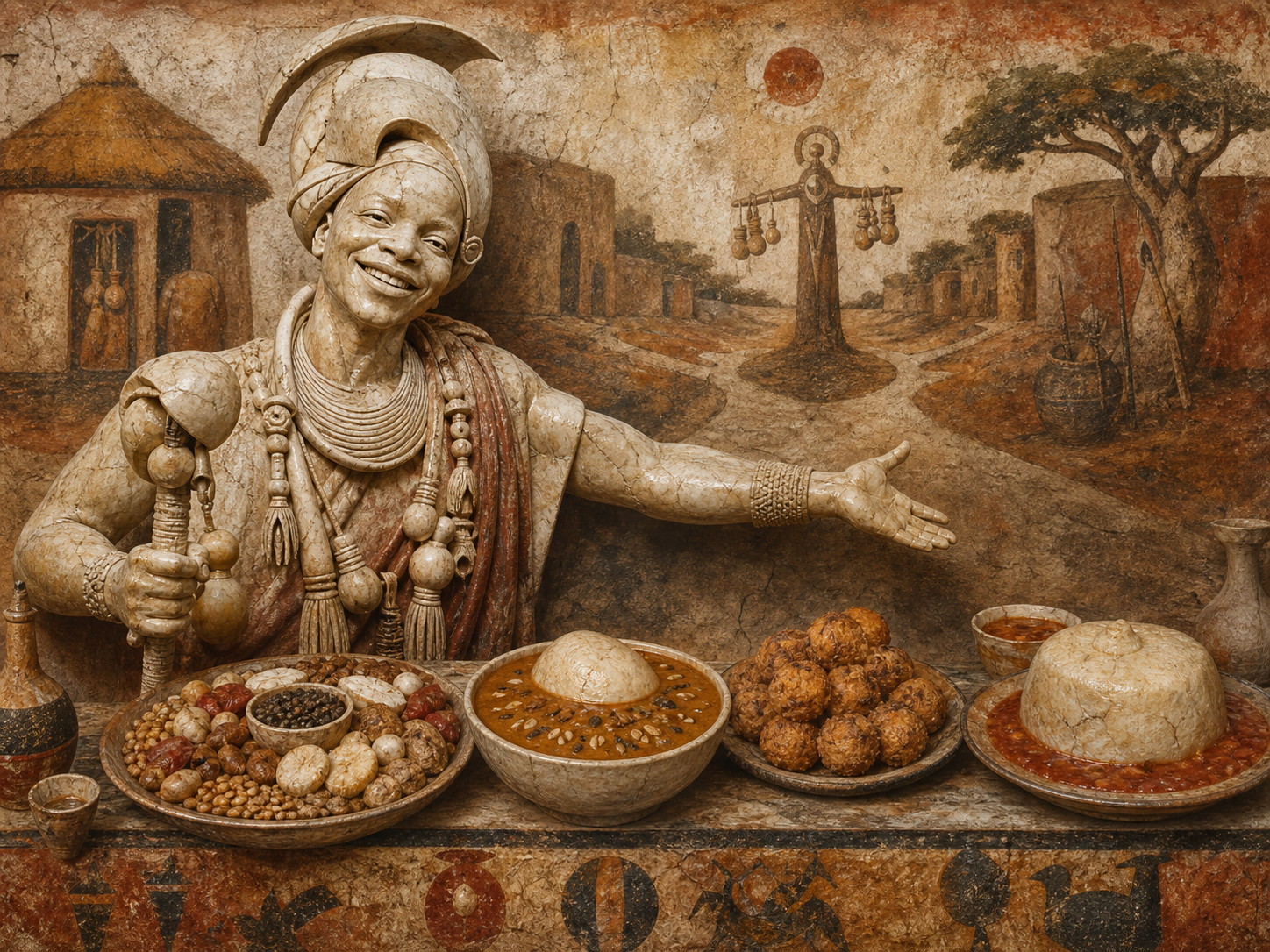
Eshu at the table
On the menu
Obè àti Oúnjẹ — the Yoruba soup-base meal
The Yoruba meal is not divided into starter-main-dessert. It is organized around a pounded or cooked starch (iyán, pounded yam; àmàlà; èkuru) that you take with your hand and dip into a thick soup (obè) bound with red palm oil and ground seeds. Around it revolve fried street snacks (the domain of Eshu, guardian of crossroads), fermented drinks, and, separately, offerings placed on the altar that belong only to the god.
Signature : Epo pupa — red palm oil
Pressed from the fruit of the oil palm, scarlet and velvety, it colors and binds almost every Yoruba soup. It is also Eshu's primary offering: it is poured at crossroads to soften his temper. Its altar cousin, golden oil, and fermented locust bean (iru) are its umami companions.
click to flip back
Eshu at the table
5 period recipes
 Offering
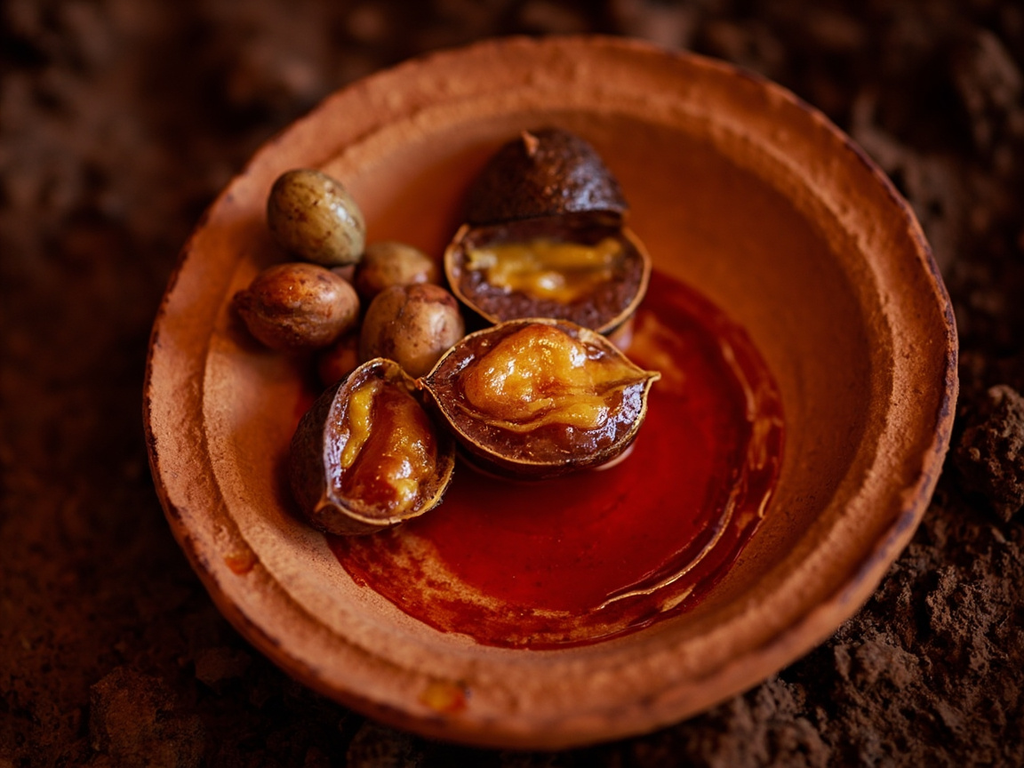
Adímú Eshu — offering platter for the guardian of crossroads
Adímú (placed offering, never consumed by the faithful)
🍯 🍄· 10 min
View the recipe
 Everyday
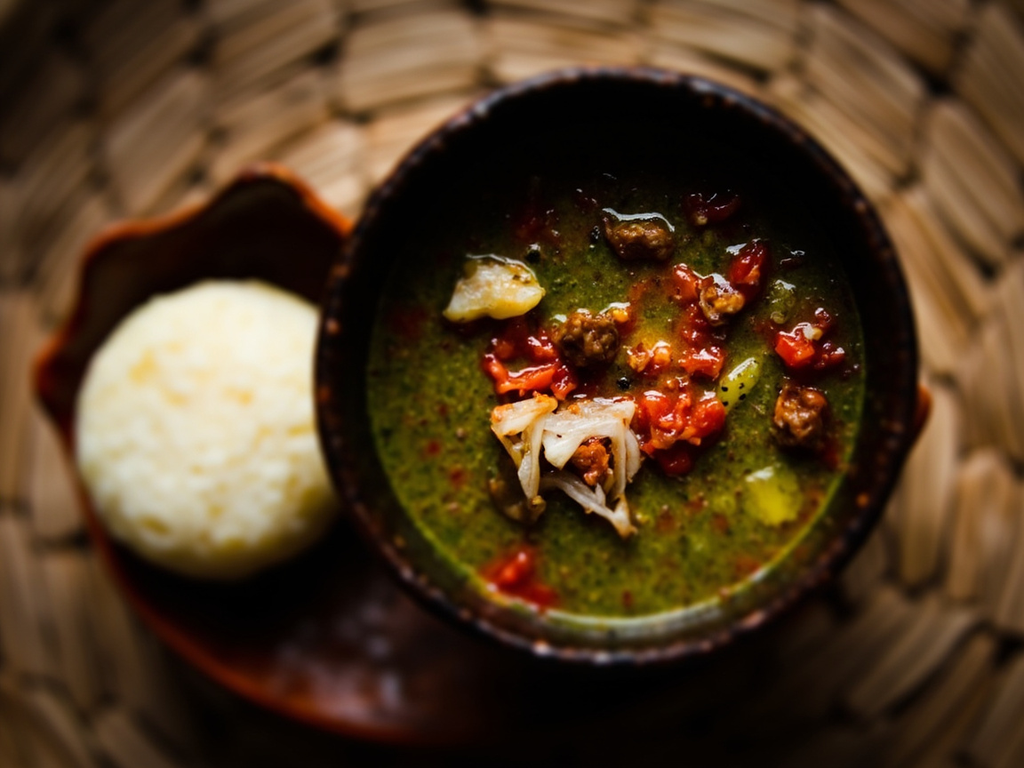
Iyán àti obè ẹ̀gúsí — pounded yam and melon-seed soup
Oúnjẹ ojúmọ́ (daily staple meal): pounded starch dipped in a bound soup
🍄 🧂 🫙· 1 h
View the recipe
 Street food
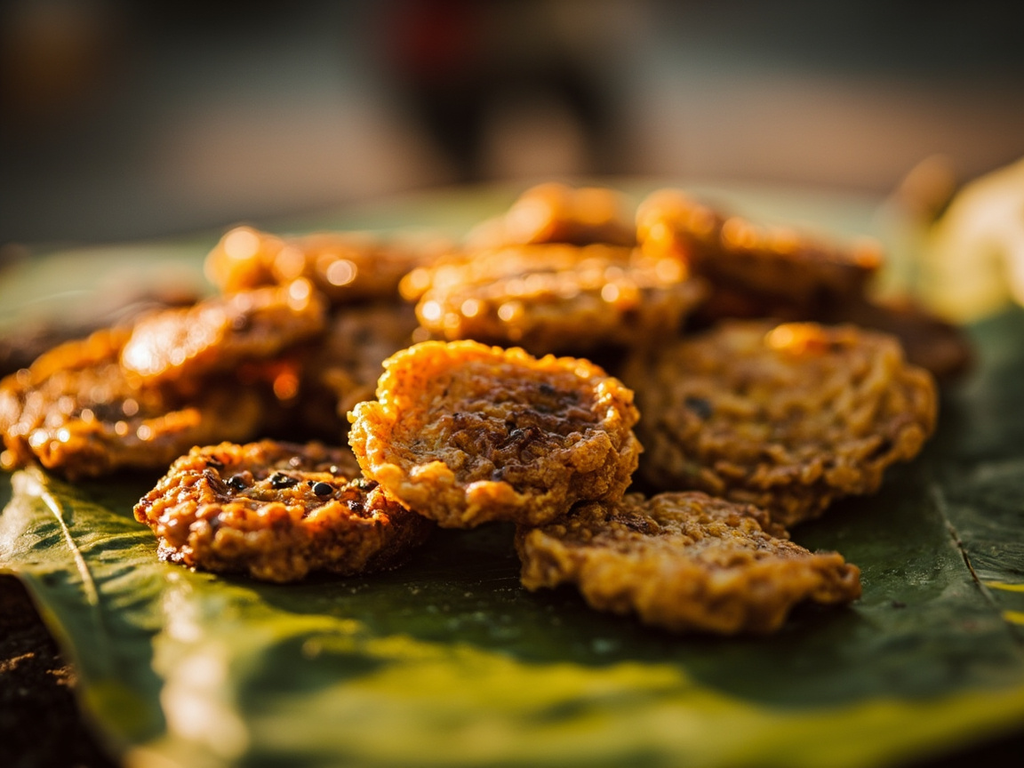
Àkàrà — black-eyed pea fritters fried at the crossroads
Oúnjẹ ọ̀nà (roadside snack, sold at crossroads)
🧂 🍄· 30 min (plus soaking)
View the recipe
 Festive
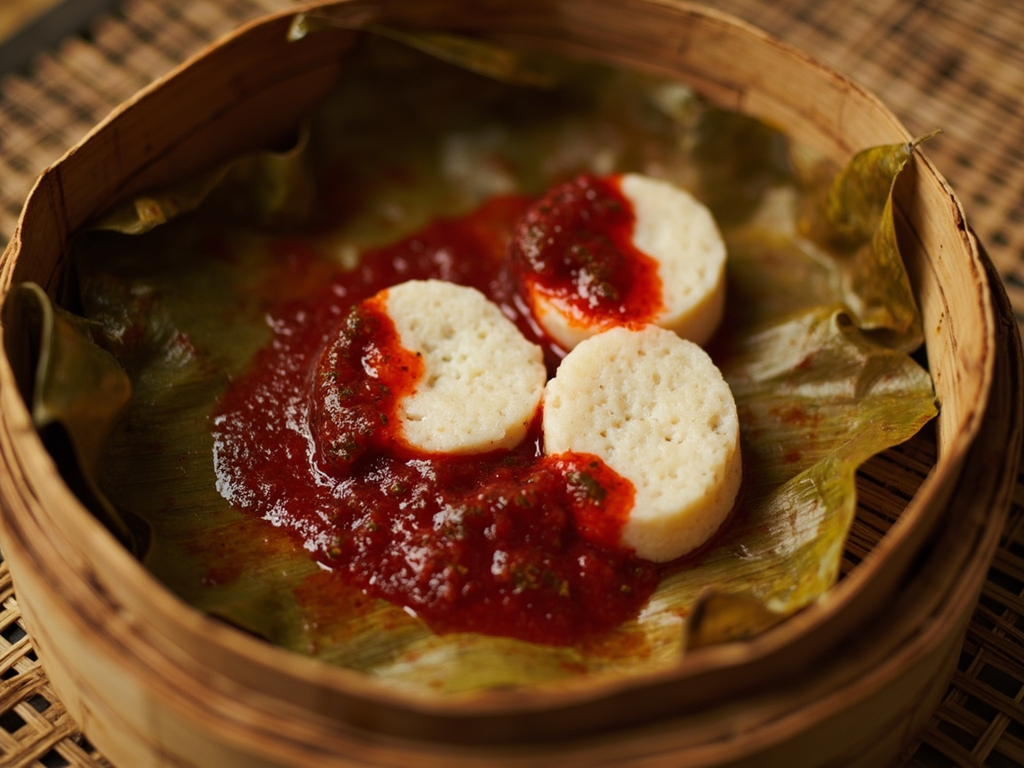
Èkuru funfun àti ọbẹ̀ epo — steamed cowpea pudding, palm oil sauce
Oúnjẹ àjọyọ̀ (festival dish shared at major orisha ceremonies)
🍄 🫙· 1 h (plus soaking)
View the recipe
 Drink
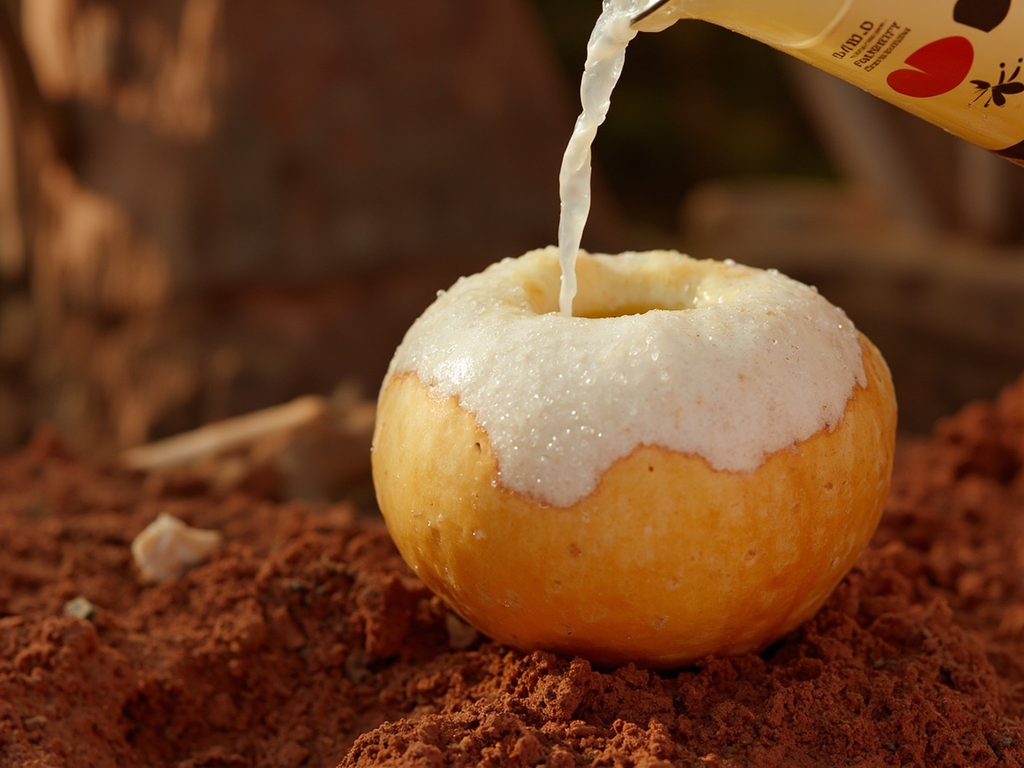
DrinkẸmu — fresh palm wine from the crossroads
Ọtí (fermented welcome drink and libation)
🫙 🍋 🍯· 5 min (service)
View the recipe