 flip
flipAdímú Eshu — offering platter for the guardian of crossroads
Adímú Eshu — offering platter for the guardian of crossroads
Why this dish? Before any Yoruba ritual, Eshu is propitiated first — otherwise the messenger garbles the messages. At crossroads and on the altar (ojúbọ), one places palm oil, honey, kola nut and palm nut: this platter is inspired by these attested offerings, without reproducing the sacred gesture.
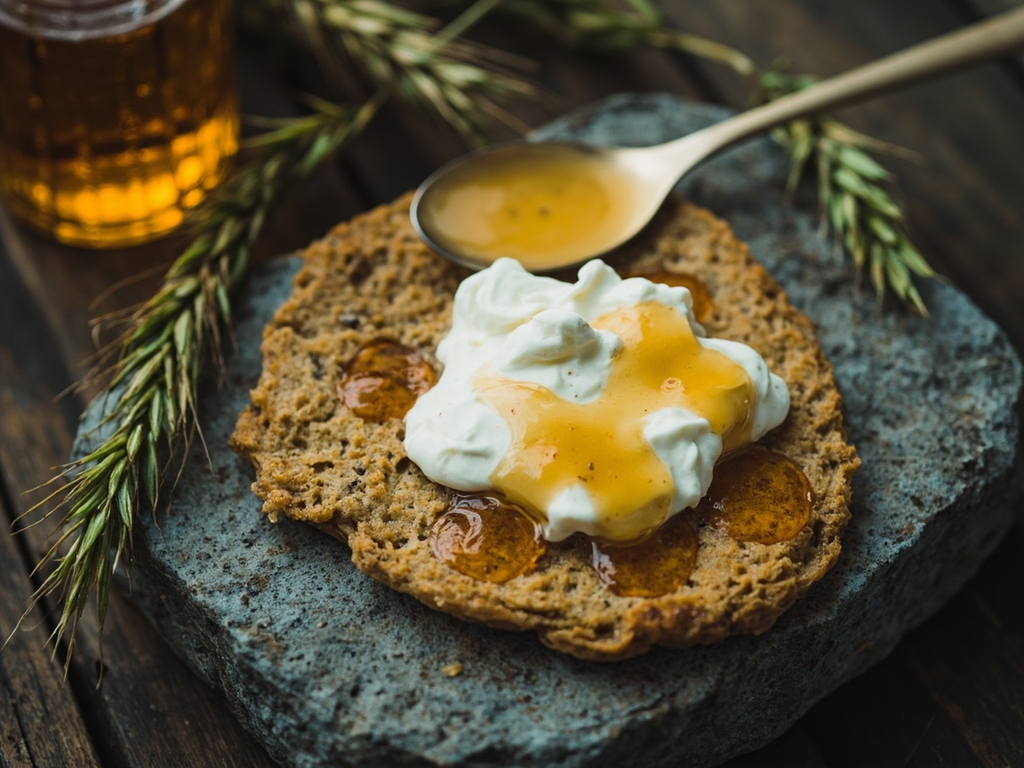
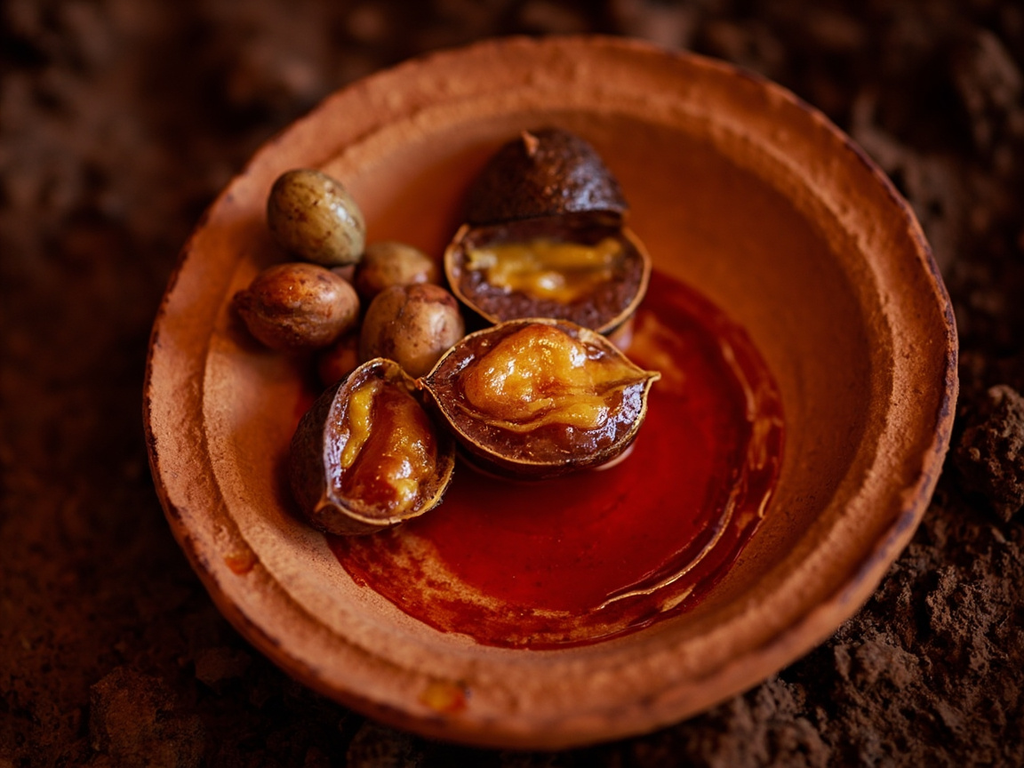
A small earthen platter where red palm oil, wild honey, split kola nut and glossy palm nuts are arranged. Sweet and oily, it is designed to appease the trickster before he opens the road.
You who arrive at the crossroads, listen to Eshu before the others! I am named first, always first, for he who greets the elders without greeting me finds his words twisted on the way. Set down for me the red oil that sweetens my tongue, the honey that turns my anger to laughter, the kola that I split between my teeth to read what is coming. Give, and the road opens; forget me, and you will walk in circles until evening. I take everything, I leave nothing — what is given to me is no longer yours.
- •Red palm oil (epo pupa) — one calabash (first offering, sweetens Eshu)
- •Wild honey (oyin) — a little (calms the temper)
- •Kola nut (obì) — one, split (divinatory fruit, greeting)
- •Palm nut (ikin) — a handful (sacred seeds of Ifá)
Adímú Eshu — offering platter for the guardian of crossroads
A small earthen platter where red palm oil, wild honey, split kola nut and glossy palm nuts are arranged. Sweet and oily, it is designed to appease the trickster before he opens the road.
Why this dish? Before any Yoruba ritual, Eshu is propitiated first — otherwise the messenger garbles the messages. At crossroads and on the altar (ojúbọ), one places palm oil, honey, kola nut and palm nut: this platter is inspired by these attested offerings, without reproducing the sacred gesture.
You who arrive at the crossroads, listen to Eshu before the others! I am named first, always first, for he who greets the elders without greeting me finds his words twisted on the way. Set down for me the red oil that sweetens my tongue, the honey that turns my anger to laughter, the kola that I split between my teeth to read what is coming. Give, and the road opens; forget me, and you will walk in circles until evening. I take everything, I leave nothing — what is given to me is no longer yours.
Ingredients (period version)
- Red palm oil (epo pupa) — one calabash (first offering, sweetens Eshu)
- Wild honey (oyin) — a little (calms the temper)
- Kola nut (obì) — one, split (divinatory fruit, greeting)
- Palm nut (ikin) — a handful (sacred seeds of Ifá)
Ingredients
- Red palm oil — 3 tbsp (scarlet base)
- Honey — 2 tbsp (sweetness)
- Kola nut (or failing that, bitter almond presented separately) — 1 (symbolic element)
- Palm nuts or date-palm fruits — a handful (glossy garnish)
Method
- Choose a small terracotta dish or a clean calabash.
- Pour the red palm oil in the center into a shiny disc.
- Drizzle honey in a spiral over the oil.
- Arrange the split kola nut and palm nuts around.
- Present the platter as an object of memory and respect — not as food to be eaten.
How it was made : Offerings (ẹbọ) to Eshu are placed at the foot of his laterite altar or at crossroads (orita meta, the three-ways). They belong entirely to him: the faithful do not touch them. Palm oil, honey, kola and palm nuts are the most ancient gifts, predating the rum and tobacco that arrived with the Atlantic trade.
The contemporary twist : For an educational table, present the platter under a glass bell jar like a still life, with a label explaining each offering — you look, you do not eat.
Sources : William Bascom, Ifa Divination: Communication Between Gods and Men in West Africa (1969) · Robert Farris Thompson, Flash of the Spirit (1983)
Eshu · Charactorium