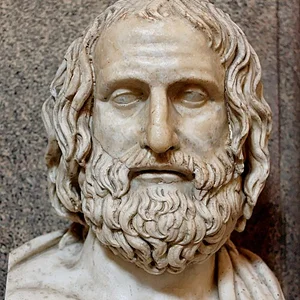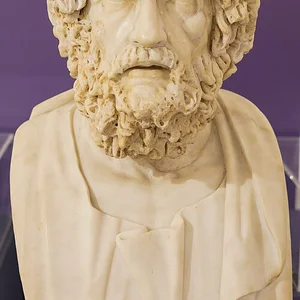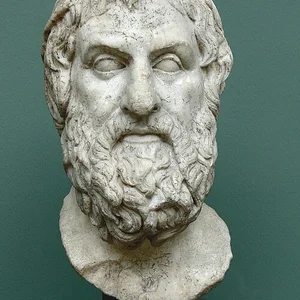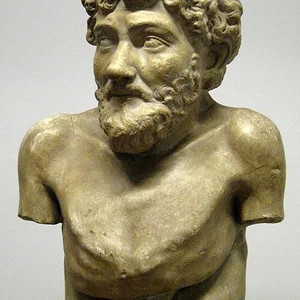

Aesop was an ancient Greek fabulist, author of fables featuring animals to convey moral lessons. His works, composed between the 7th and 6th centuries BC, have profoundly influenced Western literature and remain classics of children's literature.
Aesop(619 av. J.-C. — 563 av. J.-C.)
Aesop
Grèce antique
7 min read
Frequently asked questions
Key Facts
- Composition of fables featuring talking animals (7th–6th century BC)
- Oral transmission of his fables before they were transcribed by later authors
- Major influence on Western fable tradition, notably on Jean de La Fontaine in the 17th century
- Use of an explicit moral at the end of each fable to teach values
Works & Achievements
A fable about flattery in which a cunning fox tricks a vain crow into giving up its cheese. It inspired La Fontaine's famous retelling in the 17th century.
A tale in which the tortoise's perseverance triumphs over the hare's speed. This fable has become a universal proverb about steadfastness in the face of presumption.
A fable contrasting the grasshopper's carefree attitude with the ant's diligent, forward-thinking work. It teaches the value of labor and foresight.
A fox, unable to reach some grapes, declares they are too sour. This fable gave rise to the popular expression for sour grapes and self-deception.
A fable illustrating the injustice of the strong over the weak. The wolf invents pretexts to devour the innocent lamb, showing that might makes right.
A young shepherd repeatedly lies to attract attention, until the day no one believes him when real danger arrives. A timeless lesson about dishonesty.
A greedy man kills his miraculous goose to obtain all the gold at once, and loses everything. A fable about greed and impatience that has become proverbial.
Anecdotes
According to tradition, Aesop was a slave of Phrygian or Thracian origin, with an ungainly appearance. His master Iadmon of Samos, impressed by his intelligence and wit, is said to have granted him his freedom. This servile origin remained famous and shows that talent has nothing to do with social status.
It is said that when Aesop was asked by his master Xanthus what was the best thing in the world, he had tongue served at every course of a banquet. When then asked what was the worst thing, he served tongue again. He explained that the tongue is both the best and worst instrument: it serves to teach, persuade and praise, but also to lie, slander and deceive.
Aesop is said to have been sent to Delphi by King Croesus of Lydia to distribute gold among the inhabitants. But, finding the Delphians unworthy of such a gift, he sent the gold back to Croesus. Enraged, the Delphians falsely accused him of sacrilege and sentenced him to death by throwing him off a cliff. According to Herodotus, the Delphians were later required to pay compensation for this crime.
Plutarch reports that Aesop took part in the banquet of the Seven Sages, alongside Solon, Thales and Pittacus. Far from being intimidated by these great thinkers, he is said to have amused and instructed them with his fables. This anecdote illustrates the prestige the fabulist enjoyed despite his humble origins.
Aristophanes, in his comedy The Wasps, has a character remark that Aesop would tell fables even while walking in the street, so much did he love teaching by example. His contemporaries regarded him as a folk sage, capable of making the deepest truths accessible to all.
Primary Sources
Herodotus mentions that Aesop was a slave of Iadmon of Samos and that the Delphians put him to death. He notes that the Delphians were subsequently required to offer compensation to Iadmon's grandson.
Aristophanes references Aesop's fables as common knowledge that every educated Athenian was expected to possess, citing them during comic scenes.
Plutarch portrays Aesop alongside the Seven Sages of Greece, having him tell fables to illustrate philosophical discussions on power and justice.
This popular narrative describes Aesop as a deformed slave of remarkable intelligence who obtained his freedom through his wisdom. The text recounts his travels, his encounters with kings, and his tragic death at Delphi.
Key Places
Greek island in the Aegean Sea where Aesop is said to have lived as a slave under Iadmon before being freed. It is there that he reportedly began telling his fables.
Panhellenic sanctuary dedicated to Apollo, where Aesop met his death. The Delphians unjustly condemned him, which became a scandal throughout the Greek world.
Capital of the kingdom of Lydia, seat of King Croesus. Tradition holds that Aesop stayed at the court of Croesus as an advisor and ambassador.
Great city where Aesop's fables were very popular from the 5th century BC. Socrates himself is said to have versified some of Aesop's fables while in prison.
Region of Asia Minor sometimes cited as Aesop's birthplace. Phrygia was known at the time for its oral traditions and folk tales.
Typical Objects
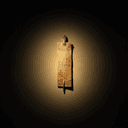
Common writing medium in ancient Greece. Aesop or his transcribers would have noted down the fables on these before they were copied onto papyrus.
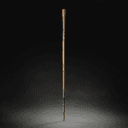
Described as a tireless traveler, Aesop walked from city to city across Greece. A staff was an essential companion for any traveler of the era on the dusty roads.

The medium on which the earliest collections of fables were copied. Scrolls allowed texts to be distributed throughout the Greek world.
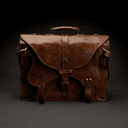
Typical travel bag of modest free men. Aesop, a formerly enslaved man who had been freed, traveled with few material possessions.
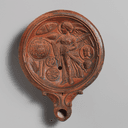
An everyday object of archaic Greece, used for lighting in the evening — the traditional time for telling fables.
📷 CC0 · Wikimedia Commons ↗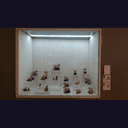
Small statuettes depicting the animals ever-present in the fables: foxes, crows, tortoises, hares. They were found in Greek homes and sanctuaries.
📷 CC BY-SA 4.0 · Wikimedia Commons ↗School Curriculum
Vocabulary & Tags
Key Vocabulary
Daily Life
Morning
Aesop would rise at dawn, like all Greeks of the era. After a brief wash with cold water, he would have a frugal breakfast of barley bread soaked in water-diluted wine (akratisma). He would then head to the agora to observe merchants, craftsmen, and passersby who inspired his fables.
Afternoon
In the afternoon, Aesop would travel from city to city or attend the banquets of the powerful. He would tell his fables before attentive audiences, using animal stories to comment on human failings. As an ambassador of Croesus, he might also negotiate with the authorities of Greek city-states.
Evening
In the evening, Aesop would join a symposion (banquet) at a host's home, reclining on a dining couch. Guests would discuss philosophy and politics over the meal. He would tell his fables by the light of oil lamps before retiring to a simple room to sleep on a rope-strung bed covered with woolen blankets.
Food
Aesop's diet would be typically Greek: barley or wheat bread, olives, fresh or dried figs, goat cheese, grilled fish, and vegetables such as lentils and broad beans. Wine diluted with water would accompany meals. Meat would be reserved for religious feast days and sacrifices.
Clothing
Aesop would wear a chiton, a linen or wool tunic fastened at the shoulders with fibulae. Over it, a himation (draped cloak) would protect him from the cold. On his feet, simple leather sandals. As a formerly enslaved freedman, his clothes would be modest, in natural colors — off-white, beige, or brown.
Housing
Aesop would live in a simple Greek house, built from mud bricks on stone foundations, with a terracotta tile roof. The house would be organized around an open inner courtyard. The furnishings would be plain: beds, wooden chests, stools, and a few pieces of pottery. An oil lamp would light the darker rooms.
Historical Timeline
Period Vocabulary
Visual Style
Style visuel inspiré de la céramique grecque à figures noires, avec des silhouettes d'animaux sur fond de terre cuite, des paysages méditerranéens dorés et la mer Égée d'un bleu profond.
Sound Ambience
Ambiance sonore de la Grèce archaïque : cigales, marché animé, bruit de la mer sur l'île de Samos, chants d'oiseaux et murmures d'un public écoutant un conteur sur l'agora.
Liens externes & ressources
Références
Œuvres
Le Corbeau et le Renard
VIIe-VIe siècle av. J.-C.
Le Lièvre et la Tortue
VIIe-VIe siècle av. J.-C.
La Cigale et la Fourmi
VIIe-VIe siècle av. J.-C.
Le Renard et les Raisins
VIIe-VIe siècle av. J.-C.
Le Loup et l'Agneau
VIIe-VIe siècle av. J.-C.
Le Garçon qui criait au loup
VIIe-VIe siècle av. J.-C.
La Poule aux œufs d'or
VIIe-VIe siècle av. J.-C.