 flip
flipMelitoûtta, the honey and sesame cake for the gods
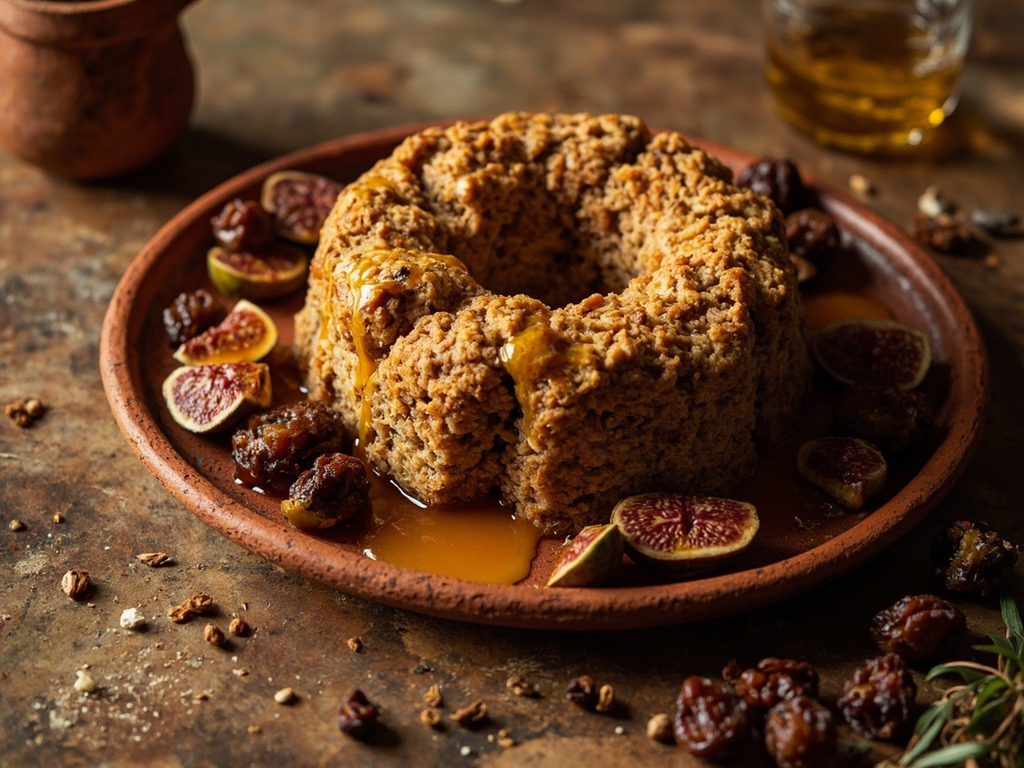
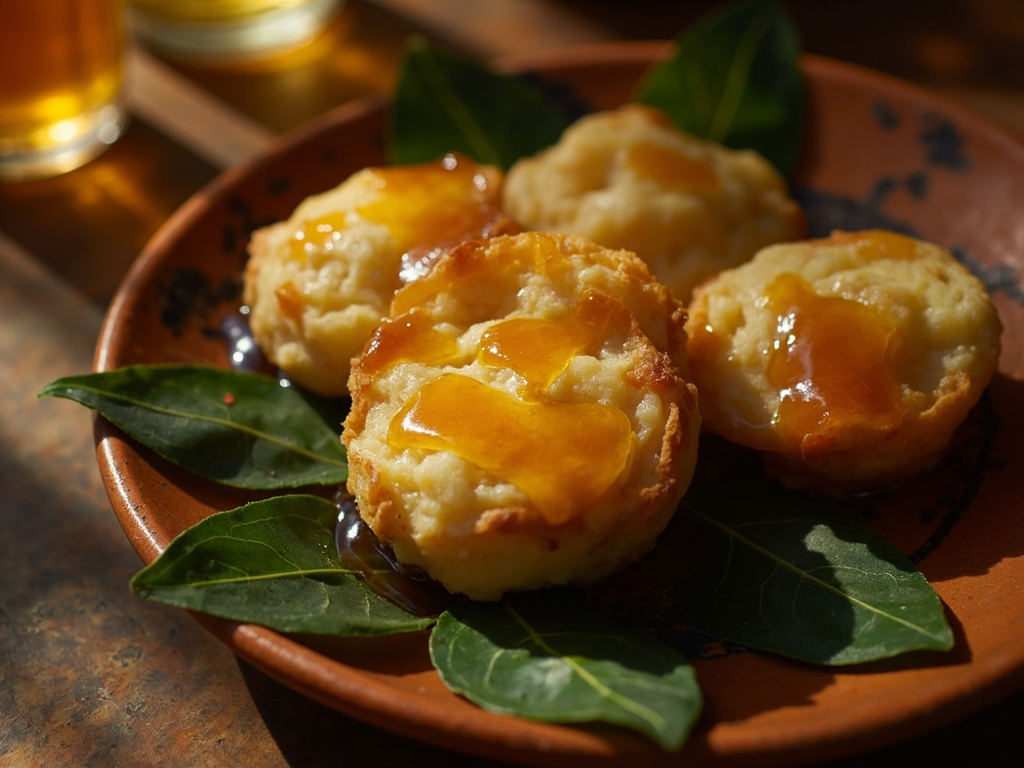
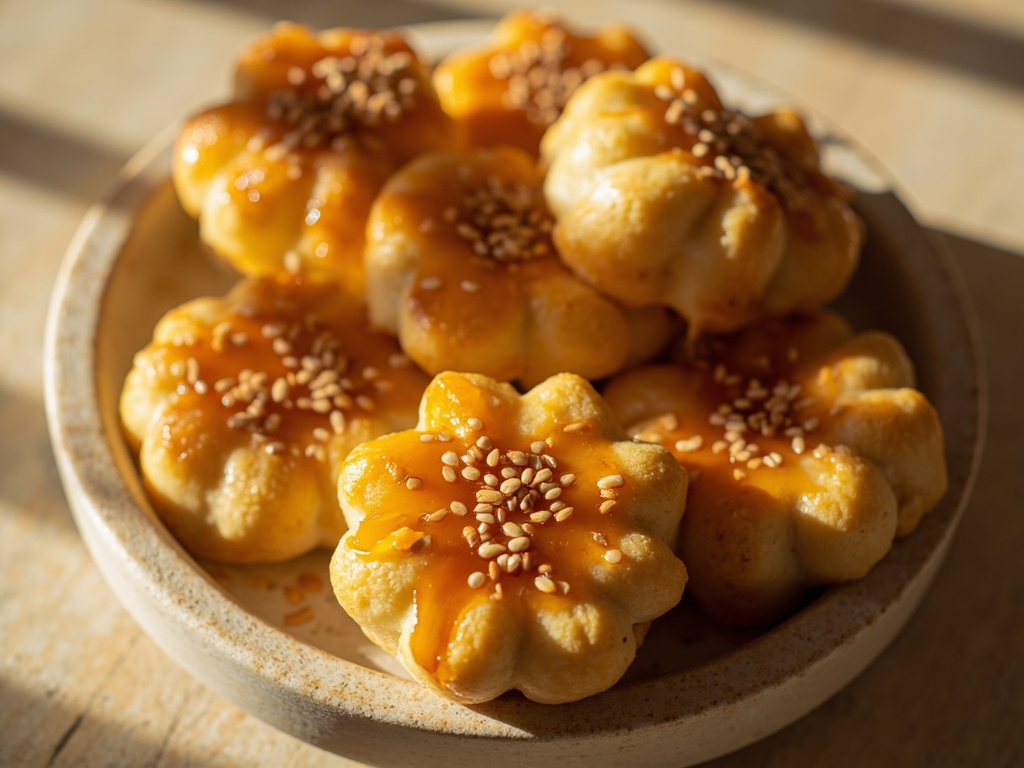
Melitoûtta, the honey and sesame cake for the gods
Why this dish? Tradition says Aesop ended his days at Delphi, sanctuary of Apollo where cakes and libations were offered. Inspired by these offering sweets, this little honey and sesame cake evokes the altar and the sympósion — sweetness appeared mainly for the gods and festive occasions.
Small soft honey cakes, fragrant with toasted sesame, golden and sticky. All floral sweetness, they are the perfect offering-dessert, to share after the meal while drinking.
To the gods one does not skimp, even when one has almost nothing: a little flour, honey from wild bees, a pinch of toasted sesame, and here is something to honor Apollo. At Delphi, I saw the priests carry such cakes to the altar — remember that the sincere offering of the poor is worth more than the proud feast of the powerful. Keep one for yourself, dipped in wine: the gods will not begrudge you.
- •Wheat flour — a measure (structure)
- •Honey — generous (sweetness and binder)
- •Toasted sesame seeds — a handful (signature)
- •Olive oil — a little (softness)
- •Sweet wine — a dash (flavor (optional))
Melitoûtta, the honey and sesame cake for the gods
Small soft honey cakes, fragrant with toasted sesame, golden and sticky. All floral sweetness, they are the perfect offering-dessert, to share after the meal while drinking.
Why this dish? Tradition says Aesop ended his days at Delphi, sanctuary of Apollo where cakes and libations were offered. Inspired by these offering sweets, this little honey and sesame cake evokes the altar and the sympósion — sweetness appeared mainly for the gods and festive occasions.
To the gods one does not skimp, even when one has almost nothing: a little flour, honey from wild bees, a pinch of toasted sesame, and here is something to honor Apollo. At Delphi, I saw the priests carry such cakes to the altar — remember that the sincere offering of the poor is worth more than the proud feast of the powerful. Keep one for yourself, dipped in wine: the gods will not begrudge you.
Ingredients (period version)
- Wheat flour — a measure (structure)
- Honey — generous (sweetness and binder)
- Toasted sesame seeds — a handful (signature)
- Olive oil — a little (softness)
- Sweet wine — a dash (flavor (optional))
Ingredients
- Wheat flour — 200 g (structure)
- Honey (thyme or blossom) — 120 g + a little for glazing (sweetness and binder)
- Sesame seeds — 50 g (signature)
- Mild olive oil — 3 tbsp (softness)
- Water or sweet wine — 2 to 3 tbsp (binder)
Method
- Toast sesame seeds dry until golden and fragrant; reserve a few for topping.
- Mix flour, honey, oil and sesame; add water or sweet wine to form a soft dough.
- Shape into small flat cakes and place on an oiled baking sheet.
- Bake at medium heat (180°C) for 12 to 15 minutes until golden.
- Brush with warm honey and sprinkle with reserved sesame. Let cool slightly before serving.
How it was made : The Greeks offered all kinds of pémmata (cakes) to the gods: honey replaced sugar, unknown, and sesame was among the most prized festive toppings. Many of these cakes served both as offerings on the altar and as sweets shared at the sympósion.
The contemporary twist : Press the cakes into bars and roll in sesame: an 'antiquity bar' to slip into a pocket, distant ancestor of the Greek pasteli.
Sources : Andrew Dalby, Siren Feasts: A History of Food and Gastronomy in Greece · Athenaeus of Naucratis, Deipnosophistae (book on pastries)
Aesop · Charactorium