 Flip the card
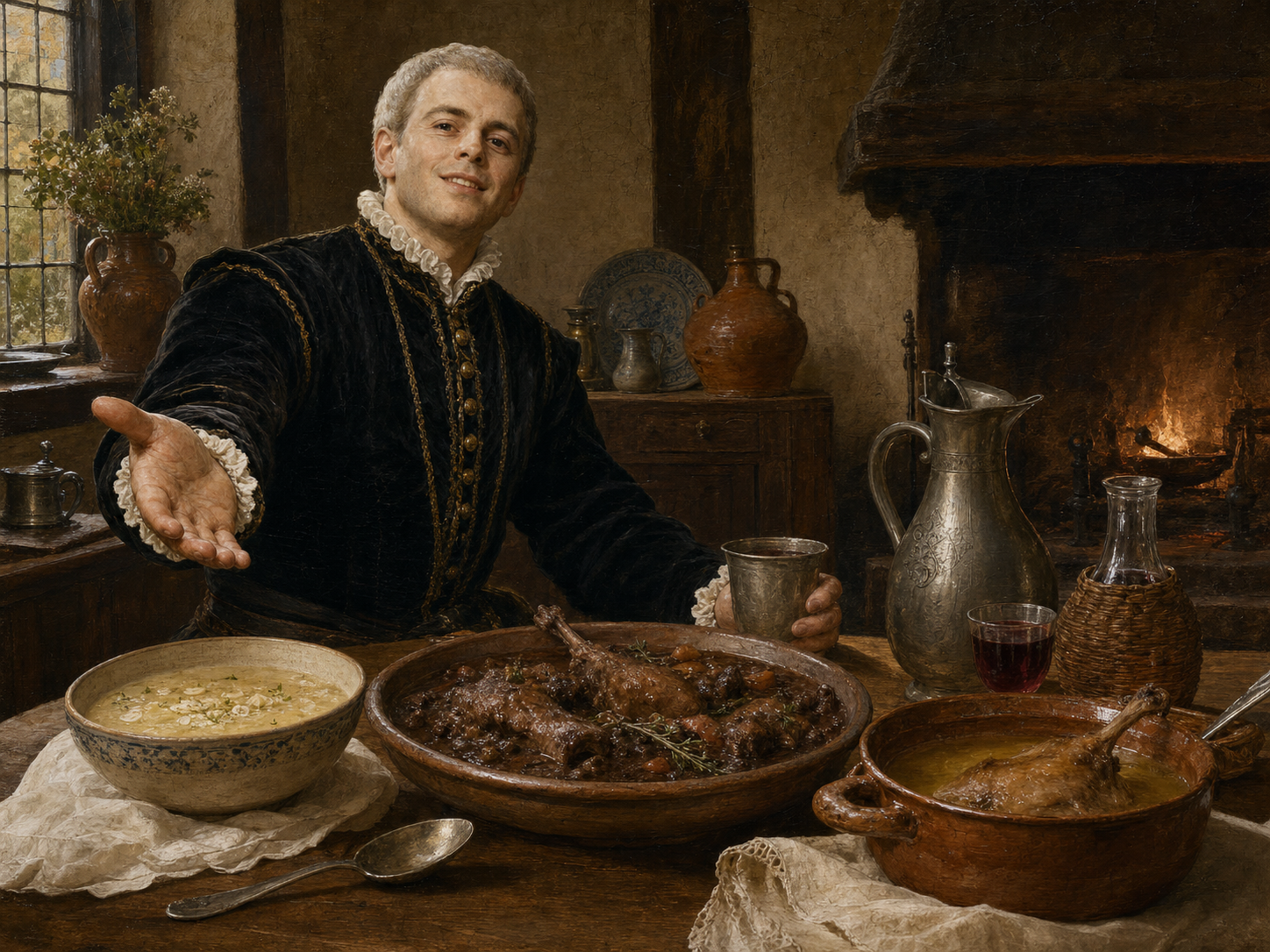
Étienne de La Boétie at the table
1530 — 1563
On the menu
Service à la française and the issue de table
In the Renaissance, meals were not served as starter-main-dessert but as successive "services" where several dishes arrived together: first potages and roasts, then stews and game, and finally the "issue de table" — a final moment of sweets, dried fruits, preserves, and spiced wine enjoyed while conversing. In the home of a Périgord magistrate like La Boétie, the table mingled humble daily soup with festive dishes, in the spirit of friendship and conversation cherished by humanists.
Signature : The Périgord walnut
An emblem of the Sarlat region where La Boétie was born, the walnut appears everywhere: eaten at the end of the meal, pressed into oil for seasoning, ground into sweets. Along with goose fat and garlic, it is the soul of this robust, fragrant, deeply terroir-rooted cuisine of southwestern France.
click to flip back
Étienne de La Boétie at the table
1530 — 1563
5 period recipes
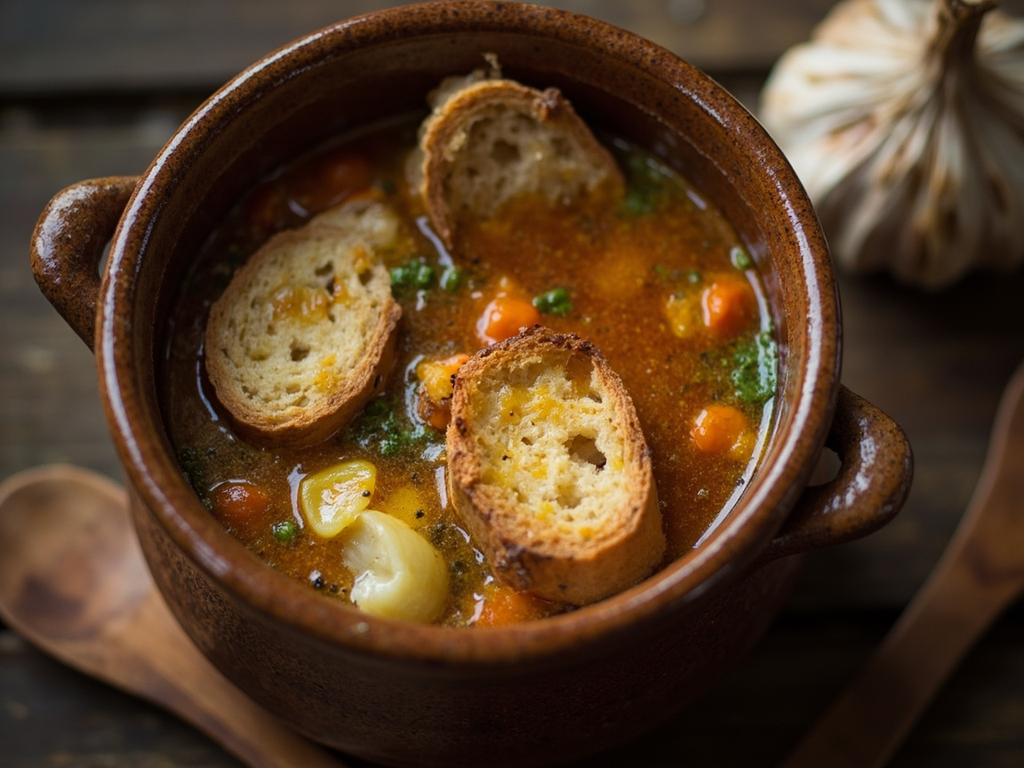 Everyday
Tourin blanchi à l'ail
Potage of the first service
🧂 🍋 🍄· 30 min
View the recipe
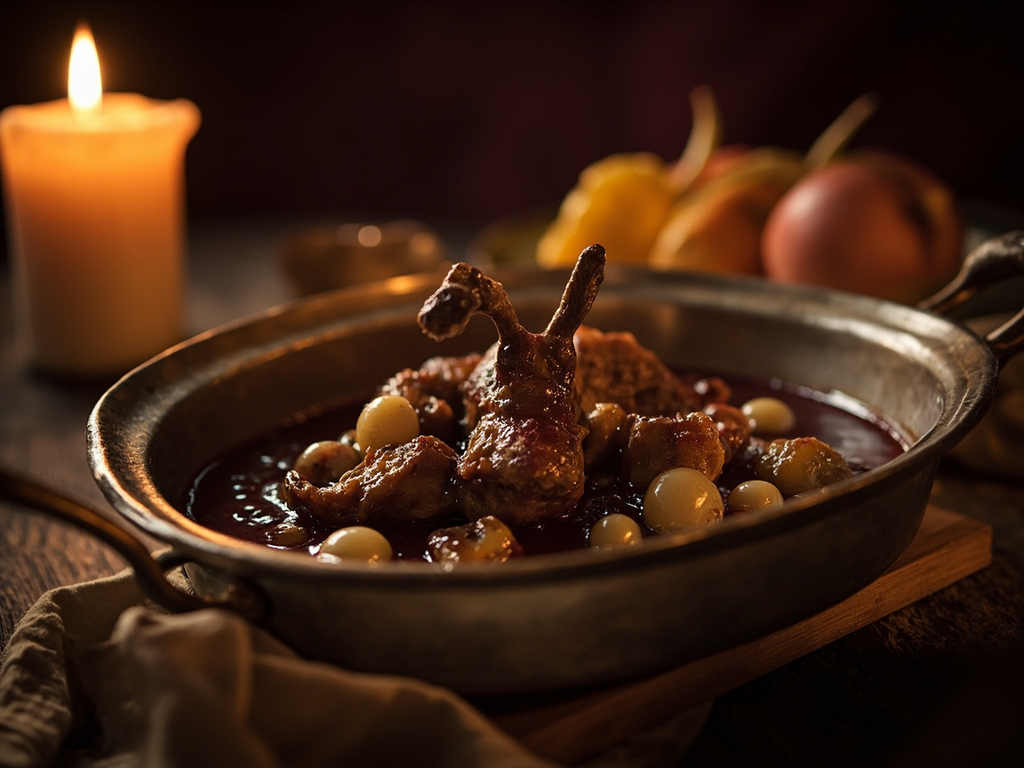 Festive
Civet de lièvre au vin de Bordeaux
Roast and small game of the second service
🍄 🌶️· 3 h (+ marinade the day before)
View the recipe
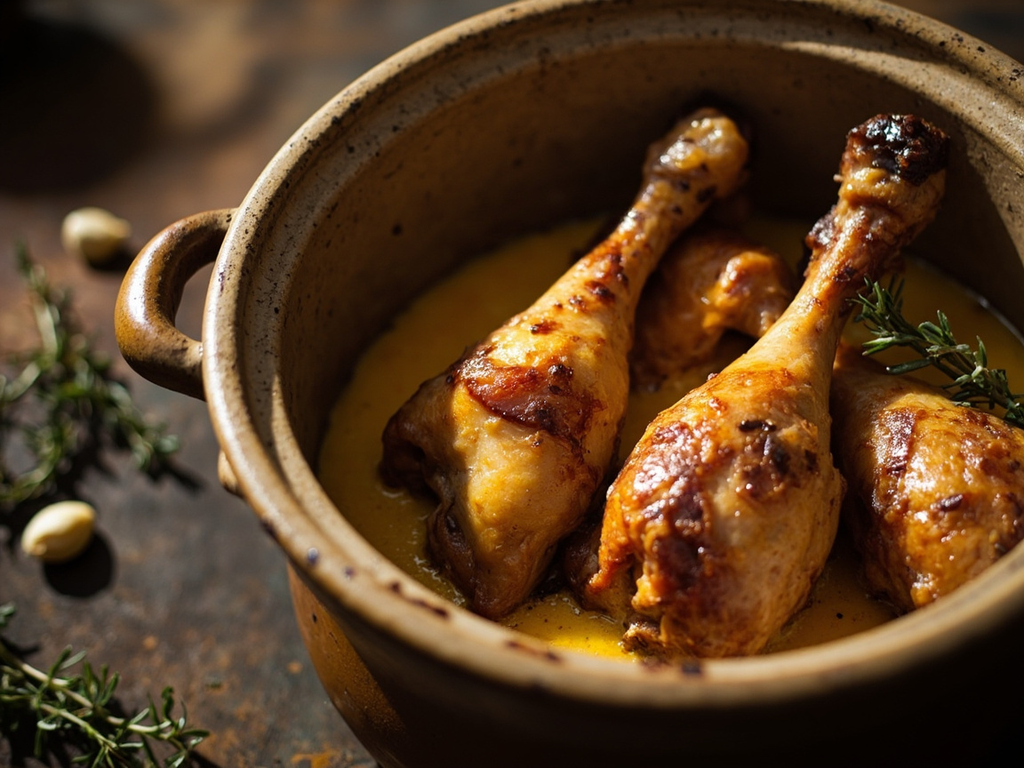 Preserving
Confit d'oie en pot de graisse
Salt-cured pantry preserve
🧂 🍄· 3 h 30 (+ salting the day before)
View the recipe
 Drink
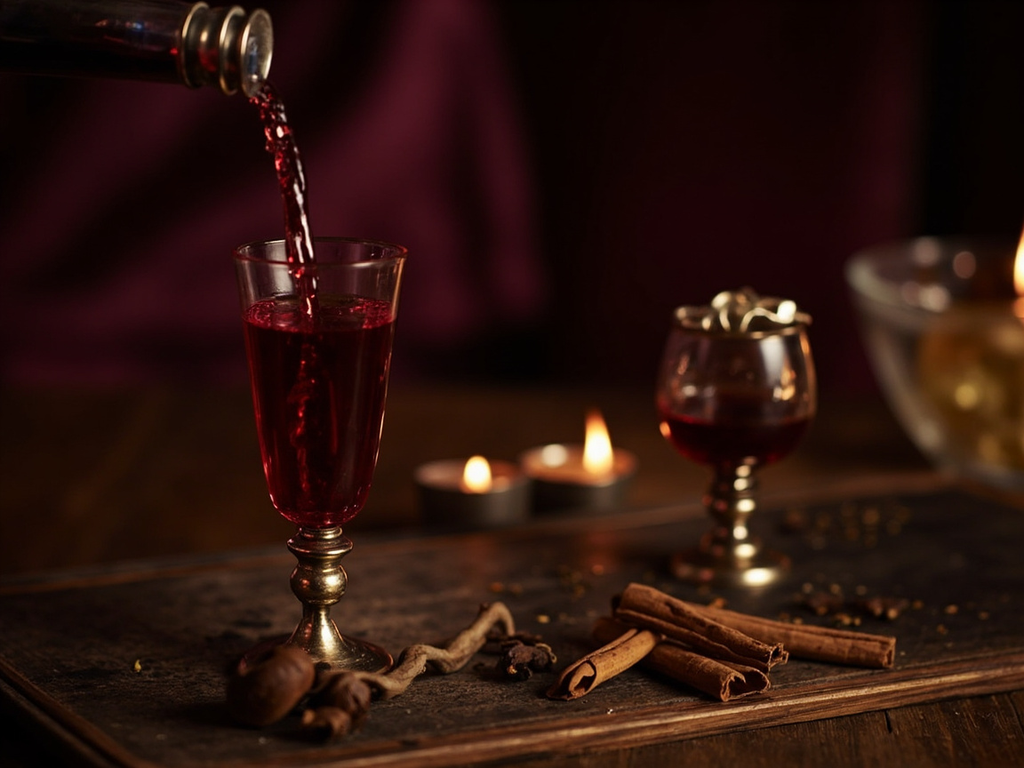
DrinkHypocras au vin de Guyenne
Beverage of the issue de table
🍯 🌶️· 20 min (+ infusion overnight)
View the recipe
 Travel
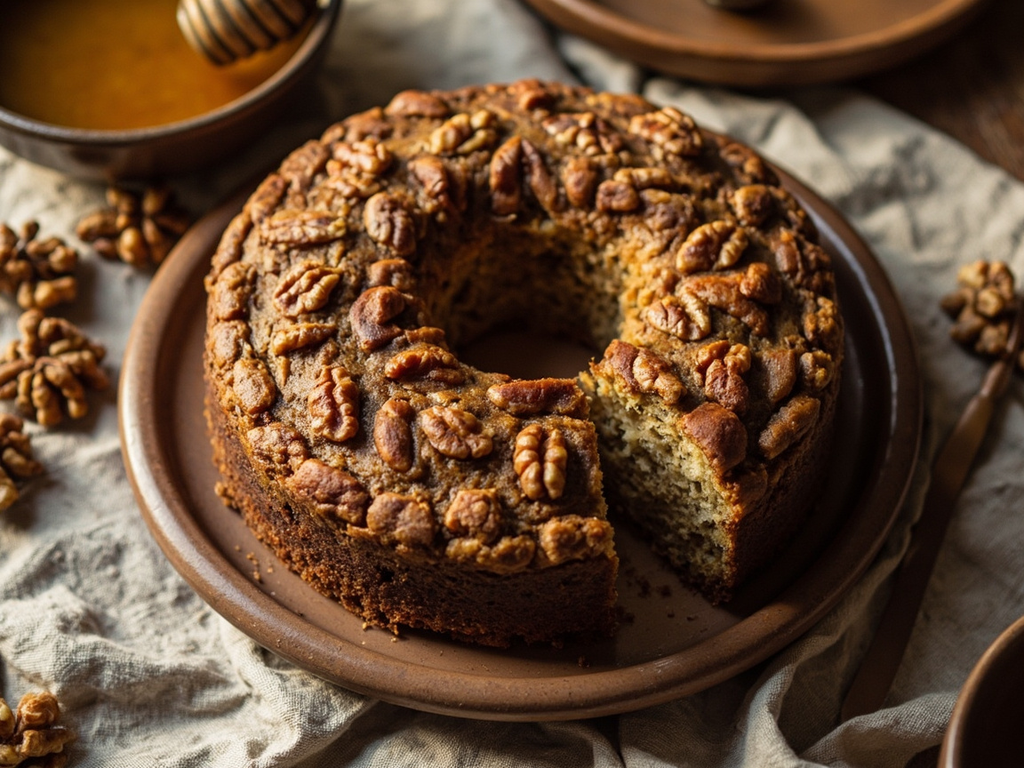
Tourteau de noix et miel pour la route
Travel provision and issue de table sweet
🍯 ☕· 55 min
View the recipe