 flip
flipCivet de lièvre au vin de Bordeaux
Civet de lièvre au vin de Bordeaux
Why this dish? Game from the Périgord woods paired with Bordeaux wine: a festive dish worthy of a table where one received a friend like Montaigne. The civet, a dish for great days, crowned the meat services.
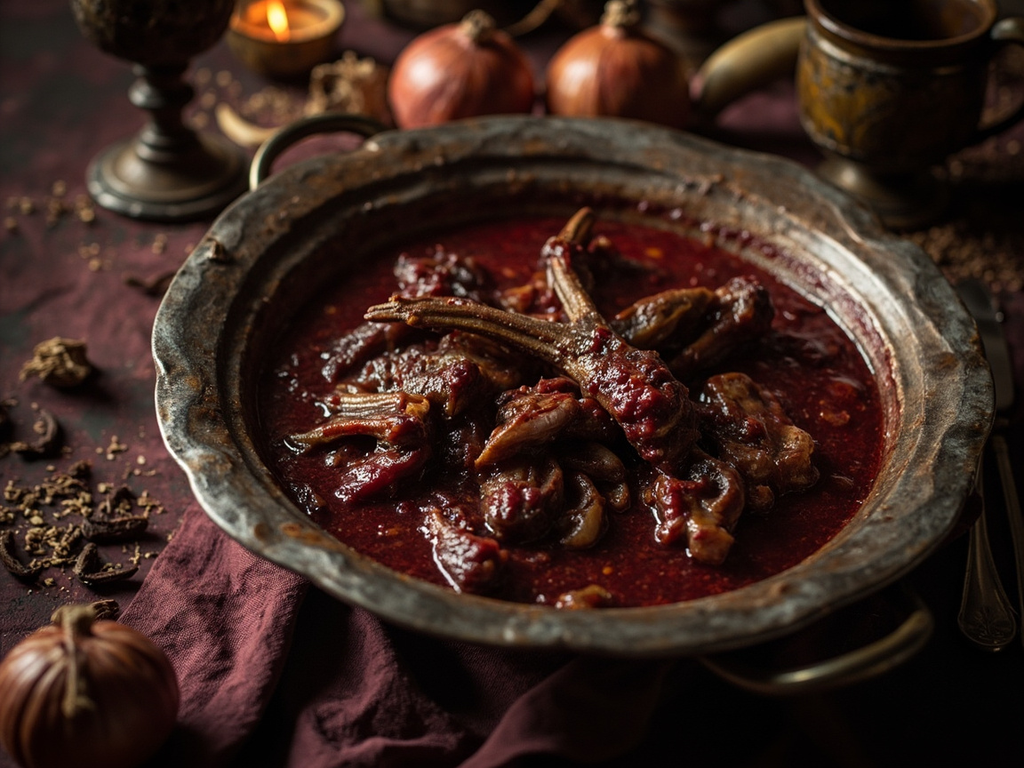
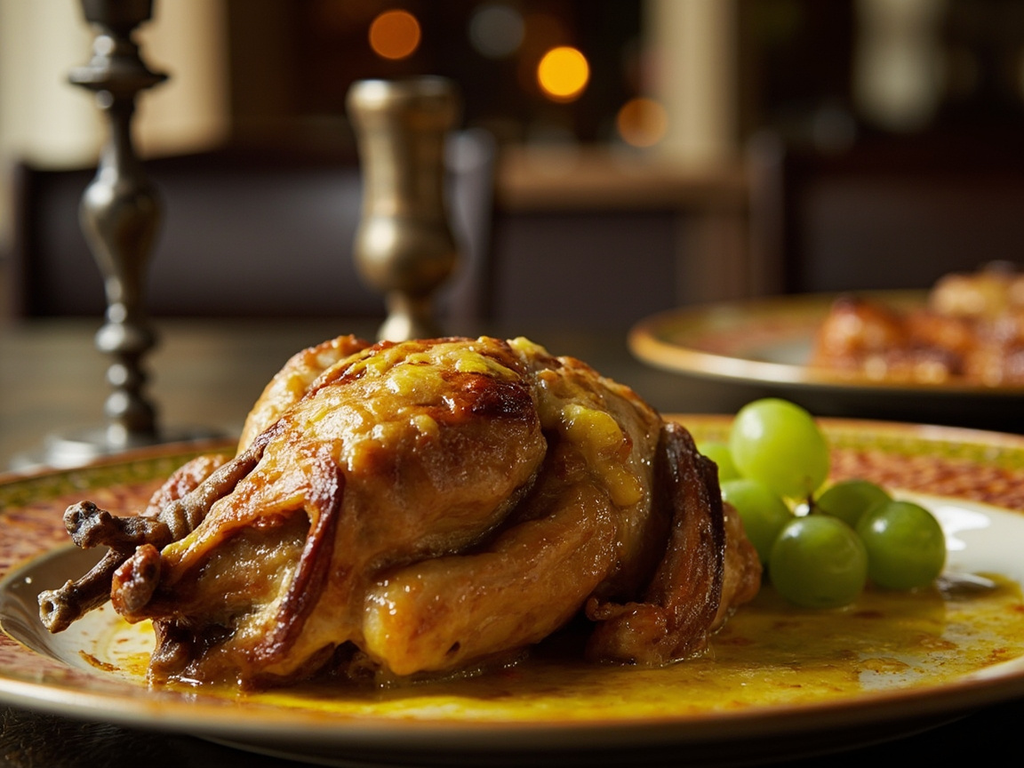
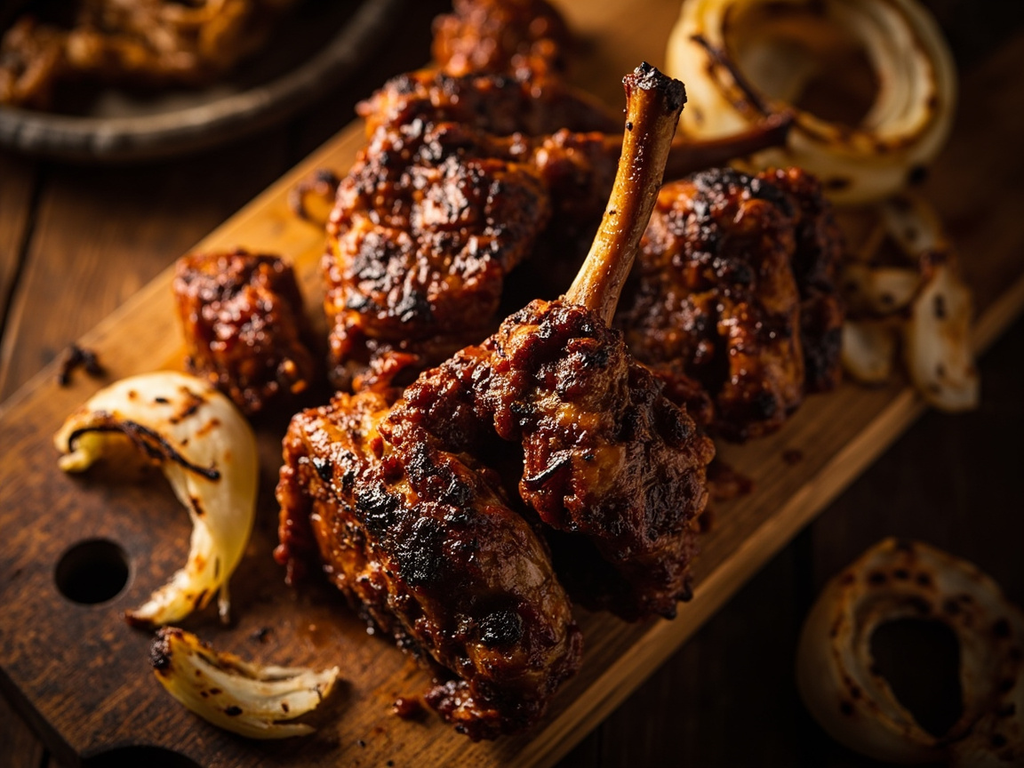
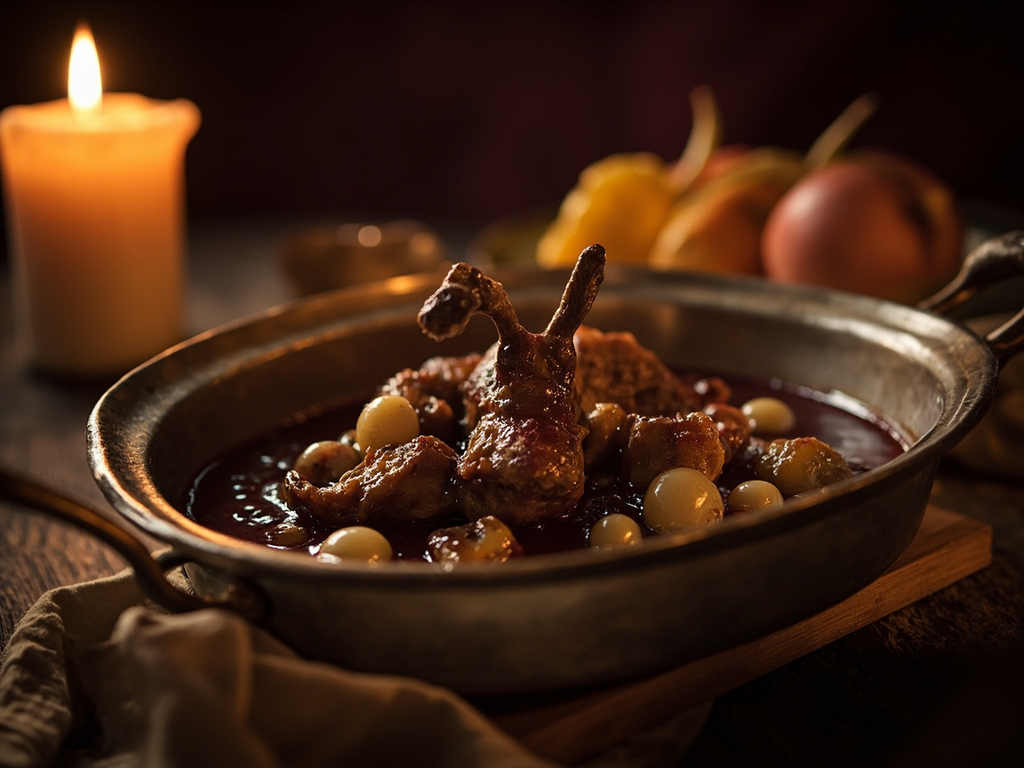
A dark, deep hare stew marinated in red wine, long-simmered with onions and spices, then thickened with blood according to custom. A melting game meat reserved for days of rejoicing.
Here is a dish for a day of celebration, when friendship gathers around the table. The hare, I would first let it marinate a whole night in the wine from our hillsides, with onions and spices from the Orient. Then you brown it, moisten it with its marinade, and let it simmer away very slowly for a long time. At the end, you thicken the sauce with the beast's blood, as is proper: that is what gives it that velvet color and that flavor no other preparation equals.
- •Hare — one, skinned (game meat)
- •Red Bordeaux wine — a bottle (marinade and cooking)
- •Onions — several (aromatic)
- •Lard — a piece (cooking fat)
- •Pepper, clove, cinnamon, nutmeg — a pinch of each (spices from the merchant)
- •Hare's blood — that collected (final thickener)
- •Vinegar — a dash (balance)
Civet de lièvre au vin de Bordeaux
A dark, deep hare stew marinated in red wine, long-simmered with onions and spices, then thickened with blood according to custom. A melting game meat reserved for days of rejoicing.
Why this dish? Game from the Périgord woods paired with Bordeaux wine: a festive dish worthy of a table where one received a friend like Montaigne. The civet, a dish for great days, crowned the meat services.
Here is a dish for a day of celebration, when friendship gathers around the table. The hare, I would first let it marinate a whole night in the wine from our hillsides, with onions and spices from the Orient. Then you brown it, moisten it with its marinade, and let it simmer away very slowly for a long time. At the end, you thicken the sauce with the beast's blood, as is proper: that is what gives it that velvet color and that flavor no other preparation equals.
Ingredients (period version)
- Hare — one, skinned (game meat)
- Red Bordeaux wine — a bottle (marinade and cooking)
- Onions — several (aromatic)
- Lard — a piece (cooking fat)
- Pepper, clove, cinnamon, nutmeg — a pinch of each (spices from the merchant)
- Hare's blood — that collected (final thickener)
- Vinegar — a dash (balance)
Ingredients
- Hare (or farm rabbit legs) — 1.5 kg in pieces (meat)
- Full-bodied red wine (Bordeaux) — 75 cl (marinade and cooking)
- Onions — 3 (aromatic)
- Smoked bacon lardons — 150 g (fat)
- Mixed pepper, clove, cinnamon, nutmeg — 1 tsp (spices)
- Hare blood (or 1 tbsp cocoa as modern option — otherwise omit) — as available (thickener)
- Wine vinegar — 1 tbsp (balance)
- Flour — 1 tbsp (backup thickener)
Method
- The day before, marinate the hare pieces in the wine with sliced onions and spices, refrigerated.
- Drain the meat (reserve the marinade), brown it in a casserole with the lardons.
- Sprinkle with a spoonful of flour, then moisten with the strained marinade. Salt.
- Cover and simmer over low heat for 2 to 3 hours, until the meat falls off the bone.
- Off the heat, thicken the sauce with the blood (or reduce it instead), add a dash of vinegar, adjust seasoning, and serve very hot.
How it was made : The word "civet" comes from "cive" (onion), the central aromatic of the dish. Thickening with the animal's blood is a medieval and Renaissance technique, giving the stew its coating texture and dark color. Spiced game was served on wealthy tables, the Eastern spices marking the host's rank.
The contemporary twist : Plated on a purée of Périgord chestnuts with a few grilled walnut halves and a candied orange slice for freshness.
Étienne de La Boétie · Charactorium