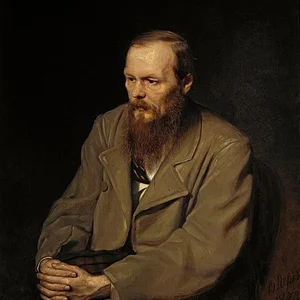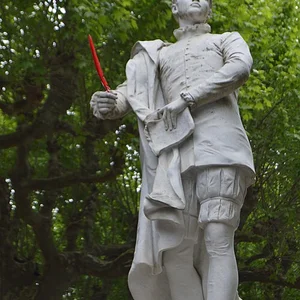

French Renaissance writer, poet, and statesman (1530–1563). Author of the celebrated Discourse on Voluntary Servitude, he questioned why people accept oppression. A close friend of Montaigne, he embodies the critical humanist thought of the 16th century.
Étienne de La Boétie(1530 — 1563)
Étienne de La Boétie
France
7 min read
Frequently asked questions
Key Facts
- 1530: Born in Sarlat, Périgord
- 1548–1553: Studies in Montpellier and Toulouse, legal training
- 1558: Wrote the Discourse on Voluntary Servitude (landmark critique of absolute power)
- 1560: Political career in Guyenne, officer of the Bordeaux Parliament
- 1563: Premature death at age 33 (August)
Works & Achievements
Major work of political philosophy questioning why peoples accept tyranny. A founding text of libertarian thought and civil disobedience.
Collection of love poems in the Petrarchan tradition, published by Montaigne in the Essays. They bear witness to La Boétie's poetic talent.
Political text in which La Boétie analyzes the religious situation in France and proposes paths of reconciliation between Catholics and Protestants.
Translation from ancient Greek attesting to La Boétie's humanist erudition and his interest in ancient moral philosophy.
Translation of a Greek treatise on household management and agriculture, illustrating La Boétie's taste for the practical texts of Antiquity.
Various poems in French and Latin, bequeathed to Montaigne. They reveal a poet with command of classical and Neo-Latin forms.
Anecdotes
Étienne de La Boétie is said to have written the Discourse on Voluntary Servitude when he was only 16 or 18 years old, which astonished his contemporaries with the maturity of his political thought. The text first circulated in manuscript form among humanist circles before being published well after his death.
His meeting with Michel de Montaigne, around 1558, gave rise to one of the most celebrated friendships in French literature. Montaigne wrote in his Essays the now mythical phrase: "Because it was him, because it was me", to explain this unbreakable bond.
La Boétie died at only 32 years old, probably from dysentery or plague, on August 18, 1563, in Germignan, near Bordeaux. Montaigne, present at his bedside, was deeply affected by this death agony and gave a detailed account of it in a letter to his father.
A councillor at the Bordeaux parliament from the age of 23, La Boétie actively took part in attempts at reconciliation between Catholics and Protestants during the Wars of Religion. He was sent on a diplomatic mission to the Agenais region by Chancellor Michel de L'Hospital in 1562.
The Discourse on Voluntary Servitude was taken up after his death by the Huguenot Protestants, who published it in the collection Mémoires de l'Estat de France sous Charles neufiesme in 1576, giving it a political reach that La Boétie may not have originally intended.
Primary Sources
Be resolved to serve no more, and you are at once freed. I do not ask that you place hands upon the tyrant to topple him over, but simply that you support him no longer; and you will see him, like a great colossus whose pedestal has been pulled away, fall of his own weight and break in pieces.
What we ordinarily call friends and friendships are nothing but acquaintances and familiarities… In the friendship I speak of, souls mingle and blend into one another so completely that the seam that joined them is effaced and cannot be found again.
He asked me to call his wife, and told her with as calm a face as he could manage that he begged her to be willing to accept his library as her inheritance, and that it was little enough reward for so good a woman.
If my heart were not so firmly set in friendship, / Your absence would have filled me with strange distress; / But I know well that in you I have found the other half / Of myself, and that absent you love me just the same.
Key Places
La Boétie's birthplace in Périgord. His childhood home, with its remarkable Renaissance façade, is still visible in the historic town center.
Seat of the parliament where La Boétie served as a counselor from 1553 until his death. It was also in this city that he met Montaigne.
A prestigious humanist institution where La Boétie pursued his studies. It was likely there that he wrote the Discourse on Voluntary Servitude.
The place where La Boétie died on August 18, 1563, in a country house, in the presence of Montaigne, who recorded his final moments.
The residence of Michel de Montaigne, where he kept the manuscripts La Boétie had bequeathed to him upon his death, including his poems and translations.
Typical Objects

La Boétie's everyday writing instruments, used to compose his political texts, sonnets, and legal documents for parliament.

The Discourse on Voluntary Servitude circulated for a long time in the form of handwritten copies. Humanist texts were often bound in calfskin or vellum.

As a councillor at the Parlement de Bordeaux, La Boétie wore the long black robe and square cap typical of magistrates of the era.

An avid reader of Plutarch, Tacitus, and Xenophon, La Boétie owned Latin and Greek editions that nourished his political thinking.

A common instrument among Renaissance scholars. La Boétie, a poet and lover of the arts, moved in circles where music accompanied poetry.

Used to authenticate official acts of the Parlement de Bordeaux and La Boétie's diplomatic correspondence.
School Curriculum
Vocabulary & Tags
Key Vocabulary
Tags
Époque
Concept
Mouvement
Daily Life
Morning
La Boétie rose at dawn, like most magistrates of his era. After morning prayer, he devoted the early hours to reading Greek and Latin authors — Plutarch, Tacitus, Xenophon — in his study. He would then make his way to the Bordeaux parliament for the morning hearings.
Afternoon
Afternoons were divided between deliberations in parliament and writing work. La Boétie drafted his political texts, translations, and correspondence. He would also receive learned friends for humanist discussions, or stroll through the streets of Bordeaux.
Evening
Evenings were devoted to reading, writing poetry, and scholarly conversations. La Boétie and Montaigne would exchange at length on philosophy, politics, and literature. Supper was taken relatively early, after which one retired to read by candlelight.
Food
The diet of a magistrate from south-western France in the 16th century included wheat bread, roasted or stewed meats, garden vegetables, and seasonal fruits. Bordeaux wine accompanied meals. Fish replaced meat on the lean days prescribed by the Church.
Clothing
As a counsellor in parliament, La Boétie wore the long black robe and square cap of magistrates. Outside his duties, he dressed in the fitted doublet, hose, and short cloak typical of Renaissance gentlemen, in fine wool or dark velvet fabrics.
Housing
Born in a fine Renaissance townhouse in Sarlat, La Boétie later lived in Bordeaux in respectable city lodgings befitting a magistrate. The interiors featured carved walnut furniture, storage chests, a stone fireplace, and of course a bookcase stocked with precious volumes.
Historical Timeline
Period Vocabulary
Visual Style
Un style visuel Renaissance sobre et lettré, évoquant les portraits de la seconde école de Fontainebleau, avec la lumière dorée du Périgord et l'atmosphère studieuse des humanistes du XVIe siècle.
Sound Ambience
L'atmosphère sonore d'un cabinet d'étude humaniste du XVIe siècle dans le sud-ouest de la France, entre travail intellectuel, vie parlementaire et douceur du Périgord.
Liens externes & ressources
Références
Œuvres
Discours de la servitude volontaire
vers 1549
Vingt-neuf sonnets
vers 1555-1560
Mémoire sur l'édit de janvier 1562
1562
Traduction des Règles de mariage de Plutarque
vers 1558-1560
Traduction de l'Économique de Xénophon
vers 1558-1560
Vers français et latins
vers 1550-1563