 flip
flipTourteau de noix et miel pour la route
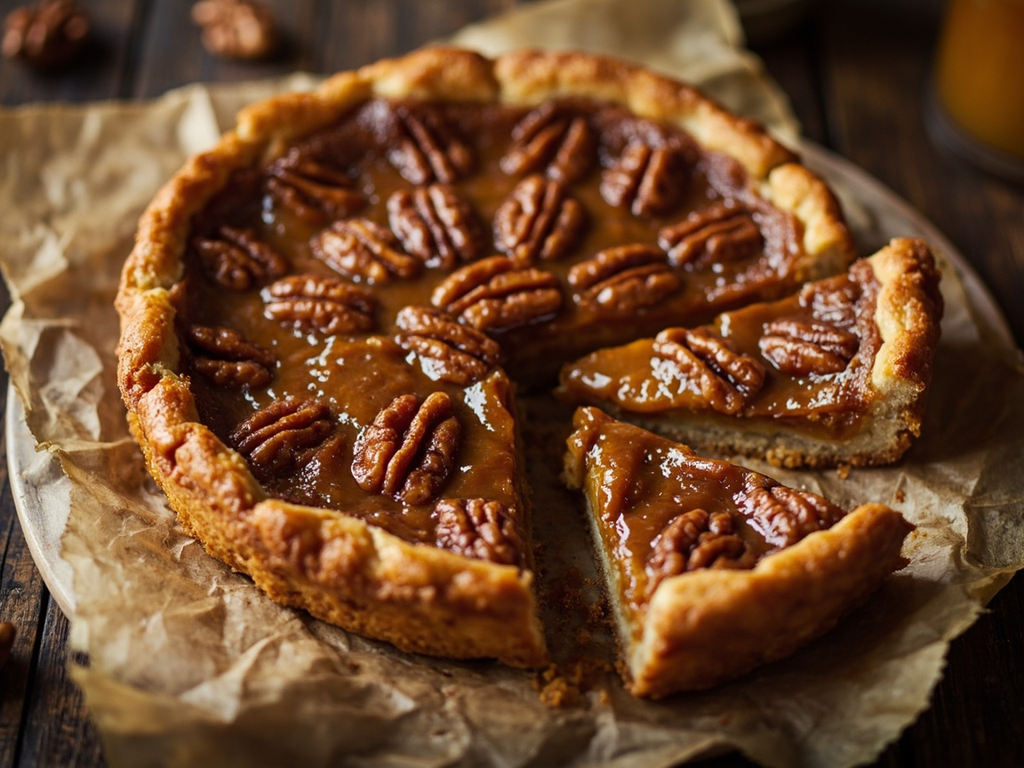
Tourteau de noix et miel pour la route
Why this dish? A magistrate called to Bordeaux and on missions, La Boétie knew long journeys on horseback. A dense cake of Périgord walnuts and honey, which keeps and travels well, was the ideal provision for the scholarly traveler, and a sweet end to meals at home.
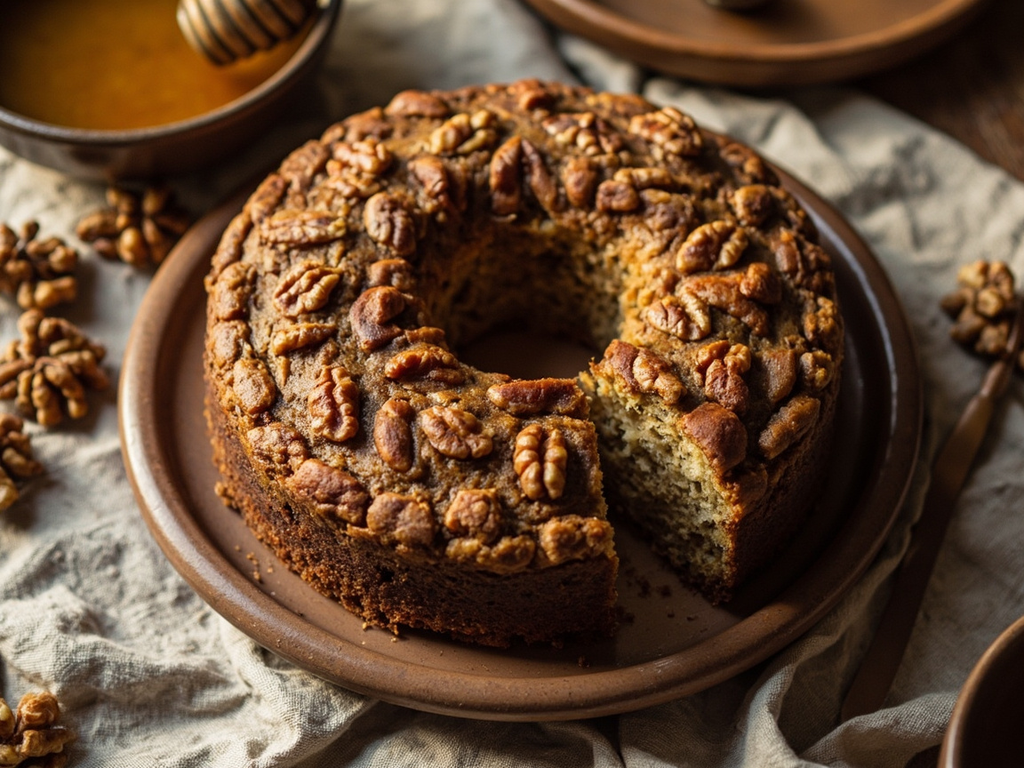
A compact, fragrant cake of ground walnuts bound with honey and eggs, enriched with just a little flour and mild spices. It keeps for several days and slips into a saddlebag: food for the road as much as a treat for the issue de table.
Before taking the road to Bordeaux, I would have this tourteau made from our Sarlat walnuts. You grind the kernels finely, mix them with honey, eggs, and a little flour, with a pinch of cinnamon for fragrance. Baked slowly, it becomes dense and keeps for several days without spoiling, which suits the traveler. I would slip a piece into my saddlebag, and it sustained my stomach between way stations as well as at the end of a good supper.
- •Périgord walnuts — a good quantity, ground (base and signature)
- •Honey — generously (binder and sweetness)
- •Eggs — a few (binder)
- •Wheat flour — a little (structure)
- •Cinnamon — a pinch (fragrance)
- •Butter or fat — for the mold (baking)
Tourteau de noix et miel pour la route
A compact, fragrant cake of ground walnuts bound with honey and eggs, enriched with just a little flour and mild spices. It keeps for several days and slips into a saddlebag: food for the road as much as a treat for the issue de table.
Why this dish? A magistrate called to Bordeaux and on missions, La Boétie knew long journeys on horseback. A dense cake of Périgord walnuts and honey, which keeps and travels well, was the ideal provision for the scholarly traveler, and a sweet end to meals at home.
Before taking the road to Bordeaux, I would have this tourteau made from our Sarlat walnuts. You grind the kernels finely, mix them with honey, eggs, and a little flour, with a pinch of cinnamon for fragrance. Baked slowly, it becomes dense and keeps for several days without spoiling, which suits the traveler. I would slip a piece into my saddlebag, and it sustained my stomach between way stations as well as at the end of a good supper.
Ingredients (period version)
- Périgord walnuts — a good quantity, ground (base and signature)
- Honey — generously (binder and sweetness)
- Eggs — a few (binder)
- Wheat flour — a little (structure)
- Cinnamon — a pinch (fragrance)
- Butter or fat — for the mold (baking)
Ingredients
- Walnut halves — 200 g (base and signature)
- Honey — 120 g (binder and sweetness)
- Eggs — 3 (binder)
- Flour — 80 g (structure)
- Cinnamon — 1 tsp (fragrance)
- Butter — a little for the mold (baking)
Method
- Coarsely grind or pulse the walnuts to keep some texture.
- Beat the eggs with the honey until the mixture lightens slightly.
- Fold in the walnuts, flour, and cinnamon to form a thick batter.
- Pour into a buttered mold and bake at medium heat (160°C) for about 40 minutes, until a blade comes out clean.
- Let cool: the cake firms up and keeps for several days wrapped in a cloth.
How it was made : Walnuts have been cultivated in Périgord since the Middle Ages and were a valuable resource (oil, long-keeping fruit). Dense cakes with honey and dried fruit, without leavening, kept well and made excellent travel provisions, as cane sugar was rare and expensive: honey remained the common sweetener.
The contemporary twist : Cut into bars and drizzled with warm honey, as a "Renaissance" energy snack for hiking.
Étienne de La Boétie · Charactorium