 Flip the card
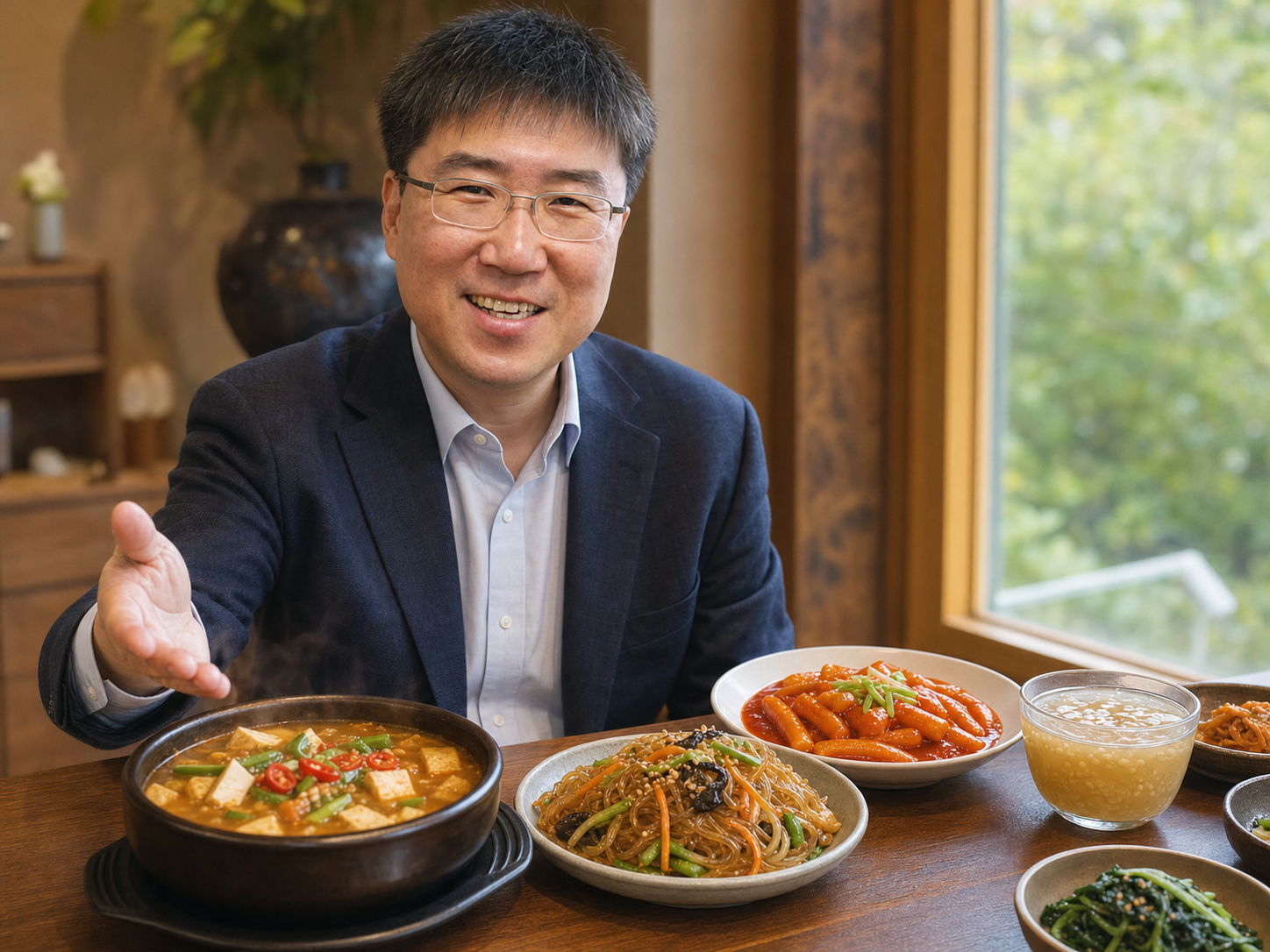
Ha-Joon Chang at the table
1963 — ?
On the menu
Bapsang (밥상) — the Korean table
The Korean meal is not served in successive courses but as a shared table: a bowl of rice (bap) for each diner, a stew or simmered soup (jjigae/guk) at the center, and a constellation of small side dishes (banchan) that everyone picks from freely with their chopsticks. There is neither starter nor dessert in the French sense: everything arrives together, the balance is made in each person's bowl. Sweets and sweet drinks like sikhye close the meal.
Signature : Doenjang (된장), fermented soybean paste
Umami heart of Korean cuisine, doenjang is made by fermenting soybean blocks (meju) for months. For Ha-Joon Chang, this slow fermentation — a patient, collective know-how — is the very image of an economy built over time, not in the instant of the market. He discusses it in *Edible Economics* as a product that defies the idea that everything must be fast and 'efficient'.
click to flip back
Ha-Joon Chang at the table
1963 — ?
4 period recipes
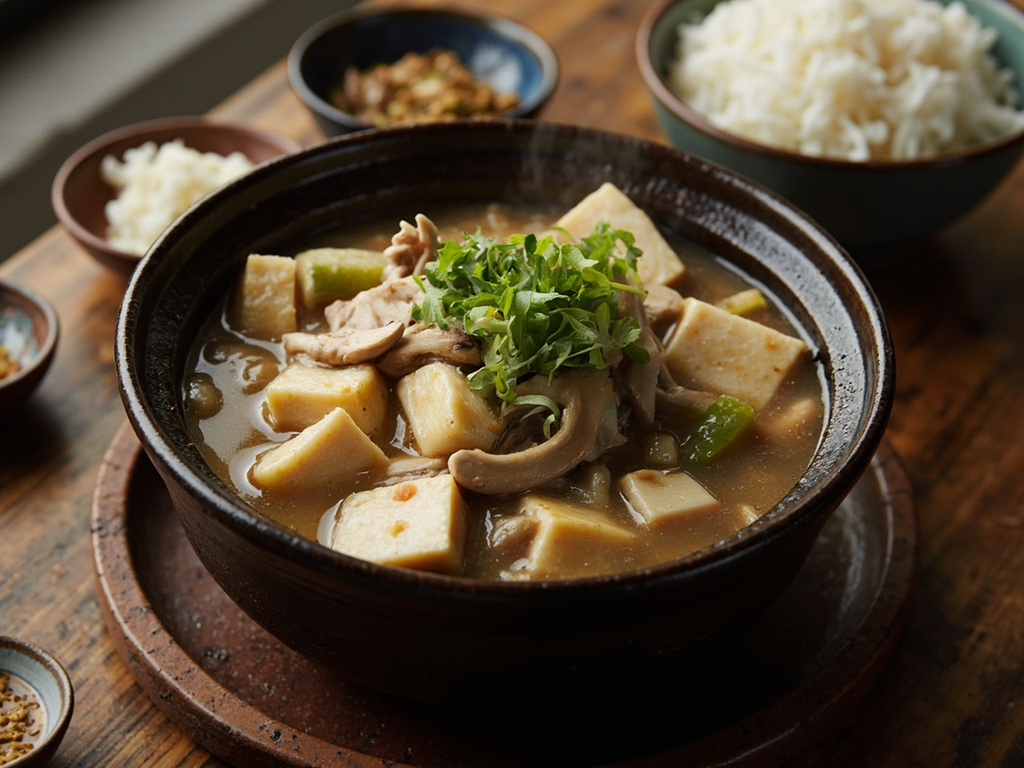 Everyday
Doenjang jjigae — fermented soybean paste stew
Jjigae (stew simmered at the center of the bapsang)
🫙 🍄 🧂· 30 min
View the recipe
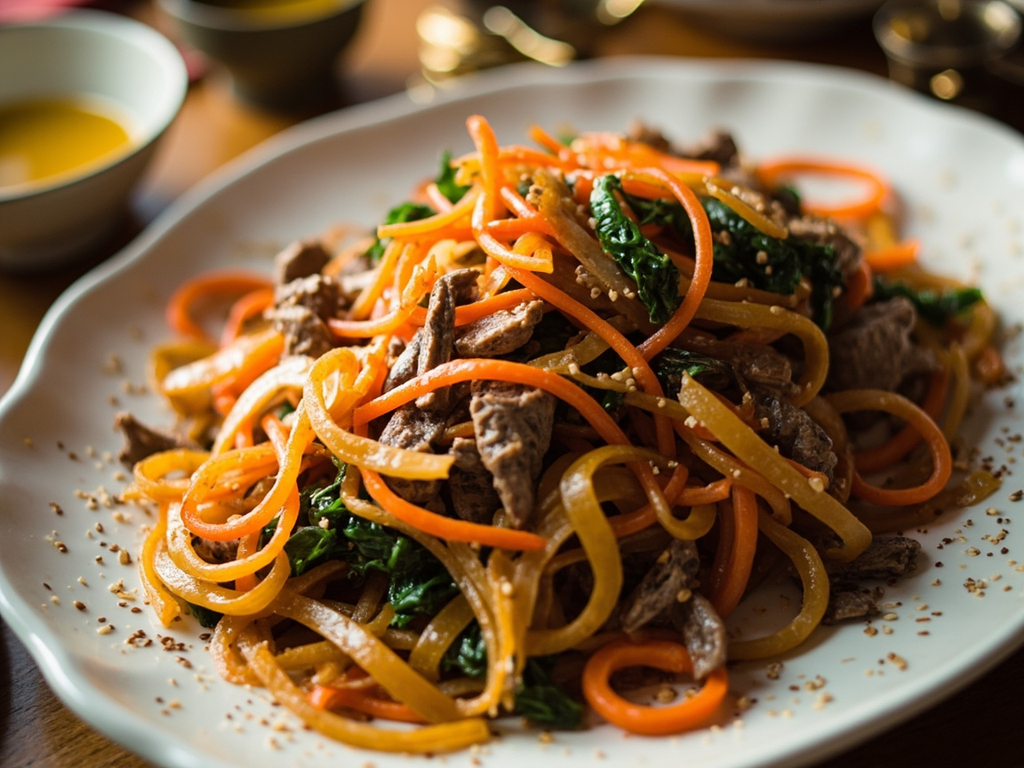 Festive
Japchae — stir-fried sweet potato noodles with vegetables
Festive banchan (shared dish for large gatherings)
🧂 🍯 🍄· 50 min
View the recipe
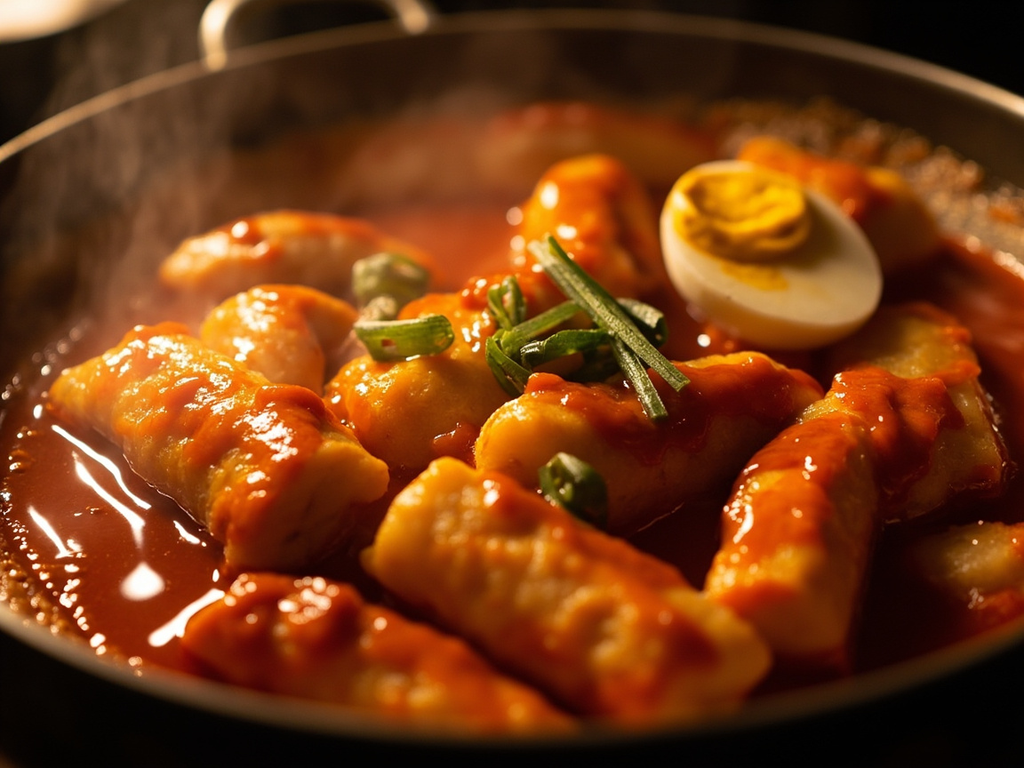 Street food
Tteokbokki — spicy stir-fried rice cakes
Bunsik (street snack from pojangmacha stalls)
🌶️ 🍯 🍄· 25 min
View the recipe
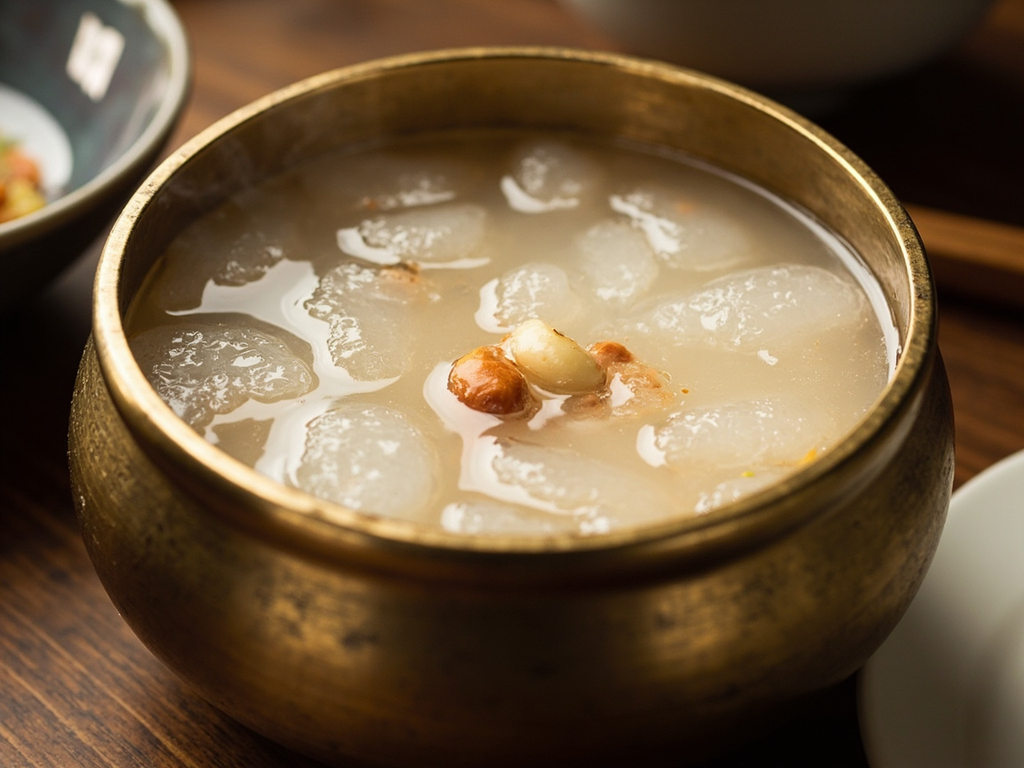 Drink
DrinkSikhye — sweet malted rice drink
Eumcheong (traditional end-of-meal beverage)
🍯· 6 h (including fermentation)
View the recipe